How to Find a Personal Injury Lawyer in Texas


Every article on this site is researched by our internal team, reviewed for legal accuracy against current Texas law, and held to State Bar of Texas advertising standards before publication. We do not publish content that overstates outcomes or makes promises about results.
Learn more about our
editorial standards .
Key Takeaways
- Choose a Texas lawyer whose daily work matches your type of injury claim.
- Verify the lawyer, read the fee agreement, and ask who will actually handle your case.
- Move quickly, because evidence fades, and Texas deadlines can limit your options.
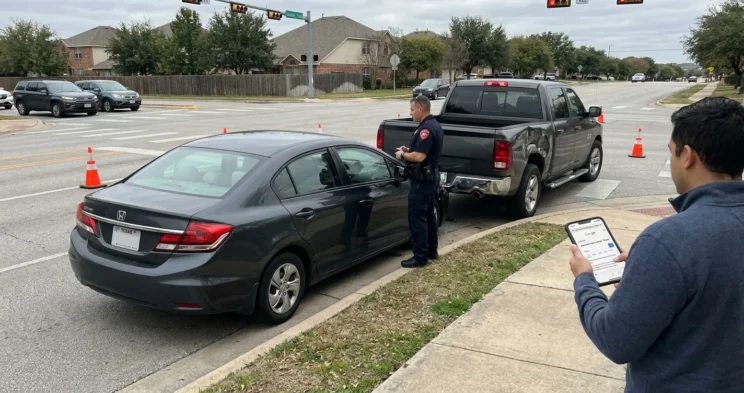
You were rear-ended on I-35 outside Austin. Now, the insurer wants a recorded statement, your back still hurts, and you need to choose a lawyer before key evidence is lost.
Here are the steps to take to find a personal injury lawyer in Texas.
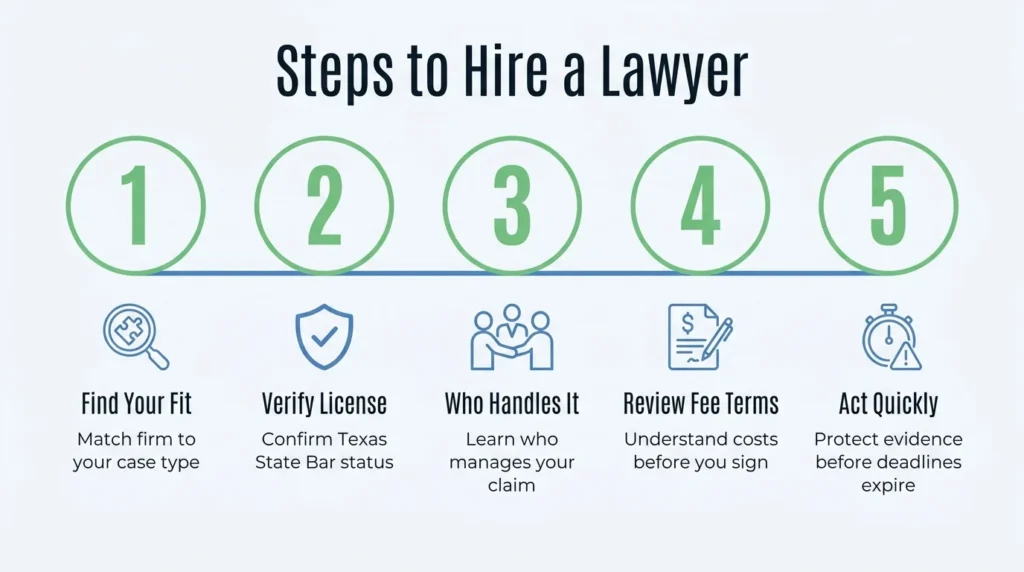
Step One: Find the Appropriate Lawyer For Your Case
Not every injury firm handles the same types of cases. Some focus on crash cases. Others spend more time on truck crashes, unsafe property cases, or wrongful death claims. Start with a firm that regularly handles personal injury cases, then evaluate how it will specifically handle a case like yours. Our post on what qualifies as a personal injury case can help you narrow down your list.
Step Two: Confirm the Lawyer Is Licensed in Texas
Before you send records or sign a fee agreement, check the State Bar of Texas attorney search so you know the lawyer is licensed in Texas. Additionally, the State Bar Lawyer Referral & Information Service can point you toward lawyers or legal resources based on your county and type of case, but you will still need to compare each lawyer’s experience and how clearly they communicate with clients.
Step Three: Ask Who Will Handle Your Case
The name of a law firm does not always reflect the specific attorneys who will handle your case. Ask who will investigate the claim, who will deal with the insurance company, and who will update you when something changes. You should also ask whether you can speak with a lawyer before you accept or reject any settlement offer.
Step Four: Read the Fee Agreement Before You Sign
Many injury firms use contingency fees. This means they only get paid if you win the case or receive a settlement. However, firms can still differ significantly in how much they charge, how they handle costs, and the level of service they provide. Be sure to ask how costs are tracked, when they are deducted, and whether you will owe anything if the case ends without a recovery. You should understand their answer well enough to summarize it in a single sentence.
Step Five: Look for Proof, Not Slogans
Review the firm’s case results and client reviews with one question in mind: does this firm handle cases like yours and keep clients informed while the claim moves forward? Look for patterns in the types of cases, the quality of communication, and the level of detail.
Step Six: Act Quickly Before the Deadline Hurts Your Case
Evidence disappears quickly: photos can get lost, and witnesses can forget details. For many injury claims, Texas Civil Practice and Remedies Code § 16.003 sets a two-year limitation period, so the lawyer you hire should talk about deadlines and evidence preservation in the first conversation.
If your injuries came from a crash, our post on what to do after a car accident in Texas can help you protect the evidence you have.
Questions to Ask on the First Call
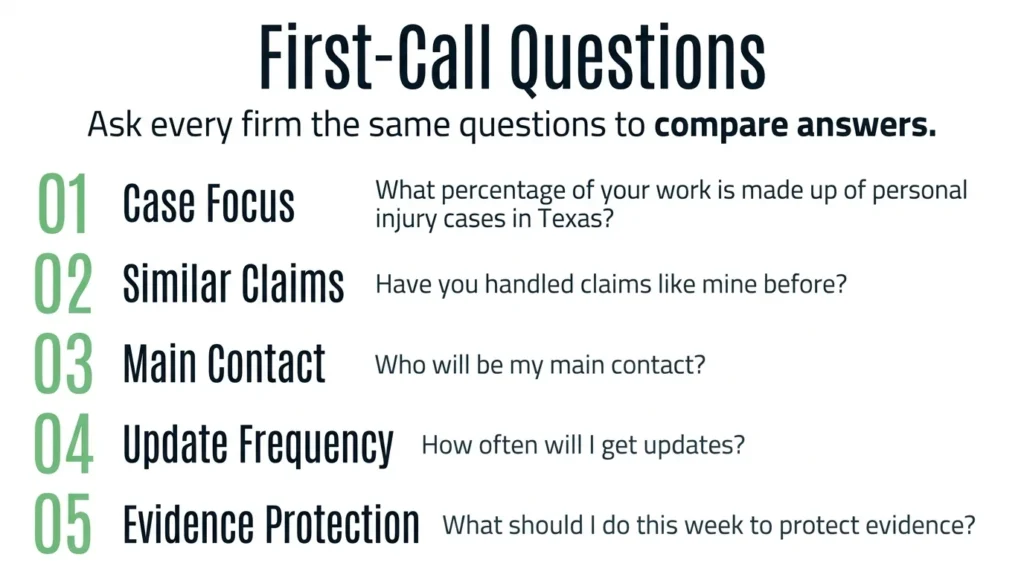
Use the same questions with every firm, so you can compare their answers:
- What percentage of your work is made up of personal injury cases in Texas?
- Have you handled claims like mine before?
- Who will be my main contact?
- How often will I get updates?
- How do case costs work?
- What should I do this week to protect evidence?
A strong answer should sound direct, specific, and easy to understand. If the answer feels vague or slippery, keep looking.
Choose a Lawyer Who Will Explain the Next Steps and Act on Them
The right lawyer should understand your claim, explain your options clearly, and move fast enough to protect evidence and deadlines.
At Angel Reyes & Associates, we offer free initial consultations, and you pay no fee unless we win. Use our contact form to discuss your case if you want to talk through your options with our team.
Choosing a Lawyer FAQs
Should you hire a Texas personal injury lawyer right away after an accident?
Not every case requires immediate legal representation, but early legal help can make a difference when evidence, vehicle data, surveillance footage, or witness accounts are at risk of disappearing quickly. A lawyer can also help you avoid making mistakes with recorded statements or early settlement pressure.
What is a contingency fee in a Texas personal injury case?
A contingency fee means the lawyer’s fee is usually paid from a recovery, instead of upfront hourly billing. You should still read the contract closely to see how litigation costs, medical record charges, and other case expenses are handled.
Can you switch personal injury lawyers in Texas if the firm is not communicating well?
Yes, in many situations, you can change lawyers if the relationship is not working, or your case is not being handled the way you were led to expect. Before switching lawyers, ask how your file will be transferred, and whether the first firm may assert a fee claim for work already performed.
Does it matter whether a Texas personal injury lawyer actually files lawsuits and goes to trial?
It can. Many injury claims settle, but insurers may value a case differently when the lawyer has a track record of building cases for litigation, instead of treating every claim like a quick settlement file.
What documents should you have ready before your first call with a Texas injury lawyer?
Bring the crash report if you have it, along with photos, insurance information, medical records or discharge papers, wage-loss details, and any messages from adjusters. Even if you do not have everything yet, having the basic timeline and the names of everyone involved at hand can make the first conversation more useful.
About the Authors

Angel Reyes
Writer
Angel L. Reyes, III is the Founder and Managing Partner of Angel Reyes & Associates. A nationally recognized trial attorney and business leader, Angel has helped over 70,000 injury victims recover more than $1 billion since founding the firm in 1993. Named to the Texas Super Lawyers list annually since 2008, Angel brings Wall Street experience, Ivy League education, and a deep commitment to client advocacy. He is a frequent legal commentator and published author with extensive contributions to legal scholarship, trial strategy, and consumer protection.

Kyle Nicolas
Editor
Kyle Nicolas is the Web Content & SEO Manager at Angel Reyes & Associates. He has more than 10 years of experience as a marketing co...

Angel Reyes
Reviewer
Angel L. Reyes, III is the Founder and Managing Partner of Angel Reyes & Associates. A nationally recognized trial attorney and business...