Can a Personal Injury Lawyer Drop Your Case in Texas?


Every article on this site is researched by our internal team, reviewed for legal accuracy against current Texas law, and held to State Bar of Texas advertising standards before publication. We do not publish content that overstates outcomes or makes promises about results.
Learn more about our
editorial standards .
Key Takeaways
- A Texas personal injury lawyer can withdraw, but the reason and timing must comply with professional rules.
- Once a lawsuit is filed, a lawyer usually needs court approval through a written motion showing good cause.
- If your lawyer withdraws, get your file, track deadlines, and speak with new counsel ASAP.

You are recovering after a crash on I-35 in Texas. Medical treatment is ongoing, the insurance company keeps calling, and then your lawyer tells you the firm may be stepping away from your case.
Why would a law firm that previously agreed to represent you suddenly walk away from a case? Are they even allowed to do that? Do you have any kind of recourse or opportunity to take additional action to seek alternative representation?
The simple answer is yes, a personal injury lawyer can end representation and walk away from the attorney-client relationship. However, that does not mean a lawyer can walk away without rules, notice, or court involvement. In Texas, a lawyer may be required to withdraw in some situations and may be allowed to withdraw in others under Texas Disciplinary Rule 1.16.
When a Lawyer Can Withdraw & Why It Happens
While every personal injury case is unique, most instances of attorney withdrawal stem from one of the following situations.
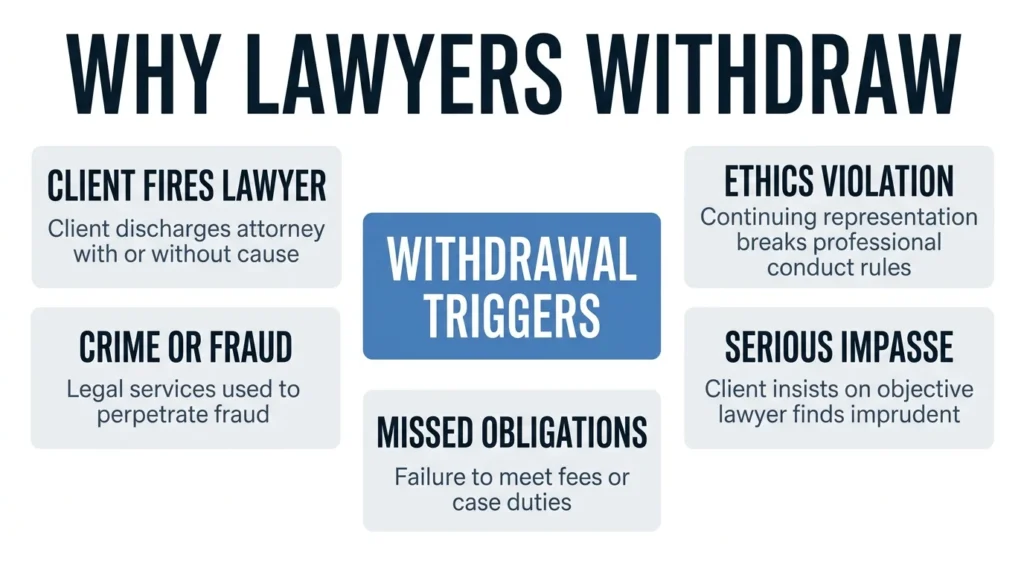
The Client Fires the Lawyer.
As a client, you retain the power to discharge your attorney at any time, with or without cause. If you feel you are not being represented fairly, your case is not being given proper attention, or you have a strong disagreement with the strategy being pursued, you may wish to seek a different representative.
Firing an attorney does not necessarily absolve you of any financial responsibility, however. Fees still may be owed, particularly if a firm has fronted costs for medical treatment, court fees, or other financial investments in your case.
Continuing the Case Would Break the Rules or the Law.
Lawyers are bound by strict ethics and conduct rules, and are held to high standards by their peers. This is one somewhat unique aspect of the legal profession: it is heavily self-policed, and those who violate rules or requirements are subject to stiff consequences.
This means a lawyer must withdraw from a case if continuing the representation would violate professional conduct rules or other laws.
The Client Uses the Lawyer’s Services for Crime or Fraud.
A lawyer may choose to withdraw from a case if the client persists in conduct the lawyer reasonably believes may be criminal or fraudulent, or if the lawyer’s services were used to commit a fraud or crime.
For personal injury cases, if a client is believed to be trying to use their services to push a fraudulent claim through an insurance company, their lawyer may choose to drop the case.
The Lawyer & Client Reach a Serious Impasse.
Withdrawal may happen when the client insists on an objective the lawyer sees as imprudent, or makes the representation unreasonably difficult. In other words, if a client continues to insist on pursuing a case when the attorney feels it is a lost cause or a waste of time and resources, they may opt to drop out entirely.
Not all cases are valid or worth pursuing. For example, if a client wishes to sue another driver who they claim ran a red light, but that driver has dashcam evidence showing that their client was the one who ran the signal, the attorney may opt to end their case since it’s obvious any efforts to pursue compensation through a car accident claim will be fruitless.
The Client Does Not Meet Case Obligations.
A lawyer may seek to withdraw if the client substantially fails to meet obligations tied to the representation, including agreed-upon fees, after reasonable warning.
Representation is a two-way street: clients must work with attorneys as much as attorneys work with their clients. If a client continuously makes things difficult by missing appointments, failing to turn in paperwork or key documentation by mandated deadlines, or continuously withholding information, an attorney cannot be reasonably expected to do their job.
The Case Creates an Unreasonable Burden on the Firm.
Texas rules allow withdrawal when the representation creates an unreasonable financial burden on the lawyer or when other good cause exists.
A weak case can also lead to withdrawal in practice. If new facts show the claim cannot be pursued responsibly, the lawyer may conclude the representation should end rather than continue on a claim that cannot be supported.
Court Approval & Ongoing Duties After a Lawsuit Is Filed
Once a case is in litigation, the process is more formal. Under Texas Rule of Civil Procedure 10, an attorney may withdraw only by written motion for good cause shown. If no substitute lawyer is stepping in, the motion must state that the client received the motion, was told of the right to object, and was given the party’s last known contact information, plus all pending settings and deadlines. If the motion is granted, the lawyer must promptly notify the client in writing of any additional known settings or deadlines. Texas Disciplinary Rule of Professional Conduct 1.16 also states that when a tribunal orders the lawyer to continue, the lawyer must keep representing the client despite otherwise valid grounds to withdraw.
That means a lawyer usually cannot leave a filed case on a casual phone call. The court controls the timing once litigation is underway.
How to Reduce the Risk of Being Dropped
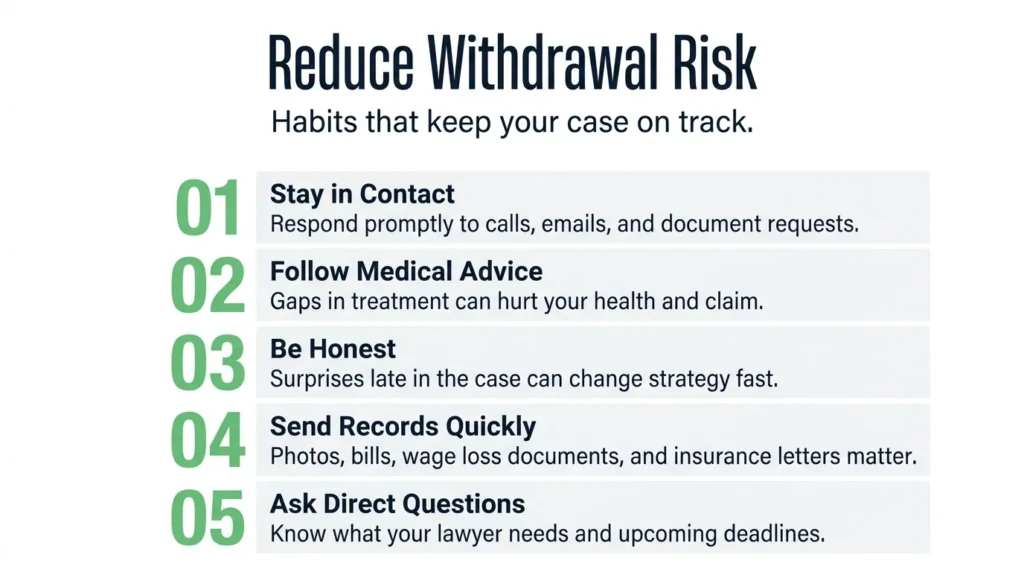
These steps help keep your case moving and reduce avoidable problems with your attorney relationship:
- Stay in contact with your attorney. Respond to calls, emails, and document requests.
- Follow medical advice. Gaps in treatment can hurt both your health and your claim.
- Be honest about facts and prior injuries. Surprises late in the case can change legal strategy fast.
- Send records quickly. Photos, bills, wage loss documents, and insurance letters all matter.
- Ask direct questions about expectations. You should know what your lawyer needs from you and what deadlines are coming up.
- Raise fee or trust concerns early. Silence usually makes disagreements worse.
What to Do If Your Lawyer Withdraws & Your Case Is Still Active
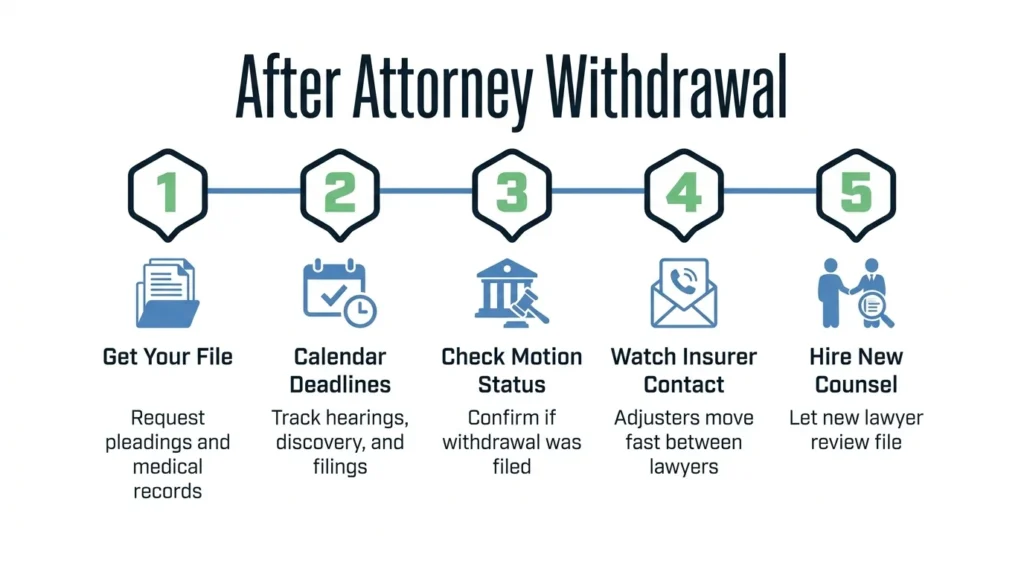
These actions help protect your claim if representation changes in the middle of the case:
- Get your file right away. Ask for pleadings, correspondence, medical records gathered so far, and insurance information.
- Calendar every deadline. Hearings, discovery responses, and filing dates do not stop mattering because your lawyer withdrew.
- Find out whether a motion to withdraw was filed or granted. In a filed lawsuit, that status affects who is responsible for the next step.
- Do not ignore insurer contact. Adjusters may move quickly when they learn you are between lawyers.
- Talk to a new lawyer as soon as possible. A replacement attorney needs time to review the file before the next deadline.
Fast action matters most when the case is already in court, because judges expect deadlines to be met even during a change in counsel.
Get Clear Answers Before Your Case Loses Momentum
If your lawyer has dropped your case, or you think that they might be preparing to do so, the next move is to protect deadlines, secure your file, and get a second opinion on where the claim stands.
Angel Reyes & Associates offers free initial consultations and works on a contingency basis, meaning no fee unless we win. We have over 30 years of experience handling personal injury cases and can handle yours through any of our more than 30 office locations throughout Texas.
Take a look at our case results page to see what types of claims we handle, then give us a call to schedule a consultation.
Past results do not guarantee future success.
Attorney Change FAQs
Will I still owe my old personal injury lawyer money if I hire a new lawyer in Texas?
Possibly. Under Texas law, a lawyer discharged from a contingency-fee case may still seek compensation in quantum meruit or, in some situations, from a later recovery, so changing firms does not always erase a prior fee claim.
Can my lawyer keep my case file until I pay outstanding costs or fees?
Not usually. While Texas allows for a “retaining lien” in some cases, a lawyer cannot hold your file hostage if doing so would prejudice your legal rights or cause you to miss a court deadline.
Does a lawyer need court permission to withdraw before a lawsuit is filed?
Usually, no court order is needed before suit, but the lawyer still must follow Texas ethical duties when ending the representation. Once a case is in court, Texas Rule of Civil Procedure 10 requires a written motion and court approval.
What can I do if I think my lawyer withdrew improperly or will not turn over my file?
You may be able to seek help through the State Bar of Texas Client-Attorney Assistance Program (CAAP), and formal grievances are also available for alleged attorney misconduct. Those options do not replace the need to protect your injury claim right away, but they can help address the lawyer-conduct issue.
About the Authors

Angel Reyes
Writer
Angel L. Reyes, III is the Founder and Managing Partner of Angel Reyes & Associates. A nationally recognized trial attorney and business leader, Angel has helped over 70,000 injury victims recover more than $1 billion since founding the firm in 1993. Named to the Texas Super Lawyers list annually since 2008, Angel brings Wall Street experience, Ivy League education, and a deep commitment to client advocacy. He is a frequent legal commentator and published author with extensive contributions to legal scholarship, trial strategy, and consumer protection.

Kyle Nicolas
Editor
Kyle Nicolas is the Web Content & SEO Manager at Angel Reyes & Associates. He has more than 10 years of experience as a marketing co...

Angel Reyes
Reviewer
Angel L. Reyes, III is the Founder and Managing Partner of Angel Reyes & Associates. A nationally recognized trial attorney and business...