What Does Litigation Mean in a Personal Injury Case?


Every article on this site is researched by our internal team, reviewed for legal accuracy against current Texas law, and held to State Bar of Texas advertising standards before publication. We do not publish content that overstates outcomes or makes promises about results.
Learn more about our
editorial standards .
Key Takeaways
- Litigation is the formal court process used when a Texas injury claim does not settle on fair terms.
- Most litigated injury cases still settle before trial, but the court process creates deadlines, evidence rules, and pressure that can change case value.
- Early legal help can protect deadlines, preserve evidence, and improve your position, making settlement more likely during litigation.

Litigation is the formal legal process of resolving a dispute through the court system when a settlement cannot be reached privately. It involves a structured series of phases, from filing a petition to conducting discovery and potentially proceeding to trial, to determine liability and fair compensation under Texas law.
When Does Litigation Start?
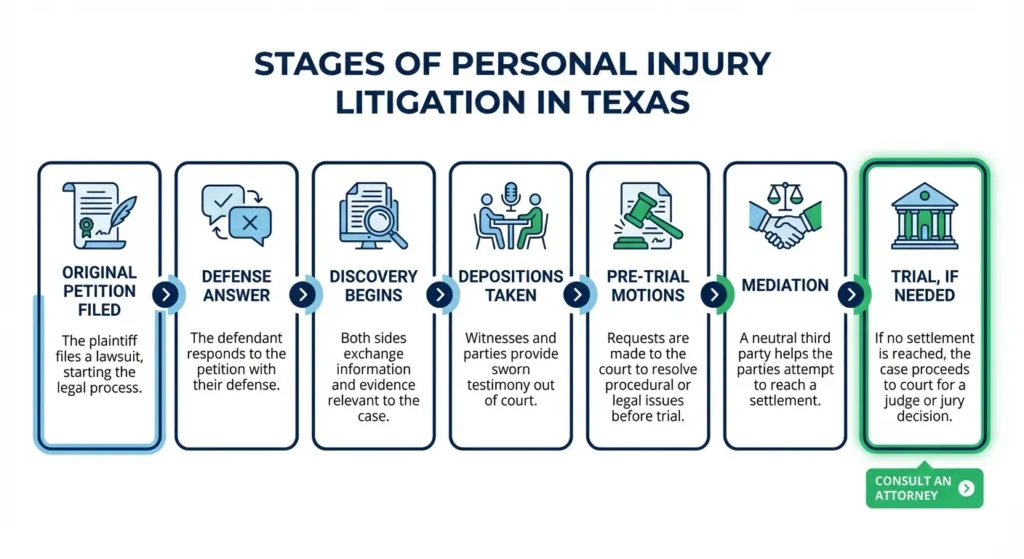
When a personal injury claim cannot be settled on fair terms, it proceeds to litigation. In a Texas injury case, this process begins when your lawyer files a lawsuit and both sides exchange evidence. Throughout the litigation process, all parties must adhere to the deadlines set by the Texas Rules of Civil Procedure.
Under Texas Civil Practice and Remedies Code § 16.003, you generally have a strict two-year statute of limitations to file your lawsuit. While entering litigation does not guarantee a trial, as many cases settle during the discovery phase, missing this filing deadline will most likely permanently terminate your right to recover compensation.
What Happens During Litigation?
Once a lawsuit is filed, your case moves from informal negotiations into the formal litigation phase. This process follows a structured sequence governed by the Texas Rules of Civil Procedure.
Here is what you can expect after you file your lawsuit:
- Original petition: Your attorney files this formal document to initiate the lawsuit, outlining the facts, the responsible parties, and the damages sought.
- The answer: The defense responds to the lawsuit and may deny fault, dispute your injuries, or raise legal defenses.
- Discovery: Both sides exchange information such as medical records, crash reports, photographs, billing records, witness statements, and insurance details.
- Depositions: Out-of-court testimony is given by parties, witnesses, doctors, or company representatives to preserve witness statements and evaluate the strength of the evidence.
- Pre-trial motions: Either side can ask the court to rule on specific legal issues or the admissibility of certain evidence.
- Mediation: Many cases resolve during this supervised settlement conference, where a neutral third party helps both sides reach an agreement before trial.
- Trial: If the case does not settle by this final stage, a judge or jury decides fault, damages, and the amount of compensation.
Does Litigation Mean Your Case Will Go to Trial?
No. In many cases, litigation pushes both sides to exchange evidence, test weak arguments, and take settlement talks more seriously.
Some cases settle before depositions. Others settle after expert reports, mediation, or just before trial. The cases most likely to reach a jury are the ones where fault, medical causation, or the value of the harm remains sharply disputed.
Factors That Can Weaken Your Case During Litigation
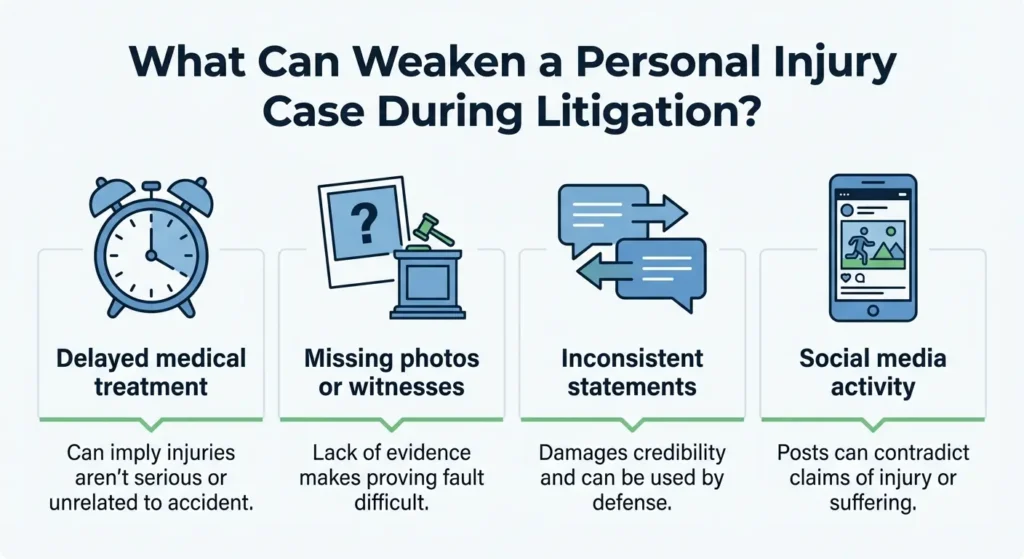
The success of your injury lawsuit depends heavily on the consistency and availability of your supporting evidence. Identifying potential gaps early is crucial, as the defense will actively search for any weak points in your case to diminish the value of your claim during the litigation process.
These factors can have a negative impact on your case during litigation:
- Delayed medical treatment can create gaps that the defense may try to use against you.
- Missing evidence, such as photos, missing witnesses, or incomplete records, can weaken proof of fault and damages.
- Inconsistent statements to insurers, doctors, or defense lawyers can undermine your credibility.
- Social media posts can be taken out of context and used to minimize the physical or emotional impact of your injuries.
By proactively addressing these evidentiary gaps, you can better protect the integrity of your case.
How Your Litigation Strategy Affects Settlement Value
In Texas, litigation is more than just a series of court filings; it is a strategic process of building settlement leverage by demonstrating that a case is trial-ready. A rigorous approach to gathering evidence, meeting strict deadlines, and securing expert testimony signals to the defense that you are prepared to see the case through to a verdict, which often forces a higher settlement offer during mediation.
Get a Clear Answer on Whether Your Case Should Move Forward
When the defense denies fault, blames your injuries on something else, or refuses to offer a fair amount, litigation may be a solution that forces the real evidence into the open.
With over 30 years of experience and free initial consultations, Angel Reyes & Associates can help you decide whether to settle, keep negotiating, or move your claim into litigation. Our attorneys have extensive experience representing Texans involved in various personal injury cases, including car accidents, bus accidents, wrongful death cases, premises liability cases, and more. Contact our team today to discuss your case. We are available 24/7.
Injury Litigation FAQs
How long does personal injury litigation usually take in Texas?
It depends on the court, the seriousness of the injuries, the number of parties involved, and whether expert testimony is needed. Some cases resolve in months, while others take much longer because of scheduling, discovery disputes, or contested medical issues.
How much does it cost to start litigation?
Most personal injury attorneys in Texas work on a contingency fee basis, meaning they cover the upfront costs of filing fees, expert witnesses, and depositions. These expenses are typically reimbursed from the final settlement or jury award, so you do not have to pay out-of-pocket to start the process.
Can the insurance company see my social media during litigation?
Yes. During the discovery phase, defense attorneys often request access to social media posts, photos, and private messages to look for inconsistencies regarding your physical activities or emotional state. It is best to adjust your privacy settings and avoid posting about your accident or injuries entirely while your case is active.
About the Authors

Angel Reyes
Writer
Angel L. Reyes, III is the Founder and Managing Partner of Angel Reyes & Associates. A nationally recognized trial attorney and business leader, Angel has helped over 70,000 injury victims recover more than $1 billion since founding the firm in 1993. Named to the Texas Super Lawyers list annually since 2008, Angel brings Wall Street experience, Ivy League education, and a deep commitment to client advocacy. He is a frequent legal commentator and published author with extensive contributions to legal scholarship, trial strategy, and consumer protection.

Kyle Nicolas
Editor
Kyle Nicolas is the Web Content & SEO Manager at Angel Reyes & Associates. He has more than 10 years of experience as a marketing co...

Angel Reyes
Reviewer
Angel L. Reyes, III is the Founder and Managing Partner of Angel Reyes & Associates. A nationally recognized trial attorney and business...