What Happens if the At-Fault Driver Lies to Insurance?


Every article on this site is researched by our internal team, reviewed for legal accuracy against current Texas law, and held to State Bar of Texas advertising standards before publication. We do not publish content that overstates outcomes or makes promises about results.
Learn more about our
editorial standards .
Key Takeaways
- A false story can delay or reduce a settlement, but strong evidence often determines liability.
- Early photos, witnesses, and medical documentation make it harder for insurers to shift blame.
- Texas deadlines and comparative fault rules still apply even when the other driver is dishonest.
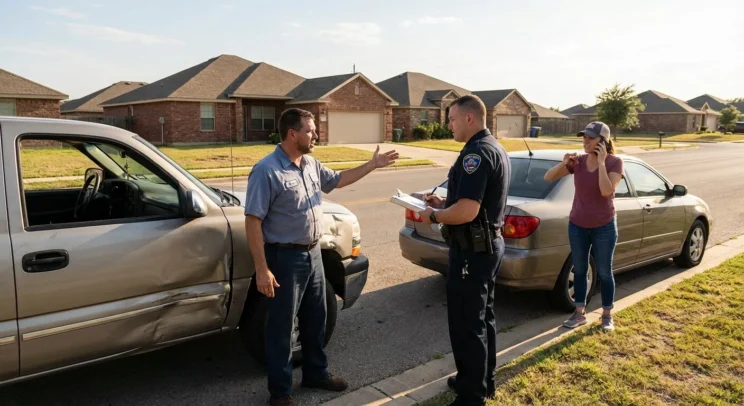
It happens more often than people expect: you get hit, you report the crash, and then you learn the other driver told their insurance company a completely different story from what you think happened. Maybe they claim you ran a red light. Maybe they say they never saw you. Maybe they deny they were speeding or texting.
A false story can slow down your claim and create unfair pressure to accept less than you need. The good news is that insurance decisions are not based on who talks first; they are based on evidence.
Why Drivers Lie
People lie to avoid blame, protect their driving record, or keep their premiums from rising. Sometimes they panic and blurt out something inaccurate. Other times, the story changes after they talk to friends or family. Sometimes people just don’t want to think they’re at fault for an incident.
When the at-fault driver lies, their insurer may:
- Delay the claim while “investigating”
- Dispute liability and argue you share fault
- Offer a low settlement because they think the case is harder to prove
- Deny the claim if they accept their insured’s version of events
Your goal is to make your evidence strong enough to unravel their narrative.
What Insurers Look at When Stories Conflict
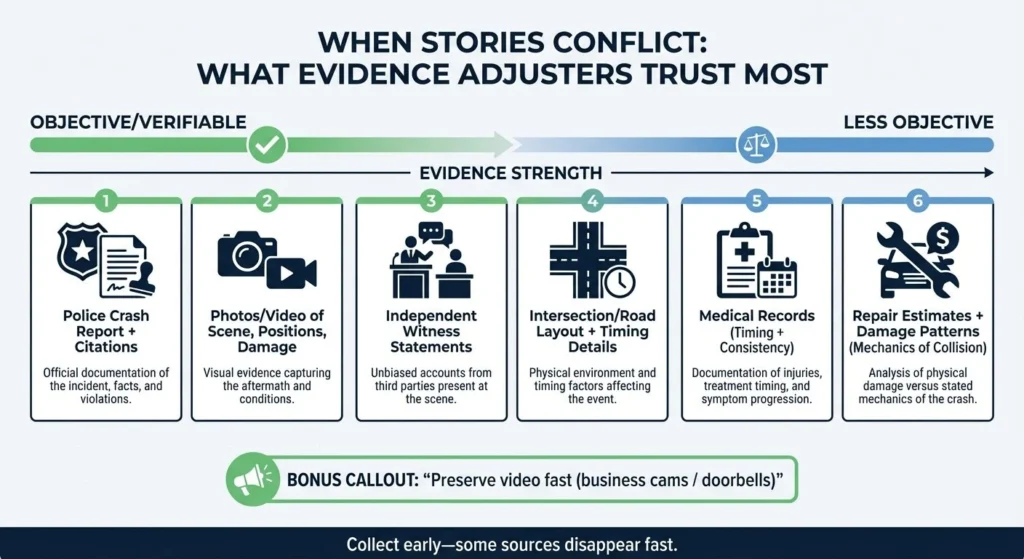
When two drivers give different versions, adjusters typically weigh objective proof over opinions. Common sources include:
- The police crash report and any citations
- Photos and video of the scene, vehicle positions, and damage
- Independent witness statements
- The location and timing of the crash (intersection layout, lane markings, signal cycles)
- Medical records showing injury timing and consistency with the impact
- Repair estimates and damage patterns that match the mechanics of the collision
If you can document what happened early, it becomes harder for a false story to stick.
Steps to Take Right Away
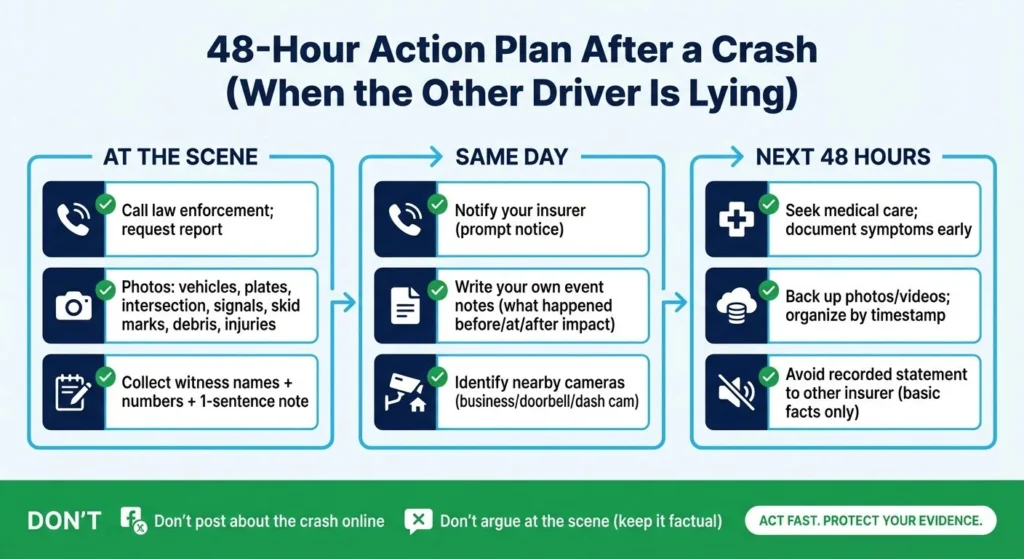
The first few days are the most important because evidence disappears and memories fade. Prioritize taking these steps as soon as possible in the event of an accident:
- Contact law enforcement and request a report. If you can, calmly explain what happened without arguing with the other driver.
- Photograph everything. Include all vehicles, license plates, the full intersection or roadway, traffic signals, skid marks, debris, and visible injuries.
- Get witness information. Names, phone numbers, and a quick note about what they saw.
- Seek medical care quickly. Some serious injuries are not obvious right away, and early records help connect the crash to your symptoms.
- Notify your own insurer. Many policies require prompt notice, even if the other driver should pay.
- Be careful with recorded statements. You can usually provide basic facts and decline a recorded interview with the other driver’s insurer until you understand your rights.
Also, avoid posting about the crash online. Insurers look for anything they can use to challenge your injuries or credibility.
Proving the Truth by Building a Timeline
When liability is disputed, a definitive and supported timeline of facts can help reconstruct the incident and prove who is really at fault. The goal is to show what happened before impact, at impact, and after impact.
Helpful evidence often includes:
- Scene documentation: photos, measurements, and roadway features that show right-of-way
- Neutral witnesses: people who do not know either driver
- Video: dash cam, nearby business cameras, or residential doorbell cameras
- Medical documentation: consistent complaints, diagnosis, and treatment that fit the crash forces
- Vehicle evidence: damage location, crush patterns, and repair data that support your version
If a claim escalates, an attorney may bring in an accident reconstruction professional to analyze angles, speeds, and roadway design.
Texas Fault Rules & Deadlines That Still Apply
Texas uses a modified comparative responsibility rule. Under Texas Civil Practice and Remedies Code § 33.001, you generally cannot recover damages if you are found more than 50% responsible, and any recovery is reduced by your percentage of fault.
This is why lies can make claims so complicated, and why it’s so important to build a concrete and definitive narrative that supports the truth. If the other driver lies to try and pin fault on you (or someone else), it will take adjusters time to uncover the truth.
Texas also has a two-year statute of limitations for most personal injury claims (§ 16.003). If the other driver drags their feet or tries to fight their assignment of fault at every chance they get, the process could drag on. If this deadline is drawing near and you still haven’t reached a resolution, continued delay may cause you to lose your ability to pursue your claim.
When a Lie Turns into a Stalled Claim
If the at-fault insurer is relying on a false story, the next steps usually focus on tightening the proof and forcing clarity. That may include sending a structured demand package, highlighting inconsistencies, and preserving video or vehicle evidence before it disappears.
If the claim still does not move, filing a lawsuit may be the step that allows formal discovery, which can include obtaining documents, taking depositions, and locking testimony into the record.
At the end of the day, a lie can create delay, but it does not have to decide the outcome. The faster you secure evidence and the more consistent your documentation is, the harder it is for an insurer to justify a denial or push blame onto you.
If you are dealing with a disputed claim in Texas, Angel Reyes & Associates can take over insurer communications, preserve key evidence, and build a case designed to stand up when the other side changes their story. We offer free initial consultations, and you pay no legal fees unless we win. Use our contact form to request a free consultation and get clear guidance on next steps.
Insurance Claim Dispute FAQs
Can I request a copy of the at-fault driver’s statement from their insurer?
Usually not during the early claim process. If a lawsuit is filed, your attorney may be able to obtain statements through formal discovery, depending on what exists and what is protected.
What if the police report includes the other driver’s false version?
A report is important, but it is not the final word, nor is it even set in stone. Errors happen, so law enforcement agencies have procedures you can follow to request corrections or amendments to a report. You will need solid evidence to support your requested changes.
Can I force the other driver to turn over phone records or camera footage?
Not by simply asking the insurer. If the case requires it, a lawsuit can allow subpoenas and other discovery tools to request records and footage from relevant sources.
Could the at-fault driver’s lie affect whether their insurance covers the crash?
It can, depending on the policy’s cooperation terms and whether the insurer believes a material misrepresentation occurred. Even if coverage becomes an issue, you may still have paths to pursue compensation through other sources.
About the Authors

Angel Reyes
Writer
Angel L. Reyes, III is the Founder and Managing Partner of Angel Reyes & Associates. A nationally recognized trial attorney and business leader, Angel has helped over 70,000 injury victims recover more than $1 billion since founding the firm in 1993. Named to the Texas Super Lawyers list annually since 2008, Angel brings Wall Street experience, Ivy League education, and a deep commitment to client advocacy. He is a frequent legal commentator and published author with extensive contributions to legal scholarship, trial strategy, and consumer protection.

Kyle Nicolas
Editor
Kyle Nicolas is the Web Content & SEO Manager at Angel Reyes & Associates. He has more than 10 years of experience as a marketing co...

Spencer Browne
Reviewer
Spencer Browne is a partner at Angel Reyes & Associates and a Board Certified personal injury trial lawyer with nearly 100 jury trials a...