Attacked After Getting Into a Fake Uber


Every article on this site is researched by our internal team, reviewed for legal accuracy against current Texas law, and held to State Bar of Texas advertising standards before publication. We do not publish content that overstates outcomes or makes promises about results.
Learn more about our
editorial standards .
Key Takeaways
- Texas requires the app to show the driver's photo and license plate before you enter.
- A wholly unaffiliated impostor's car does not gain coverage from your Uber request.
- Preserve app matches, venue video, police report details, and pickup location records.
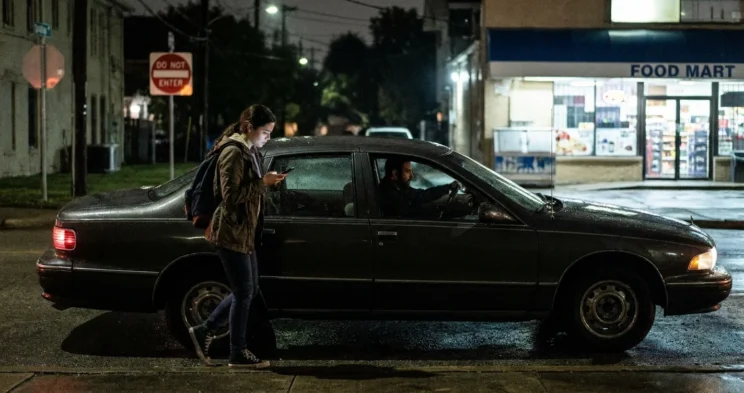
If you were attacked by a fake Uber driver in Texas, your legal options depend on who the attacker was and how the pickup happened. The matched driver’s trip insurance generally does not follow you into a wholly unaffiliated stranger’s car. Possible claims instead concern the attacker, the business controlling the pickup area, and any platform conduct that contributed to the mistake.
After an attack, sorting through app records and insurance questions can feel overwhelming. The starting point is concrete, meaning you compare the driver and license plate shown in your app with the person and vehicle you actually entered.
What the Uber App Should Show Before You Enter

Texas law requires the rideshare company to provide identifying information before you get in. Under Texas Occupations Code § 2402.104, the company must give the requesting passenger these details through its digital network before the passenger enters the vehicle:
- The driver’s first name
- A picture of the driver
- The vehicle’s make and model
- The vehicle’s license plate number
The app match screen shows who the company assigned. Comparing that information with the attacker and vehicle helps establish whether the person had any connection to your requested ride.
The statute sets a company disclosure duty. It does not, by itself, create automatic civil damages whenever an impostor deceives someone. An existing screenshot can help document the difference between the legitimate assignment and the car you entered.
Why the Matched Driver’s Trip Insurance May Not Cover an Impostor’s Car
Texas rideshare insurance duties depend on a participating driver’s app activity. Texas Insurance Code Chapter 1954 ties those duties to a driver who is logged into the app or has accepted a ride request. Requesting an Uber does not attach the matched driver’s trip insurance to a wholly unrelated stranger’s vehicle or attack.
That conclusion applies the statute’s definitions; the chapter does not expressly address fake Ubers. A complete stranger is different from a real driver’s account misuse, an unauthorized substitute, or another participating driver. Trip logs and driver records help establish which situation occurred.
Uber’s Texas Certificate of Liability Insurance describes the accepted-request phase by reference to the driver’s app status, recorded acceptance, and travel toward pickup or the destination. The certificate defers to the actual policy and does not create coverage rights. It cannot resolve every assault exclusion or a separate claim against the company for its own conduct.
The incident-date policy and actual driver activity must be reviewed for a case-specific coverage answer. An assault inside a car is not automatically a covered auto accident, and a coverage limit is not a promised financial recovery.
Who May Be Responsible For the Attack & the Pickup Area?

The attacker is the direct potential defendant. A business controlling the pickup area presents a separate question about its own responsibility for a foreseeable danger.
The Attacker As the Direct Wrongdoer
Texas recognizes civil claims for assault and battery. The Texas Supreme Court discusses these intentional torts and their distinction from negligence in City of Watauga v. Gordon.
A claim requires evidence identifying the attacker and showing the conduct, injuries, and losses. An intentional attack should not be relabeled as negligence to suggest insurance coverage. A valid claim also does not establish that the attacker has assets or insurance to pay a judgment.
When the Venue That Managed Pickup May Share Responsibility
A private business does not become liable simply because it hosted a rideshare pickup point. In UDR Texas Properties v. Petrie, the Texas Supreme Court explained that property controllers generally do not insure visitors against third-party crime. A duty can arise when the controller knows or should know of a foreseeable and unreasonable danger to an invitee, such as a customer.
Prior crimes’ proximity, timing, frequency, similarity, and publicity bear on foreseeability. The burden of reasonable protective measures requires separate consideration.
For a pickup-area claim, the investigation asks who controlled the area, what staff knew, and whether comparable incidents had occurred. It also examines staff directions and whether reasonable precautions could have prevented the attack. Pickup agreements, instructions, incident records, and camera footage can help answer those questions.
If staff directed you into the car, or you entered or were hurt off the property, the legal theory and causal connection need individual review. Publicly owned venues raise separate issues. A Texas premises liability lawyer can evaluate how these principles apply.
Could the App’s Matching or Pickup Design Have Contributed?
A claim involving the platform’s own conduct needs evidence of a specific design, communication, or operational failure that contributed to your mistake. Deception alone does not prove a defect or a company duty to prevent every crime.
Compare what you saw and followed with the app’s driver details, pickup pin, reassignment or cancellation notices, messages, and timing. Did the app change your driver or pickup spot shortly before arrival? Were its driver details current, and what instructions did it give you?
Texas Civil Practice and Remedies Code Chapter 150E distinguishes certain claims seeking to hold a company responsible for another person’s conduct from claims involving its own negligence. Section 150E.003(b) preserves liability for the company’s own negligence where the chapter applies. It does not prove negligence.
The chapter’s limitation on vicarious liability is not blanket immunity. Its requirements include a qualifying network vehicle and specified app activity, which a stranger’s car may not satisfy.
No controlling Texas decision directly resolving this exact impostor-matching scenario has been identified. Whether a design claim is viable depends on the applicable duties and the records of what happened.
Evidence to Preserve After a Fake Uber Attack

Your safety and urgent medical care come first. Once you are safe, preserve records showing the assigned ride, the actual pickup, and what happened next. Together, these materials can identify the attacker and help assess insurance and liability:
- Save the app match sequence. Keep existing screenshots, notifications, messages, reassignment and cancellation history, receipts, and original files. Do not count on retrieving every screen later.
- Request preservation of venue camera footage promptly. Video may show the vehicle, staff involvement, pickup sequence, and departure. Ask the venue to preserve pickup-area incident records too.
- Keep police report information. Retain the report number, reported narrative, witness information, and investigative updates. A police report does not itself decide civil liability.
- Document the pickup location. Save pickup instructions, pins, and phone location information already available to you. Distinguish where you requested pickup from where you entered the car; venue pickup records and agreements may also help.
- Track injuries and losses. Keep treatment records, photographs, medical bills, and relevant missed-work records.
The Texas Department of Licensing and Regulation’s TNC operations guide states that companies must retain individual ride records for five years and certain compliance records for two years. Those requirements do not guarantee preservation of every screen, video, or phone location record. They are not a reason to delay.
Speak With Angel Reyes & Associates About a Fake Uber Attack
Reviewing your options starts with the app match, driver affiliation, policy terms, pickup-area control, and available evidence. Bring any records you already have to a consultation. Bring any records you already have to a free consultation, where you will pay no fees unless we win. Our team of more than 600 dedicated professionals offers service in English and Spanish across more than 20 office in Texas.
Angel Reyes & Associates has guided injured Texans for over 30 years, and you can reach the team 24/7. Contact Angel Reyes & Associates for a free consultation to review your options.
Past results do not guarantee future outcomes.
Fake Uber Assault Claim FAQs
How long do I have to file a lawsuit after being assaulted by a fake Uber driver in Texas?
Texas generally imposes a two-year statute of limitations for personal injury claims, including assault-related civil claims, under Texas Civil Practice and Remedies Code § 16.003. Exceptions may apply depending on the circumstances, so identifying the correct deadline requires case-specific review.
Can I file a civil lawsuit against a fake Uber driver if the police never identify the attacker?
A civil claim may still be possible, but identifying the defendant is generally necessary to pursue a judgment. Witness testimony, surveillance footage, vehicle information, and other investigative evidence may help identify the attacker.
Can I recover compensation for emotional distress after a fake Uber assault in Texas?
Depending on the circumstances, assault victims may pursue damages for physical injuries, mental anguish, medical expenses, and other legally recognized losses. Recoverable damages depend on the evidence, applicable legal standards, and the claims established.
About the Authors

Angel Reyes
Writer
Angel L. Reyes, III is the Founder and Managing Partner of Angel Reyes & Associates. A nationally recognized trial attorney and business leader, Angel founded the firm in 1993, which has gone on to help over 70,000 injury victims recover more than $1 billion. Named to the Texas Super Lawyers list annually since 2008, Angel brings Wall Street experience, Ivy League education, and a deep commitment to client advocacy. He is a frequent legal commentator and published author with extensive contributions to legal scholarship, trial strategy, and consumer protection.

Graham Griffin
Editor
Graham Griffin is the Web & Content Manager at Angel Reyes & Associates, where he oversees content strategy, AI-powered workflows, a...

Angel Reyes
Reviewer
Angel L. Reyes, III is the Founder and Managing Partner of Angel Reyes & Associates. A nationally recognized trial attorney and business...