What Percentage of Personal Injury Cases Go to Trial?


Every article on this site is researched by our internal team, reviewed for legal accuracy against current Texas law, and held to State Bar of Texas advertising standards before publication. We do not publish content that overstates outcomes or makes promises about results.
Learn more about our
editorial standards .
Key Takeaways
- Most personal injury claims resolve through settlement.
- Cases are usually only likely to proceed to trial when fault is disputed, injuries are serious, or the insurance company refuses to make a fair offer.
- The best way to improve settlement value is to prepare your case as if it may need to be proven in court.
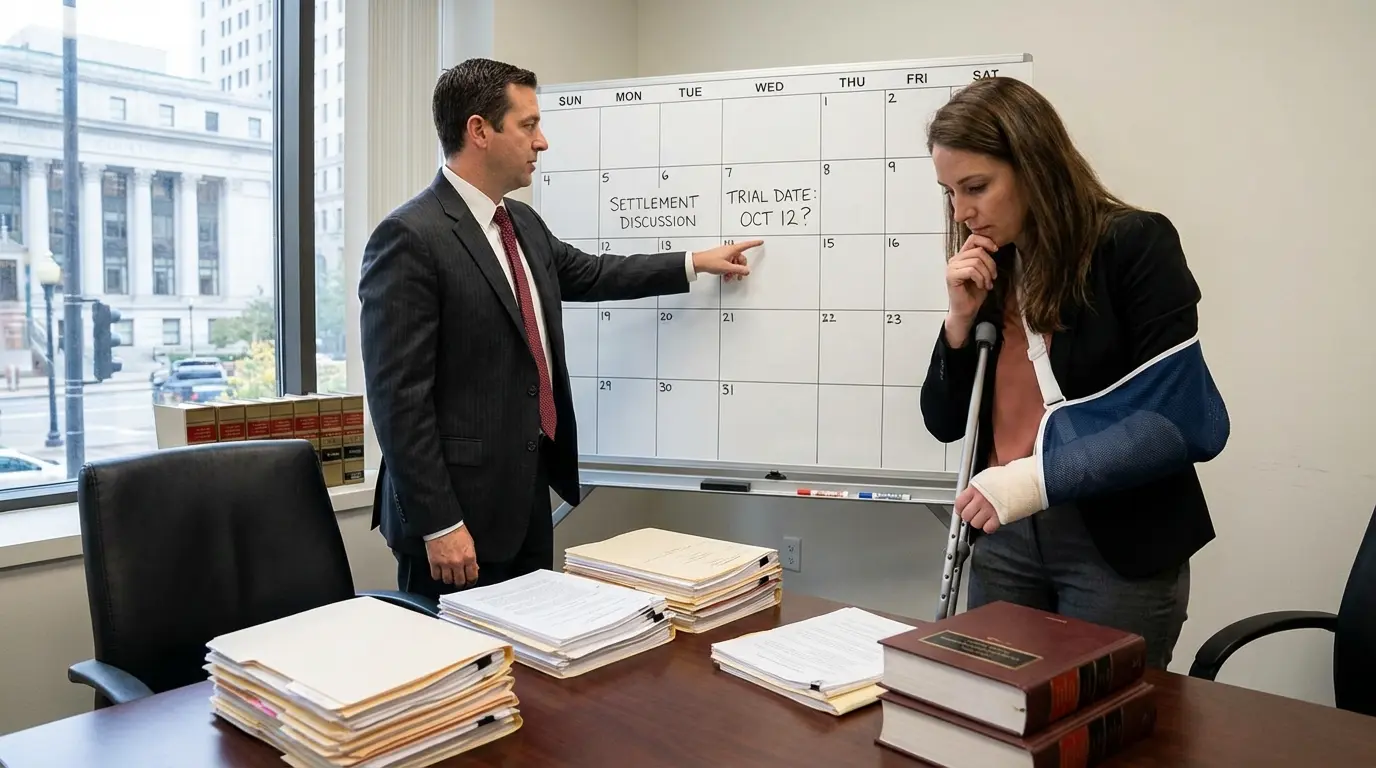
Personal injury cases can proceed to a full court trial, but this is somewhat rare. In fact, estimates show that less than 5% of these cases make it to trial, meaning that most injury claims are resolved through settlement.
Why Most Personal Injury Claims Settle
Most claims settle because settlement gives both sides a way to control cost, risk, and timing. Through settlement, you can avoid months of extra litigation and the insurer can avoid the expense and uncertainty of trial.
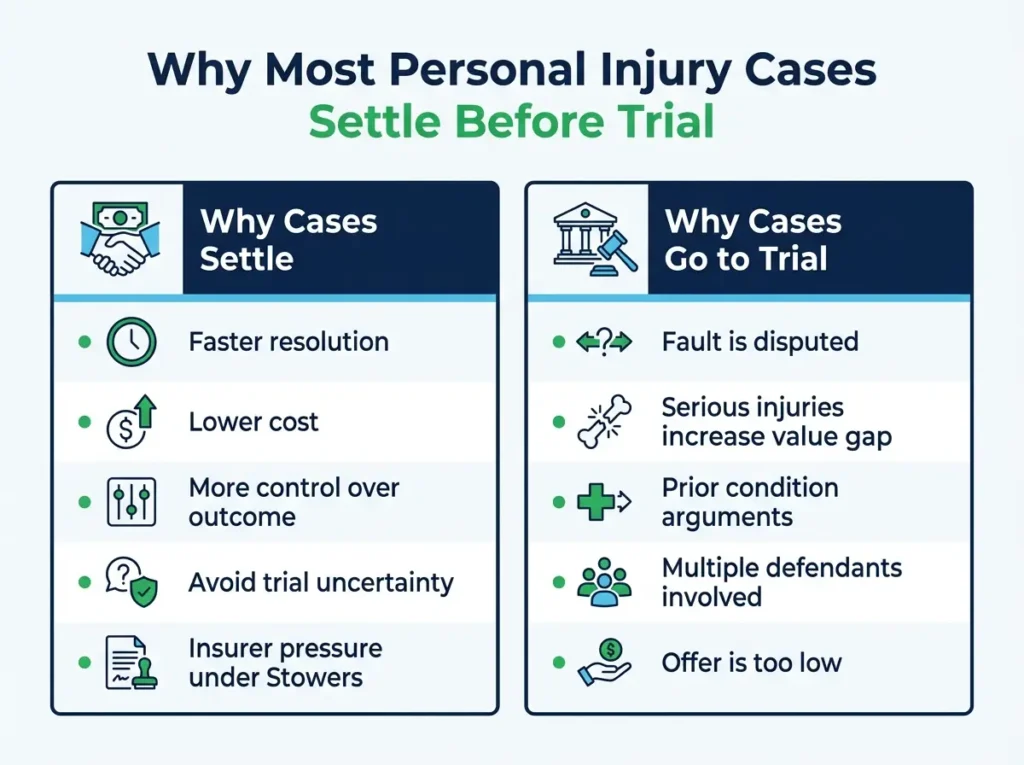
In Texas, a couple of specific factors often result in parties opting to settle, including:
- Texas Proportionate Responsibility: Under Texas Civil Practice and Remedies Code § 33.001, if a jury finds you more than 50% at fault, you recover nothing. Settlement allows both parties to agree on a certain number rather than gambling on a jury’s percentage-based verdict.
- The Stowers Doctrine: Texas law places a duty on insurance companies to act reasonably when they receive a settlement offer within policy limits. If an insurer rejects a reasonable settlement offer and a trial later results in a much higher verdict, the insurer may be liable for the full amount, even if it exceeds the policy limits. This creates massive pressure for insurers to settle early.
Ultimately, a strong settlement position is built long before any courtroom is entered. By securing medical records, photographs, and witness statements in the immediate aftermath of an accident, you create a factual record that is difficult to challenge.
This early preparation allows you to leverage Texas liability standards and the Stowers Doctrine more effectively, often compelling insurers to resolve the claim based on the weight of the evidence rather than the uncertainty of a trial.
Filing Suit Is Not the Same as Going to Trial
While filing a lawsuit means you should prepare for trial, it does not mean you are actually headed to a courtroom.
In Texas, the litigation process often serves as a series of pressure tests that encourage settlement before a jury is ever seated. Many cases settle after discovery begins, after depositions expose weak defenses, or after mediation forces both sides to evaluate real numbers.
Here are some situations that often result in settlement before trial:
- Discovery and depositions: Once a suit is filed, both sides exchange evidence. When depositions expose gaps in a defense or highlight the strength of your medical evidence, insurers often recalibrate their risk and offer higher settlements to avoid a public trial.
- Mandatory mediation: Many Texas courts require parties to attend mediation before a trial date is set. This structured negotiation forces both sides to evaluate the “real numbers” (the actual costs and risks of proceeding) often resulting in a resolution.
- Preparation as leverage: Insurers are more likely to offer fair terms when they see a case is trial-ready. By demonstrating a willingness to move forward with expert witnesses and a complete evidentiary record, you shift the negotiation from a hypothetical discussion to a high-stakes financial risk for the insurance company.
Ultimately, a well-prepared lawsuit often achieves its best result by proving that you are ready for a trial you hope to avoid. A case that is ready for trial often has a better chance of settling on fairer terms.
Ready to file a lawsuit? Our article “How Long Do I Have to File a Personal Injury Lawsuit in Texas?” can help you get started.
What Situations Can Push a Case Toward Trial?
Some factors can make settlement harder and warrant a trial.
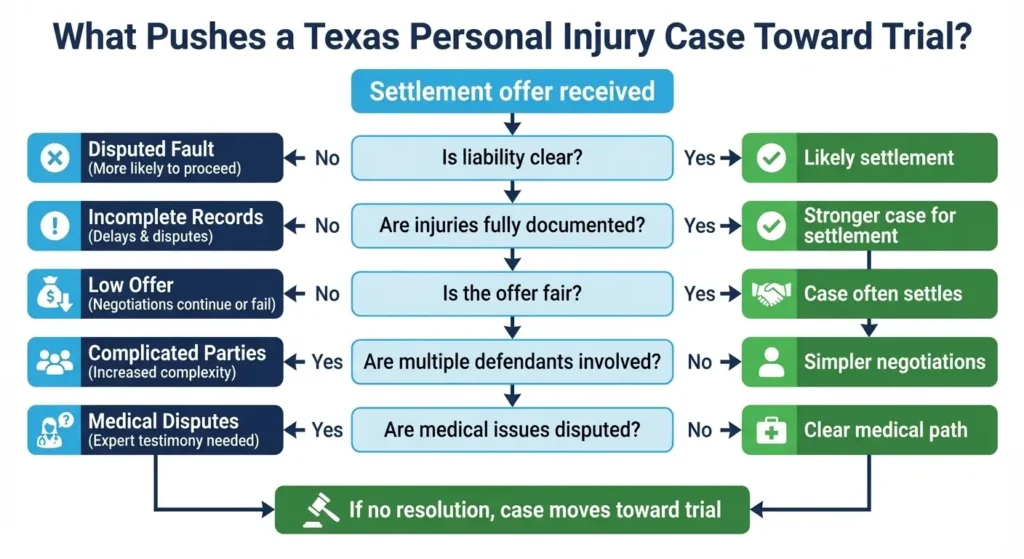
These issues commonly result in personal injury cases proceeding to trial:
- Liability is disputed, and the other side claims you caused the crash or fall.
- Your medical treatment is questioned, delayed, or blamed on a prior condition.
- The injury is severe, which raises the value gap between what you need and what the insurer wants to pay.
- Multiple defendants, insurance policies, or corporate parties can complicate the negotiations.
- A low offer leaves no practical room for compromise.
If any of those issues apply, you need a legal strategy built around proof, not hope. That is especially true in personal injury, where the details of fault, damages, and documentation often decide whether a case settles or keeps moving.
How Trial Preparation Affects Settlement Value
The strongest settlement position usually comes from serious trial preparation. That means collecting records, calculating future losses, identifying witnesses, preserving video, and working with experts when the injuries are significant.
Trial preparation not only shows the insurer you are serious, but it also helps inform your lawyer when a settlement is reasonable.
When Settlement May Be the Better Choice
A settlement may serve you better when liability is clear, coverage is limited, and the offer fully addresses your losses. It can also make sense when you want a faster resolution and the numbers are fair.
That does not mean you should accept the first offer. Before you sign anything, compare the proposal against your past bills, likely future care, lost income, pain, and the cost of unresolved risk. Work closely with your attorney to make a decision that best suits your needs and situation.
If you need a clear answer about whether to settle or keep pushing, get a free case review for your claim with Angel Reyes & Associates. Our attorneys have over three decades of experience fighting for our clients across Texas.
Whether you were involved in a car accident, truck accident, or any other personal injury case, we are available 24/7 to discuss your case. You may also use our case calculator for a preliminary valuation of your potential settlement.
Personal Injury Trial FAQs
What usually happens right before a personal injury case goes to trial?
Cases often go through written discovery, depositions, expert work, motions, and mediation before a trial date arrives. That process can narrow the issues and sometimes leads to settlema ent even late in the case.
How long does it take for a personal injury case to go to trial in Texas?
A straightforward personal injury case can often reach trial within 12 to 18 months, though more complex litigation or backed-up county dockets can extend that timeline to 2 or 3 years.
Is going to trial always better than accepting a settlement offer?
No. A trial can lead to a better result, but it also brings more risk, more delay, and less control over the outcome than a fair settlement.
How can you tell whether a low settlement offer should be rejected?
The key question is whether the offer reasonably covers your medical costs, lost income, future care, and the real effect of the injury on your daily life. If there is a major gap between the proof and the offer, the case may need to proceed to trial.
About the Authors

Spencer Browne
Writer
Spencer Browne is a partner at Angel Reyes & Associates and a Board Certified personal injury trial lawyer with nearly 100 jury trials across Texas. He focuses on car, truck, and wrongful death cases, with notable verdicts including a landmark win in the Choctaw Casino bus crash case. A recognized speaker and legal educator, Spencer is a member of the American Board of Trial Advocates and has been honored as a Texas Super Lawyer and one of D Magazine’s Best Lawyers in Dallas. He brings deep trial experience and relentless advocacy to every client he represents.

Kyle Nicolas
Editor
Kyle Nicolas is the Web Content & SEO Manager at Angel Reyes & Associates. He has more than 10 years of experience as a marketing co...

Angel Reyes
Reviewer
Angel L. Reyes, III is the Founder and Managing Partner of Angel Reyes & Associates. A nationally recognized trial attorney and business...