Bad Faith Insurance in Texas


Every article on this site is researched by our internal team, reviewed for legal accuracy against current Texas law, and held to State Bar of Texas advertising standards before publication. We do not publish content that overstates outcomes or makes promises about results.
Learn more about our
editorial standards .
Key Takeaways
- Texas Insurance Code Chapter 542 requires insurers to pay accepted claims within strict deadlines.
- Knowing violations of Chapter 541 can lead to treble damages, attorney fees, and 18% interest.
- Document every call, email, and offer to build a strong Texas bad faith insurance claim.
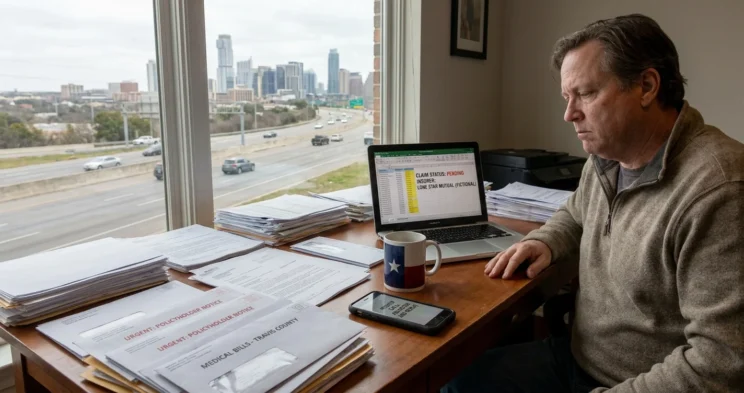
You filed a legitimate claim after a wreck on I-35 near downtown Austin, sent every document the adjuster asked for, then watched weeks turn into months with no decision. Your calls have gone unanswered. When the settlement offer finally arrives, it only covers a fraction of what your policy promised.
This pattern has a name in Texas law: bad faith insurance. Fortunately, you have real options when it happens to you.
What Is Bad Faith Insurance?
Bad faith insurance is when an insurer fails to handle your claim honestly and fairly. In Texas, this includes unreasonable delays, lowball offers, denying valid claims without investigating them first, and misrepresenting what your policy covers. Legally, your insurer is obligated to treat you fairly. It cannot legally delay, underpay, or avoid paying a claim that should be covered.
Texas law requires insurance companies to treat their customers honestly and fairly. This applies to the contract between you and your insurer. Texas courts enforce these rules, alongside other consumer protection laws. The Texas Insurance Code Chapter 541 details the specific practices that are considered unfair or deceptive in the insurance business.
There are two kinds of bad faith practices: first-party bad faith, and third-party bad faith. First-party bad faith involves your own insurance company refusing to honor your policy. Third-party bad faith happens when an insurer mishandles a claim made against one of its customers by another person. Most homeowner, auto, and health disputes in Texas are first-party bad faith cases.
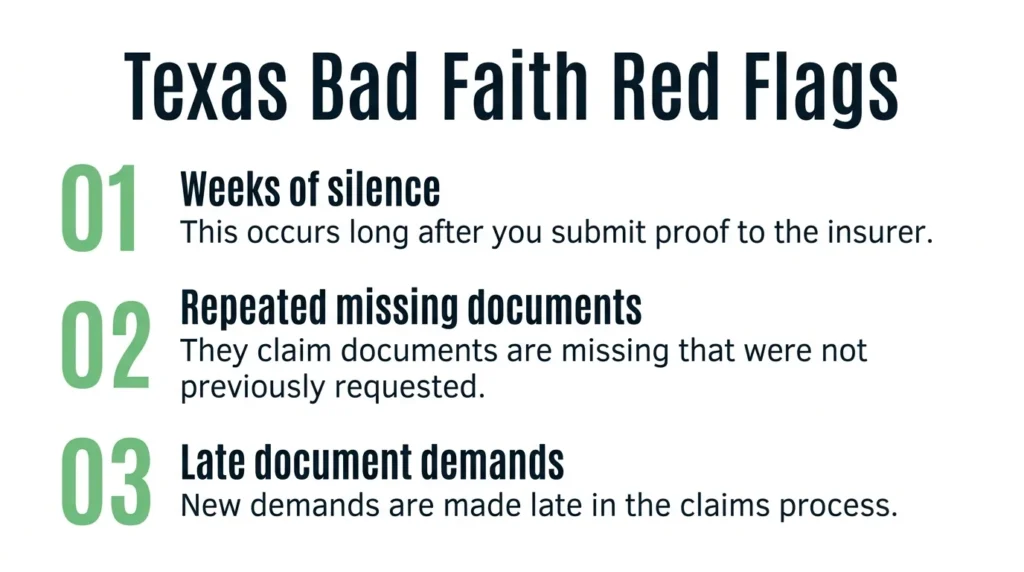
Common red flags of bad faith practices include weeks of silence after you submit proof of your losses, sudden requests for documents that the adjuster never mentioned earlier, and settlement offers that are much lower than the actual value of your damages. If your claim was denied for an unclear reason, our guide on what to do if your insurance claim is denied can walk you through the next steps.
Texas Insurance Code Requirements
The Texas Insurance Code has established hard rules for how insurers must handle your claim. Chapter 541 prohibits unfair settlement practices. Chapter 542 (often called the Prompt Payment of Claims Act) sets strict deadlines for acknowledging, investigating, and paying claims. Together, these chapters give you legal protections that go beyond what is detailed in your insurance policy.
Under Chapter 541, insurance companies are prohibited from lying about what a policy covers, refusing to settle a claim fairly when liability is clear, and refusing to pay a claim without properly investigating it. If an insurer violates these rules, they can face serious legal consequences, especially if they knowingly acted unfairly.
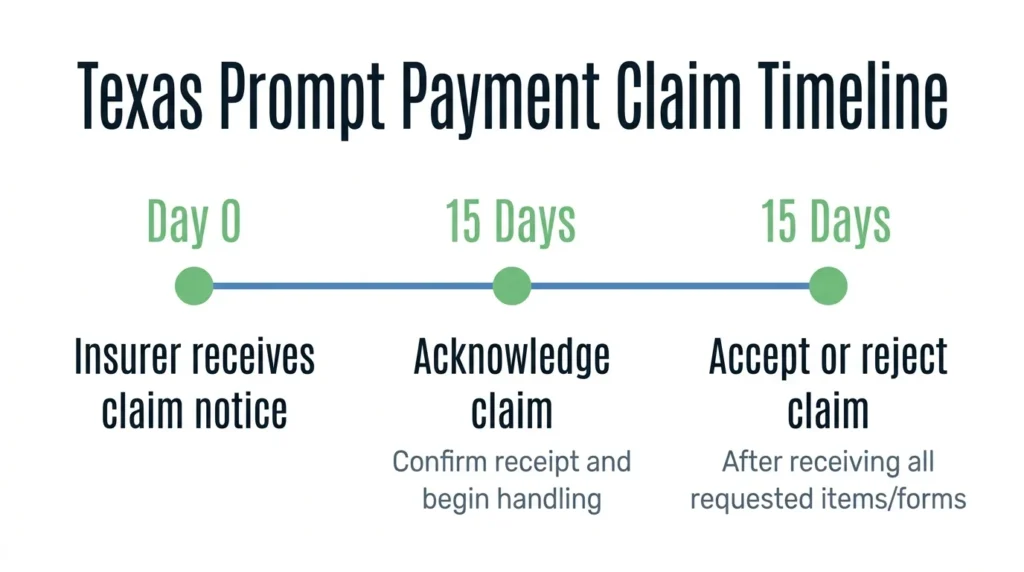
Texas Insurance Code Chapter 542 imposes specific timelines. Insurers generally must acknowledge a claim within 15 days of receiving notice. They must accept or reject the claim within 15 business days after receiving all items, statements, and forms required by the insurer to review the claim. Once the claim is accepted, payment is generally due within five business days.
Missing these deadlines requires the insurance company to pay extra penalties: an additional 18% annual interest on the amount owed, plus reasonable attorney fees. It’s important to know what your policy actually says, and our overview on understanding your insurance policy explains common insurance terms and language.
Proving Bad Faith Insurance Claims
To prove a bad faith insurance claim in Texas, you need to show that the insurer acted unreasonably and knew or should have known that their actions were unreasonable. Statutory claims under Chapter 541 require proof that the company’s unfair practices caused actual damages.
Strong cases are built on documentation, timelines, and a paper trail that exposes the insurer’s choices. Save every email, letter, and recorded message. Note the date and nature of every phone call with an adjuster. Keep copies of everything you send, and request written confirmation if the insurer asks for additional information. Patterns of repeatedly changing requirements or long periods of unexplained silence can become powerful evidence later.
Watch out for common defense tactics. Adjusters sometimes say they are missing documents that they never requested from you. They may claim policy exclusions that do not apply, or they may pressure you into a quick settlement before you understand the full extent of your losses. Our guide on dealing with insurance adjusters covers how to protect yourself in these conversations.
Texas generally applies a two-year statute of limitations to bad faith and Insurance Code claims, though specific deadlines depend on the facts. Speaking with an experienced insurance attorney early can help you preserve evidence and meet every filing deadline.
Damages & Legal Remedies
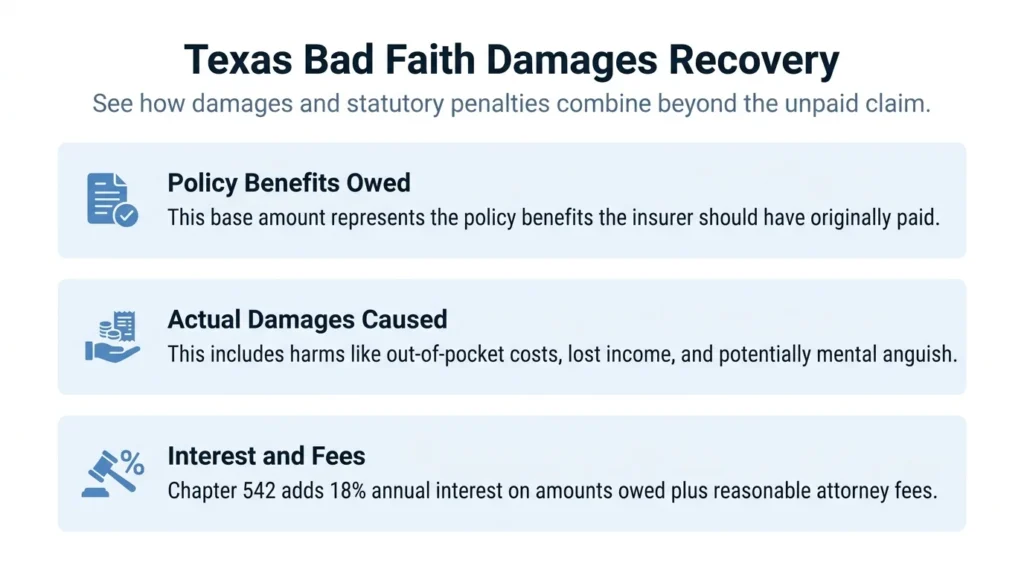
Texas law allows you to recover more than just your original insurance payment in a bad faith case. You can recover the money that the insurer refused to pay, plus extra damages caused by the delay or denial, such as out-of-pocket medical costs, lost income, and mental anguish. If legal requirements are met, the court may also add statutory penalties and require the insurance company to pay attorney fees.
The most powerful penalty is called treble damages. This means that if you prove the insurer knowingly committed unfair practices under Chapter 541, the court may award up to three times the amount of your actual damages. This provision exists to deter insurers from trying to save money by delaying or wrongfully denying claims instead of honoring them.
Chapter 542 adds extra penalties when insurance companies miss deadlines, including an 18% annual interest penalty and mandatory payment of attorney fees. These penalties stack on top of what the insurance company already owes you. For example, a $50,000 unpaid claim can become much larger once interest, attorney fees, and additional damages are included.
You can review outcomes from prior insurance disputes on our case results page.
You can also file a complaint with the Texas Department of Insurance, which investigates consumer complaints and takes administrative action against insurers. Filing a regulatory complaint doesn’t replace a lawsuit, but it can still help by putting pressure on the insurance company and creating an official record while your case proceeds.
Work With Angel Reyes & Associates
Insurance companies have lawyers and adjusters who are trained to protect their bottom line. You deserve the same level of advocacy. Angel Reyes & Associates brings over 30 years of experience handling insurance claims and bad faith disputes across Texas, with more than $1 billion recovered for clients.
We offer free initial consultations, and we work on a contingency basis, which means you pay no fees unless we win. We are available 24/7 in English and Spanish. If your insurer is delaying, denying, or lowballing a valid claim, contact us to talk about your options today.
Past results do not guarantee future outcomes.
Bad Faith Insurance FAQs
Can I sue my insurance company for bad faith if they eventually pay my claim?
Yes, you can still pursue a bad faith lawsuit even if your insurer eventually pays your claim. Delays that violate Texas Insurance Code deadlines can trigger penalties like 18% annual interest and attorney fees, regardless of whether payment ultimately occurs.
What happens if my insurance company goes out of business before they can pay my claim?
Texas has a guaranty association that helps protect policyholders if their insurer goes out of business. When this happens, the Texas Property and Casualty Insurance Guaranty Association steps in to cover most types of claims, but only up to statutory limits, and what you will get paid depends on the type of insurance policy you had with the company.
Do I need to file a complaint with the Texas Department of Insurance before filing a lawsuit?
No, you don’t have to file a regulatory complaint with TDI before pursuing a bad faith lawsuit in court. However, filing a TDI complaint can help by putting pressure on your insurer and creating an official record of how they handled your claim.
Can my insurance company cancel my policy after I file a bad faith claim?
Texas law prohibits insurers from canceling or refusing to renew policies as punishment for filing a legitimate claim or making a complaint. This constitutes additional unfair practices under Chapter 541 and may strengthen your bad faith case.
What is the difference between actual damages and treble damages in Texas bad faith cases?
Actual damages include your policy benefits, out-of-pocket costs, and other losses caused by the insurer’s conduct. Treble damages allow courts to award up to three times your actual damages when insurers knowingly violate Chapter 541.
About the Authors

Angel Reyes
Writer
Angel L. Reyes, III is the Founder and Managing Partner of Angel Reyes & Associates. A nationally recognized trial attorney and business leader, Angel has helped over 70,000 injury victims recover more than $1 billion since founding the firm in 1993. Named to the Texas Super Lawyers list annually since 2008, Angel brings Wall Street experience, Ivy League education, and a deep commitment to client advocacy. He is a frequent legal commentator and published author with extensive contributions to legal scholarship, trial strategy, and consumer protection.

Kyle Nicolas
Editor
Kyle Nicolas is the Web Content & SEO Manager at Angel Reyes & Associates. He has more than 10 years of experience as a marketing co...

Angel Reyes
Reviewer
Angel L. Reyes, III is the Founder and Managing Partner of Angel Reyes & Associates. A nationally recognized trial attorney and business...