Is Lane Splitting Legal in Texas?


Every article on this site is researched by our internal team, reviewed for legal accuracy against current Texas law, and held to State Bar of Texas advertising standards before publication. We do not publish content that overstates outcomes or makes promises about results.
Learn more about our
editorial standards .
Key Takeaways
- Texas Transportation Code Section 545.060 makes lane splitting illegal for all motorcyclists.
- Lane splitting can reduce or block injury recovery under Texas comparative negligence rules.
- Oklahoma, Arkansas, Louisiana, and New Mexico all ban lane splitting like Texas does.
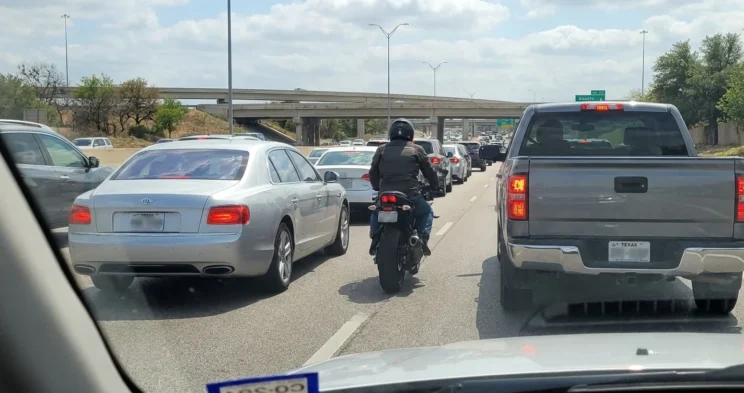
You’re stuck in stop-and-go traffic on I-35 outside Austin, and a motorcycle slips past your window, weaving between the lanes. You wonder whether that rider just broke the law, or whether Texas allows riders to split lanes. This depends on whether you are riding by yourself or sharing the road with other riders.
What Is Lane Splitting?
Lane splitting is the practice of a motorcyclist riding between two lanes of traffic moving in the same direction, usually to bypass congestion. Riders typically attempt it on highways during rush hour or at slowdowns where cars are crawling or stopped.
This maneuver is different from lane filtering, though people often confuse the two. Filtering refers to a motorcycle moving between stopped vehicles at an intersection, usually to reach the front of the line at a red light. Splitting happens at higher speeds in moving traffic.
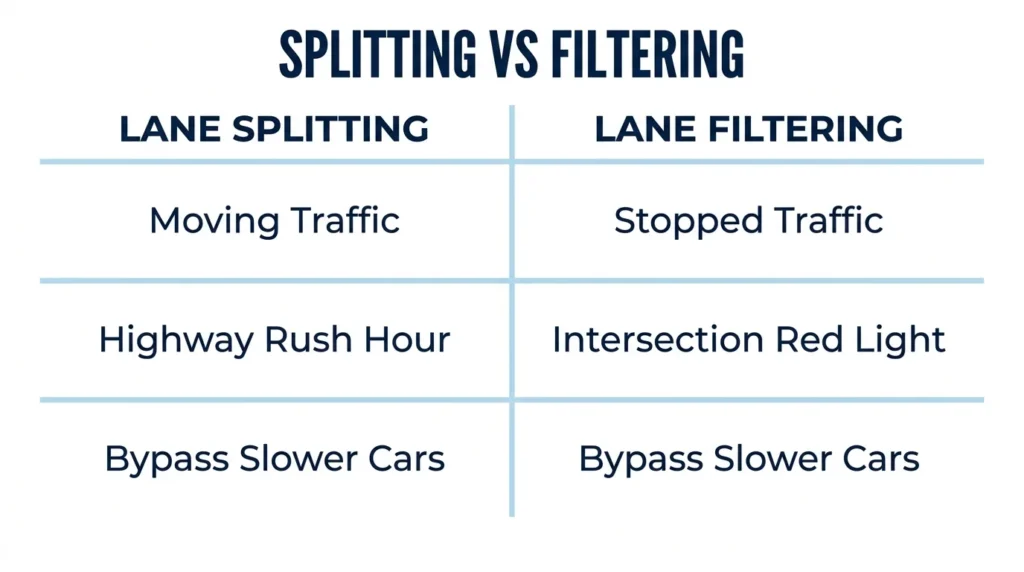
Both practices share the same goal: getting the bike past slower cars without waiting in a single lane.
Texas Transportation Code & Lane Splitting
Lane splitting is illegal in Texas. Under Texas Transportation Code (TC) § 545.060, motorists must stay entirely within a single marked lane whenever practical. Because Texas law classifies motorcycles as vehicles, this rule applies to riders as well, with no exceptions for two-wheeled traffic.
This statute also requires drivers to stay in their lane until they can change lanes safely. TC § 545.061 reinforces this by establishing rules that assume motorists will change only one lane at a time. That means that slipping between two lanes of moving traffic (lane splitting) violates both of these legal provisions.
Officers across Texas treat lane splitting as a moving violation. A citation typically results in a fine, court costs, and points on the driver’s record. Repeat violations can push insurance premiums higher and, in some cases, lead to license consequences.
Liability When Lane Splitting Causes Accidents
If a lane-splitting motorcyclist is involved in a crash, they may be found at fault. Texas uses a modified comparative negligence rule, which means an injured rider can recover damages only if they are 50% or less at fault. A rider caught splitting lanes when the collision happened will likely shoulder a meaningful share of the blame.
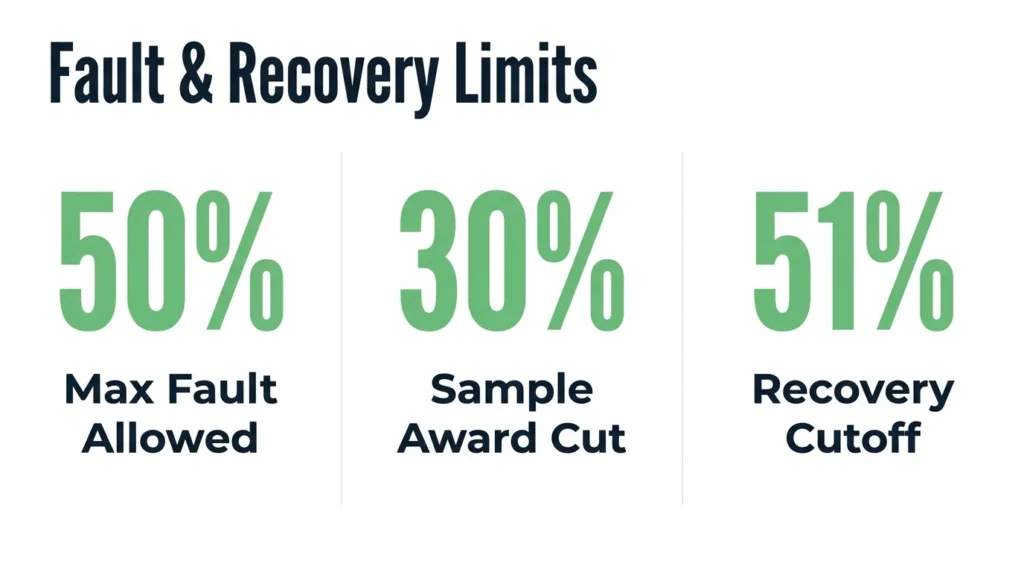
If a jury assigns a rider 30% fault for splitting lanes, any award gets reduced by 30%. If the rider crosses the 51% line, recovery drops to zero. Insurance adjusters know this and will use a lane-splitting violation to push settlement offers down in motorcycle accident claims.
Lane splitting can heavily impact your insurance coverage and financial recovery after an accident. Carriers often argue that an illegal maneuver voids certain coverages or reduces payouts. Even when the other driver clearly caused the impact, a lane-splitting motorcyclist may face a fight over medical bills and bike repairs. Understanding your legal options after a motorcycle accident can help protect your rights and recovery.
Get Help After a Texas Motorcycle Accident
Our attorneys at Angel Reyes & Associates have helped Texas motorcyclists navigate complex accident claims for decades. We work on a contingency fee basis, meaning that we charge no fees unless we win your case. Take a look at our case results to see how we have helped individuals through situations just like yours.
If you’ve been injured in a motorcycle accident, contact Angel Reyes & Associates today to discuss your legal options and protect your rights. We are available 24/7 to speak with you.
Texas Lane Splitting FAQs
How much is the fine for lane splitting in Texas?
Lane splitting fines vary by city and county, typically ranging from $100 to $300 plus court costs. The exact amount depends on local ordinances and whether it’s a first offense.
Can police pull you over just for lane splitting?
Yes, lane splitting is a primary offense in Texas, meaning officers can stop and cite you based solely on witnessing the violation. No other traffic violation needs to occur.
Does lane splitting count as reckless driving in Texas?
Lane splitting alone is typically cited as a lane violation, not reckless driving. However, if done at high speeds or in dangerous conditions, officers may add reckless driving charges.
Will my motorcycle insurance cover an accident if I was lane splitting?
Most insurance policies will still provide coverage, but your claim payout may be reduced based on your percentage of fault. Some insurers may raise your rates after a lane-splitting violation.
Are there any situations where lane splitting might be legal in Texas?
No, Texas law contains no exceptions for lane splitting under any circumstances. Emergencies do not create legal permission to ride between lanes.
About the Authors

Alex Ivanov
Writer
Alex Ivanov is a personal injury attorney at Angel Reyes & Associates, focused on car, truck, and motorcycle accident cases. Licensed in Texas and multiple federal districts, Alex brings international legal experience and a global education to his practice. He earned his LL.M. from Texas A&M University School of Law after graduating from Belarussian State University in 2016. Alex is fluent in Russian, English, Ukrainian, and Belarussian, and is recognized by multiple national trial lawyer associations for his results and leadership under 40.

Kyle Nicolas
Editor
Kyle Nicolas is the Web Content & SEO Manager at Angel Reyes & Associates. He has more than 10 years of experience as a marketing co...

Angel Reyes
Reviewer
Angel L. Reyes, III is the Founder and Managing Partner of Angel Reyes & Associates. A nationally recognized trial attorney and business...