Uber Accident With a Pre-Existing Injury in Texas


Every article on this site is researched by our internal team, reviewed for legal accuracy against current Texas law, and held to State Bar of Texas advertising standards before publication. We do not publish content that overstates outcomes or makes promises about results.
Learn more about our
editorial standards .
Key Takeaways
- A pre-existing condition does not bar your Uber crash claim under Texas injury law.
- Texas lets you recover for the aggravation a rideshare crash adds to an old injury.
- You usually have two years from the crash date to file your Texas injury lawsuit.
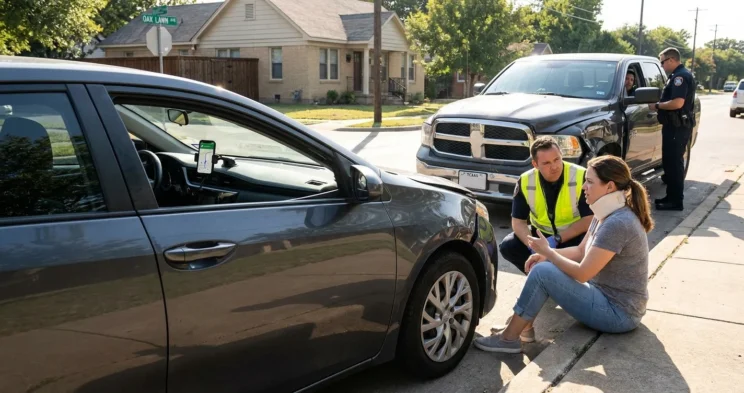
You were taking an Uber home from a late meeting near Congress Avenue when another driver ran a light and slammed into your side of the car. Your lower back, the same back that had surgery two years ago, now feels far worse than it did that morning. Now the adjuster keeps circling one question: wasn’t that pain already there?
Can You Still Recover With a Pre-Existing Injury?
Yes. A prior injury, surgery, or chronic condition does not disqualify you from compensation after an Uber crash. The law does not expect you to have been perfectly healthy before the wreck.
When an insurer points to your medical history, it is usually building one argument: that the crash did not cause your pain, so it should not have to pay. That argument sounds reasonable, but it is not how injury claims work.
A crash that makes an existing problem worse is still a harm someone caused you. You are not claiming the old injury. You are claiming the new damage from the wreck.
The size of that claim depends on real factors, not on whether your injury record is spotless.
How the Eggshell Plaintiff Rule Works in Texas
The eggshell plaintiff rule means the at-fault party takes you as they find you. If your body was more fragile going in, that is their problem, not yours. They are responsible for the full harm the crash caused, even harm a healthier person might have avoided.
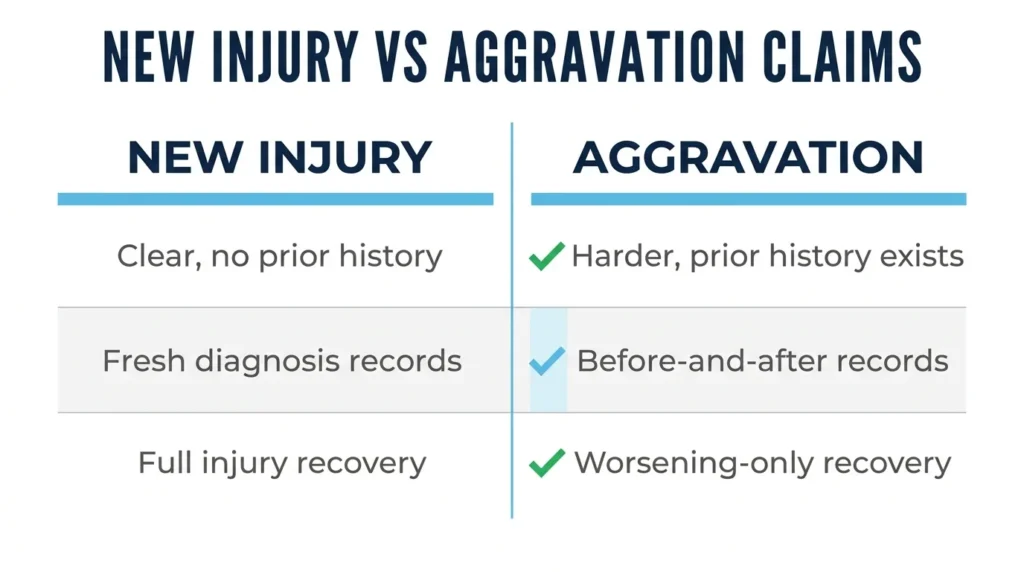
This protects you, but it does not erase a key distinction. Recovering for a brand-new injury and recovering for the worsening of an old one work differently.
- New Injury From the Crash: A new injury is the simpler case. The crash harmed a body part with no prior history, so the cause is clear. Your records center on the fresh diagnosis and the treatment that followed.
- Aggravation of a Pre-Existing Condition: A rideshare crash that aggravates an injury you already had is the harder case, but still a real claim. You recover compensation based on the worsening injury, such as the added pain, the new limits on what you can do, and the extra treatment you now need. This is why your old records help you instead of hurting you. They set the line that shows how much worse things got.
How Uber Insurance Coverage Applies
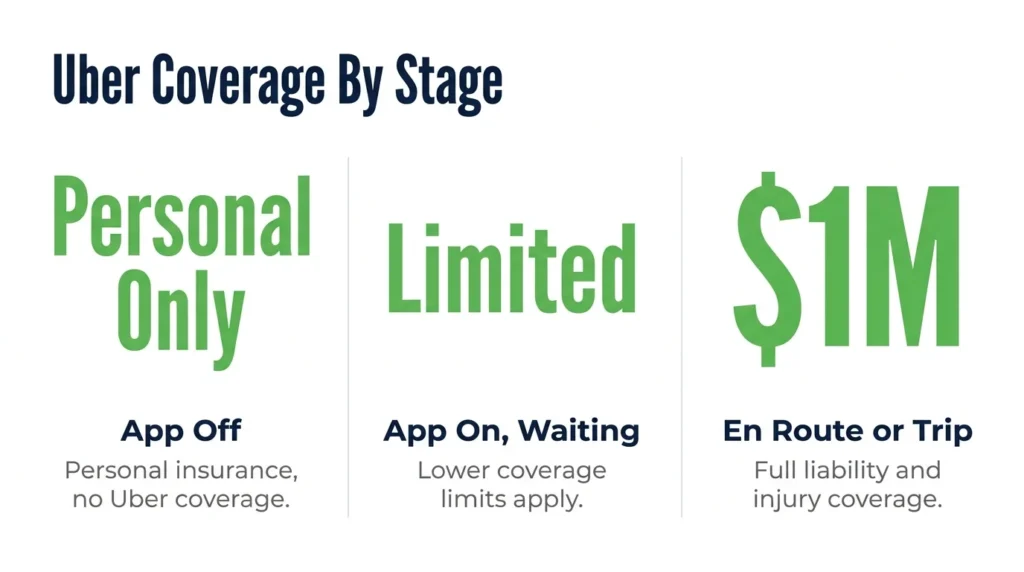
Which policy pays for your Uber crash depends on the driver’s app status at the moment of the wreck. Texas Insurance Code Chapter 1954 sets the coverage required at each stage of a trip. App off means only the driver’s personal policy; app on waiting means limited contingent coverage; en route or trip in progress means up to $1 million in coverage.
When fault is shared, Texas applies proportionate responsibility under the Texas Civil Practice and Remedies Code Chapter 33.
How Insurers Use the IME and Your Medical Records
Expect the adjuster to ask for years of prior medical records. This is a standard tactic to argue your pain predates the crash.
Consistent before-and-after documentation shows where you started and how far the crash set you back. You generally have two years from the crash date to file under Texas Civil Practice and Remedies Code (CPRC) Section 16.003.
Talk to a Knowledgeable Attorney
A pre-existing condition does not have to sink your Uber claim, but the insurer will treat your medical history as its best weapon. Angel Reyes & Associates has spent over 30 years helping injured Texans push back against insurance tactics like these.
We work on a contingency basis with no fee unless we win, and more than $1 billion recovered for clients. Contact us for a free consultation.
Past results do not guarantee future outcomes.
Uber Accident With a Pre-Existing Injury FAQs:
Do I have to tell the insurer about my pre-existing injury?
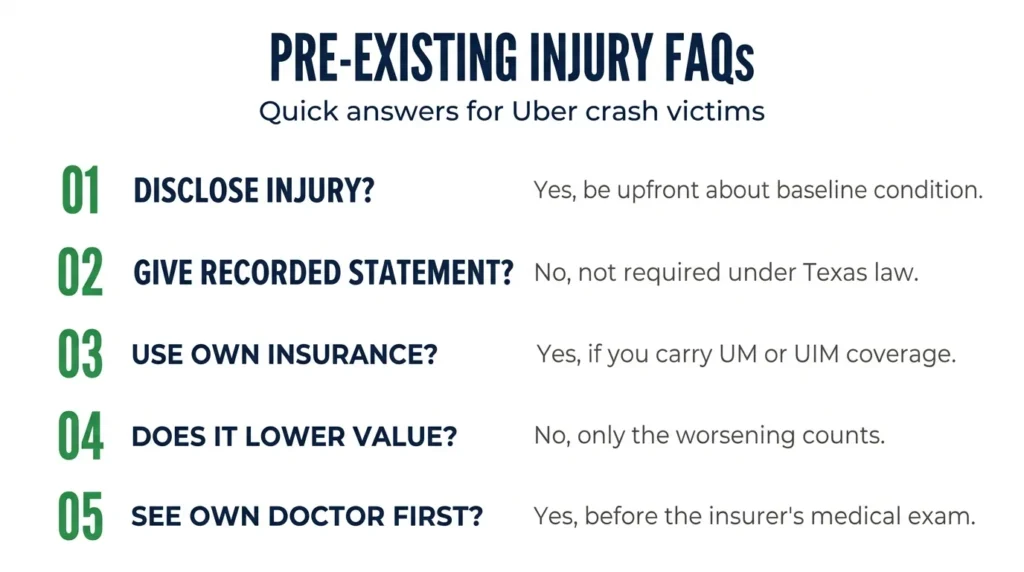
Yes. Hiding a prior injury can wreck your credibility. Being upfront lets you frame the old condition as a baseline the crash made worse.
Do I have to give the insurance company a recorded statement?
No. Texas law does not require you to give the at-fault insurer a recorded statement.
Can I use my own insurance if the Uber driver was off the app?
Possibly, if you carry uninsured or underinsured motorist coverage on your own policy.
Does a pre-existing condition lower how much my Uber claim is worth?
Not by itself. Your claim value reflects the worsening the crash caused.
Should I see my own doctor before the insurer's medical exam?
Yes. Consistent treatment from your own provider creates an independent record before you sit for an insurer-arranged exam.
About the Authors

Angel Reyes
Writer
Angel L. Reyes, III is the Founder and Managing Partner of Angel Reyes & Associates. A nationally recognized trial attorney and business leader, Angel has helped over 70,000 injury victims recover more than $1 billion since founding the firm in 1993. Named to the Texas Super Lawyers list annually since 2008, Angel brings Wall Street experience, Ivy League education, and a deep commitment to client advocacy. He is a frequent legal commentator and published author with extensive contributions to legal scholarship, trial strategy, and consumer protection.

Kyle Nicolas
Editor
Kyle Nicolas is the Web Content & SEO Manager at Angel Reyes & Associates. He has more than 10 years of experience as a marketing co...

Angel Reyes
Reviewer
Angel L. Reyes, III is the Founder and Managing Partner of Angel Reyes & Associates. A nationally recognized trial attorney and business...