Uber or Lyft Hit-and-Run Accidents in Texas


Every article on this site is researched by our internal team, reviewed for legal accuracy against current Texas law, and held to State Bar of Texas advertising standards before publication. We do not publish content that overstates outcomes or makes promises about results.
Learn more about our
editorial standards .
Key Takeaways
- Rideshare apps often identify a fleeing driver through trip, route, and vehicle records.
- The rideshare company's UM/UIM coverage can pay when an at-fault driver flees an active trip.
- Texas gives you two years from the crash date to file a hit-and-run injury claim.
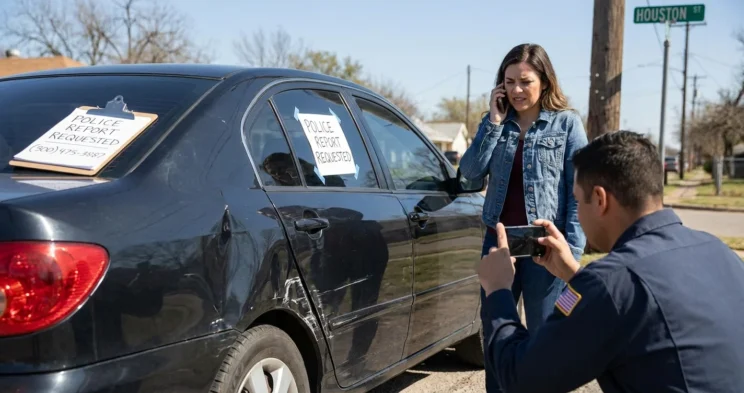
You were riding home from the Galleria one night when your Uber clipped another car and kept going. Or maybe you were the one hit, and the rideshare driver who caused it sped off before you could get a plate. Either way, the car is gone, your neck hurts, and you have no idea who pays for any of this.
You have more options than it feels like right now.
How an Uber Driver Hit-and-Run Works
A rideshare hit-and-run happens in one of two ways, and the difference shapes everything that follows. In the first, your Uber or Lyft driver causes a crash and then flees. In the second, another driver hits your active rideshare vehicle and disappears.
The detail that makes these cases different from an ordinary hit-and-run is the app. Rideshare platforms log the driver’s name, vehicle, trip, and route in real time.
So even when a driver physically leaves the scene, they are rarely as anonymous as a stranger who runs a light and vanishes. That record can follow them.
Right after the crash, though, none of that is on your mind. You feel stranded and unsure whether anyone is accountable when the at-fault car is already gone.
When the App Identifies the Fleeing Driver
Even if a Lyft driver leaves the scene, the platform usually knows exactly who they were. The app stores the driver’s name, license plate, trip timestamps, and GPS route, and that data does not disappear when the car does.
This changes your claim. An identified driver may shift your case away from a pure unidentified hit-and-run and toward the rideshare company’s liability coverage, depending on the driver’s status in the app.
That is why preserving evidence early protects what you can recover later. Take these steps as soon as you are safe:
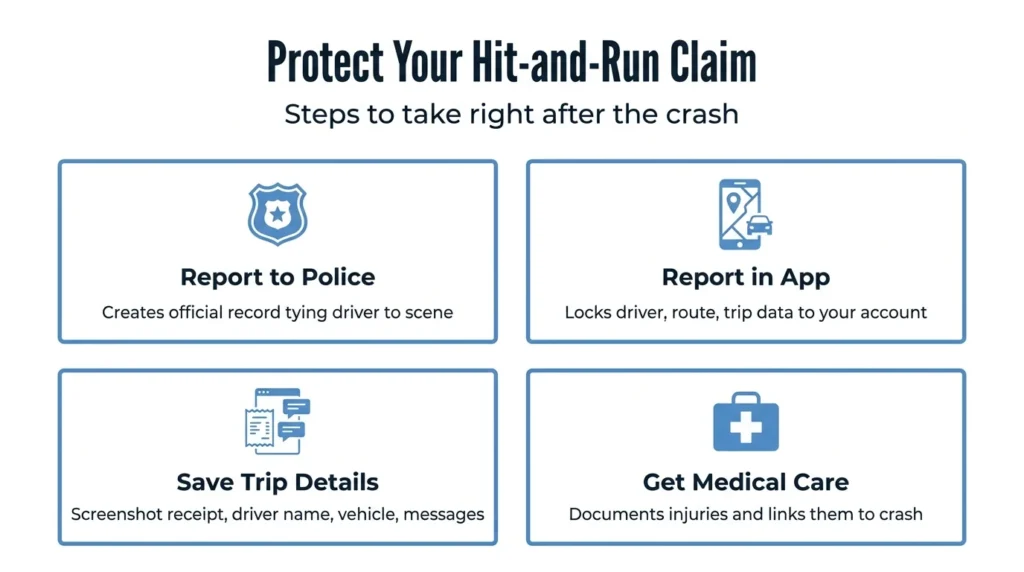
- Report the crash to the police. A report creates an official record and starts the paper trail that ties the driver to the scene.
- Report the trip inside the app. Uber and Lyft keep ride records that name the driver and map the route, so flagging the incident locks that data to your account.
- Save your own trip details. Screenshot the receipt, driver name, vehicle, and any messages before they scroll out of view.
- Get medical care quickly. A prompt exam documents your injuries and connects them to the crash.
An attorney can request the rideshare company’s trip data before it is buried, which often matters more than anything you do at the scene.
Which Insurance Pays After a Rideshare Hit-and-Run
Which policy pays depends on what the rideshare driver was doing in the app at the moment of impact. Texas law sets the coverage by app status under the Texas Insurance Code (Insurance Code) Section 1954.053.
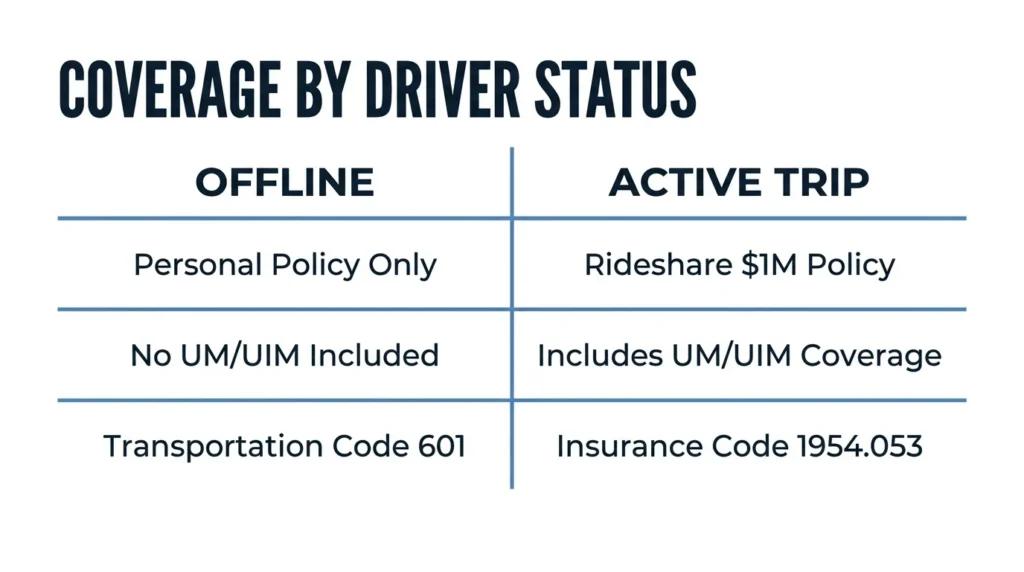
When the driver was offline and not logged in, only their personal auto policy applies. That falls under the standard Texas minimum coverage rules in the Texas Transportation Code (Transportation Code) Chapter 601, which can leave a serious injury badly underfunded.
Once the driver accepts a ride or carries a passenger, the picture improves. The rideshare company must carry up to $1 million in coverage during active trips, and that policy includes uninsured/underinsured motorist coverage that can factor in when an at-fault driver flees or carries no insurance.
So if another driver hit your active Uber and fled, the rideshare company’s coverage may be available to you. Whether you can also pursue the company directly is a separate question.
Uninsured Motorist Coverage
Uninsured motorist coverage steps in when the at-fault driver is never identified or carries no insurance at all. A driver who flees and stays unknown is the textbook case it was built for.
You may have two coverage layers to draw on. Your own auto policy can carry uninsured motorist coverage, and the rideshare company’s policy carries its own layer during active trips.
When both apply, they can sometimes stack, which is the difference between a state-minimum payout and one that actually covers your injuries.
Underinsured Motorist Coverage
Underinsured motorist coverage applies when the fleeing driver is later identified but carries too little insurance to cover the harm. The app’s records often make that identification possible.
This is where the rideshare context matters most. A driver who runs but gets named through the app may turn out to be underinsured, and underinsured motorist coverage fills the gap above their small policy.
Criminal Charges for Leaving the Scene
A driver who flees an injury crash commits a crime in Texas, separate from anything you pursue for your own losses. Drivers must stop and render aid under Texas Transportation Code Section 550.021, and failing to do so is its own offense.
The penalties scale with the harm. Leaving the scene of a crash that causes serious bodily injury is a felony, and it rises to a second-degree felony when someone dies.
A criminal case does not put money in your pocket. A prosecutor charging the driver does not pay your medical bills or replace your lost wages. Your injury claim runs on a separate track and is how you recover those costs.
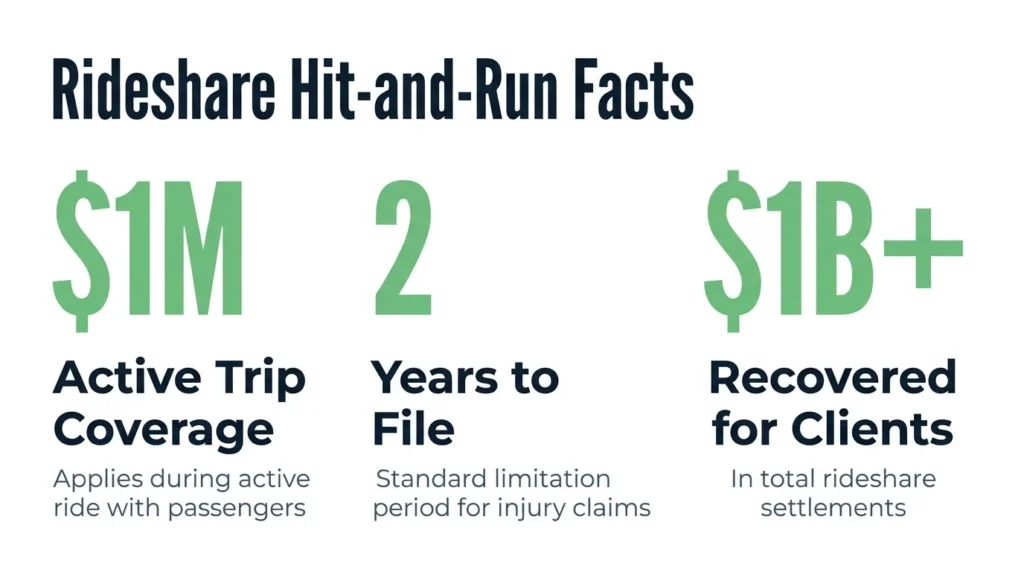
That track has a deadline. Texas generally gives you two years from the crash date to file a personal injury claim under Texas Civil Practice and Remedies Code (CPRC) Section 16.003.
Work with an Experienced Attorney
A rideshare hit-and-run can feel hopeless, but the app data, the layered coverage, and the filing deadline all work in your favor when you act early. Angel Reyes & Associates has spent over 30 years helping injured Texans untangle these situations, with more than $1 billion recovered for clients across the state.
We work on a contingency basis, so you pay no fee unless we win, and your first consultation is free. Our team can request rideshare trip records, identify every policy that might apply, and handle most of your case remotely.
If a driver fled after a crash involving an Uber or Lyft, reach out for a free consultation and learn more about how we handle Texas car accident claims. You can also read about our background and experience.
Past results do not guarantee future outcomes.
Uber & Lyft Hit-and-Run Accident FAQs
What if I was a pedestrian or cyclist hit by a rideshare driver who fled?
Pedestrian and cyclist claims work much like passenger claims, based on the driver’s app status at the time. If the driver was on an active trip, the rideshare company’s coverage may apply even though you were never in the car.
Does my insurer require a police report to pay a hit-and-run claim?
Usually yes. Most Texas insurers require you to report a hit-and-run to police, often within 24 hours, before they will pay an uninsured motorist claim.
Will filing an uninsured motorist claim raise my own insurance rates?
In most cases it should not, since you were not at fault for a hit-and-run. Some carriers may still factor repeated claims into renewal pricing, so ask your insurer how it handles not-at-fault claims.
Can Personal Injury Protection help while my hit-and-run claim is pending?
Yes. If you carry Personal Injury Protection (PIP), it can pay your medical bills and part of your lost wages quickly, no matter who caused the crash or whether the driver is found.
What if the rideshare driver was offline when another car hit me and fled?
When the driver was offline, the rideshare company’s policy does not apply, so you would look to the fleeing driver’s coverage or your own uninsured motorist coverage instead.
About the Authors

Angel Reyes
Writer
Angel L. Reyes, III is the Founder and Managing Partner of Angel Reyes & Associates. A nationally recognized trial attorney and business leader, Angel has helped over 70,000 injury victims recover more than $1 billion since founding the firm in 1993. Named to the Texas Super Lawyers list annually since 2008, Angel brings Wall Street experience, Ivy League education, and a deep commitment to client advocacy. He is a frequent legal commentator and published author with extensive contributions to legal scholarship, trial strategy, and consumer protection.

Graham Griffin
Editor
Graham Griffin is the Web & Content Manager at Angel Reyes & Associates, where he oversees content strategy, AI-powered workflows, a...

Angel Reyes
Reviewer
Angel L. Reyes, III is the Founder and Managing Partner of Angel Reyes & Associates. A nationally recognized trial attorney and business...