When Do Most Car Accidents Happen?


Every article on this site is researched by our internal team, reviewed for legal accuracy against current Texas law, and held to State Bar of Texas advertising standards before publication. We do not publish content that overstates outcomes or makes promises about results.
Learn more about our
editorial standards .
Key Takeaways
- Texas crashes peak at 5-6 PM, but fatal crashes peak hours later at night.
- Overnight hours from midnight to 5 AM carry the highest fatal crash rate.
- Weekend nights and alcohol raise crash severity risk after dark.
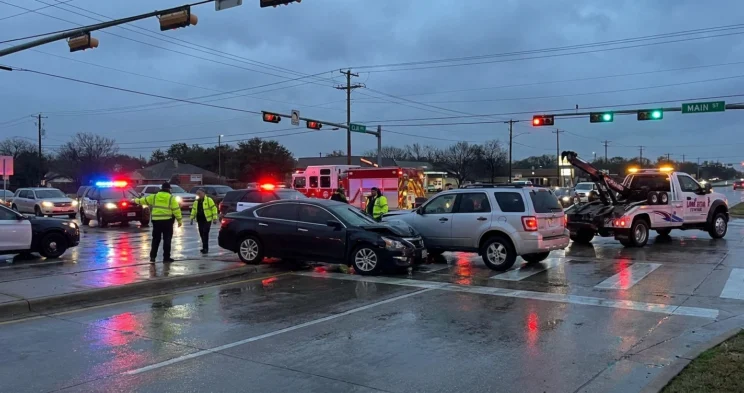
Most car accidents in Texas happen during the weekday evening commute. The crashes most likely to turn deadly tend to occur later, after traffic has eased. TxDOT data shows when the roads are busiest and when crashes carry the greatest risk.
The TxDOT Data Behind These Crash Patterns
The figures in this guide come from the Texas Department of Transportation’s Crash Records Information System, the state database built from Texas Peace Officer’s Crash Reports. The primary source is TxDOT’s Texas Motor Vehicle Traffic Crash Facts, Calendar Year 2025, which includes reports processed through April 7, 2026.
The 2025 figures were also compared with TxDOT’s 2024 data to identify patterns that continued across both years. Calendar year 2025 is the most recent complete dataset available. Individual records can be searched through TxDOT’s CRIS Query tool.
The same data also reveals significant differences across the state, including the Texas counties with the highest numbers of deadly crashes.
The Hours When Crashes Happen Most Often
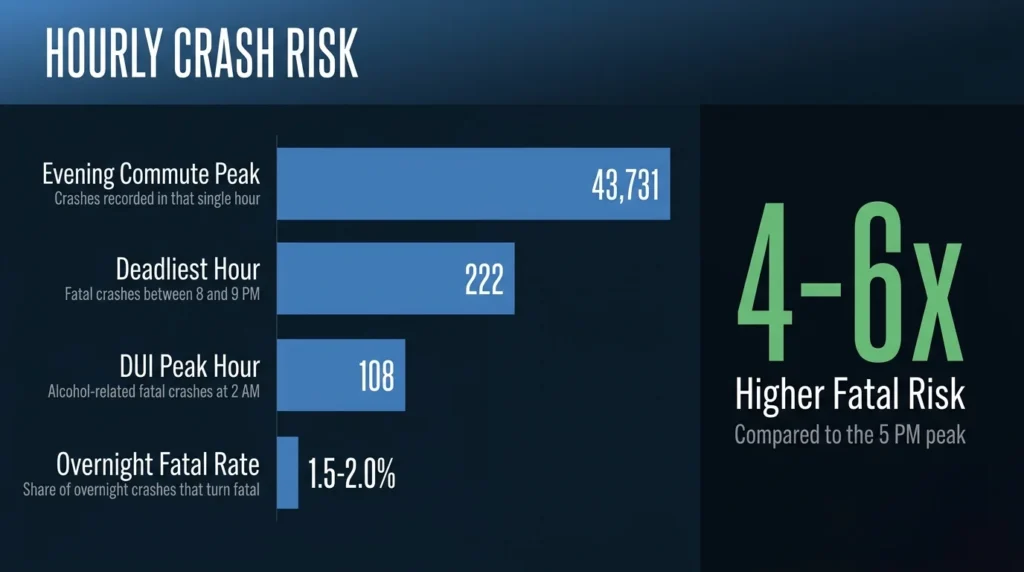
The busiest hour on Texas roads is 5:00 to 5:59 PM. TxDOT’s hour-by-hour crash data for CY2025 recorded 43,731 crashes statewide in that single hour, the weekday evening commute peak.
The single hour with the most fatal crashes was 8:00 to 8:59 PM, with 222 fatal crashes, two to three hours after the volume peak. TxDOT’s published counts also show how the percentage of fatal crashes changes throughout the day. The overnight hours from roughly midnight to 5 AM carry the highest share, between about 1.5% and 2.0%, compared to roughly 0.3% during the 5 PM peak.
That’s four to six times higher, even with far fewer cars on the road overnight. This comparison uses our calculation based on TxDOT’s published hourly counts, rather than a figure reported directly by the agency.
Alcohol contributes to the overnight risk. TxDOT’s DUI-related fatal crash data shows 2:00 to 2:59 AM as the single highest hour for alcohol-related fatal crashes in CY2025, with 108 crashes, more than any other hour of the day.
The prior year shows the same pattern. In CY2024, the peak volume hour was also 5:00 to 5:59 PM, and the peak fatal hour fell from 9:00 to 9:59 PM.
The exact hour changes, but the highest number of fatal crashes consistently falls between 8 PM and 10 PM, a few hours after crash volume peaks. These hourly figures also contribute to Texas’s average daily crash totals.
The Days That Carry the Most Risk
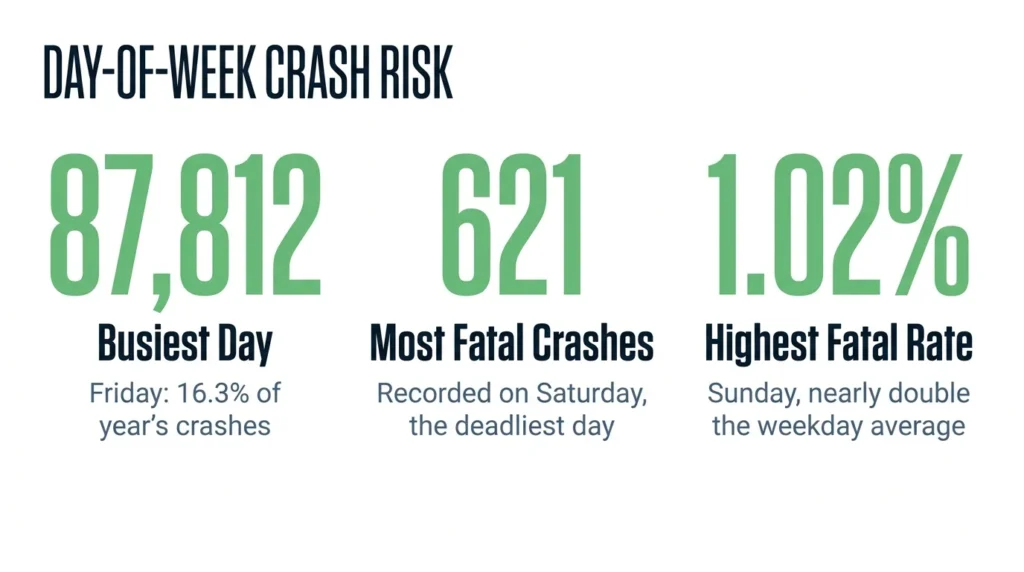
Friday is the busiest day of the week on Texas roads, with 87,812 crashes in CY2025, about 16.3% of the year’s total. Friday’s fatal rate, 0.60%, sits close to the weekday average.
Saturday had the most fatal crashes of any single day, 621. Saturday and Sunday both carry the highest fatal rates of the week, 0.85% and 1.02% respectively, roughly double the 0.52% to 0.56% fatal rate seen Monday through Thursday.
The highest-risk hour-and-day combination was Sunday from 2:00 to 2:59 AM. That figure reflects crashes occurring after midnight following Saturday night activities rather than a broader risk associated with daytime driving on Sunday.
TxDOT’s CY2024 hour-and-day report shows a similar pattern. Friday had the most crashes, Saturday had the most fatal crashes, and Saturday and Sunday had the highest fatal crash rates.
How Crash Risk Shifts Through the Year
October was the busiest month for crashes in CY2025, with 50,494 crashes recorded in TxDOT’s monthly crash breakdown. March was the deadliest month, with 342 fatal crashes, narrowly ahead of August’s 337.
The busiest month and the deadliest month were not the same, echoing the pattern seen by hour and day. TxDOT’s CY2024 monthly report shows October itself was the deadliest month that year, with 347 fatal crashes.
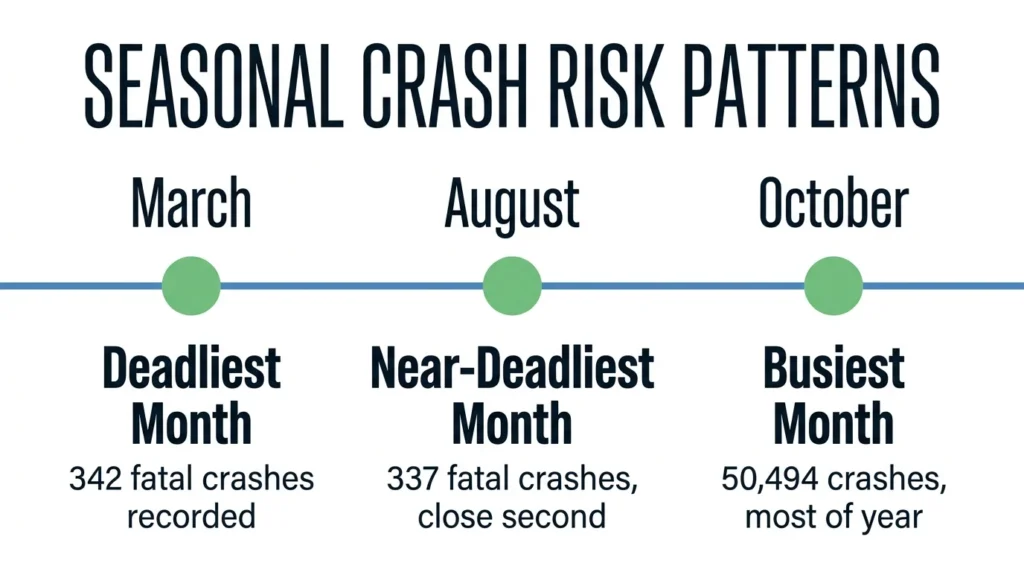
The comparison shows that the deadliest month can change from year to year, and the month with the most crashes is not always the month with the most fatal crashes.
What These Patterns Mean If You’re Hurt in a Texas Car Crash
TxDOT’s data shows several consistent patterns:
- Crashes are most likely during the weekday evening commute, roughly 4 to 6 PM.
- The odds that a crash turns fatal are highest overnight, roughly midnight to 5 AM, and on weekend nights following Friday and Saturday driving.
- Alcohol is a recurring factor in the deadliest overnight hours, especially around 2 to 3 AM.
- TxDOT’s public data splits crashes into fatal and non-fatal only, with no hour-by-hour breakdown of injury severity available. “Peak injury hours” in this guide refers to the fatal-crash data, the closest available proxy.
- Texas recorded 3,769 traffic fatalities and 3,476 fatal crashes statewide in CY2025.
The time of the crash does not change the steps you should take afterward. After a Texas car accident, protecting your health, documenting the scene, and preserving evidence remain important whether the collision happened at 5 PM on a Friday or 2 AM on a Sunday.
Hurt in a Car Accident? Talk to Angel Reyes & Associates
No matter when your crash happened, the road ahead can feel confusing. Angel Reyes & Associates has guided injured Texans through situations like this for over 30 years.
A free consultation costs you nothing and gives you a clear picture of your options. Contact Angel Reyes & Associates to talk through what happened and what comes next.
Past results do not guarantee future outcomes.
Texas Car Accident Timing FAQs
Are car accidents more common on highways or city streets in Texas?
Car accidents occur on both highways and city streets, but collision types can differ based on traffic conditions, speed limits, and road design. Highways generally involve higher travel speeds, while city streets have more intersections, turning vehicles, and interactions with pedestrians.
Does rush hour traffic increase the risk of rear-end collisions?
Heavy traffic creates frequent stopping and slowing, which can increase the risk of rear-end collisions when drivers follow too closely or become distracted. Sudden braking, limited following distance, and stop-and-go conditions can contribute to these crashes.
How does bad weather affect car accident risk in Texas?
Rain, fog, and icy conditions can reduce visibility and make it harder for drivers to maintain control of their vehicles. Under Texas law, drivers must adjust their speed to account for weather, road conditions, and other circumstances that affect safe travel.
Can you file a car accident claim in Texas if the crash happened late at night?
Yes. The time of a collision does not prevent an injured person from pursuing compensation, although limited visibility, driver fatigue, and other nighttime conditions may be relevant when determining fault.
How long do you have to file a car accident lawsuit in Texas?
Under Texas Civil Practice and Remedies Code Section 16.003, you must file most personal injury lawsuits arising from car accidents within two years of the date the claim arises. Certain exceptions may affect this deadline, so the time available to file depends on the circumstances of the case.
About the Authors

Spencer Browne
Writer
Spencer Browne is a partner at Angel Reyes & Associates and a Board Certified personal injury trial lawyer with nearly 100 jury trials across Texas. He focuses on car, truck, and wrongful death cases, with notable verdicts including a landmark win in the Choctaw Casino bus crash case. A recognized speaker and legal educator, Spencer is a member of the American Board of Trial Advocates and has been honored as a Texas Super Lawyer and one of D Magazine’s Best Lawyers in Dallas. He brings deep trial experience and relentless advocacy to every client he represents.

Kyle Nicolas
Editor
Kyle Nicolas is the Web Content & SEO Manager at Angel Reyes & Associates. He has more than 10 years of experience as a marketing co...

Angel Reyes
Reviewer
Angel L. Reyes, III is the Founder and Managing Partner of Angel Reyes & Associates. A nationally recognized trial attorney and business...