Why Do Truck Brakes Fail?


Every article on this site is researched by our internal team, reviewed for legal accuracy against current Texas law, and held to State Bar of Texas advertising standards before publication. We do not publish content that overstates outcomes or makes promises about results.
Learn more about our
editorial standards .
Key Takeaways
- Federal law requires carriers to systematically inspect and maintain truck brakes.
- Brake fade, bad adjustment, air loss, and contamination can all cause failures.
- Maintenance records, DVIRs, and inspection history can help challenge a claim that the brake failure was sudden and unexpected.
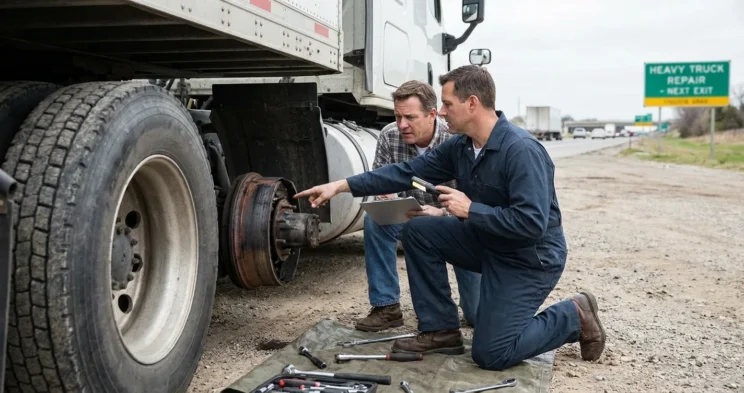
You pull up the crash report and see two words: “brake failure.” It sounds like an explanation, but it is really just the beginning of the investigation. To understand who may be responsible, you have to look beyond the words “brake failure” and determine what went wrong, and whether someone should have caught the problem before the crash.
Truck brakes do not fail without a cause. Problems such as worn components, inadequate maintenance, or defects can contribute to a loss of braking ability, and federal safety rules require trucking companies to identify and address dangerous conditions before putting a truck on the road.
This guide explains why truck brakes fail, the legal safety duty that every trucking company operating in Texas owes to people sharing the road, and how the records that trucking companies must keep can show whether a claim that “the brakes just went out” tells the whole story.
Commercial Truck Maintenance Requirements in Texas
Every commercial truck on a Texas highway is subject to a federal rule that sets clear maintenance requirements. Under 49 CFR § 396.3, every trucking company must “systematically inspect, repair, and maintain” every vehicle it controls. This includes keeping brakes and other safety equipment in safe and proper working condition at all times.
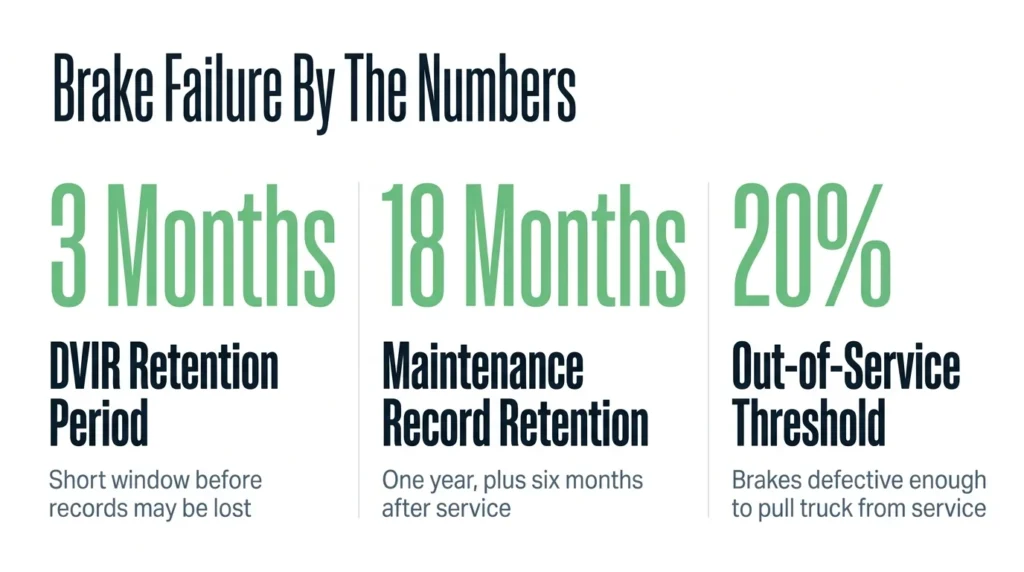
This is not a once-a-year requirement. The rule requires an ongoing, systematic maintenance program, and trucking companies must keep maintenance records for each truck. Those records must be kept where the truck is housed or maintained for one year, plus six months after the truck leaves the carrier’s control.
Texas does not have a separate brake standard for commercial trucks. 37 Texas Administration Code § 4.11 adopts federal safety rules for trucking companies operating in Texas. That means a trucking company hauling loads through Dallas or along I-35 generally has the same maintenance duties under Texas law as those required by federal regulations.
Four Main Causes of Truck Brake Failure
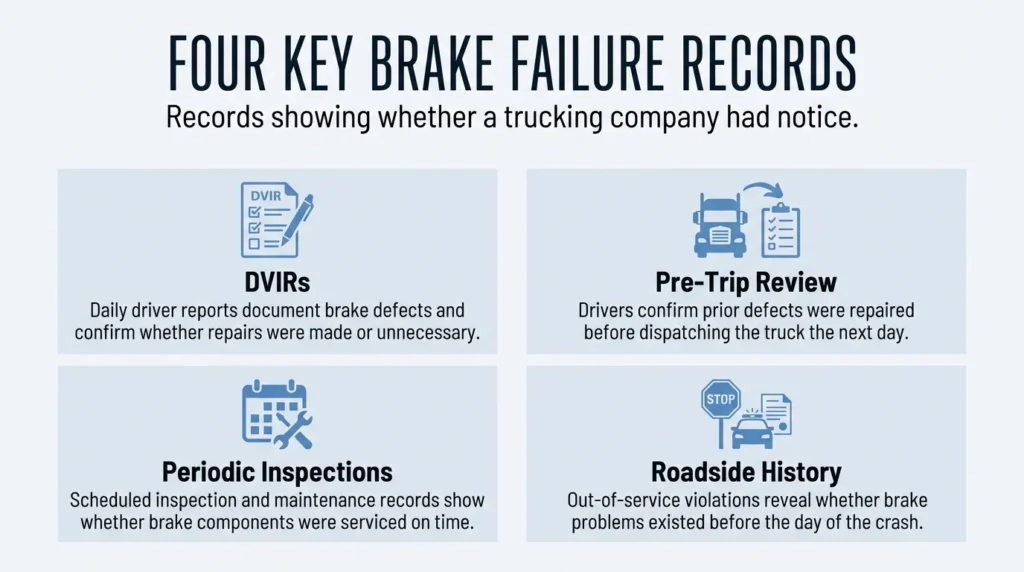
Truck brake failure generally falls into one of four major problems. Each has its own cause, and each is the type of problem that a systematic maintenance program is designed to identify and fix before it becomes dangerous.
- Brake fade: Braking turns motion into heat. When a truck brakes repeatedly or heavily, the brakes can build up more heat than they can release. The friction material may then lose effectiveness, causing brake fade. Brake fade may also leave no obvious defect for an inspector to find. A truck can appear mechanically sound during an inspection but still lose stopping power once its brakes heat up on the road.
- Out-of-adjustment brakes: Federal law also sets specific limits for brake adjustment. 49 CFR § 393.47 requires brake components to be maintained, so they prevent excessive fading and grabbing. It also sets limits on how far brake components can wear before adjustment is required. 49 CFR § 393.53 also requires automatic brake adjusters and adjustment indicators to be installed on air-braked trucks built after October 20, 1994. An out-of-adjustment brake may provide less stopping force than intended. Roadside inspections frequently identify brake adjustment as a serious maintenance problem.
- Air loss: Air brakes rely on pressure to work safely. A leaking line, failed valve, failed compressor, or moisture in the system can cause air pressure to drop. If the pressure falls too low, the truck may not be able to apply its service brakes properly. The low-air warning may activate, and the spring brakes may automatically apply as an emergency measure. A slow leak may go unnoticed until a warning buzzer or dashboard light activates. A ruptured line or a major valve failure can cause a sudden loss of pressure. Uneven air loss can also affect braking balance. These problems are the kinds of conditions that a trucking company’s maintenance program should identify through inspections and driver reports, including reports of hissing air, slow pressure buildup, or warning lights.
- Contamination: Brakes depend on friction, so their braking surfaces must stay clean. Oil, grease, hydraulic fluid, or water on a truck’s drums, rotors, shoes, or pads can significantly reduce friction, even when the mechanical parts are otherwise intact. A leaking wheel seal or axle grease can allow grease to reach the drum lining. Water entering a hydraulic brake system can also lower the brake fluid’s boiling point, making brake fade more likely. Like the other failure modes, contamination can point to a maintenance problem, leaking seal, or worn gasket that a systematic inspection program should identify before it affects braking performance.
Four Records That Can Help Prove Truck Brake Failure
A trucking company may describe brake failure as “sudden and unforeseeable.” Federal records can help test that claim by showing whether the truck was properly inspected, maintained, and repaired.
Four types of records can help answer whether “the brakes just went out” or the trucking company had notice of the problem long before the crash:
- Driver vehicle inspection reports (DVIRs): Under 49 CFR § 396.11, drivers must complete a signed report at the end of each day, covering the truck’s service and parking brakes, and any other safety-related defects they find. The trucking company must then certify that any reported defects were repaired or did not require repair.
- Pre-trip review: Under 49 CFR § 396.13, a driver must review the prior day’s inspection report and sign to confirm that any required repairs were completed before operating the truck. If a brake problem was reported one day, and the truck was dispatched the next day without documentation showing that it was repaired, that could raise questions about whether the trucking company properly addressed the problem.
- Periodic inspection records: 49 CFR § 396.17, along with the maintenance records required under § 396.3(b), can show whether brake components were inspected and serviced on schedule. These records can also reveal whether the trucking company performed the reported repairs or just produced paperwork documenting them without supporting repair records.
- Roadside inspection and out-of-service history: A truck can be placed out of service when 20% or more of its service brakes have defects, such as being out of adjustment or inoperative. A history of brake violations involving the same truck or fleet can make it harder for a trucking company to claim that a brake failure on the day of the crash was completely unexpected.
Once a crash happens and a lawsuit becomes reasonably likely, a trucking company may have a duty to preserve relevant evidence, including maintenance records, DVIRs, electronic control module data, and the truck itself. Failing to preserve this evidence can lead to court sanctions and may weaken the trucking company’s position about the cause of the brake failure.
Talk to an Attorney About Your Brake Failure Related Truck Crash
If you or someone you love was injured or killed in a Texas truck crash where brake failure is suspected, you do not have to accept a trucking company’s explanation without investigating what happened.
Angel Reyes & Associates has guided injured Texans through situations through truck accident claims for over 30 years, and we have recovered over $1 billion for our clients. We work on contingency, which means you pay no fee unless we win your case, and we can handle the majority of your case remotely.
Contact Angel Reyes & Associates for a free consultation to understand what may have caused the brake failure, and what maintenance records, DVIRs, and other inspection records may reveal about the crash.
Past results do not guarantee future outcomes.
Brake Failure FAQs
Is a trucking company automatically liable if its brakes fail in a crash?
No single set of facts makes a trucking company automatically liable. Under § 49 CFR 396.3, federal law requires trucking companies to systematically inspect, repair, and maintain their trucks, including the brakes. Liability generally depends on whether the trucking company met that duty or knew about a brake problem and failed to fix it. Maintenance records, DVIRs, and roadside inspection history can help show whether the failure resulted from a maintenance problem or was truly unforeseeable.
How long do trucking companies have to keep brake maintenance and inspection records?
Under § 49 CFR 396.3(b), a trucking company must keep maintenance records for each truck at the location where the vehicle is housed or maintained for one year, plus six months after the truck leaves the company’s control. DVIRs documenting brake defects and repairs under § 49 CFR 396.11 must be kept for only three months. That shorter retention period is one reason these records may be lost unless they are specifically preserved after a crash makes a claim reasonably likely.
What should I do if I suspect brake failure caused my truck accident in Texas?
Get medical attention and make sure a police report is filed if one has not already been completed. Preserve or photograph anything at the scene connected to the brakes, such as skid marks or how the truck came to rest. Trucking companies are only required to keep some records (like DVIRs) for a few months, so it helps to act quickly to request or preserve maintenance records, periodic inspection history, and any available electronic control module data before they are lost or routinely discarded.
About the Authors

Angel Reyes
Writer
Angel L. Reyes, III is the Founder and Managing Partner of Angel Reyes & Associates. A nationally recognized trial attorney and business leader, Angel has helped over 70,000 injury victims recover more than $1 billion since founding the firm in 1993. Named to the Texas Super Lawyers list annually since 2008, Angel brings Wall Street experience, Ivy League education, and a deep commitment to client advocacy. He is a frequent legal commentator and published author with extensive contributions to legal scholarship, trial strategy, and consumer protection.

Graham Griffin
Editor
Graham Griffin is the Web & Content Manager at Angel Reyes & Associates, where he oversees content strategy, AI-powered workflows, a...

Angel Reyes
Reviewer
Angel L. Reyes, III is the Founder and Managing Partner of Angel Reyes & Associates. A nationally recognized trial attorney and business...