What to Expect at a Car Accident Deposition in Texas


Every article on this site is researched by our internal team, reviewed for legal accuracy against current Texas law, and held to State Bar of Texas advertising standards before publication. We do not publish content that overstates outcomes or makes promises about results.
Learn more about our
editorial standards .
Key Takeaways
- Depositions run two to six hours and follow a predictable before, during, and after structure.
- Expect questions on the crash, your injuries, your medical history, and daily limitations.
- An objection differs from an instruction not to answer under Texas Rule of Civil Procedure 199.5.
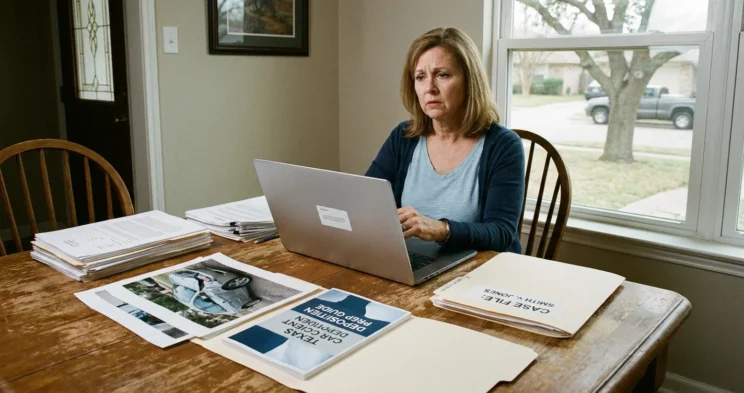
You’ve just learned opposing counsel wants your deposition. In Houston or anywhere else in Texas, that notice usually means your car accident claim is moving toward a real test.
Sitting for sworn testimony feels intimidating when you don’t know the room, the timeline, or the rules. Here’s what actually happens.
What Happens at Your Deposition
You’ll get official notice weeks before the date, which gives you and your attorney real time to prepare. Your attorney reviews your accident documentation and medical records with you and walks through likely questions beforehand.
The room itself is smaller than most people picture. It typically holds opposing counsel, a court reporter, sometimes an insurance representative, and your own attorney seated beside you. This session is part of formal discovery, the phase where both sides gather facts before trial.
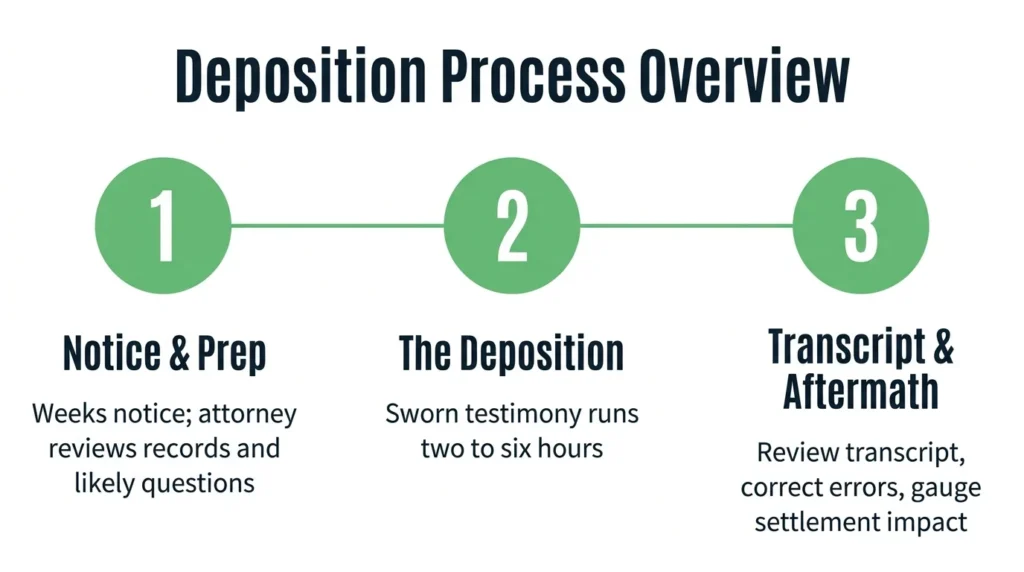
Before questioning starts, you swear under oath to tell the truth; this oath carries real weight. Lying under oath is a crime under Texas Penal Code § 37.02, and a knowingly false, material statement in your deposition can even rise to a felony under § 37.03. It is not a minor slip-up you can walk back later.
Sessions often run two to six hours, though the exact length depends on your case’s complexity, with regular breaks built in. Afterward, you’ll review the transcript, and you’ll be able to correct any errors before it becomes final.
Insurance companies often reassess their position once they see how you held up. Your testimony’s strength often shapes the settlement conversation that follows, and sometimes it leads to additional depositions before either side is ready to talk numbers.
The Questions You Will Face
Every case differs in the details, but the question categories stay consistent.
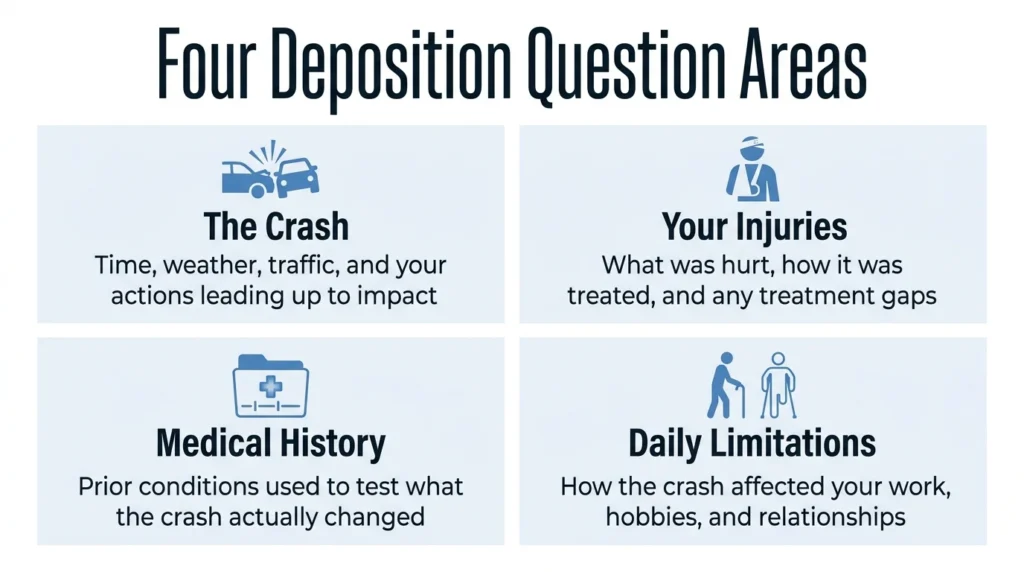
Expect four areas:
- Your crash. Time, weather, traffic conditions, and your actions leading up to impact. Expect to describe it more than once from different angles as opposing counsel probes for inconsistencies.
- Your injuries. What was hurt, how it was treated, and whether any gaps exist in that treatment. Treatment gaps are a favorite target for minimizing your claim’s value.
- Your medical history. Your health and any prior conditions before the crash. Opposing counsel uses this to test what actually changed because of the collision, sometimes drawing on records obtained through a subpoena.
- Your daily limitations. How the crash changed your work, your hobbies, and your relationships at home. These answers carry real weight in a pain-and-suffering claim.
Answer each category honestly. Specific, honest limitations carry more weight than exaggeration ever could.
Your Attorney’s Role in the Room
You are not sitting there alone; your attorney actively works throughout the session. They object to improper questions, ask for clarification when a question is vague or compound, and call breaks when you need one. During those breaks, you can also talk privately about how the questioning is going.
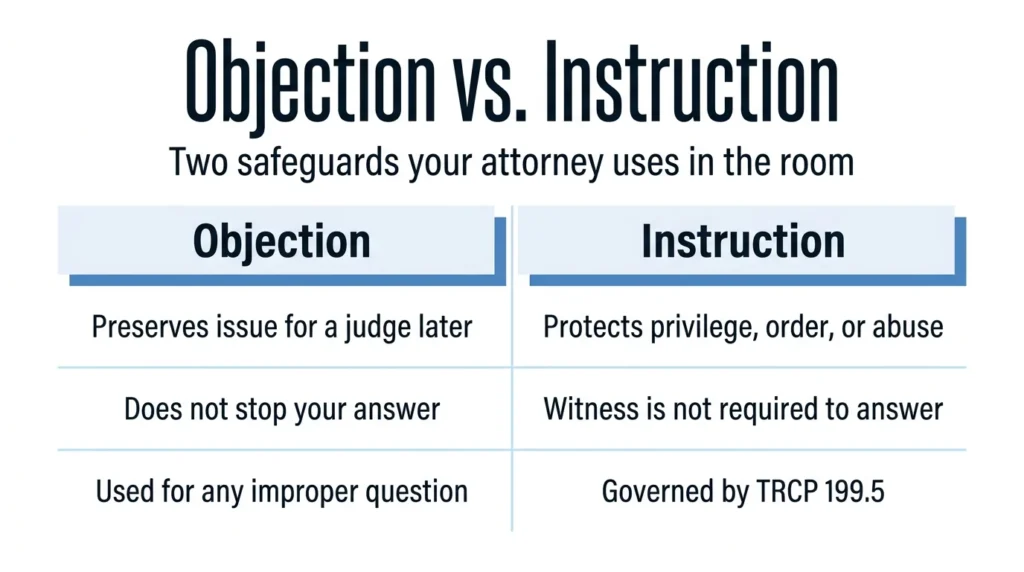
To protect you during the testimony itself, your attorney relies on two specific safeguards. While these tools sound similar, they work differently in practice.
- An objection preserves an issue for a judge to decide later. It does not stop you from answering the question.
- An instruction not to answer is different, and rarer. Governed by Texas Rule of Civil Procedure 199.5, your attorney can use it only to protect a privilege, follow a court order, or stop an abusive or misleading question.
Knowing which one just happened means you are never left guessing what to do next, or whether you are still required to respond.
Mistakes That Undercut a Strong Deposition
A few missteps do more damage than any single tough question.
- Avoid Guessing & Overexplaining. Guessing at facts you don’t remember creates inconsistencies opposing counsel will use later; “I don’t know” is a complete, truthful answer when it’s true. Overexplaining beyond what was asked hands over information nobody requested.
- Keep Your Cool & Stay Consistent. Arguing with opposing counsel, even when a question feels unfair or provocative, makes you look difficult instead of credible. Your answers also need to match what you have said before; any conflict with an earlier statement becomes a tool the defense can use against you.
- Resist Speculating About Fault: Speculating about fault percentages is the costliest mistake. Let the evidence speak instead. How fault is determined in Texas is a question for experts, not for your guesswork during questioning.
- Focus on Concrete Details: Specific answers help you here too. Concrete examples of what you can no longer do carry more weight than a general complaint about pain.
Trust Angel Reyes & Associates to Prepare You
Angel Reyes & Associates has spent more than 30 years handling Texas car accident cases. That experience shapes how we prepare you for a deposition.
We review your documents with you and run mock question-and-answer sessions. We also walk through the Texas-specific rules that will govern your day, so nothing in that room catches you off guard. Our attorneys sit beside you throughout the process, and you pay nothing unless we win your case.
Don’t walk into your deposition without preparation. Contact Angel Reyes & Associates today to get ready for your upcoming deposition.
Past results do not guarantee future outcomes.
Common Car Accident Deposition FAQs
Can a deposition happen by video call instead of in person?
Yes. Texas Rule of Civil Procedure 199.1 allows a party to take an oral deposition by telephone or another remote electronic method with proper written notice.
Can anyone besides the two drivers be deposed in a car accident case?
Yes. Texas Rule of Civil Procedure 199.1 lets a party depose any person or entity with relevant knowledge, not just the plaintiff and defendant.
How do you correct an error in your deposition transcript?
You note the change in writing on a separate errata sheet rather than altering the transcript itself, under Texas Rule of Civil Procedure 203.1.
What happens if you skip a properly noticed deposition?
Texas Rule of Civil Procedure 215 allows a court to treat your absence as contempt, or order you to cover the other side’s reasonable attorney’s fees for the missed session.
Can your attorney pause your deposition if a question becomes abusive?
Yes. Texas Rule of Civil Procedure 199.5 lets your attorney suspend the deposition to seek a ruling from the court when questioning becomes abusive.
About the Authors

Spencer Browne
Writer
Spencer Browne is a partner at Angel Reyes & Associates and a Board Certified personal injury trial lawyer with nearly 100 jury trials across Texas. He focuses on car, truck, and wrongful death cases, with notable verdicts including a landmark win in the Choctaw Casino bus crash case. A recognized speaker and legal educator, Spencer is a member of the American Board of Trial Advocates and has been honored as a Texas Super Lawyer and one of D Magazine’s Best Lawyers in Dallas. He brings deep trial experience and relentless advocacy to every client he represents.

Kyle Nicolas
Editor
Kyle Nicolas is the Web Content & SEO Manager at Angel Reyes & Associates. He has more than 10 years of experience as a marketing co...

Angel Reyes
Reviewer
Angel L. Reyes, III is the Founder and Managing Partner of Angel Reyes & Associates. A nationally recognized trial attorney and business...