How Bus Accident Claims Differ from Car Accident Claims


Every article on this site is researched by our internal team, reviewed for legal accuracy against current Texas law, and held to State Bar of Texas advertising standards before publication. We do not publish content that overstates outcomes or makes promises about results.
Learn more about our
editorial standards .
Key Takeaways
- A bus operator owes riders the highest degree of care, far above ordinary driver negligence.
- Government-owned buses trigger a six-month notice deadline and state damage caps.
- Bus claims often involve more defendants, so they can take longer and pay more.
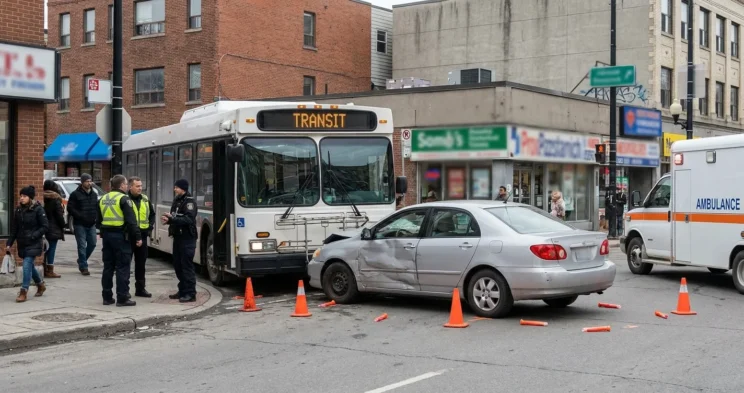
You were riding a city bus down Harry Hines Boulevard in Dallas when it slammed into the car ahead. Now an insurance adjuster keeps mentioning a transit authority and a claim deadline you’ve never heard of. It already feels more tangled than the fender bender you handled years ago. There’s a reason for that.
Bus Accidents Follow a Different Legal Path
A bus crash and a car crash both start from the same idea: Someone was careless and hurt you. But a bus claim then layers on three things a car accident never triggers:
- A higher duty of care
- A possible government defendant
- Federal safety rules
Together they decide who you can sue, what deadlines you face, and how long your case runs.
That is why a bus accident claim is rarely as simple as an ordinary crash claim. The vehicle is bigger, and the oversight behind it runs far deeper than it does for a standard car accident claim.
Federal data on large truck and bus crashes shows how much heavier and more regulated these vehicles are. That extra regulation is part of why the claims differ.
Common Carrier Duty of Care
Texas law holds bus operators to a higher standard than it holds ordinary drivers. This heightened duty comes from Texas common law, not a statute, and the Texas Supreme Court reaffirmed it in VIA Metropolitan Transit v. Meck.
Once you understand that higher standard, the next question is who is liable for bus accidents.
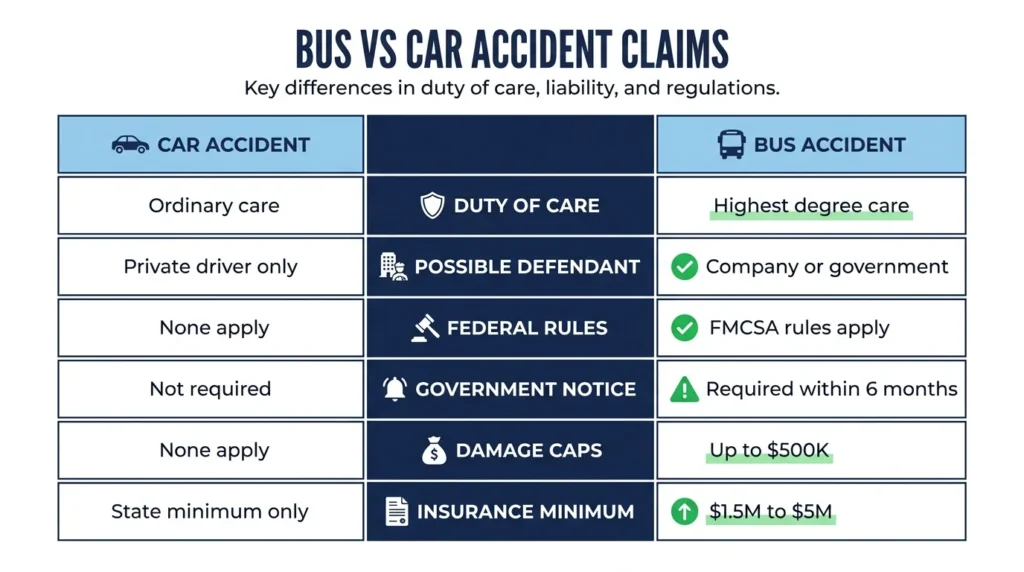
Ordinary Negligence Duty for Drivers
A private driver owes you only ordinary care. That means acting the way a reasonably careful person would behind the wheel. If the driver falls short of that and causes your injury, they are negligent.
Common Carrier Duty for Bus Operators
A bus operator owes you far more. As a common carrier, it must use the highest degree of care that a very cautious person would use in the same situation. That bar sits well above ordinary negligence, which can make a bus driver’s liability easier to prove.
Governmental Immunity for Public Bus Claims
When a public transit authority or school district owns the bus, you run into governmental immunity. The Texas Tort Claims Act gives you a limited window to sue, which doesn’t apply to claims against private drivers.
You must give the government formal notice within six months under the Texas Civil Practice and Remedies Code (CPRC) § 101.101. City charters often shorten that window even more. An ordinary car accident claim has no such step.
You can read more about how the Tort Claims Act limits bus claims before you decide how to proceed.
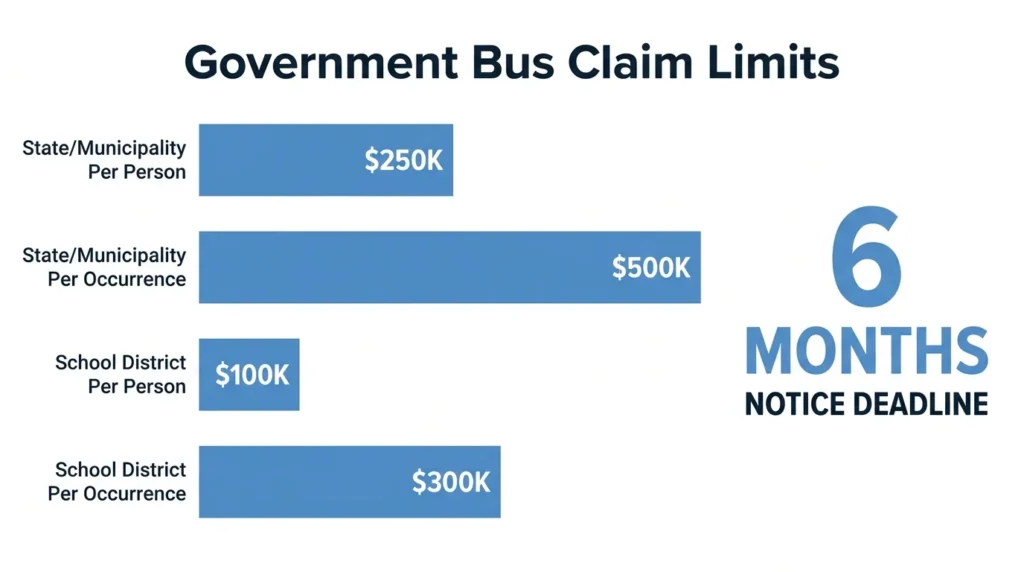
Damage caps also apply when a government unit is the defendant. Under CPRC § 101.023, the amount depends on the entity. The state or a municipality faces a cap of $250,000 per person and $500,000 per occurrence. Other local units, such as school districts, face $100,000 per person and $300,000 per occurrence.
Federal Oversight of Commercial Buses
A private driver answers to no federal agency for how they operate day to day. A commercial bus does. The Federal Motor Carrier Safety Administration sets rules for commercial bus operators, and breaking one can become evidence of negligence in your claim.
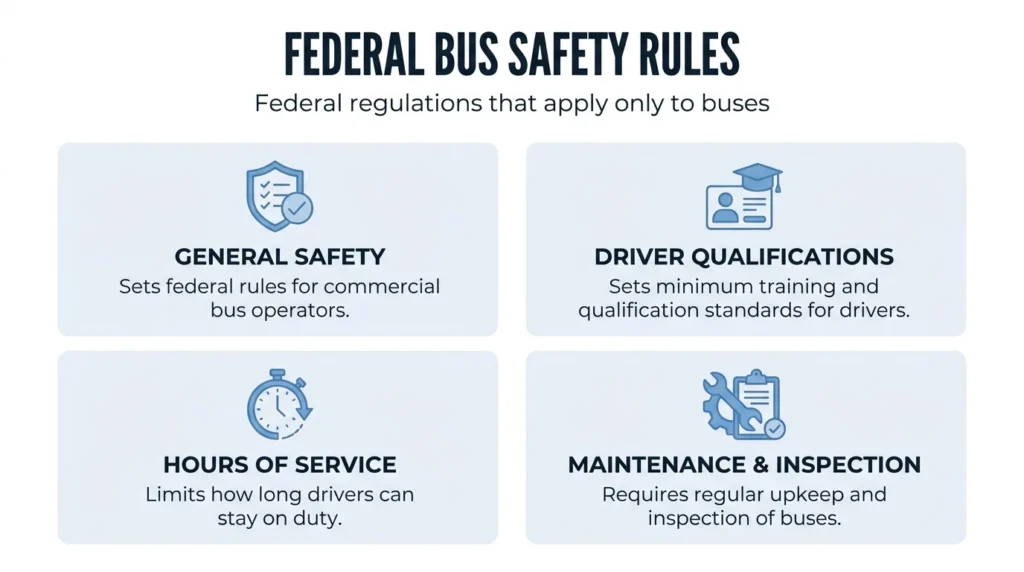
- General safety framework: 49 CFR Part 390 sets the federal rules commercial bus operators must follow.
- Driver qualifications: 49 CFR Part 391 sets minimum training and qualification standards for drivers.
- Hours of service: 49 CFR Part 395 limits how long a driver can stay on duty, with no equivalent for a private driver.
- Maintenance and inspection: 49 CFR Part 396 requires regular upkeep, adding a liability angle that a car claim lacks.
Who Is Liable in a Bus Accident?
Both the bus driver and the bus company can be liable for your injuries. Suing a bus company works differently than suing a single driver, because an employer relationship pulls the company in.
When a transit authority or school district owns the bus, the government entity itself can be a defendant, subject to the immunity rules above.
Because there are more defendants and more injured passengers, these claims can take longer and reach higher values than a car accident claim. You can see how bus and car settlements compare to get a sense of the range.
Once you see why your claim is built differently, the practical next move is knowing what to do after a bus crash to protect your case.
Work with a Texas Bus Accident Attorney
Angel Reyes & Associates has spent more than 30 years helping injured Texans work through claims like this one. We understand how transit authorities, bus companies, and federal regulators operate, and how to hold each one accountable. Sorting out which damage cap applies, and against whom, takes real work, and our background in handling injury claims can help you understand what your case is realistically worth.
We work on contingency, so you pay nothing unless we win your case, and our results include more than $1 billion recovered for clients. You can read firsthand accounts from our past clients to see how we’ve helped people like you.
If a bus crash has left you with bills and unfamiliar deadlines, schedule a free consultation so you know your options before time runs out.
Past results do not guarantee future outcomes.
Bus Accident FAQs
How long do you have to sue a private bus company after a bus accident in Texas?
You generally have two years from the accident date under Texas’s standard personal injury statute of limitations. That deadline is different from the six-month notice required when a government entity owns the bus.
Does the bus driver's higher duty of care protect other drivers and pedestrians too?
The heightened duty applies only to passengers on the bus. A bus driver owes other drivers and pedestrians the same ordinary care that any driver owes on the road.
Do bus companies have to carry more insurance than a private driver?
Federal rules require commercial bus companies to carry between $1.5 million and $5 million in liability coverage, based on the number of passengers the bus seats. That is far more than the minimum insurance Texas requires for a private driver.
Do federal bus safety rules apply to public transit and school buses?
Public transit and school district buses are exempt from most federal motor carrier rules. Their drivers must still meet commercial license and drug testing requirements.
If a bus is privately owned instead of government owned, does the claims process change?
A privately owned bus company has no governmental immunity, so the claim moves like an ordinary negligence case against a company. The common carrier duty and federal safety rules still apply either way.
About the Authors

Angel Reyes
Writer
Angel L. Reyes, III is the Founder and Managing Partner of Angel Reyes & Associates. A nationally recognized trial attorney and business leader, Angel has helped over 70,000 injury victims recover more than $1 billion since founding the firm in 1993. Named to the Texas Super Lawyers list annually since 2008, Angel brings Wall Street experience, Ivy League education, and a deep commitment to client advocacy. He is a frequent legal commentator and published author with extensive contributions to legal scholarship, trial strategy, and consumer protection.

Graham Griffin
Editor
Graham Griffin is the Web & Content Manager at Angel Reyes & Associates, where he oversees content strategy, AI-powered workflows, a...

Spencer Browne
Reviewer
Spencer Browne is a partner at Angel Reyes & Associates and a Board Certified personal injury trial lawyer with nearly 100 jury trials a...