Common Bus Accident Injuries & How They Affect Your Case


Every article on this site is researched by our internal team, reviewed for legal accuracy against current Texas law, and held to State Bar of Texas advertising standards before publication. We do not publish content that overstates outcomes or makes promises about results.
Learn more about our
editorial standards .
Key Takeaways
- Most large buses lack passenger seatbelts, which raises the risk of ejection injuries.
- A claim against a government-run bus system needs written notice within six months.
- Texas gives you two years to file most injury claims, but bus cases can differ.
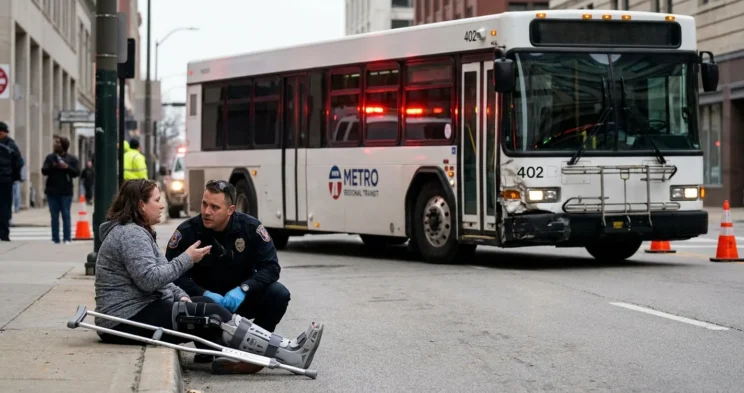
You were riding home from work on a crowded bus down Fredericksburg Road, standing near the front because every seat was full. The driver braked hard to miss a car, and the momentum threw you into a metal pole before you could grab the rail.
Now your shoulder is throbbing, and you are trying to figure out why a bus injury feels nothing like a fender bender.
Bus Accident Injuries Differ from Car Crashes
Bus injuries follow a different pattern than a car crash, and the reason is the bus itself. Most large buses have no seatbelts for passengers, unlike the car you drive every day.
That gap traces back to federal seatbelt rules for motorcoaches, which only cover certain new buses built after 2016 and exclude transit buses and school buses altogether. Older buses already on the road were never required to add belts. With nothing holding you in place, a hard stop can throw you from your seat.
The inside of a bus makes an impact worse. High floors, metal poles, and hard bench seats surround you, with none of the padding or airbags that soften a car wreck.
Standing riders face a fall hazard that a normal car accident never involves. These differences change what your injuries look like and how a claim gets built.
Federal large truck and bus crash data shows why. Bus wrecks produce injury patterns unlike those in an ordinary car crash.
Ejection Injuries from Unbelted Bus Seats
When a bus stops short, swerves, or rolls over, an unbelted passenger can be thrown from the seat or into another part of the bus. These ejection injuries tend to be serious, and they show up in a few common forms:
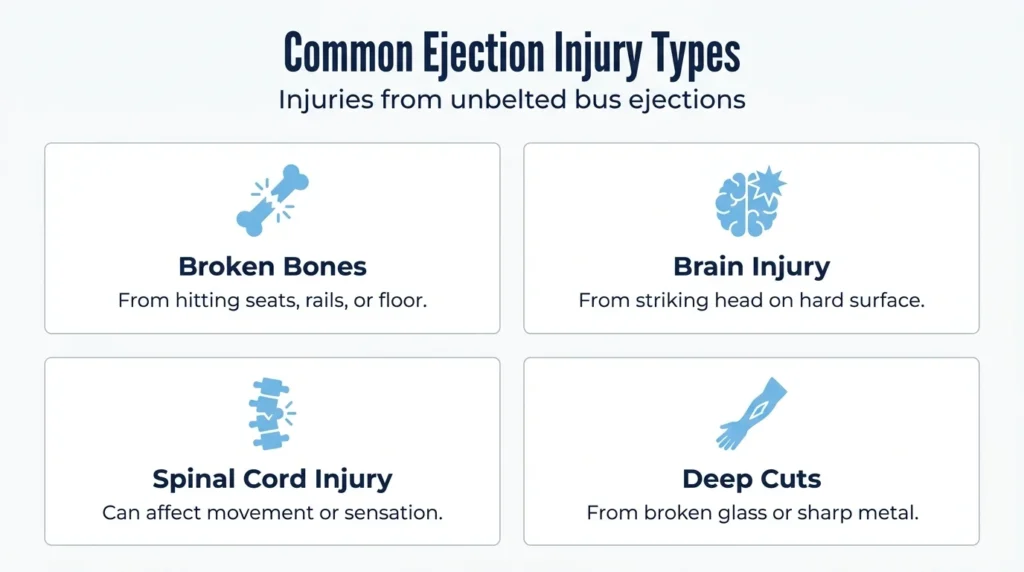
- Broken bones from hitting seats, rails, or the floor
- Traumatic brain injury from striking the head on a hard surface
- Spinal cord injury that can affect movement or sensation
- Deep cuts from broken glass or sharp metal edges
School buses follow a narrower rule. Under Texas Transportation Code § 547.701, buses purchased for model year 2018 or later must include a three-point seat belt for each passenger, but a school board can vote to skip that requirement if its budget will not allow it.
That exception is why some students ride belted and others do not.
Head & Neck Injuries from Interior Impacts
Even when you stay in your seat, the hard surfaces inside a bus can cause serious head and neck injuries. A head striking a pole, window, or seat back can lead to a concussion or a more serious traumatic brain injury.
You can also get hurt without hitting anything at all. Sudden braking or a rear-end hit can snap your head back and forth, causing whiplash and other soft tissue injuries.
These injuries can be easy to shrug off in the first day or two. Symptoms like headaches, dizziness, or neck stiffness sometimes take time to appear, so it helps to get checked even if you feel fine.
Standing Passenger Fall Injuries
Standing riders face a hazard that has no real match in a car accident. A sudden stop, sharp turn, or hard brake can throw you to the floor or into a pole, rail, or another passenger.
These falls often cause sprains and fractures, especially to the wrist or hip when you reach out to catch yourself. Hitting your head or face on the floor or a hard edge is common too.
How Bus Accident Injuries Affect Your Claim
Your injuries do more than cause pain. They shape how your claim gets valued, starting with the high standard the law holds bus operators to.
Texas treats bus operators as common carriers, which means they owe passengers a heightened duty of care. In plain terms, a company that carries the public for a fee must use more caution than an ordinary driver. That standard can strengthen a bus accident injury claim, since the law expects the operator to do more to keep you safe.
A bus crash often involves more than one party. The driver, the transit authority or school district, or a maintenance contractor could each share blame. Sorting out who is liable in a bus accident is one of the first things to pin down.
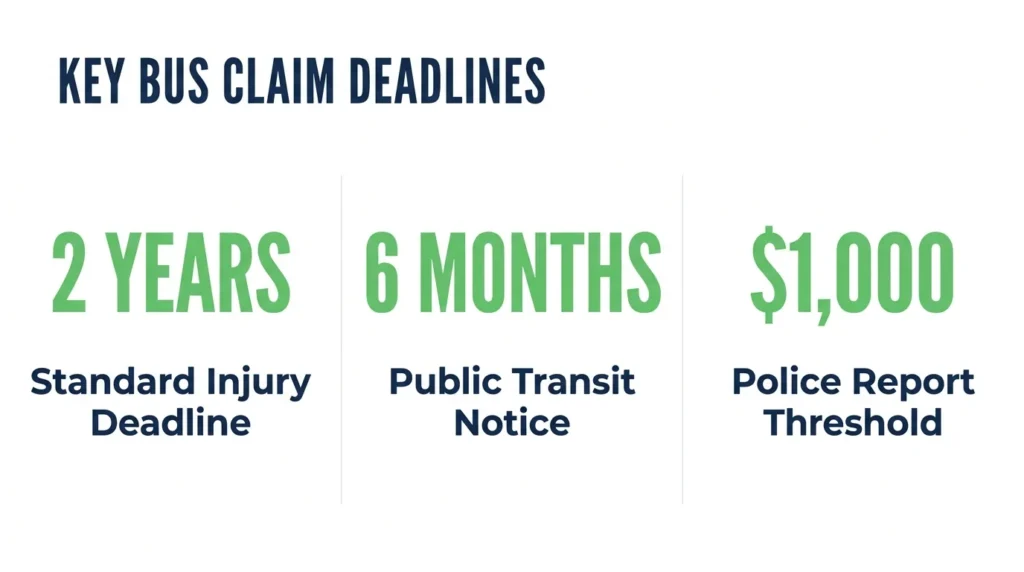
The clock is also running. Texas generally gives you two years from the accident date to file a personal injury claim. That deadline comes from the Texas Civil Practice and Remedies Code (CPRC) § 16.003.
Claims Against Public Transit & School Buses
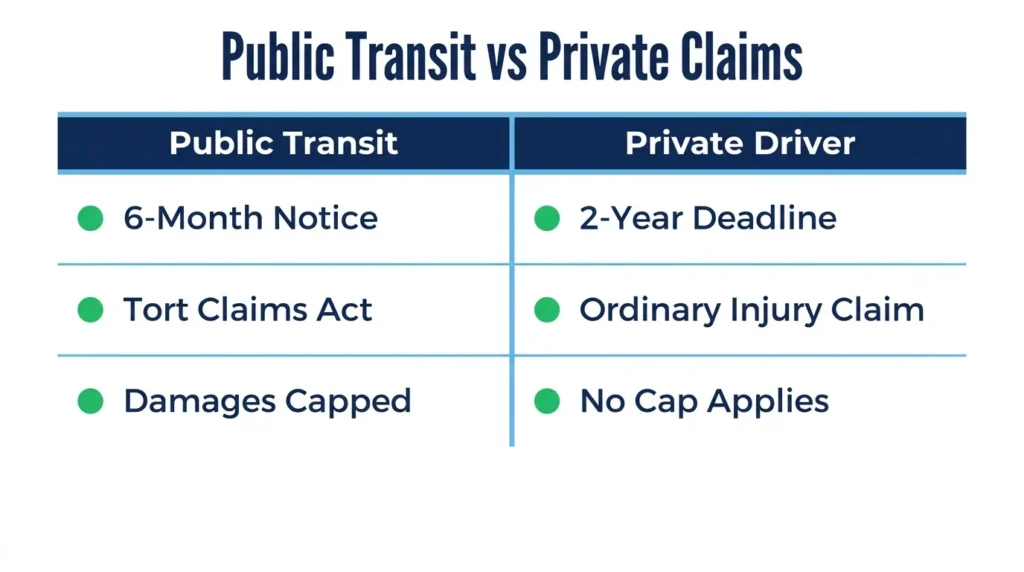
A claim against a government-run bus system follows a much tighter deadline. You must give written notice within six months of the accident under Texas Civil Practice and Remedies Code (CPRC) § 101.101, far shorter than the usual two years.
These claims fall under the Texas Tort Claims Act, which sets special limits on suing a public agency. A cap also applies to what you can financially recover from a governmental unit under Texas Civil Practice and Remedies Code (CPRC) § 101.023. That limit does not exist when a private driver hurts you.
Claims Against Charter Bus Operators
Charter and intercity bus companies play by different rules than public agencies. As private carriers, they must follow the Federal Motor Carrier Safety Regulations, the same framework that governs commercial trucking.
These cases resemble truck accident claims more than a simple car wreck. They often call for the same digging into driver logs, maintenance records, and safety history. That means more parties may carry insurance, and more evidence may exist to support your claim.
Work with an Experienced Attorney Today
A bus injury can leave you facing medical bills and missed paychecks while you are still healing. Angel Reyes & Associates has guided injured Texans through claims of this kind for over 30 years. Our record includes more than $1 billion recovered for clients.
There is no fee unless we win, and any court costs or case expenses are explained up front. When you are ready, schedule a free consultation so we can review what happened and walk you through your options.
Past results do not guarantee future outcomes.
Bus Accident Claim FAQs
What happens if I was partly at fault in a bus accident?
Texas follows a shared fault rule, so you can still recover damages if you were 50 percent or less at fault. If your share of fault reaches 51 percent or more, state law bars you from recovering anything.
What if another driver caused the bus accident, not the bus itself?
You can often bring a claim against that driver’s insurance as well as, or instead of, a claim against the bus company. Either party can be legally responsible for causing your injuries.
Do I need a police report to file a bus accident injury claim in Texas?
Texas law requires police to file a written report when a crash causes injury or at least $1,000 in property damage. That report becomes useful evidence for your claim, though you can also document the scene yourself.
If a bus hits a pedestrian, do the same accident rules still apply?
Yes, a pedestrian claim follows similar liability and deadline rules as a passenger claim. Fault usually depends on crosswalk and traffic signal evidence rather than what happened inside the bus.
Can I recover lost wages if I'm paid hourly and miss work after a bus accident injury?
Yes, lost wages count as recoverable damages, whether you earn a salary or an hourly rate. Pay stubs, timesheets, and a note from your employer showing your missed hours can help support that part of your claim.
About the Authors

Angel Reyes
Writer
Angel L. Reyes, III is the Founder and Managing Partner of Angel Reyes & Associates. A nationally recognized trial attorney and business leader, Angel has helped over 70,000 injury victims recover more than $1 billion since founding the firm in 1993. Named to the Texas Super Lawyers list annually since 2008, Angel brings Wall Street experience, Ivy League education, and a deep commitment to client advocacy. He is a frequent legal commentator and published author with extensive contributions to legal scholarship, trial strategy, and consumer protection.

Kyle Nicolas
Editor
Kyle Nicolas is the Web Content & SEO Manager at Angel Reyes & Associates. He has more than 10 years of experience as a marketing co...

Angel Reyes
Reviewer
Angel L. Reyes, III is the Founder and Managing Partner of Angel Reyes & Associates. A nationally recognized trial attorney and business...