Following a Bus Accident, How Much Does a Lawyer Cost in Texas?


Every article on this site is researched by our internal team, reviewed for legal accuracy against current Texas law, and held to State Bar of Texas advertising standards before publication. We do not publish content that overstates outcomes or makes promises about results.
Learn more about our
editorial standards .
Key Takeaways
- Texas bus accident lawyers work on contingency, charging 33% to 40% only if you recover.
- Government bus claims demand written notice within six months under the Texas Tort Claims Act.
- Personal injury claims in Texas must be filed within two years of the bus accident date.
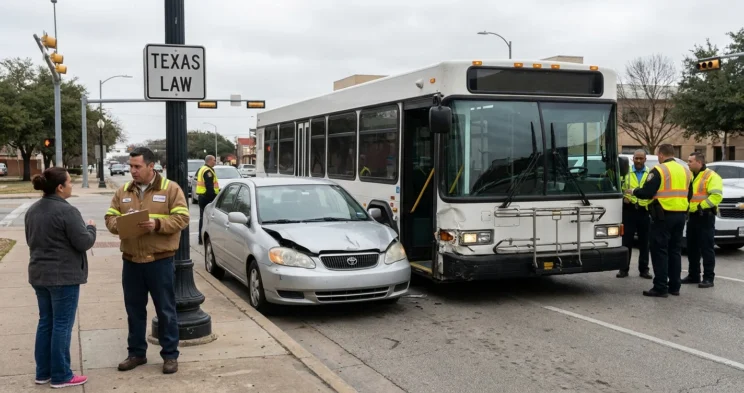
You were riding the Metro bus home through Midtown when the driver slammed the brakes and threw you into the seat ahead. Now you are facing medical bills, missed work, and a question that feels impossible to answer. Can you even afford a lawyer to help you?
Bus Accident Lawyers Work on Contingency
You pay nothing upfront to hire a lawyer in Texas following your bus accident. There is no retainer, no hourly billing, and no payment unless you receive compensation.
The lawyer’s fee comes out of the money you win, not out of your pocket. That is the heart of how attorney fees in Texas work.
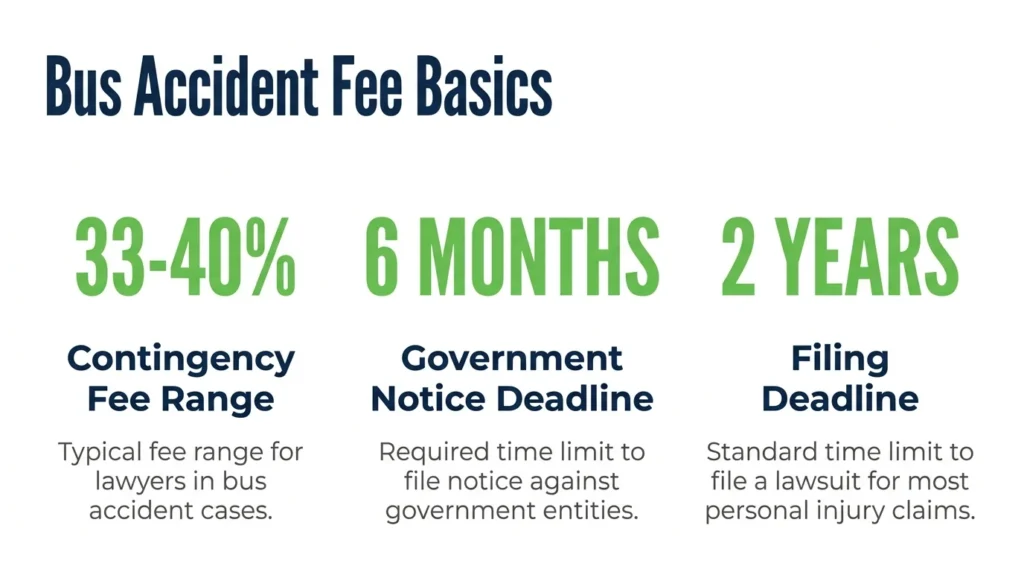
Most Texas personal injury cases run on a contingency fee between 33% and 40% of the recovery. Where your case lands depends on its complexity and whether it settles or goes to trial.
Bus cases often sit at the higher end of that range. The reasons have less to do with the lawyer and more to do with how these claims are built.
The fee structure for bus claims follows the same contingency model used in other crash cases.
Texas requires every contingency agreement to be in writing. The Texas Disciplinary Rules of Professional Conduct Rule 1.04 says the agreement must state the exact percentage and how costs come out.
That written agreement protects you. It locks in the percentage and stops any surprise deductions from showing up when your case settles.
A lawyer can walk you through what a bus accident claim involves and explain your fee agreement line by line before you sign anything.
Attorney Fees vs. Case Costs in Bus Claims
Your attorney fee and your case costs are two different things. The fee is the lawyer’s percentage of your final compensation, paid only if you win or settle.
Case costs are separate. These are the out-of-pocket expenses of building your claim.
They include accident reconstruction, expert witnesses, medical record retrieval, court filing fees, and deposition costs. None of that is part of the attorney’s percentage.
Most Texas firms front these bus accident case costs and recover them when your case resolves.
You should still confirm one detail in writing.
Ask whether costs come out before or after the attorney percentage is applied. That single choice changes how much money actually lands in your hands.
Bus claims tend to cost more to build than standard car accident cases. They more often need expert review of vehicle data, federal safety records, and government documents that take time and money to obtain.
Public vs. Private Buses: Why It Matters for Fees
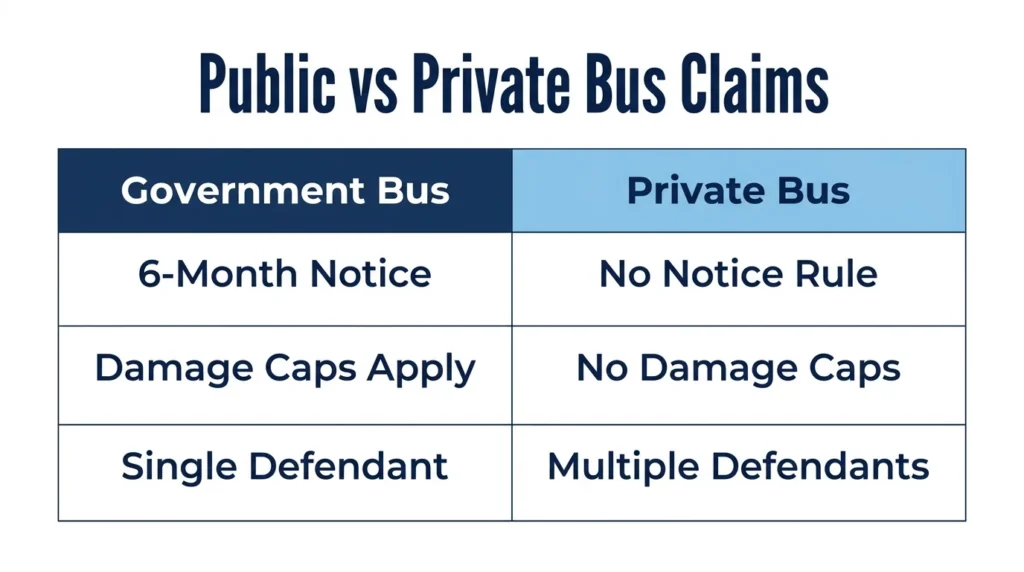
The single biggest factor in your fee is who owned the bus. A government-operated bus and a private charter bus live under completely different legal rules.
That difference shapes your deadlines, your damages, and how much work your case demands.
Government Bus Claims under the TTCA
Claims against public transit agencies like DART, Houston Metro, or VIA fall under the Texas Tort Claims Act. This law sets a tight notice deadline and limits what you can recover.
You must give the government entity written notice within six months of the crash. Miss that window and Texas Civil Practice and Remedies Code (CPRC) § 101.101 ends your claim before it begins.
The same chapter limits the money you can collect from a government entity. These caps lower the settlement ceiling, which in turn affects the total fee your lawyer earns.
Sovereign immunity review, notice deadlines, and compensation limits all add work that a standard car crash never involves. That extra preparation is why these cases take more time and effort to handle correctly.
When the deadline is this short, the early work matters most.
Private Bus & Charter Carrier Claims
Private carriers play by different rules. Charter buses, privately operated school buses, and intercity coaches carry no sovereign immunity and must meet higher federal insurance minimums.
Federal regulations under 49 CFR § 387.33 require for-hire bus operators to carry between $1.5 million and $5 million in coverage. The exact minimum depends on how many passengers the bus is built to hold.
That higher coverage can mean more money available to you. It also brings more parties to the table.
A single private bus crash may involve the carrier, the vehicle owner, a staffing agency, and a maintenance contractor. Each one may show up with its own defense team. Sorting out who is liable in a bus accident becomes a core part of the case.
The more defendants involved, the more complex the litigation. That added complexity can push the contingency percentage toward the higher end of the 33% to 40% range.
Factors That Affect Your Fee Percentage
Several specific things decide where your fee lands within the 33% to 40% range. Knowing them helps you understand why your case may differ from someone else’s:
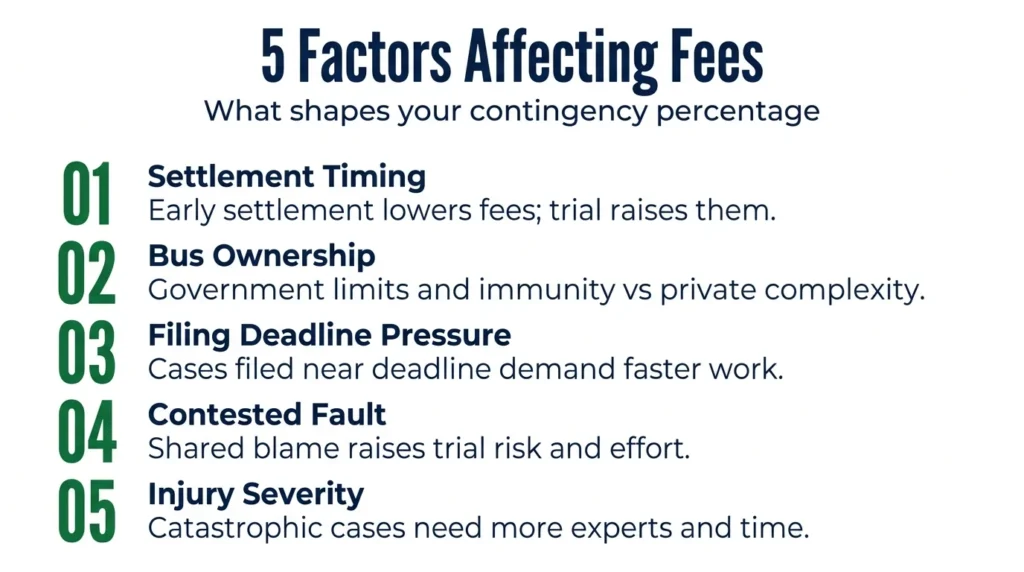
- Settlement timing. Most written agreements set a lower percentage if the case settles before a lawsuit is filed and a higher one if it goes to trial.
- Who owned the bus. A government defendant brings notice deadlines, compensation limits, and immunity review, while a private carrier brings coverage analysis and multiple parties to coordinate.
- Filing deadline pressure. Personal injury claims must be filed within two years under Texas Civil Practice and Remedies Code (CPRC) § 16.003, and cases brought close to that deadline can demand more intensive work.
- Contested fault. When several parties share blame, Texas proportionate responsibility rules under Chapter 33 come into play, and disputed liability raises the trial risk.
- Injury severity. Catastrophic injury and wrongful death cases require more expert testimony, more investment, and longer timelines.
The most serious cases carry the most at stake. If you lost a family member, you can file a Texas wrongful death claim.
A lawyer can review how these factors apply to your own crash before you decide whether to file a claim.
Talk to an Experienced Lawyer Today
A bus crash leaves you with enough to worry about without the fear of legal bills you cannot pay. Angel Reyes & Associates has spent over 30 years helping injured Texans hold negligent parties accountable, and we work on contingency, so you owe us no fee unless we win.
We offer free consultations, serve clients across the entire state of Texas, and have recovered more than $1 billion recovered for clients. You can see what past clients have said about working with our team or find one of our office locations across Texas near you.
Reach out to us for a free consultation and let us explain your options before any deadline runs out.
Past results do not guarantee future outcomes.
Bus Accident Lawyer Cost FAQs
Can you negotiate the contingency fee percentage before signing?
Yes, the percentage is negotiable before you sign the agreement. Texas law requires the fee to be reasonable and in writing, so you can ask about the rate during your consultation and discuss it before committing.
What happens if you switch lawyers after hiring one for your bus accident case?
Your former attorney can place a lien on your case for the work already done, and the two lawyers will typically split the single contingency fee based on their share of the work. In most situations this does not add extra cost to you because both attorneys are paid from the same percentage.
If a child was injured on the bus, does a parent need court approval for the settlement?
Yes. Texas requires a court proceeding to approve any settlement on behalf of a minor, and the money is generally held in a restricted account until the child turns 18. A judge reviews the terms to confirm the settlement is fair to the child.
If the case is lost and nothing is recovered, do you owe the attorney for case costs?
You owe no attorney fee if there is no compensation for your injuries, but whether you owe case costs depends on what your written agreement says. Many Texas personal injury firms only seek reimbursement of costs from a successful recovery, so confirm this in writing before signing.
About the Authors

Angel Reyes
Writer
Angel L. Reyes, III is the Founder and Managing Partner of Angel Reyes & Associates. A nationally recognized trial attorney and business leader, Angel has helped over 70,000 injury victims recover more than $1 billion since founding the firm in 1993. Named to the Texas Super Lawyers list annually since 2008, Angel brings Wall Street experience, Ivy League education, and a deep commitment to client advocacy. He is a frequent legal commentator and published author with extensive contributions to legal scholarship, trial strategy, and consumer protection.

Kyle Nicolas
Editor
Kyle Nicolas is the Web Content & SEO Manager at Angel Reyes & Associates. He has more than 10 years of experience as a marketing co...

Angel Reyes
Reviewer
Angel L. Reyes, III is the Founder and Managing Partner of Angel Reyes & Associates. A nationally recognized trial attorney and business...