Rideshare Accidents on Texas Toll Roads


Every article on this site is researched by our internal team, reviewed for legal accuracy against current Texas law, and held to State Bar of Texas advertising standards before publication. We do not publish content that overstates outcomes or makes promises about results.
Learn more about our
editorial standards .
Key Takeaways
- A rideshare crash claim starts with the at-fault driver, then Uber or Lyft coverage by app status.
- Suing a toll authority like NTTA or TxDOT is rare because governmental immunity limits the claim.
- Being 51 percent or more at fault bars recovery, so preserve app and road evidence early.
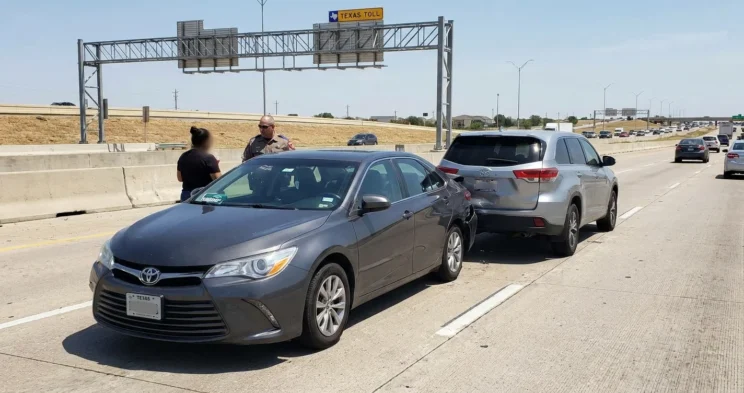
You were riding home from Addison late one night when your Uber driver got rear-ended on the Dallas North Tollway. Now your neck hurts, the bills are coming, and you are not sure whose insurance is even supposed to pay. The toll road only adds to the confusion, because you wonder if the people who run it share any blame.
Who Is Liable After a Toll Road Uber Crash?
The at-fault driver is the starting point for any rideshare crash claim, and Uber or Lyft coverage may apply on top of that driver’s policy. Whether the platform’s coverage kicks in depends on what the rideshare driver was doing when the crash happened.
A toll road crash can involve more than one responsible party. The rideshare driver, another motorist, or the platform itself may be at fault, and in some cases a road authority might too. Sorting that out is the heart of your claim.
The fact that the crash happened on a tollway does not change the basic fault analysis. What it does change is the evidence available and the question of which government entity ran the road. The more you understand about Texas rideshare accident claims, the easier it is to see how these cases come together.
If you want a fuller picture of how coverage works in a standard Uber wreck, you can review what happens when an Uber gets in an accident in Texas.
How Rideshare Insurance Coverage Applies
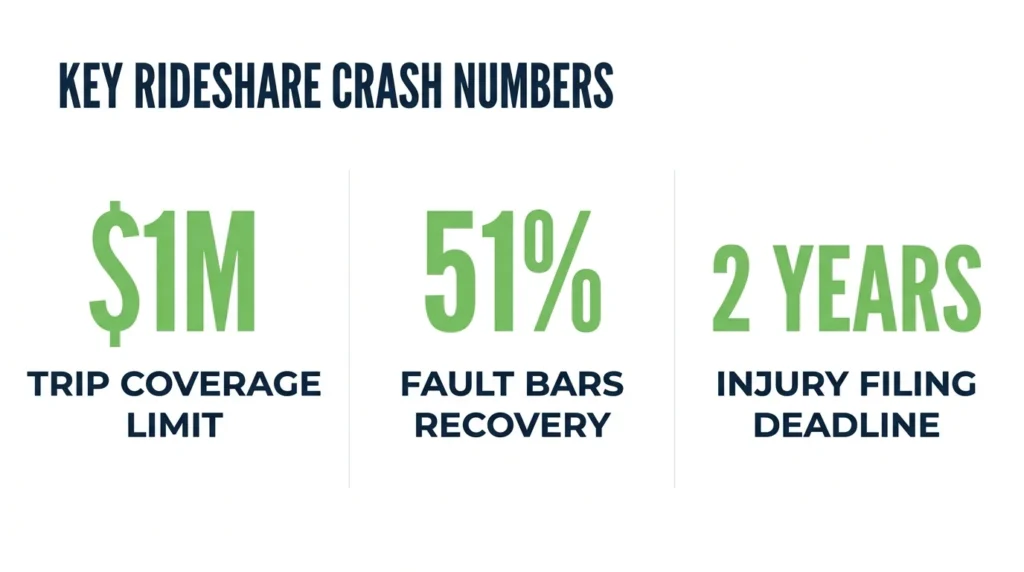
The period the driver was in at the moment of impact decides which policy pays. A small contingent policy and a $1 million policy are both possible, and the gap between them is large.
When the driver is logged on but has not accepted a ride, lower insurance limits apply. Texas Insurance Code Section 1954.052 sets those minimum amounts, and they often fall short in a serious crash.
Once the driver accepts a trip or has a passenger aboard, the picture improves. Texas Insurance Code Section 1954.053 requires a transportation network company to carry at least $1 million in aggregate liability coverage during a prearranged, paid ride. That is the coverage most injured passengers are counting on.
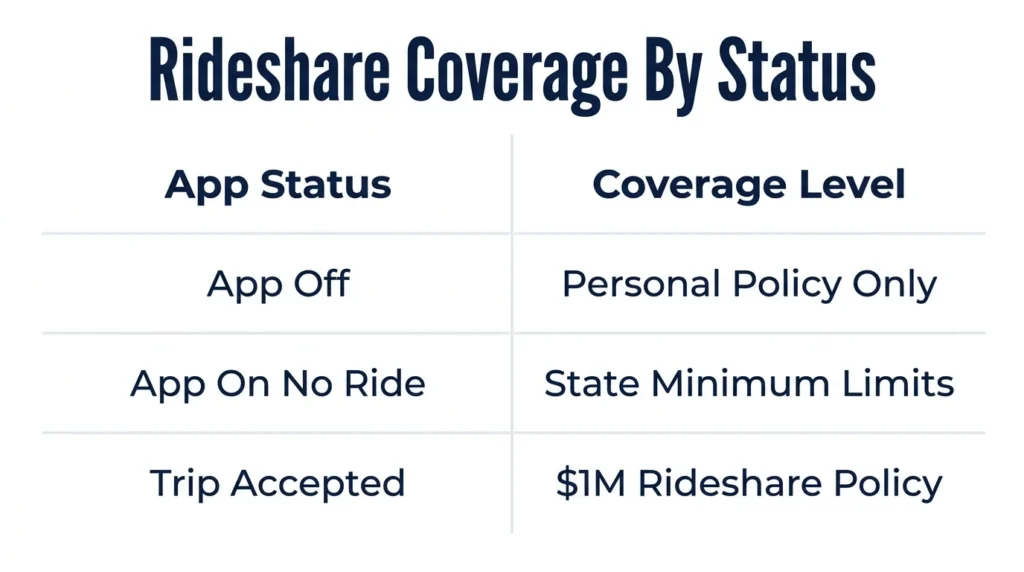
When the app is off, only the driver’s personal policy applies. Many personal auto policies exclude crashes that happen while driving for pay, which can leave a coverage gap.
Can a Toll Authority Share Liability?
A claim against a toll authority is possible only in some situations, because these entities are hard to sue. Toll operators like the North Texas Tollway Authority and the Texas Department of Transportation are government units protected by governmental immunity.
Texas Civil Practice and Remedies Code (CPRC) Chapter 101, known as the Texas Tort Claims Act, waives that immunity only in certain situations. Those include certain dangerous road conditions and the negligent use of government property.
Even when one of these situations apply to a claim, strict rules follow. You may face a notice deadline measured in months rather than years, and compensation caps that limit what you can recover. These limits are often far tighter than an ordinary injury claim.
A road design or maintenance theory also needs strong proof that the road condition caused the crash. That kind of evidence fades fast, so an attorney can move quickly to document road conditions and meet short government notice deadlines.
How Shared Fault Affects Your Claim
Your compensation decreases with your share of fault, and it disappears entirely at 51 percent. Under Texas Civil Practice and Remedies Code (CPRC) Chapter 33, Texas divides fault among the parties, so a person found 51 percent or more at fault receives no compensation.
A multi-party toll road crash makes that fault fight central. Insurers for the rideshare driver, another motorist, and the platform may each try to push blame onto someone else, including you. The percentages they assign decide how much you can collect.
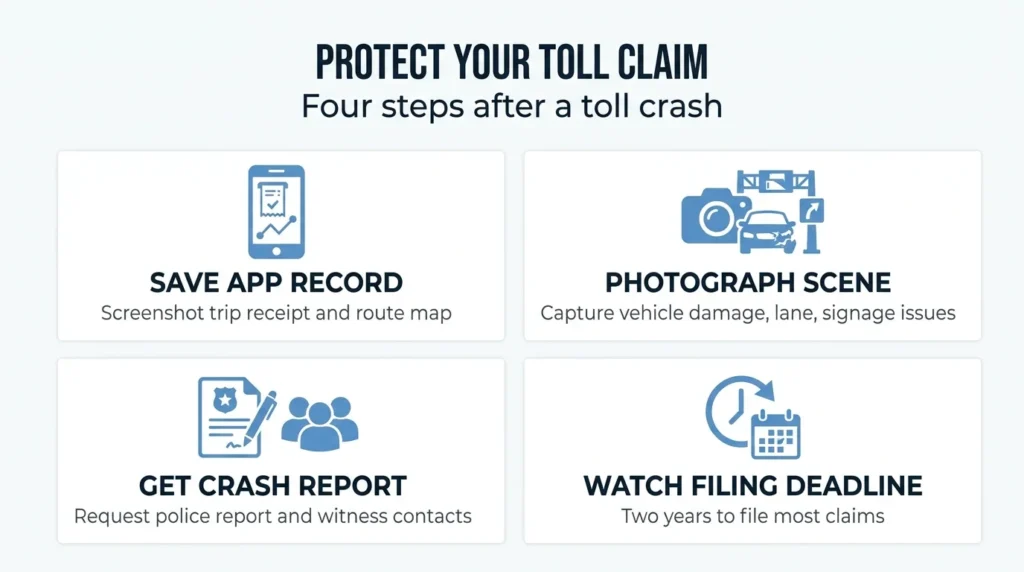
You can protect your claim with a few concrete steps after a toll road rideshare crash:
- Step 1: Save the rideshare app record. Screenshot the trip receipt, the driver’s profile, and the route map so you can prove which coverage period was active.
- Step 2: Photograph the scene and the road. Capture vehicle damage, lane markings, and any pavement or signage problems before they are cleaned up or repaired.
- Step 3: Get the crash report and witness details. Request the police report and collect names and numbers from anyone who saw what happened.
- Step 4: Watch your filing deadline. Texas Civil Practice and Remedies Code (CPRC) Section 16.003 gives you two years to file most injury lawsuits, though a government claim can carry a much shorter notice window.
For a deeper checklist, review what to do after a rideshare accident in Texas.
Talk with an Experienced Attorney
Toll road rideshare crashes can pull in several insurers and, in rare cases, a government defendant with its own short deadlines. Sorting through that is hard while you are trying to heal. Angel Reyes & Associates has spent over 30 years helping injured Texans across the state untangle claims like these.
We work on contingency, so there is no fee unless we win, and your first consultation is free. You can review past outcomes to see the kinds of claims we handle. Reach out to us for a free consultation and we can walk through your options.
Past results do not guarantee future outcomes.
Rideshare Accidents on Texas Toll Roads FAQs
What if a hit-and-run driver causes my Uber crash on a toll road?
If the rideshare driver was on an active trip, Uber’s or Lyft’s policy includes uninsured and underinsured motorist coverage that can apply when the other driver flees or has no insurance.
Can I get the toll road camera footage of my crash?
You can request it, but toll operators often release video only through a subpoena or a public records request, and many keep footage for a limited time before deleting it.
What happens if my rideshare driver was off the app when we crashed?
Only the driver’s personal auto policy applies, and many personal policies exclude crashes that happen while driving for pay, which can leave little or no coverage.
Does my own car insurance help if I was a passenger in the Uber?
Your personal injury protection or uninsured motorist coverage may pay regardless of fault, so it is worth checking your own policy even when you were only a passenger.
Who do I notice first if a toll authority might be partly responsible?
You generally must send written notice to the government entity quickly, sometimes within months, so identifying the correct toll operator early protects that potential claim.
About the Authors

Angel Reyes
Writer
Angel L. Reyes, III is the Founder and Managing Partner of Angel Reyes & Associates. A nationally recognized trial attorney and business leader, Angel has helped over 70,000 injury victims recover more than $1 billion since founding the firm in 1993. Named to the Texas Super Lawyers list annually since 2008, Angel brings Wall Street experience, Ivy League education, and a deep commitment to client advocacy. He is a frequent legal commentator and published author with extensive contributions to legal scholarship, trial strategy, and consumer protection.

Kyle Nicolas
Editor
Kyle Nicolas is the Web Content & SEO Manager at Angel Reyes & Associates. He has more than 10 years of experience as a marketing co...

Angel Reyes
Reviewer
Angel L. Reyes, III is the Founder and Managing Partner of Angel Reyes & Associates. A nationally recognized trial attorney and business...