Can You Claim PTSD After a Rideshare Accident?


Every article on this site is researched by our internal team, reviewed for legal accuracy against current Texas law, and held to State Bar of Texas advertising standards before publication. We do not publish content that overstates outcomes or makes promises about results.
Learn more about our
editorial standards .
Key Takeaways
- PTSD qualifies as mental anguish under Texas law and is recoverable as a non-economic damage after a rideshare crash.
- Passengers in an active Uber or Lyft ride can access up to $1 million in liability coverage for all injuries, including psychological harm.
- Texas gives you two years from the crash date to file a PTSD claim, regardless of when the diagnosis occurs.
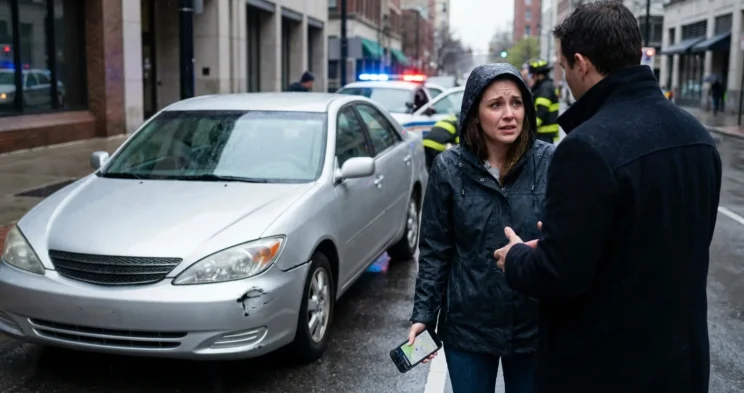
You were a passenger in a Lyft on your way home through Midtown Houston when another driver ran a red light on Westheimer Road and hit you broadside. The physical cuts healed. But weeks later, you can’t get in a car without your hands shaking, and the sound of brakes makes your chest tighten. What you’re describing is real. Under Texas law, it qualifies as a compensable injury.
PTSD Is a Real Injury Under Texas Law
Texas allows you to recover compensation for psychological harm, not just broken bones or hospital bills. Texas Civil Practice and Remedies Code (CPRC) Chapter 41 governs non-economic damages in personal injury cases and expressly includes mental anguish as a recognized category of harm.
Texas courts define mental anguish as a high degree of mental pain and distress that goes beyond ordinary worry, embarrassment, or anxiety. The standard, established in Parkway Co. v. Woodruff (1995), requires evidence of either a substantial disruption to your daily routine or a high degree of mental pain and distress tied to the crash. Post-traumatic stress disorder (PTSD) satisfies this standard when your diagnosis is documented and connected to the accident.
Symptoms such as flashbacks, nightmares, hypervigilance, avoidance of vehicles, and difficulty functioning at work or home all constitute legally recognizable harm. You don’t need a separate physical impact beyond the crash itself to pursue a psychological injury claim as a direct crash victim. If you were a passenger in the rideshare vehicle when the collision occurred, you were a direct victim.
If you want to understand how Texas rideshare accident claims work from a broader liability standpoint, that context will help you see where your PTSD claim fits in the overall case.
How Rideshare Insurance Covers Psychological Injuries
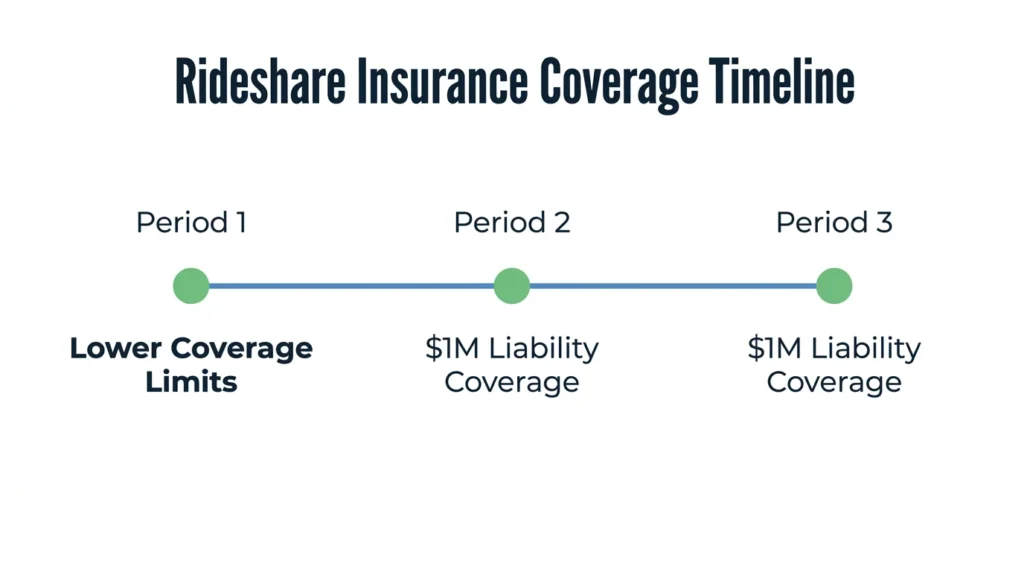
Which insurance coverage applies to your PTSD claim depends entirely on what phase of the trip you were in when the crash occurred. Texas Insurance Code Chapter 1954 establishes mandatory coverage periods for Transportation Network Company (TNC) drivers, and the limits differ significantly between them.
Period 1: App On, No Ride Matched
During Period 1, the driver is logged into the app but hasn’t yet accepted a ride. Coverage at this stage drops to lower minimums, and the TNC’s corporate policy may not be the primary source. If another driver struck the Uber or Lyft vehicle during this phase, the at-fault driver’s personal policy would be the first source of recovery, with TNC contingency coverage potentially available in a limited capacity. PTSD claims originating from a Period 1 crash may face tighter coverage limits.
Periods 2 & 3: Ride Accepted Through Drop-Off
Once a driver accepts a ride and through the entire trip, both Uber and Lyft carry $1 million in liability coverage plus $1 million in uninsured and underinsured motorist coverage. As a passenger in the vehicle during an active ride, you have access to the full $1 million liability policy for all damages, including non-economic damages such as emotional distress and PTSD.
Non-economic damages, including psychological injuries, are part of the compensable damages pool under this tier. An adjuster handling a Period 3 claim can’t simply exclude PTSD from the coverage analysis because the harm is psychological rather than physical.
If you’re uncertain which period applied to your crash, reviewing how Uber and Lyft insurance coverage periods work before speaking with an adjuster will help you understand what the insurance company already knows about your claim.
Adjusters will make a determination about coverage periods, whether or not you understand the framework. Getting informed first puts you in a better position to evaluate what they tell you.
Documenting PTSD for an Insurance Claim or Lawsuit
Building a PTSD claim requires a paper trail that connects the accident to your diagnosis and your diagnosis to your daily life. The stronger that connection, the harder it is for an adjuster to dismiss your psychological injury as exaggerated or unrelated. Here is what that documentation looks like in practice:
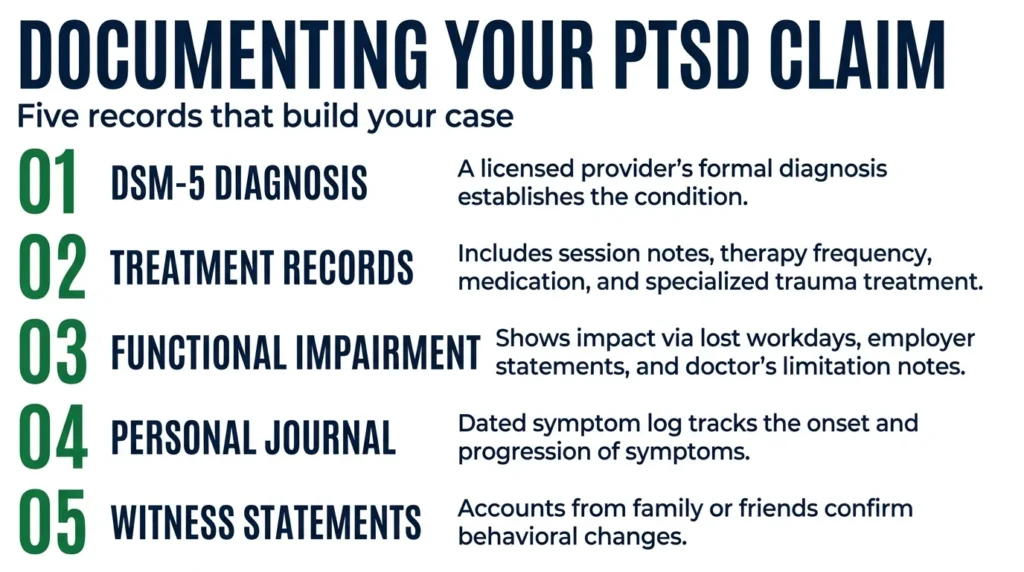
- Formal Diagnostic and Statistical Manual of Mental Disorders Fifth Edition (DSM-5) PTSD diagnosis. A licensed psychiatrist, psychologist, or clinical social worker must diagnose you using the DSM-5 criteria. The diagnosis alone is not enough. You need the treatment records to back it up.
- Treatment records. Session notes, frequency of therapy visits, medication prescriptions, and any referrals to specialized trauma treatment (eye movement desensitization and reprocessing, prolonged exposure therapy, trauma-focused cognitive behavioral therapy) all support the claim.
- Functional impairment records. Documentation of lost workdays, statements from your employer about absences, notes from your primary care doctor referencing accident-related complaints, and records of your inability to drive or use rideshare services.
- Personal journal. A written log of your symptoms, dated from shortly after the accident, showing the onset, progression, and daily disruptions. Courts and adjusters give weight to contemporaneous documentation over recollection.
- Collateral witness statements. Written statements from family members, coworkers, or friends who’ve observed behavioral changes since the accident. This is some of the most credible evidence available because it comes from people with no financial stake in the outcome.
After reviewing what to do following a rideshare accident in Texas, pursuing mental health care immediately is one of the most consequential steps you can take for both your recovery and legal claim.
How PTSD Damages Are Valued in Texas
PTSD falls under the category of non-economic damages, sometimes called pain and suffering. Texas doesn’t cap non-economic damages in standard personal injury cases. The caps under CPRC Chapter 41 only apply to exemplary (punitive) damages and medical malpractice cases. Your PTSD claim in a rideshare accident is not subject to those limits.
Valuation depends on the severity and duration of your symptoms, the degree to which your functioning is impaired, the quality and consistency of your treatment records, and the documented impact on your work and relationships. A person who has undergone six months of weekly therapy and can demonstrate missed workdays and an inability to commute will recover more than someone with only a single assessment and no follow-up care.
Insurance adjusters will aggressively challenge psychological injury claims. The harm is invisible, the causation is disputable, and the dollar amounts are subjective. The quality of your documentation is the primary factor in how seriously your claim gets taken.
An attorney handling rideshare injury claims can evaluate your full range of damages before you accept or reject any settlement offer. Accepting a low offer permanently closes the claim. The average Uber accident settlement includes non-economic damages like emotional distress, but what you actually receive depends on how well your specific harm is documented and presented.
Filing Deadline & Next Steps in Texas

Texas gives you two years from the date of the accident to file a personal injury claim, including claims for psychological injuries like PTSD. Texas CPRC § 16.003 sets this deadline.
The clock starts on the date of the crash, not the date of your diagnosis. If your PTSD symptoms took several months to fully develop or be formally identified, this delay doesn’t pause the filing window. Waiting for a complete diagnosis before consulting an attorney can put you dangerously close to the deadline.
Your immediate priorities should be seeking mental health care, preserving all crash documentation (your accident report, the Uber or Lyft receipt, any app screenshots showing the ride status), and beginning a symptom journal. Avoid giving recorded statements to insurance adjusters before you understand what happens legally when your Uber is in an accident in Texas. Adjusters record those statements and use them to dispute later claims about the severity of your injuries.
Talk to a Texas Rideshare Injury Attorney
Psychological injuries from a rideshare accident are real, compensable under Texas law, and require the same careful documentation and advocacy as any physical injury claim.
Angel Reyes & Associates has helped injured Texans pursue personal injury claims, including rideshare accidents involving psychological harm, for over 30 years. We work on a contingency basis, which means there’s no fee unless we win. Consultations are free, so contact us for a free review of your situation. We’re available 24/7.
Past results do not guarantee future outcomes.
Frequently Asked Questions
Can an Uber or Lyft driver file a PTSD claim after an accident?
Yes. Rideshare drivers who were involved in a crash that another driver caused can pursue PTSD as a non-economic damage in a Texas personal injury claim, just like a passenger. Their recovery path runs through the at-fault driver’s insurance rather than the TNC’s policy.
What if a family member witnessed the rideshare crash? Can they claim PTSD too?
Texas allows bystander emotional distress claims under limited conditions: the person must have been present at or near the scene, must be closely related to someone who was injured, and must show their distress came directly from witnessing the accident. Meeting all three conditions is harder than making a direct-victim claim.
Will health insurance pay for PTSD therapy after a rideshare accident?
Most health insurance plans cover trauma therapy and PTSD treatment, and you can use that coverage while your personal injury claim is pending. Your insurer may have a subrogation right, meaning it can seek reimbursement from your settlement for what it paid.
How long does it take to resolve a PTSD claim from a rideshare accident?
Psychological injury claims take longer to settle than physical injury claims because insurers tend to challenge them more aggressively, often requesting independent evaluations or prolonging negotiations. Cases that require litigation can take a year or more to resolve.
Can you claim PTSD if you were not physically hurt in the rideshare crash?
Texas courts recognize PTSD claims from direct crash victims even when physical injuries are minimal or absent, provided the psychological harm is well-documented and clearly tied to the crash. Having consistent treatment records and a formal DSM-5 diagnosis strengthen a case where physical injuries aren’t the focus.
About the Authors

Angel Reyes
Writer
Angel L. Reyes, III is the Founder and Managing Partner of Angel Reyes & Associates. A nationally recognized trial attorney and business leader, Angel has helped over 70,000 injury victims recover more than $1 billion since founding the firm in 1993. Named to the Texas Super Lawyers list annually since 2008, Angel brings Wall Street experience, Ivy League education, and a deep commitment to client advocacy. He is a frequent legal commentator and published author with extensive contributions to legal scholarship, trial strategy, and consumer protection.

Kyle Nicolas
Editor
Kyle Nicolas is the Web Content & SEO Manager at Angel Reyes & Associates. He has more than 10 years of experience as a marketing co...

Angel Reyes
Reviewer
Angel L. Reyes, III is the Founder and Managing Partner of Angel Reyes & Associates. A nationally recognized trial attorney and business...