Can You Keep a Totaled Car?


Every article on this site is researched by our internal team, reviewed for legal accuracy against current Texas law, and held to State Bar of Texas advertising standards before publication. We do not publish content that overstates outcomes or makes promises about results.
Learn more about our
editorial standards .
Key Takeaways
- Keeping a totaled car reduces your payout by the salvage value the insurer deducts.
- A current Texas nonrepairable title bars rebuilding, retitling, and road registration.
- Get both written offers and repair estimates before you decide to keep or surrender.
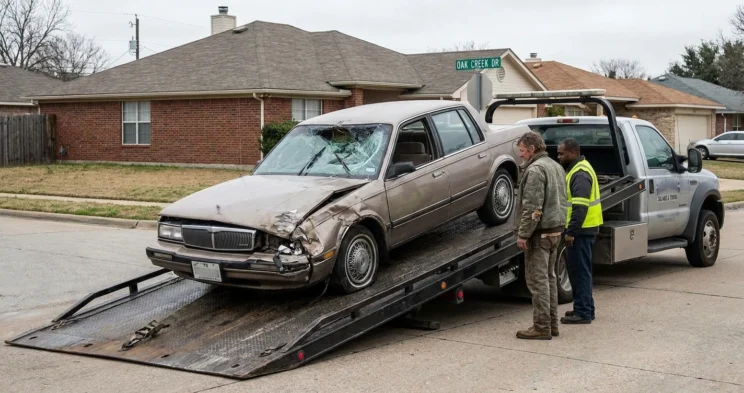
Yes, you can usually keep your totaled car in Texas, but the insurer will deduct its salvage value from your settlement. Keeping the car does not mean you can legally drive it.
Before deciding, check its title classification, estimated repair costs, loan balance, and future insurance options. Your written settlement should also explain the salvage deduction and what happens to the vehicle.
Can You Keep a Car After the Insurer Totals It?
Yes, but tell the insurer promptly that you want to keep the vehicle. Request written offers showing how much you would receive with and without retaining it, as recommended by the Texas Department of Insurance.
What to Request Before You Agree
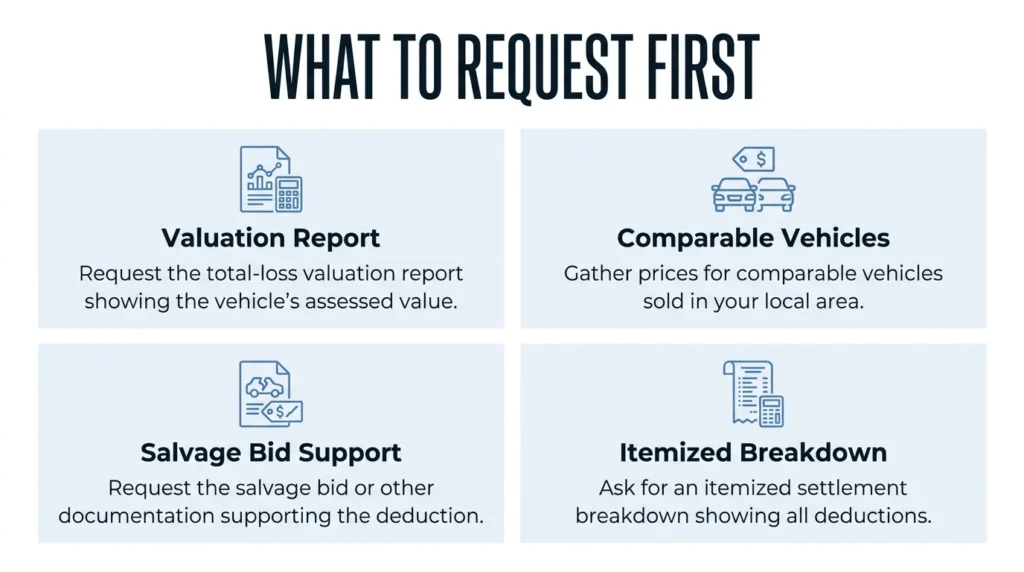
Ask for the total-loss valuation report, local comparable vehicles, the salvage bid or other support for the deduction, and an itemized settlement breakdown. If you dispute the valuation, gather prices for comparable vehicles in your area and document any custom parts or special equipment.
Any deductible depends on your policy and claim type. Do not automatically apply your collision deductible to a claim against the other driver’s liability insurer.
Before accepting the offer, contact your lender and an insurer willing to cover the retained vehicle. The settlement does not automatically pay off your loan, so check whether Texas gap insurance applies if you owe more than the vehicle is worth. Review both written offers before deciding whether keeping the car makes financial sense.
What Texas Ownership Document Will You Need?
You may need a Salvage Vehicle Title or a Nonrepairable Vehicle Title, depending on the car’s condition. If the vehicle meets neither definition, the insurer’s total-loss decision alone does not require either document. Texas Transportation Code Chapter 501 provides the definitions used to determine its title status.
Salvage Versus Nonrepairable
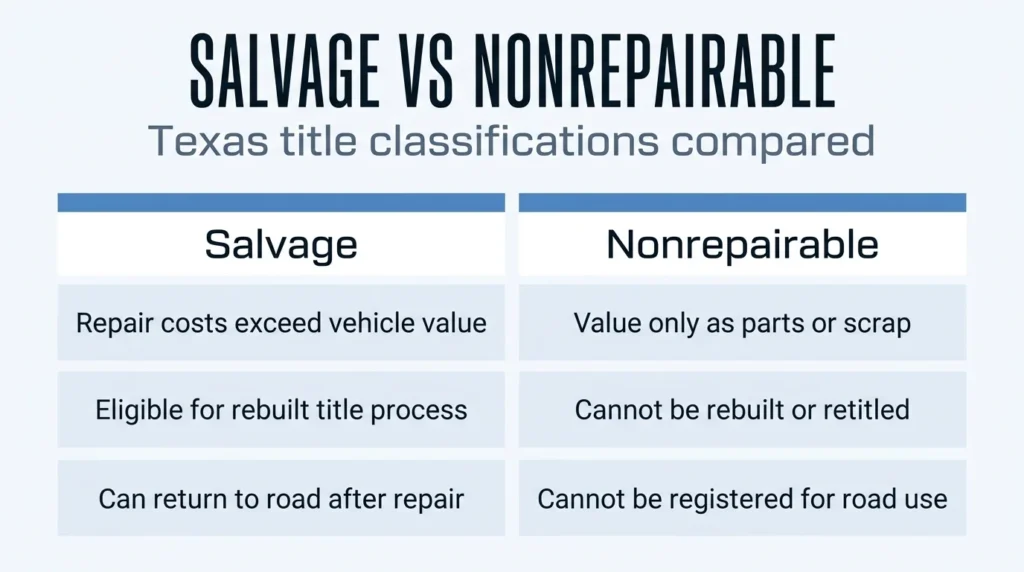
A vehicle generally qualifies as salvage when repair costs, excluding repainting costs and sales tax, exceed its pre-damage actual cash value. An applicable out-of-state salvage document can also establish its status.
The statutory definition of damage excludes hail-only damage, paint-only damage, gradual damage, and certain theft-related losses. Texas does not use a single percentage to determine whether every totaled vehicle is salvage.
A nonrepairable vehicle generally has value only as a source of parts or scrap. The TxDMV Salvage/Nonrepairable Motor Vehicle Manual explains that an eligible salvage vehicle may go through the rebuilt-title process. A vehicle with a current nonrepairable title cannot be rebuilt, retitled, or registered for road use.
Insurer Reporting & Paperwork
When an insurer pays a qualifying claim without taking ownership, Chapter 501 requires it to report the vehicle and notify you before the 31st day after payment. This is the insurer’s reporting deadline. It’s not a universal deadline for filing as the owner.
Apply for the appropriate salvage or nonrepairable ownership document using TxDMV Form VTR-441, with:
- Evidence of ownership
- Applicable lien documentation
- An $8 application fee
Follow the current form’s submission instructions. Lien requirements depend on the vehicle’s title status and whether the lien has been released. You must obtain the appropriate ownership document before transferring the vehicle. The insurer’s settlement letter is not a rebuilt title and does not authorize you to drive the car.
Can You Repair & Drive a Retained Salvage Car?
An eligible salvage vehicle can return to Texas roads after you repair it, title it as rebuilt salvage, and register it. Estimate the repair and title costs before deciding that keeping it will save money. A vehicle classified as nonrepairable cannot go through this process.
The Rebuilt Salvage Title Process
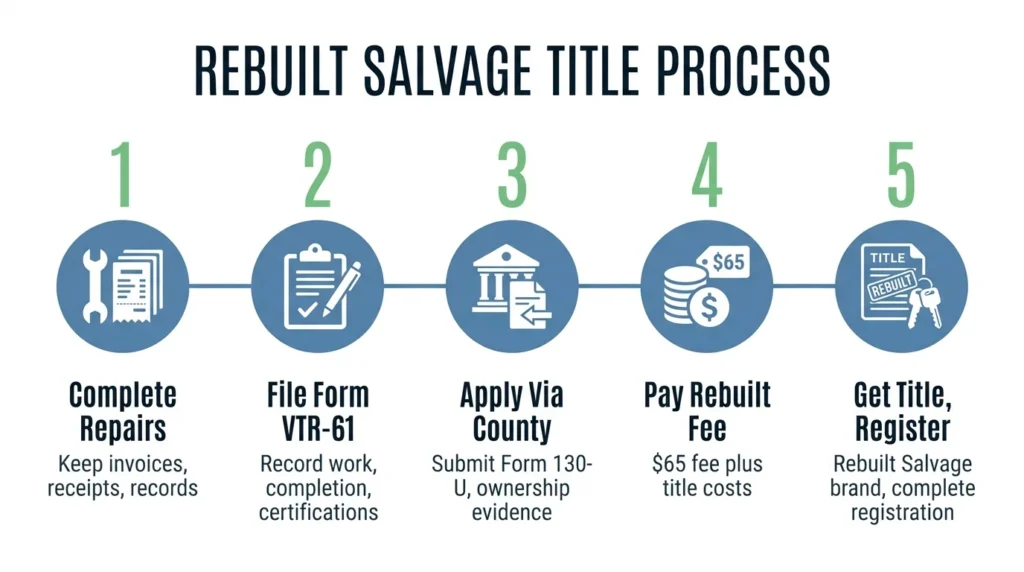
The TxDMV manual describes these steps for eligible salvage:
1. Complete repairs and preserve repair invoices, parts receipts, and ownership records.
2. Complete TxDMV Form VTR-61, recording the work, completion date, certifications, and relevant component-part details.
3. Apply through your county tax assessor-collector using Form 130-U, ownership evidence, VTR-61, and applicable supporting documents.
4. Pay the $65 rebuilt fee, plus title and other applicable fees.
5. Obtain a title branded Rebuilt Salvage and complete registration requirements before road use.
Inspection Rules Changed in 2025
TxDMV Registration and Title Bulletin 005-24 removed the safety-inspection requirement for rebuilt salvage title applications effective January 1, 2025. Applicable emissions testing may still be required for registration.
The special ASE inspection language in Form VTR-61 applies to newly assembled vehicles that were never previously titled as complete vehicles. It does not apply to every repaired salvage car.
Before taking a rebuilt car onto I-35, have a qualified shop check that it was repaired properly and is safe to drive. This inspection is recommended, even though it is not required for every rebuilt title application.
Can You Recover Loss of Use After a Total Loss?
You may have a loss-of-use claim while you repair or replace a totaled vehicle. Whether you can recover these costs depends on the claim type, available coverage, supporting evidence, and settlement terms.
What You Need to Prove Loss of Use
In J&D Towing, LLC v. American Alternative Insurance Corp., the Texas Supreme Court recognized that loss-of-use damages may be available even when a vehicle is destroyed. The case involved a commercial tow truck and underinsured motorist coverage. The claimed loss must be supported by evidence, caused by the loss of the vehicle, and limited to a reasonable replacement period.
The decision does not guarantee unlimited rental benefits under every policy. If you choose a lengthy rebuild, the insurer may dispute whether the entire repair period was reasonable. Keep transportation receipts, rental-rate evidence, and a dated timeline showing the repair or replacement process.
How Should You Decide Whether to Keep or Surrender It?
Compare the net payment for each option with its costs and title consequences. Also consider your loan balance, future insurance options, transportation needs, and the car’s potential resale value.
If you surrender the car, compare the proposed settlement with the cost of replacing it. If you keep it, start with the settlement after the salvage deduction. Then subtract estimated repairs, possible additional repair costs, title and registration fees, and transportation expenses while the car is unavailable.
Documents That Support Your Decision
Keep the valuation and comparables, salvage bid or deduction support, written owner-retained settlement letter and insurer notice, current title and lien records, and detailed repair estimates together. If you rebuild the car, also save your parts receipts and title application records.
If you were injured, review any proposed release as part of your Texas car accident claim to confirm whether it would resolve only the vehicle damage or your injury claim as well.
Talk With Angel Reyes & Associates About Your Total-Loss Claim
Angel Reyes & Associates can review your owner-retained offer, explain what the title status means, and discuss any related injury claim. Bring the valuation, salvage deduction, title paperwork, and repair estimates to your free consultation.
Past results do not guarantee future outcomes.
Totaled Car Retention FAQs
Can you sell a totaled car to a private buyer in Texas?
Yes, but the vehicle’s title status determines how you can sell it. You may sell a salvage vehicle to an eligible buyer under Texas title laws, while a nonrepairable vehicle is subject to stricter transfer restrictions.
Can you keep personal belongings from a totaled car?
Yes, you can generally retrieve personal belongings from your totaled vehicle before transferring it to an insurer or salvage yard. Arrange access promptly and remove items such as electronics, documents, and other personal property.
What happens if your totaled car is damaged while sitting at a salvage yard?
Responsibility for additional damage depends on who had possession of the vehicle, the circumstances of the damage, and any applicable storage agreement. Photograph the vehicle before releasing it and document any new damage you discover.
Can you keep a totaled car if the accident was your fault?
You may still be able to retain your totaled vehicle if your collision coverage pays for the loss, even when you caused the accident. Your policy terms and the insurer’s settlement procedures determine how they handle the claim.
Do you have to disclose a rebuilt salvage title when selling a car in Texas?
Texas requires rebuilt salvage branding to remain on the vehicle’s title so prospective buyers can identify its history. Sellers should accurately disclose the vehicle’s title status and avoid misrepresenting its accident or repair history.
About the Authors

Spencer Browne
Writer
Spencer Browne is a partner at Angel Reyes & Associates and a Board Certified personal injury trial lawyer with nearly 100 jury trials across Texas. He focuses on car, truck, and wrongful death cases, with notable verdicts including a landmark win in the Choctaw Casino bus crash case. A recognized speaker and legal educator, Spencer is a member of the American Board of Trial Advocates and has been honored as a Texas Super Lawyer and one of D Magazine’s Best Lawyers in Dallas. He brings deep trial experience and relentless advocacy to every client he represents.

Graham Griffin
Editor
Graham Griffin is the Web & Content Manager at Angel Reyes & Associates, where he oversees content strategy, AI-powered workflows, a...

Angel Reyes
Reviewer
Angel L. Reyes, III is the Founder and Managing Partner of Angel Reyes & Associates. A nationally recognized trial attorney and business...