Do I Have Windshield Damage Insurance On My Plan?


Every article on this site is researched by our internal team, reviewed for legal accuracy against current Texas law, and held to State Bar of Texas advertising standards before publication. We do not publish content that overstates outcomes or makes promises about results.
Learn more about our
editorial standards .
Key Takeaways
- If you claim against the at-fault driver's insurer, you have no deductible as the claimant.
- Check full glass coverage terms for differences between repair and replacement costs.
- Ask the glass shop to include manufacturer-required camera calibration in its estimate.
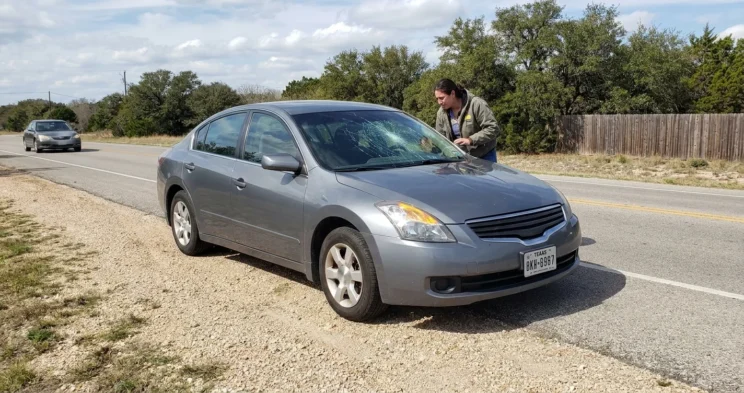
Yes, insurance can cover a windshield broken in a crash. In Texas, payment usually comes from the at-fault driver’s property damage liability insurance or your own collision coverage. If you are dealing with injuries and a cracked windshield after an I-35 crash, the claim route determines whether you have to pay a deductible.
Your policy’s glass provisions, along with the repair estimate, affect the outcome. Driver-assistance cameras near the windshield may need recalibration after replacement. Including that work in the estimate helps document the full repair scope before you accept a payment.
Which Insurance Covers a Windshield Broken in a Crash?
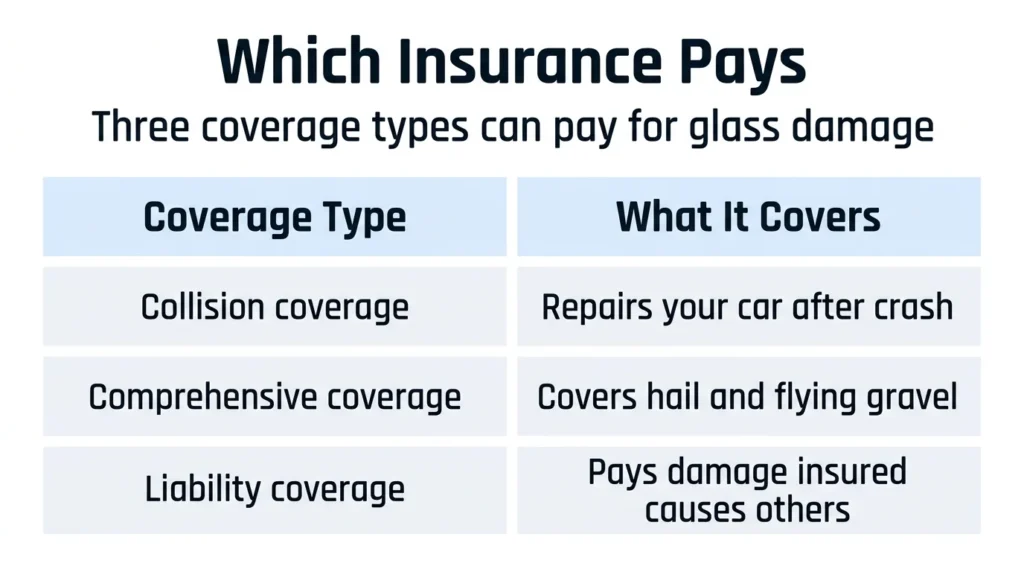
The responsible driver’s property damage liability insurance or your own applicable collision coverage can pay for crash-damaged glass. The Texas Department of Insurance auto insurance guide explains that collision coverage pays to repair your car after an accident, while comprehensive coverage handles risks such as hail and flying gravel. Liability insurance pays for damage its insured causes to others.
If another vehicle shattered your windshield, look to collision coverage or the other driver’s liability insurance. If a rock kicked up on US 290 or a hailstorm cracked the glass, look to comprehensive coverage. Progressive’s windshield guidance helps distinguish debris damage from collisions with vehicles or objects.
For the other driver’s liability insurance to pay, its insured must be responsible for the crash and the policy must cover the loss. Available policy limits can also affect payment. Filing a claim does not mean the insurer has accepted responsibility or approved the repair estimate.
Check your declarations page, policy, and any glass endorsement. Ask your insurer which glass provision and deductible apply to your loss.
Does Full Glass Coverage Remove the Windshield Deductible?
“Full glass coverage” does not automatically mean windshield replacement is free in Texas. A claim against the responsible driver’s insurer has no deductible for you as the claimant, as the Texas Department of Insurance explains. When you use your own collision or glass coverage, your policy determines the deductible.
Glass repair and replacement can also carry different deductibles. Travelers’ auto glass guidance explains that policies may provide a lower or zero glass deductible. Compare the repair and replacement terms before assuming that either service is free.
If the other driver’s insurer does not pay and you use your own coverage, your insurer may pursue recovery from the other side, including your deductible. TDI’s wreck claim tips describe that process. A refund is not guaranteed, and you should not assume when it will arrive.
Having no deductible on a third-party claim does not guarantee immediate or complete payment. The insurer may still dispute fault, coverage, available limits, or the repair estimate.
When Does Windshield Replacement Need Camera Recalibration?
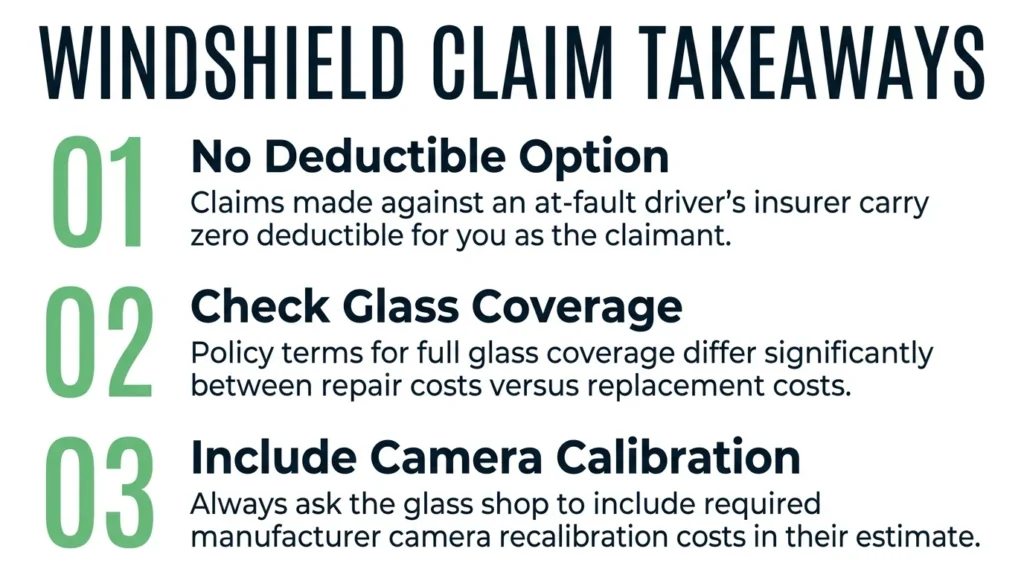
Replacement may require recalibration when a driver-assistance camera sits behind or near the windshield. Your vehicle’s manufacturer specifies whether recalibration is required. If so, the glass shop’s estimate should include the calibration for the insurer to review.
Safelite’s glass service explanation describes recalibration as realigning the forward-facing camera so features such as lane assistance and automatic emergency braking work as intended. Depending on the vehicle, the procedure may involve targets inside the shop, driving the vehicle, or both.
Subaru provides one example. Its April 2020 EyeSight windshield position statement requires calibration after windshield replacement on EyeSight-equipped vehicles and directs repairers to the service manual. The statement also warns that unsuitable glass can affect camera visibility, object measurement, and calibration.
Camera recalibration isn’t required for every windshield. Ask the shop to identify your vehicle’s manufacturer procedure, list calibration and required diagnostic work separately, and explain how it will document completion.
Including calibration in the estimate does not guarantee payment of every charge. An insurer may also dispute whether it must pay for original manufacturer glass. Ask the insurer to review the supported repair scope and explain any amount it excludes.
How Do You Document the Full Windshield Claim?
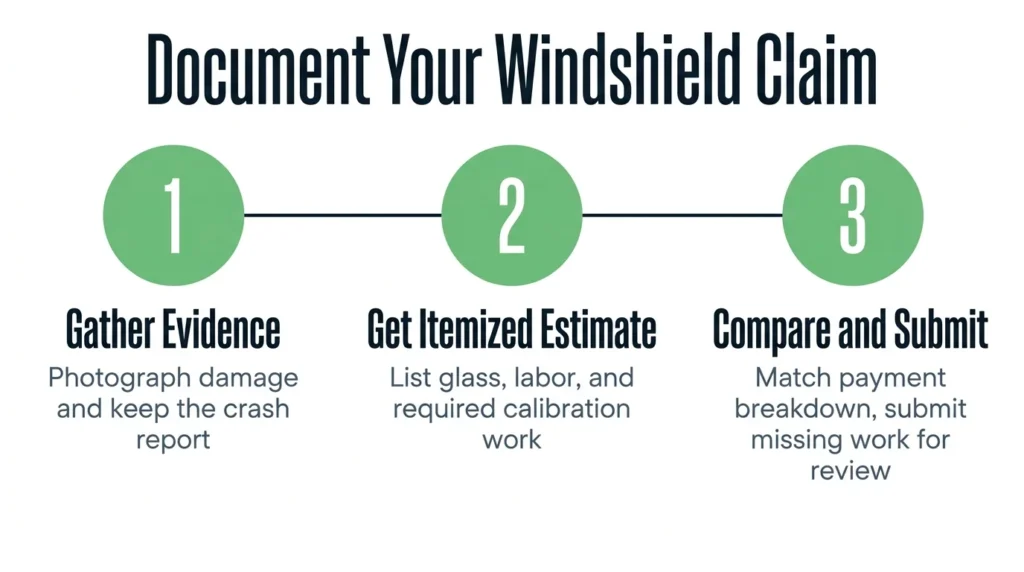
Gather damage photos and any crash report, then compare the glass shop’s itemized estimate with the insurer’s payment breakdown. Those records can help you identify missing work and explain what you want the insurer to review.
- Photograph the damage before repair, when safe. Capture the windshield and relevant crash details, including other vehicle damage and the point of impact.
- Keep the crash report. Submit a copy if one was prepared. It can support the investigation but does not conclusively determine fault.
- Request an itemized estimate from the glass shop. It should identify the vehicle, glass, installation materials, labor, required calibration, and applicable diagnostic work. Ask the shop to cite the manufacturer’s procedure supporting the calibration.
- Compare the insurer’s payment breakdown. Match the approved amount, deductible, and omitted or excluded work to the shop’s line items. Request a written explanation if the calibration is missing.
- Submit missing work for supplemental review. Have the shop send the omitted work and supporting procedure to the insurer. TDI’s claim guidance recommends contacting the insurer before approving additional repairs. Submitting a supplement does not guarantee approval.
- Save the completion records. Keep the final invoice and calibration documentation with your claim paperwork.
Get Help After a Crash That Caused Injuries
If you were hurt, the windshield repair is only one part of your car accident injury claim. Keep your photos, crash report, estimate, and payment records together.
Contact Angel Reyes & Associates for a free consultation to review your claim and discuss your options.
Past results do not guarantee future outcomes.
Texas Windshield Claim FAQs
Can I drive with a cracked windshield in Texas?
Texas law prohibits driving when windshield damage obstructs the driver’s clear view of the road. Even if a crack does not block your vision, it may worsen or affect the windshield’s structural integrity.
Can I choose my own windshield repair shop after a car accident?
Under Texas Insurance Code Section 1952.301, an insurer cannot require you to use a specific repair shop as a condition of receiving payment. However, the insurer may dispute charges it considers unreasonable or unrelated to the covered damage.
Does Texas require insurance companies to pay for OEM windshield glass?
Texas law does not generally require insurers to pay for original equipment manufacturer (OEM) windshield glass in every claim. Whether OEM glass is covered depends on the policy, the vehicle’s repair requirements, and the circumstances of the claim.
How long does an insurance company have to settle a windshield damage claim in Texas?
Under Texas Insurance Code Chapter 542, insurers generally must acknowledge a first-party claim within 15 days and notify the policyholder of acceptance or rejection within 15 business days after receiving the information needed to evaluate it, subject to exceptions. Different rules apply to claims against another driver’s insurer.
Can windshield damage affect the value of my car after an accident?
A crash may reduce a vehicle’s resale value even after you repair the windshield and other damage. In Texas, you may be able to pursue a diminished value claim against the at-fault driver if you can establish a loss in market value.
About the Authors

Angel Reyes
Writer
Angel L. Reyes, III is the Founder and Managing Partner of Angel Reyes & Associates. A nationally recognized trial attorney and business leader, Angel founded the firm in 1993, which has gone on to help over 70,000 injury victims recover more than $1 billion. Named to the Texas Super Lawyers list annually since 2008, Angel brings Wall Street experience, Ivy League education, and a deep commitment to client advocacy. He is a frequent legal commentator and published author with extensive contributions to legal scholarship, trial strategy, and consumer protection.

Kyle Nicolas
Editor
Kyle Nicolas is the Web Content & SEO Manager at Angel Reyes & Associates. He has more than 10 years of experience as a marketing co...

Angel Reyes
Reviewer
Angel L. Reyes, III is the Founder and Managing Partner of Angel Reyes & Associates. A nationally recognized trial attorney and business...