What Is Occupational Accident Insurance for Delivery Drivers?


Every article on this site is researched by our internal team, reviewed for legal accuracy against current Texas law, and held to State Bar of Texas advertising standards before publication. We do not publish content that overstates outcomes or makes promises about results.
Learn more about our
editorial standards .
Key Takeaways
- Occupational accident insurance pays capped benefits for your own covered delivery injuries.
- Accepting occupational benefits does not by itself release the driver who caused your crash.
- Save your policy certificate, app records, medical bills, and a ledger of every payment.
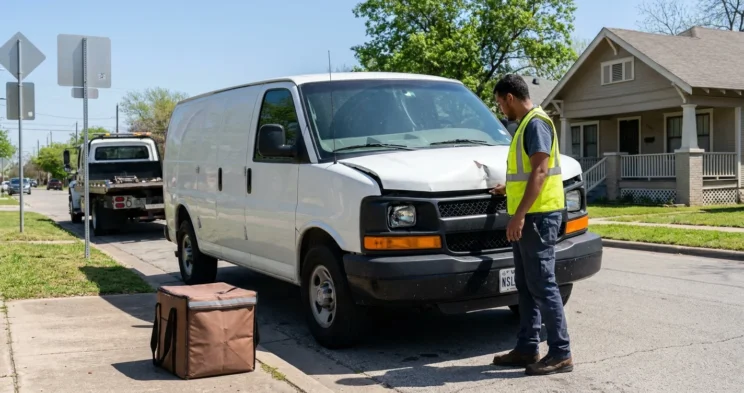
Occupational accident insurance for delivery drivers may pay medical expenses, disability income, and death or survivor benefits after an injury during covered delivery work. If another driver caused the crash, you may also have a separate delivery app accident claim against that driver.
Whether the coverage applies depends on the platform, your enrollment status, and what you were doing when the accident happened. Policy limits, conditions, and exclusions still apply.
What Occupational Accident Insurance Covers for a Delivery Driver
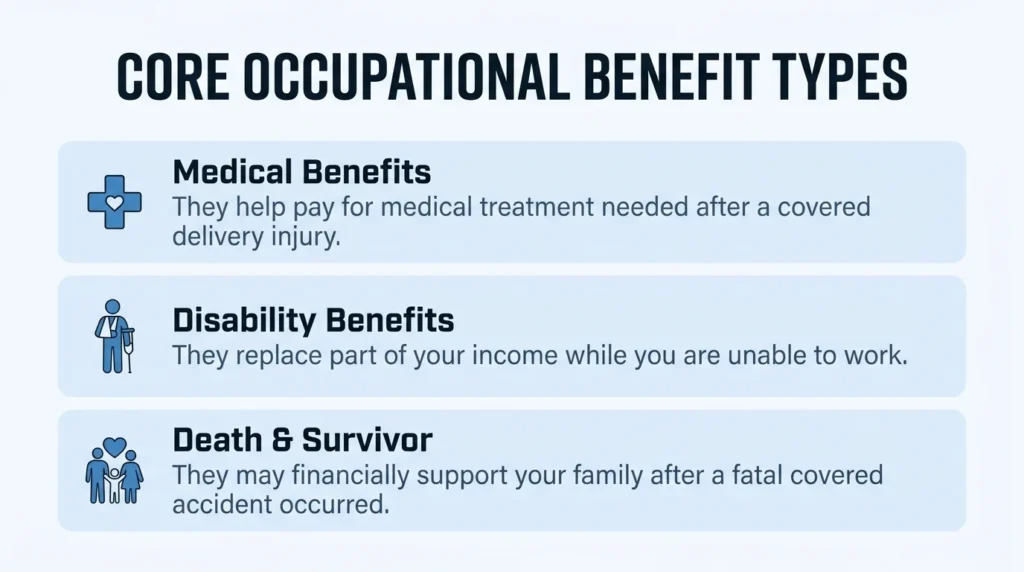
Occupational accident insurance pays benefits to you or on your behalf for covered injuries. Auto liability insurance covers injuries or property damage a driver causes to others.
Medical benefits help pay for treatment. Disability benefits replace part of your income while you cannot work. Death or survivor benefits may support your family. Benefits, limits, and covered periods vary by platform and policy.
Confirm the platform, accident date, enrollment status, and what you were doing in the app when the crash happened. The policy and endorsements control the coverage. Platform webpages only provide summaries.
This coverage is different from Texas workers’ compensation. The Texas Department of Insurance workers’ compensation guide explains that alternative policies have contractual dollar and time limits. Occupational coverage does not itself provide workers’ compensation rights.
How DoorDash Occupational Accident Insurance Works
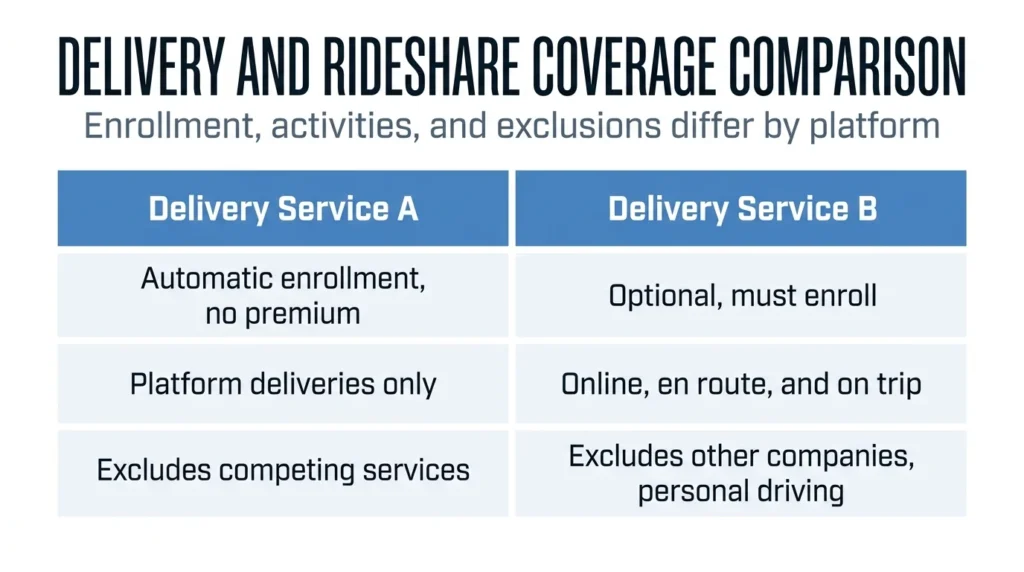
DoorDash’s occupational accident policy FAQ says Dashers are automatically eligible, with no enrollment or premiums, subject to the policy terms.
The FAQ describes coverage for injuries while making DoorDash deliveries. Deliveries for competing services are excluded. DoorDash also offers additional online-time coverage for California drivers, but that coverage does not extend to Texas.
Benefits, Waiting Periods, & Exclusions to Check
DoorDash publishes benefit maximums, but the policy in effect on your accident date determines what it will pay. According to the DoorDash FAQ, medical expenses are covered up to $1 million with no deductible or copay. Disability payments are 50% of your average weekly wage, capped at $500 per week minus other income.
Payments depend on the policy terms and facts of the claim. The FAQ also says this injury coverage does not pay for damage to your car or bicycle. It does not provide a current Texas death-benefit amount. Check the applicable certificate and benefit schedule.
How Uber’s Coverage Differs
Uber’s Optional Injury Protection is available in Texas, but drivers must enroll. Uber’s page describes coverage while online waiting for requests, en route, and on trips. It excludes services for other companies and personal driving.
Uber’s published schedule lists accidental death benefits up to $50,000. Drivers hurt on the same Houston freeway can face different coverage depending on the app, enrollment, and activity at the time of the crash.
Terms to Find in Your Certificate
A disability waiting period is the delay before disability benefits begin. It is separate from whether you were in a covered delivery period when the crash happened. Check these terms in your accident-date certificate, policy, and endorsements:
1. Read the definitions of covered accident and disability.
2. Find the disability waiting period and whether benefits cover that period retroactively.
3. Check how the policy calculates earnings and what income it subtracts.
4. Note the time limits on medical treatment and disability payments.
5. Confirm deadlines for giving notice and submitting proof of loss.
6. Review the exclusions and endorsements.
Read the policy wording before deciding whether an exclusion applies. DoorDash’s public FAQ does not provide a current Texas disability waiting period or a complete list of exclusions.
How Occupational Benefits May Interact With Other Insurance
After a Texas delivery crash, occupational benefits, the at-fault driver’s liability coverage, your personal injury protection (PIP), and health insurance may all apply. No single rule determines which one pays first in every case. Policy terms and applicable law control how shared bills and repayment demands are handled.
The At-Fault Driver’s Liability Insurance
The other driver’s insurer does not automatically pay each medical bill as it arrives. The Texas Department of Insurance auto insurance guide explains that the responsible driver’s insurer may offer an injury settlement and ask you to sign a release that prevents additional claims from the accident.
If the other driver’s limits fall short, your own health or auto coverage may help. Compare the settlement offer with your bills and any repayment demands before resolving your car accident claim against the responsible driver.
Texas PIP & Health Insurance
If your auto policy includes PIP coverage that applies to your delivery use, Texas Insurance Code § 1952.155 makes those benefits payable regardless of fault or other medical and wage benefits. That rule applies to PIP and does not automatically extend to occupational accident coverage.
Health plans may seek repayment from what you recover from the at-fault driver. Texas Civil Practice and Remedies Code Chapter 140 places limits on certain contractual reimbursement claims. It excludes self-funded ERISA plans, Medicare, Medicaid, and workers’ compensation, so the plan type can affect the repayment rules.
Request the occupational policy’s other-insurance, reimbursement, and subrogation clauses. These address overlapping coverage and a payer’s rights to recover payments. Ask each payer in writing how it is handling shared bills.
Does Accepting Occupational Accident Benefits Affect a Claim Against the At-Fault Driver?
Receiving occupational accident benefits does not, by itself, release the person who caused your crash. However, the policy may allow the payer to seek repayment from a later settlement, which can reduce the amount you keep.
Chapter 140 may limit certain repayment demands depending on the contract and plan type, but it does not govern every platform policy. A liability settlement release can end the claims it covers, so review the benefit contract, repayment demand, and settlement papers before signing.
Records to Gather After a Delivery Crash
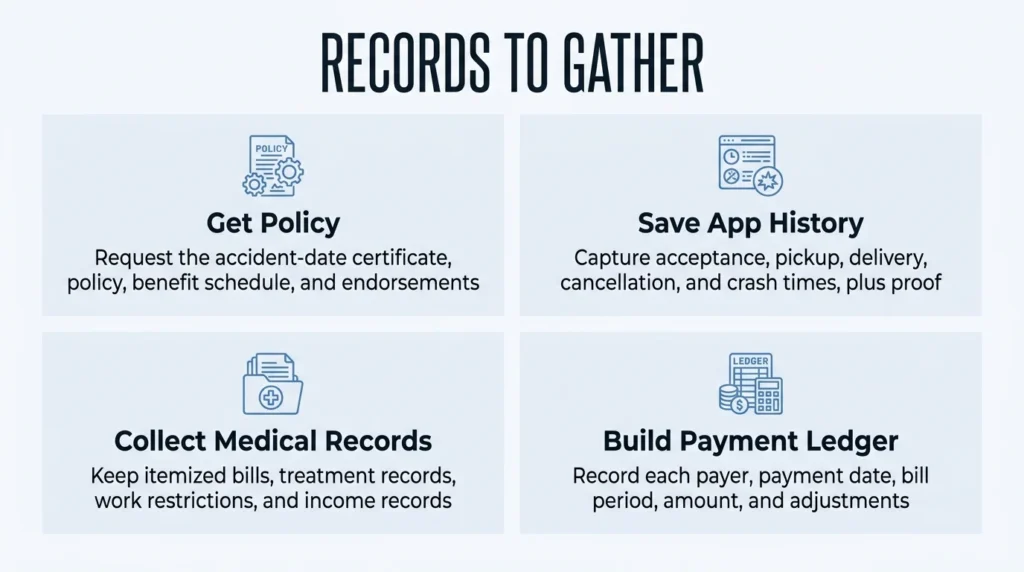
Your records help establish covered activity, document losses, and track payments. Report the injury promptly. DoorDash directs occupational claims to Blue Star. Its intake asks for company and contractor information, accident details, treatment, and work status.
Use the claim route DoorDash provides, then build your file:
1. Get the policy. Request the accident-date certificate, policy, benefit schedule, and endorsements.
2. Save your app history. Capture order acceptance, pickup, delivery, cancellation, and crash times, plus enrollment proof if required.
3. Collect medical and income records. Keep itemized bills, treatment records, work restrictions, and income records for a disability claim.
4. Build a payment ledger. Record each payer, payment date, bill or benefit period, amount, adjustments, and asserted reimbursement.
A payment ledger is not a required form. It can help you identify overlapping payments and compare them with any repayment demands.
Talk With Angel Reyes & Associates About Your Delivery Crash
Angel Reyes & Associates has served injured Texans for over 30 years, and you can reach the team 24/7. Bring your policy, app records, medical bills, and payment ledger to a free consultation. We can review your benefits and any claim against the driver who caused the crash.
Past results do not guarantee future outcomes.
Occupational Accident FAQs
Can delivery drivers receive occupational accident benefits for injuries that happen outside a vehicle?
Depending on the policy, occupational accident insurance may cover injuries from falls, lifting packages, or other accidents during covered delivery activities. Coverage depends on how the policy defines eligible work and covered injuries.
Does occupational accident insurance cover delivery drivers who are injured in a hit-and-run accident?
A hit-and-run accident does not automatically prevent a delivery driver from receiving occupational accident benefits. Texas drivers may also have a claim under uninsured motorist coverage if their auto policy covers the accident and they meet the applicable requirements.
Can a delivery driver qualify for occupational accident benefits after aggravating a preexisting injury?
Some occupational accident policies may cover an accident that worsens an existing medical condition, while others limit benefits for preexisting conditions. The policy’s injury definitions and medical evidence help determine whether the aggravated condition qualifies.
Are occupational accident insurance benefits taxable for delivery drivers?
The tax treatment depends on the benefit type and who paid the insurance premiums. Under federal tax rules, disability payments may be taxable when an employer or another party paid the premiums and did not include them in the worker’s taxable income.
Can a delivery driver appeal a denied occupational accident insurance claim in Texas?
A driver may be able to request reconsideration or use an appeal process established by the insurance policy. Because occupational accident insurance is generally separate from workers’ compensation, a denial does not automatically qualify for the Texas workers’ compensation dispute process.
About the Authors

Angel Reyes
Writer
Angel L. Reyes, III is the Founder and Managing Partner of Angel Reyes & Associates. A nationally recognized trial attorney and business leader, Angel founded the firm in 1993, which has gone on to help over 70,000 injury victims recover more than $1 billion. Named to the Texas Super Lawyers list annually since 2008, Angel brings Wall Street experience, Ivy League education, and a deep commitment to client advocacy. He is a frequent legal commentator and published author with extensive contributions to legal scholarship, trial strategy, and consumer protection.

Graham Griffin
Editor
Graham Griffin is the Web & Content Manager at Angel Reyes & Associates, where he oversees content strategy, AI-powered workflows, a...

Angel Reyes
Reviewer
Angel L. Reyes, III is the Founder and Managing Partner of Angel Reyes & Associates. A nationally recognized trial attorney and business...