Home-State Insurance After a Texas Uber Crash


Every article on this site is researched by our internal team, reviewed for legal accuracy against current Texas law, and held to State Bar of Texas advertising standards before publication. We do not publish content that overstates outcomes or makes promises about results.
Learn more about our
editorial standards .
Key Takeaways
- Your home-state no-fault policy may pay medical bills before fault is decided in Texas.
- A Texas Uber trip policy may lack PIP because a named insured can reject it in writing.
- Gather your declarations page, trip-policy PIP records, and itemized medical bills early.
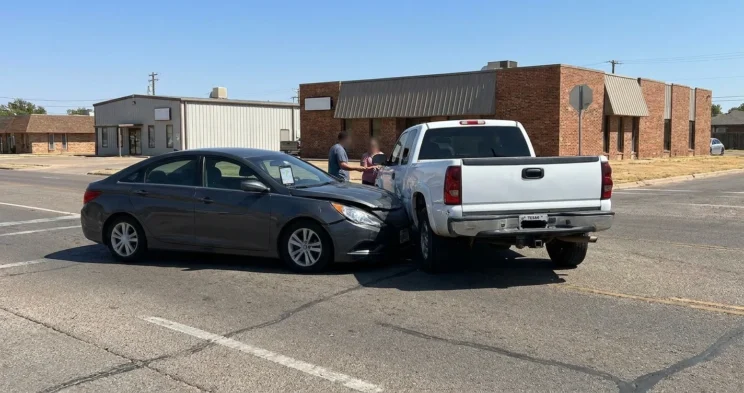
If you were hurt in an Uber crash while visiting Texas, your home-state auto policy may help pay your medical bills before anyone determines who caused the crash. Coverage depends on your policy’s terms and whether you qualify for benefits.
Sorting out out-of-state insurance after an accident in Texas starts with checking your home-state policy, the Uber trip policy, and any at-fault driver’s insurance. Your policy documents and medical bills can help show which coverage applies.
Can Your Home-State Insurance Cover Injuries in a Texas Uber Crash?
Your home-state auto policy may pay medical bills after a Texas Uber crash before anyone decides who caused it. Living in a no-fault state does not guarantee coverage. Check who your policy covers, where it applies, what it excludes, when it was in effect, and what it requires to file a claim.
If you qualify for no-fault benefits, also called personal injury protection (PIP), you can file a claim with your own insurer even if you were riding in someone else’s car.
A rideshare liability claim depends on showing that a driver was at fault. You can seek payment through that driver’s liability insurance.
The Texas Department of Insurance advises rideshare passengers to check whether their own auto policy covers rideshare travel and whether the driver has insurance for the ride. To see what may be covered, gather your declarations page and full policy, the Uber trip policy documents, and your medical bills.
When No-Fault Benefits Follow a Visiting Passenger Into Texas
New York is one example of how no-fault benefits can follow you into Texas. Under New York Regulation 68, the standard no-fault endorsement covers eligible injuries during the policy period in the United States, its territories or possessions, and Canada.
The regulation generally directs people named on the policy and qualifying relatives injured outside New York to their own insurer. This rule excludes motorcycle occupants. For an eligible New Yorker injured while riding in an Uber in Dallas, that means filing the no-fault claim with their own insurer.
What to Check in Your Own Policy
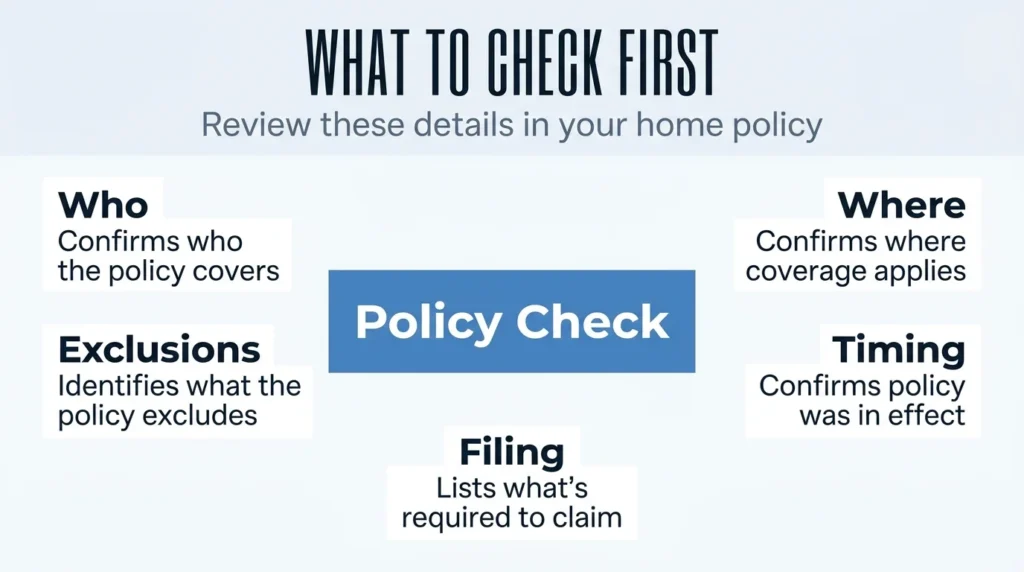
To check your PIP coverage after an out-of-state accident, look at where your policy applies and who it covers. Then check for rideshare exclusions, benefit limits, deductibles, and the deadlines and documents required to file a claim.
For example, State Farm’s published New York PIP endorsement includes an exclusion for a rideshare driver using the vehicle insured under that policy. That wording does not automatically exclude you when you’re a passenger in someone else’s Uber. Check the wording in your own policy.
Eligibility does not guarantee quick payment or reimbursement of every bill. It means you may be able to seek covered medical benefits without waiting for a liability settlement.
Does the Texas Uber Trip Policy Include PIP?
Not necessarily. Texas Insurance Code § 1954.053(3) requires personal injury protection (PIP) during a prearranged ride when § 1952.152 requires it. An insured named in the policy can reject PIP in writing under § 1952.152(b).
To find out whether PIP was available, check the trip policy and any written rejection that applied on the date of your crash.
What the $1 Million Liability Limit Covers
§ 1954.053 separately requires at least $1 million in total liability coverage per incident for death, bodily injury, and property damage. That limit applies to the incident as a whole and does not guarantee a payment to each passenger.
The driver, the rideshare company, or both can provide the required insurance, as the Texas Department of Licensing and Regulation’s rideshare guide explains.
How Texas PIP Pays Benefits
If the trip policy includes Texas PIP, § 1952.155 provides benefits regardless of fault. It does not automatically change how your home-state policy works.
Ask the trip insurer for the declarations page, the PIP endorsement or written rejection, the coverage dates, and a claim number.
How Medical Benefits & Liability Claims Fit Together
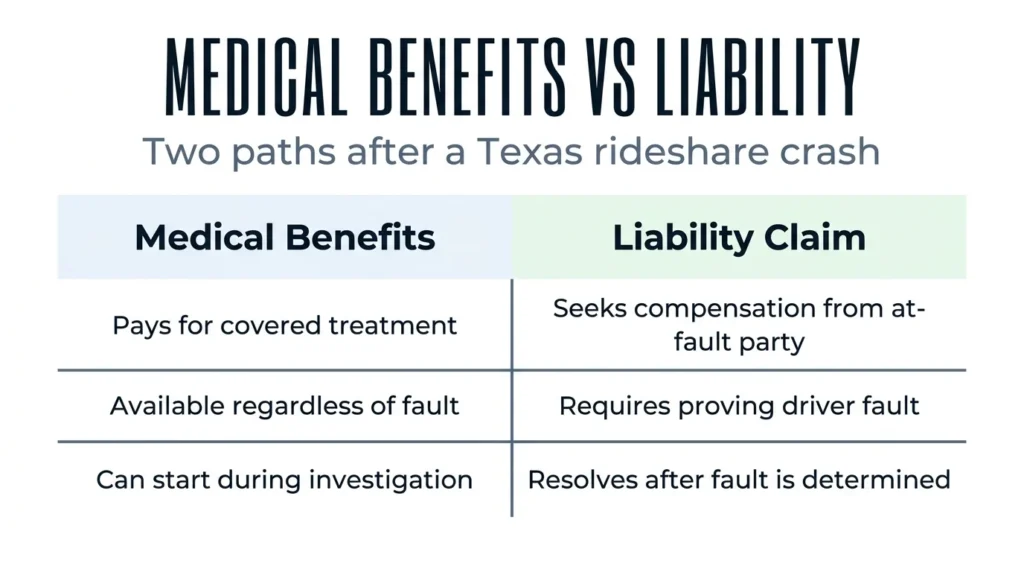
You may seek medical benefits under your own policy or the Uber trip policy while insurers investigate who caused the crash. Which insurer pays first and whether any payment must be deducted or repaid depends on the policies and who paid each bill.
Medical benefits can help pay for covered treatment. A liability claim seeks compensation from the person responsible for the crash. Report the injury to your insurer and the Uber trip insurer. If another driver was involved, identify that driver’s insurer too.
Your home-state policy may limit payment for an expense another insurer has already covered. Check your own policy before assuming you’ll have to repay anything from a Texas settlement.
Under Texas Insurance Code § 1952.159, a passenger’s award in a liability claim against the owner or driver of the vehicle they rode in, or against that party’s insurer, can be reduced by the amount those parties already paid the passenger in PIP benefits. That rule does not automatically apply to payments from your own out-of-state policy.
Before you sign a settlement or release, check which bills were paid, what balances remain, and whether any insurer claims an offset or reimbursement.
What to Gather Before Filing or Settling a Claim
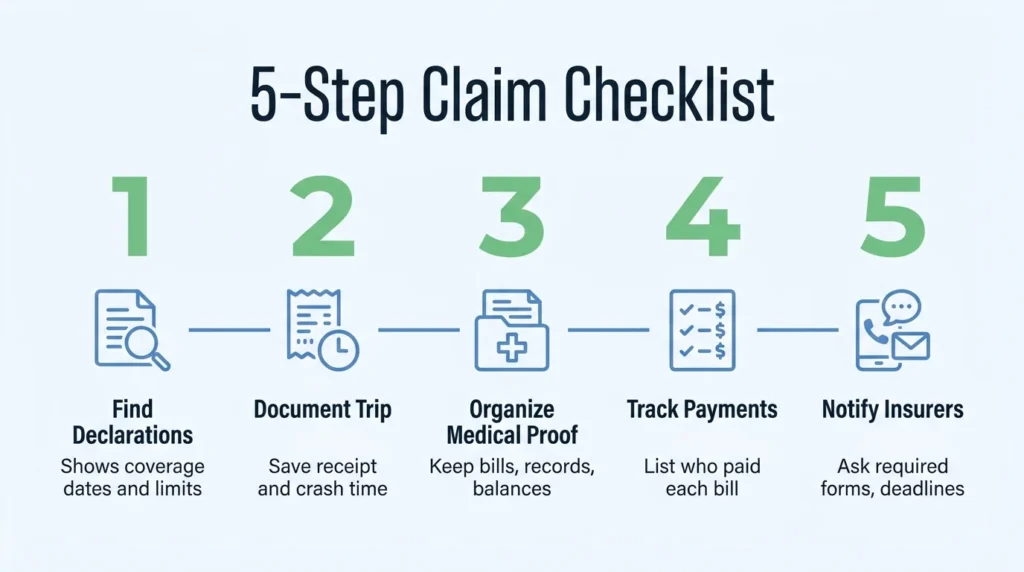
Start with your home policy’s declarations page, documents showing whether the Uber trip policy includes PIP, and itemized medical bills.
1. Find your declarations page. It shows your coverage dates, who’s named on the policy, and any PIP or no-fault coverage, limits, and deductibles. Request the full policy to check where it applies, who it covers, and what it excludes.
2. Document the trip. Keep your Uber ride receipt and trip details, and note the time of the crash. Request the trip policy information, the PIP endorsement or written rejection, and a claim number. Save any written denial and its stated policy basis.
3. Organize your medical proof. Keep itemized bills, treatment dates, records linking your care to the crash, payment statements, and balances.
4. Track every payment. A list of who paid each bill can help you check whether a payment should be deducted or repaid.
5. Notify each insurer promptly. Ask in writing what forms and records you need to submit and when they’re due. Deadlines vary by policy and state.
Have these records reviewed before you sign a release so you know which bills are still unpaid and whether an insurer is asking for repayment.
Get Help Reviewing Your Coverage After a Texas Uber Crash
Sorting out your home-state benefits, the trip policy’s PIP status, and a liability claim is a heavy load while you heal, especially far from home. You do not have to work through it alone.
Angel Reyes & Associates has served injured Texans for over 30 years and can walk you through your declarations page, trip coverage, medical bills, and liability claim. You can reach our firm 24/7. Contact Angel Reyes & Associates for a free consultation to review your options.
Past results do not guarantee future outcomes.
Home-State Uber Insurance FAQs
Can an out-of-state Uber passenger use health insurance for medical treatment in Texas?
Yes. Your health insurance may cover emergency care and follow-up treatment after a Texas Uber accident, subject to network rules, deductibles, and other policy terms.
What happens if an uninsured driver causes an Uber accident in Texas?
Uninsured motorist coverage may provide compensation if the at-fault driver has no insurance. Whether you qualify as an Uber passenger depends on the applicable policy and its coverage requirements.
Can you file a Texas Uber accident lawsuit if you live in another state?
Yes. Living outside Texas does not prevent you from filing a personal injury lawsuit in Texas when the accident occurred there, as long as the court has jurisdiction over the defendant.
How long do out-of-state passengers have to file an Uber accident lawsuit in Texas?
Under Texas Civil Practice and Remedies Code § 16.003, most personal injury lawsuits must be filed within two years of the accident. This deadline generally applies even if the injured passenger lives in another state, although exceptions may apply.
Can you recover lost wages after an Uber accident while visiting Texas?
You may seek compensation for lost income if your injuries prevent you from working, even if your employer is located outside Texas. Pay records, employer statements, and medical documentation can help establish the income you lost.
About the Authors

Angel Reyes
Writer
Angel L. Reyes, III is the Founder and Managing Partner of Angel Reyes & Associates. A nationally recognized trial attorney and business leader, Angel founded the firm in 1993, which has gone on to help over 70,000 injury victims recover more than $1 billion. Named to the Texas Super Lawyers list annually since 2008, Angel brings Wall Street experience, Ivy League education, and a deep commitment to client advocacy. He is a frequent legal commentator and published author with extensive contributions to legal scholarship, trial strategy, and consumer protection.

Graham Griffin
Editor
Graham Griffin is the Web & Content Manager at Angel Reyes & Associates, where he oversees content strategy, AI-powered workflows, a...

Angel Reyes
Reviewer
Angel L. Reyes, III is the Founder and Managing Partner of Angel Reyes & Associates. A nationally recognized trial attorney and business...