Dealing With a GEICO Auto Accident Claim


Every article on this site is researched by our internal team, reviewed for legal accuracy against current Texas law, and held to State Bar of Texas advertising standards before publication. We do not publish content that overstates outcomes or makes promises about results.
Learn more about our
editorial standards .
Key Takeaways
- GEICO uses Texas comparative fault rules to assign partial blame and reduce settlement payouts.
- Audatex valuations often undervalue total-loss vehicles, so request the full report and challenge comps.
- Early settlement offers often arrive before injuries fully surface, so wait until treatment is complete.
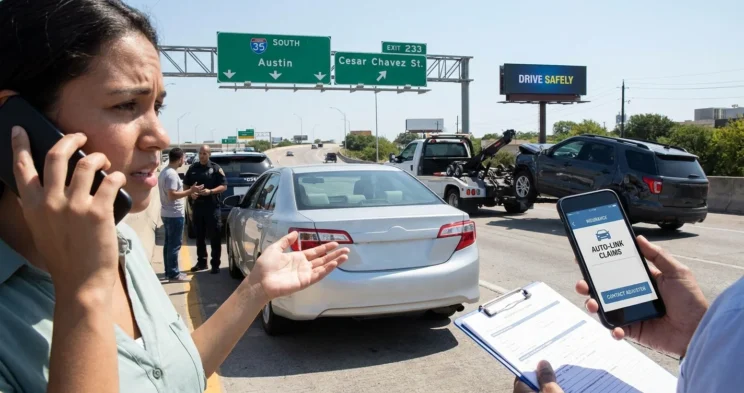
You’re driving home along I-35 in Austin when another driver runs a red light and slams into your passenger side. Within hours, a GEICO adjuster calls, sounding helpful and asking for a recorded statement. The questions feel routine, but each answer could quietly shape your payout. Knowing how a GEICO auto accident claim proceeds in Texas before you respond can change the entire trajectory of your case unfolds.
GEICO’s Claim Process in Texas
GEICO opens most Texas claims within 24 to 48 hours through its 24-hour hotline, and an adjuster is typically assigned the same day or the next business day. That speed sounds reassuring, but it also gives the insurer early control over the narrative.
After you report the crash, GEICO will request a recorded statement, photos, a police report number, and medical records. The TDI Guide to Filing Auto Insurance Claims lays out what Texas drivers must provide and what they can decline. You are not required to give a recorded statement to the at-fault driver’s insurer.
Keep your own records from day one. Save the crash report, photos of vehicle damage, names of witnesses, and every medical visit tied to the wreck. If you are unsure how the car accident claims process works in Texas, get those answers before your second call with the adjuster.
GEICO’s Liability Dispute Tactics
GEICO is known for assigning partial fault to claimants to shrink payouts under Texas Civil Practice and Remedies Code Chapter 33. Texas follows a modified comparative fault rule with a 51% bar. If you are found 51% or more at fault, you recover nothing.
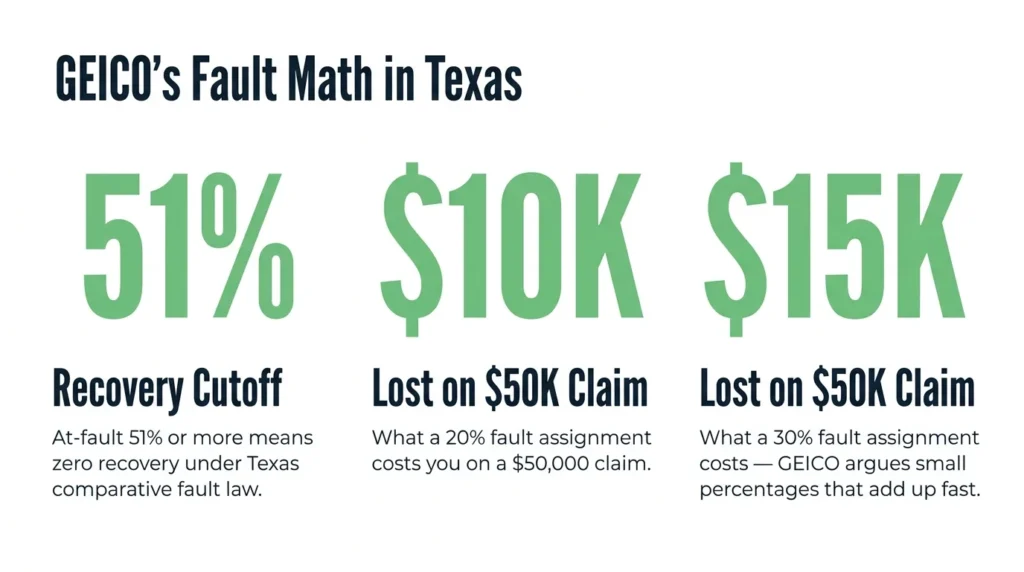
Adjusters will push small percentages onto you that feel harmless. A 20% fault assignment cuts a $50,000 claim by $10,000. A 30% finding takes $15,000. The math adds up fast, which is why GEICO leans on it.
Common arguments include claims that you were speeding, distracted, or could have avoided the crash. Many of these arguments collapse under scrutiny once witness statements, dash cam footage, and the police report are reviewed.
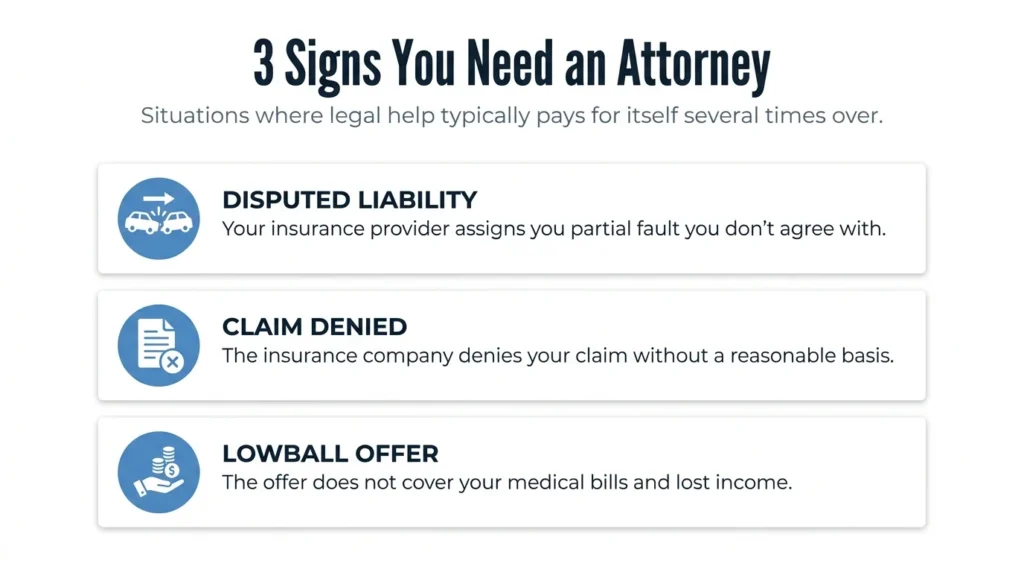
If GEICO assigns you at fault you do not agree with, push back in writing and request the basis for their determination. Disputed liability is one of the clearest signals that you need legal help.
Vehicle Valuation & Total Loss Issues
GEICO uses Audatex to value total-loss vehicles, and the numbers it generates often come in below what comparable vehicles actually sell for in Texas. The system relies on regional data sets that can miss recent upgrades, low mileage, or strong condition.
Ask GEICO for the full Audatex valuation report. Review every comparable vehicle listed. Check the mileage, trim level, options, and condition rating against your own car. If the comps are weaker than your vehicle, you have grounds to challenge the offer.
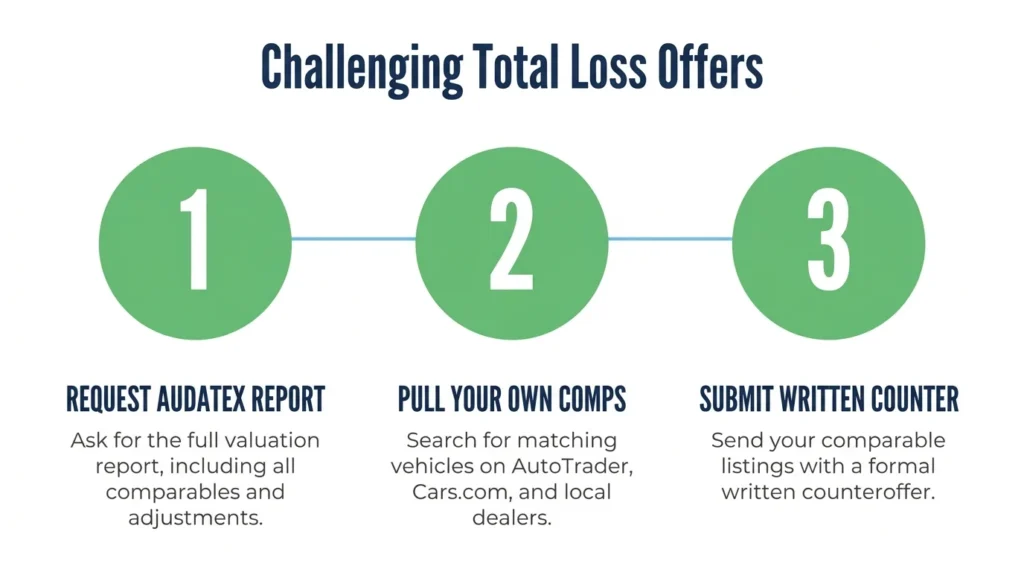
Pull listings from AutoTrader, Cars.com, and local dealerships for vehicles matching your year, make, model, and trim. Submit those listings with a written counteroffer.
If the repair estimate is close to the actual cash value, GEICO may try to total the vehicle when repair makes more sense, or the reverse. Get an independent body shop estimate before agreeing to either path.
Settlement Pressure & Lowball Offers
GEICO frequently makes early settlement offers before claimants finish medical treatment, because injuries that look minor in week one often require months of care. Accepting too early means absorbing those costs yourself.
A herniated disc, soft tissue damage, or a concussion can take weeks to surface fully. Once you sign a release, the claim is closed.
The TDI Company Complaint Ratios track how often Texas drivers file complaints against each insurer. GEICO appears regularly for claim-handling disputes, including delays and undervalued offers. You can also file a complaint directly through the Texas Department of Insurance when an insurer behaves unfairly.
Counter a lowball offer with a written demand that itemizes medical bills, lost wages, vehicle damage, and pain and suffering. Silence is leverage. So is documentation.
When Legal Help Becomes Necessary
You should consider hiring an attorney when GEICO disputes liability, denies your claim, or offers a number that does not cover your medical bills and lost income. These are the conditions where representation typically pays for itself several times over.
Under Texas Insurance Code Chapter 541, insurers face penalties for unfair claim settlement practices. Misrepresenting policy terms, failing to investigate, or refusing to pay without a reasonable basis can support an insurance bad faith claim with additional damages on top of the original payout.
Cost should not block representation. Personal injury attorneys in Texas work on contingency, meaning you pay nothing upfront and nothing unless the lawyer recovers money for you. The fee comes from the settlement, not your pocket.
Work with a Texas Injury Attorney
Angel Reyes & Associates has spent more than 30 years fighting insurance companies like GEICO across Texas, and we have recovered more than $1 billion for our clients. You pay no fee unless we win your case.
If GEICO is undervaluing your vehicle, disputing your fault percentage, or pressuring you toward a quick settlement, talk to an attorney from our team before you sign anything. Contact us today for a free case review.
GEICO Auto Accident Claim FAQs
Can I switch from GEICO to another insurance company while my claim is still pending?
Yes, you can change insurance companies at any time, but your pending claim will still be handled by GEICO under your original policy terms. The new insurer will not take over an existing claim.
What happens if GEICO takes longer than 30 days to respond to my claim?
Texas law requires insurers to acknowledge claims within 15 days and begin investigation promptly, but settlement timelines vary based on complexity. You can file a complaint with the Texas Department of Insurance if GEICO unreasonably delays your claim.
Does GEICO have to pay for a rental car while my vehicle is being repaired?
GEICO must provide rental coverage only if you purchased rental reimbursement coverage on your policy or if you are filing a third-party claim against their insured driver. Check your policy declarations page to confirm your coverage limits.
Can I negotiate directly with GEICO without hiring a lawyer?
Yes, you can negotiate your own settlement with GEICO, but consider legal help if the claim involves serious injuries, disputed liability, or offers that seem inadequate. Many people successfully handle minor property damage claims themselves.
What should I do if GEICO requests a second medical examination?
GEICO can request an independent medical examination for injury claims, but the doctor must be qualified and the exam must be reasonable in scope. You have the right to have your attorney present and to receive a copy of the examination report.
About the Authors

Angel Reyes
Writer
Angel L. Reyes, III is the Founder and Managing Partner of Angel Reyes & Associates. A nationally recognized trial attorney and business leader, Angel has helped over 70,000 injury victims recover more than $1 billion since founding the firm in 1993. Named to the Texas Super Lawyers list annually since 2008, Angel brings Wall Street experience, Ivy League education, and a deep commitment to client advocacy. He is a frequent legal commentator and published author with extensive contributions to legal scholarship, trial strategy, and consumer protection.

Kyle Nicolas
Editor
Kyle Nicolas is the Web Content & SEO Manager at Angel Reyes & Associates. He has more than 10 years of experience as a marketing co...

Spencer Browne
Reviewer
Spencer Browne is a partner at Angel Reyes & Associates and a Board Certified personal injury trial lawyer with nearly 100 jury trials a...