Do I Need a Lawyer For a Minor Car Accident?


Every article on this site is researched by our internal team, reviewed for legal accuracy against current Texas law, and held to State Bar of Texas advertising standards before publication. We do not publish content that overstates outcomes or makes promises about results.
Learn more about our
editorial standards .
Key Takeaways
- A minor Texas accident means no injury, clear fault, and simple property damage.
- 2. Whiplash, concussions, and disc pain often surface 24 to 72 hours after impact.
- 3. Texas law gives injured drivers a full two years to file a car accident lawsuit.
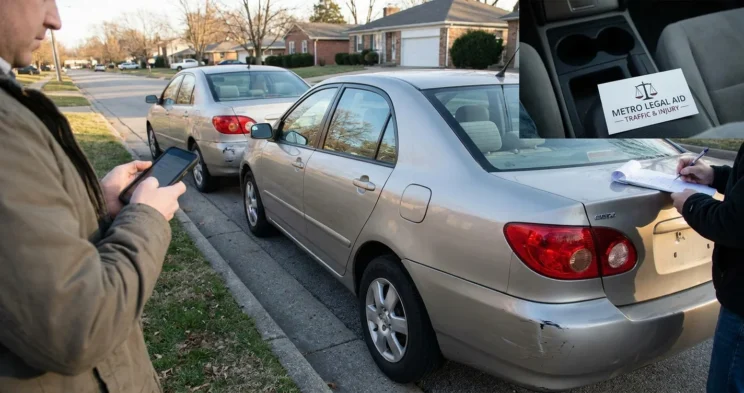
You’re standing in a parking lot off I-30 in Fort Worth, staring at a small dent where the other car clipped your bumper. You and the other driver are calm, insurance cards have been exchanged, and nobody mentions any pain. Still, you’re left wondering: what happens if I wake up in pain tomorrow?
What Counts As A Minor Car Accident?
A minor car accident is one with property damage only. No one reports pain, and fault for the crash isn’t in dispute between two insured drivers. The damage is typically limited to cosmetic repairs like dented bumpers, cracked taillights, or scraped paint. It’s not the kind of crash that totals a vehicle.
“Minor” might describe how the crash looks at the scene, but it’s no guarantee it will stay that way. Injuries can surface days later, and things can change once an insurance adjuster gets involved.
Injuries That Show Up Days Later
Adrenaline can hide your injuries for hours or days after a crash, which is why feeling OK at the scene doesn’t mean everything is fine. Three injury types cause the most trouble because they rarely show up immediately.

Whiplash
Whiplash and other soft tissue neck injuries often peak in pain and stiffness 24 to 72 hours after impact. Insurers frequently dispute these claims since the injury doesn’t show up on an X-ray, which makes it critical that you document them early.
Concussions
Concussions can be just as delayed. According to the CDC, mild traumatic brain injury symptoms such as headache, confusion, and dizziness can appear hours or even days after the impact that caused them.
Disc Injuries
Disc injuries follow a similar pattern: soreness that feels like ordinary stiffness at first, developing into persistent back or neck pain as inflammation builds over the following weeks.
A doctor’s evaluation—not how you feel today—should decide whether your injuries warrant a claim.
Other Red Flags That Call For a Lawyer
Beyond delayed injuries, a handful of other signs mean a “minor” accident calls for legal help. Any one of them on its own is reason enough to get a professional opinion.
The clearest sign is when the other driver’s story changes. An apology at the scene can turn into a denial once their insurance company gets involved, and without someone locking down witness statements early, it becomes your word against theirs.
Insurers sometimes use delay and denial tactics to wear your claim down rather than resolve it fairly. Watch for:
- Requesting the same documents more than once
- Moving your claim between adjusters repeatedly
- Disputing medical treatment without a medical basis
- Offers with an unreasonably short expiration date
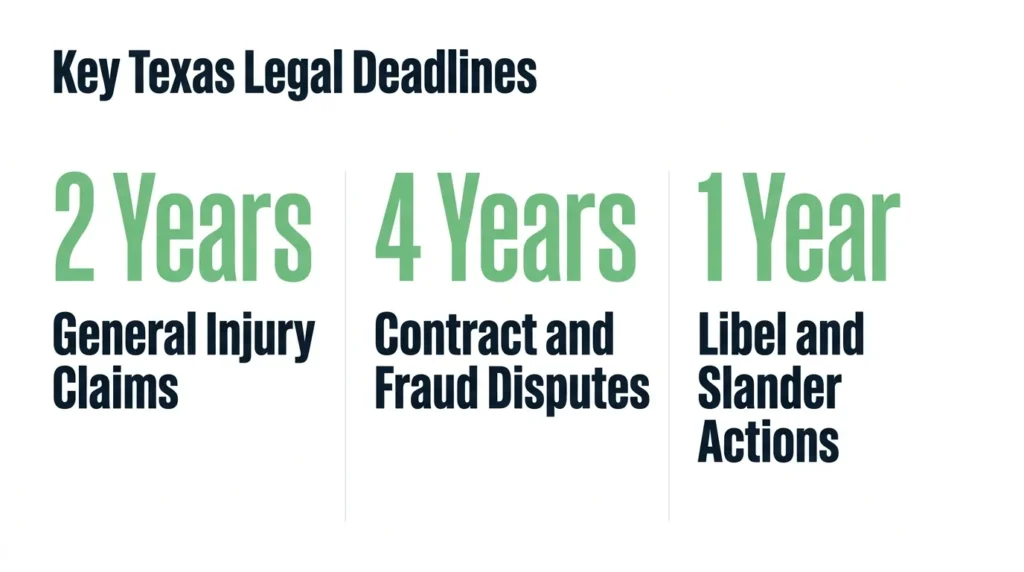
None of this needs to be sorted out overnight. Texas Civil Practice and Remedies Code § 16.003 gives an injured driver two years from the crash to file suit, so there’s little reason to accept a rushed offer out of false urgency.
The Insurance Research Council has found that claimants represented by an attorney recover substantially higher average payments than those who handle a car accident claim without one, even after accounting for contingency fees.
When You Can Handle a Minor Claim Yourself
You can likely handle a minor claim on your own when every one of these conditions holds true:
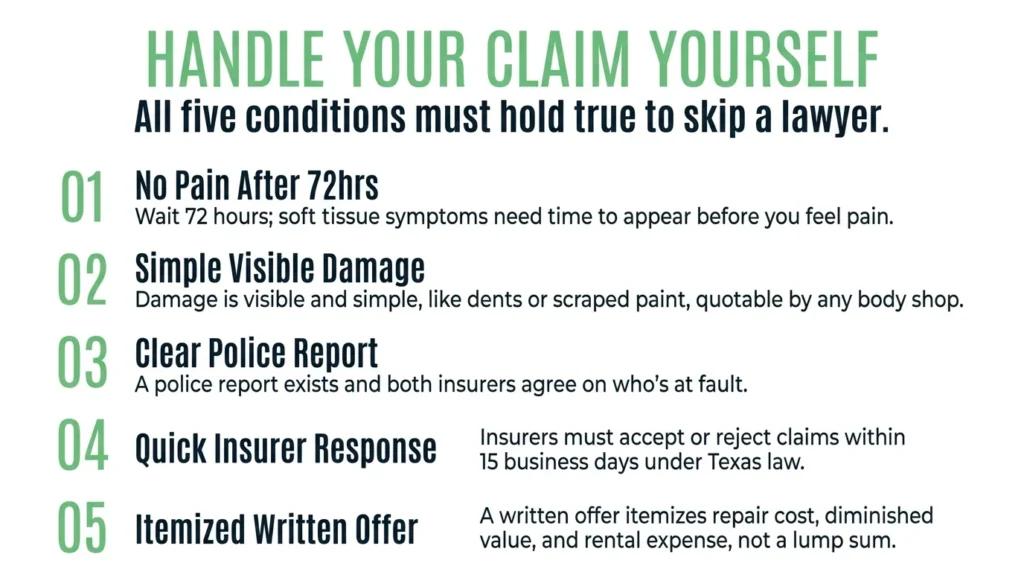
- You have no pain at all after waiting 72 hours. Doctors say soft tissue symptoms need time to appear.
- Damage is visible and simple, such as dents or scraped paint, which any body shop can quote.
- A police report is made and both insurers agree on who’s at fault..
- An insurer acknowledges your claim quickly. Under Texas Insurance Code § 542.056, insurers must accept or reject a claim within 15 business days of receiving your paperwork, and a well-run claim should hit that window without pressure tactics.
- You get a written offer that itemizes repair cost, diminished value, and rental car expense, not a vague lump sum.
If your accident fits this description, it likely falls into the same category as a straightforward no-injury Texas accident claim, which usually resolves through insurance alone.
Get Help From a Texas Injury Attorney
If your “minor” accident is starting to look more complicated, a second opinion costs nothing. Angel Reyes & Associates has represented Texas accident victims for more than 30 years, with more than $1 billion recovered for clients across those cases.
Our case results reflect decades of experience handling both simple and complex car accident claims. We work on contingency, so you owe nothing unless we win.
Contact us today for a free case review.
Past results do not guarantee future outcomes.
Frequently Asked Questions
Do I have to report a minor car accident to the police in Texas?
Yes. If it caused injury, death, or roughly $1,000 or more in property damage, Texas law requires an immediate report to local police or the sheriff’s office.
Does my Texas auto policy include uninsured motorist coverage automatically?
Yes. Texas insurers must include uninsured or underinsured motorist coverage in every auto policy unless the policyholder rejects it in writing.
Will my insurance rate go up after a minor accident that wasn't my fault?
It can. Insurers weigh any reported crash when assessing risk, so a premium increase is possible even when another driver caused the accident.
Do I have to report the crash if it happened in a parking lot in Texas?
Yes. Texas’s duty to exchange information and render aid extends to business parking lots and access ways, in addition to public roads.
About the Authors

Angel Reyes
Writer
Angel L. Reyes, III is the Founder and Managing Partner of Angel Reyes & Associates. A nationally recognized trial attorney and business leader, Angel has helped over 70,000 injury victims recover more than $1 billion since founding the firm in 1993. Named to the Texas Super Lawyers list annually since 2008, Angel brings Wall Street experience, Ivy League education, and a deep commitment to client advocacy. He is a frequent legal commentator and published author with extensive contributions to legal scholarship, trial strategy, and consumer protection.

Kyle Nicolas
Editor
Kyle Nicolas is the Web Content & SEO Manager at Angel Reyes & Associates. He has more than 10 years of experience as a marketing co...

Angel Reyes
Reviewer
Angel L. Reyes, III is the Founder and Managing Partner of Angel Reyes & Associates. A nationally recognized trial attorney and business...