Do You Need a Helmet on an E-Bike?


Every article on this site is researched by our internal team, reviewed for legal accuracy against current Texas law, and held to State Bar of Texas advertising standards before publication. We do not publish content that overstates outcomes or makes promises about results.
Learn more about our
editorial standards .
Key Takeaways
- Texas has no statewide adult e-bike helmet requirement; Austin and Dallas require helmets for riders under 18, and Houston requires them for minors.
- Class 3 e-bike operators must be at least 15 years old; some municipalities restrict Class 3 bikes from certain shared-use paths.
- Helmet non-use can be raised as a comparative fault argument in Texas, reducing recovery for head injuries where a helmet would have helped — but it does not bar the claim entirely.
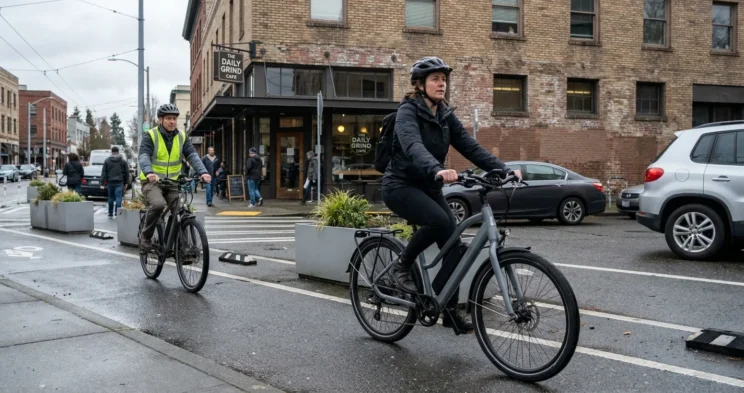
Texas Has No Statewide Adult E-Bike Helmet Law
Texas Transportation Code Chapter 664 governs e-bike standards and classification in Texas. It sets speed limits, wattage limits, and age restrictions—but it includes no helmet requirement for adult riders. Neither does Chapter 551, which covers bicycle rules more broadly.
Texas has left helmet requirements to local governments, and most have chosen to apply them only to minors.
Helmet Rules in Austin, Dallas, & Houston
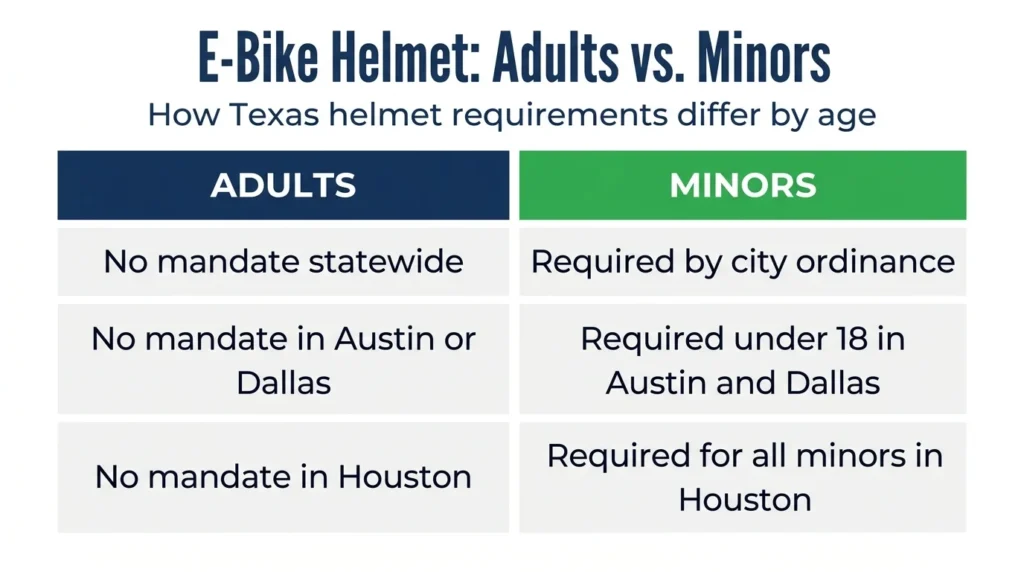
None of Texas’s three largest cities currently require you to wear a helmet on an e-bike if you’re an adult. However, Austin, Dallas, and Houston all require helmets for bikers under 18, and Houston imposes penalties on parents when children under 14 ride without a helmet.
How Not Wearing a Helmet Affects an Injury Claim
Texas follows a modified comparative fault system under Texas Civil Practice and Remedies Code Chapter 33. Understanding how comparative fault affects your case is essential to understanding your options.
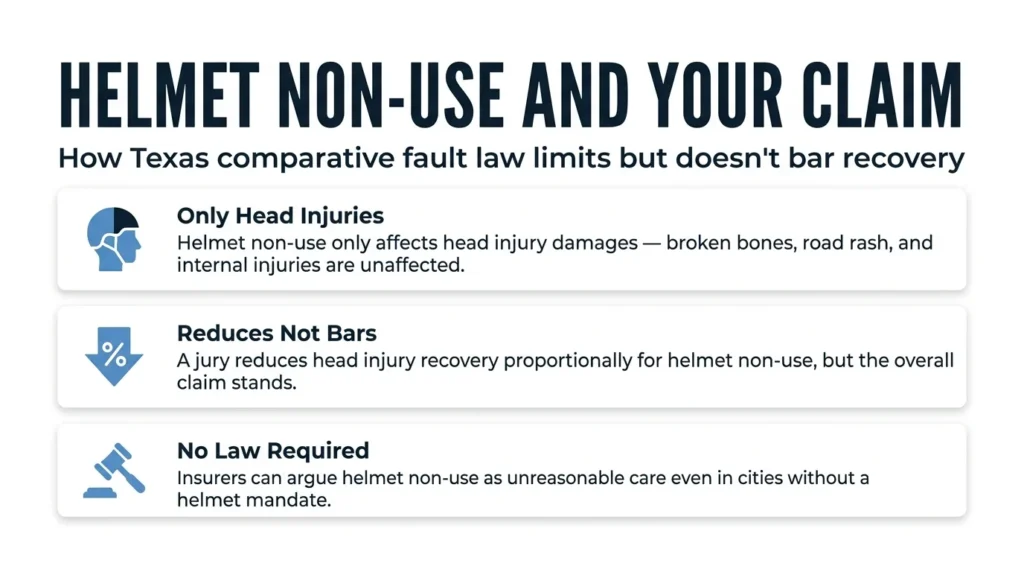
A jury assigns a fault percentage to each party involved in an accident, and your recovery is reduced by your own percentage of fault. If you are found more than 50 percent responsible for your injuries, you cannot recover anything.
When you’re not wearing a helmet and suffer a head injury, a defense attorney will typically argue that your failure to wear a helmet contributed to the severity of the injury. Even though no law required a helmet, you made a choice that increased your harm, and a jury can hold that against you.
This argument is only relevant to injuries a helmet would have prevented or reduced—most commonly, head injuries and traumatic brain injuries. It doesn’t apply to injuries a helmet wouldn’t reduce or prevent, like broken bones, internal injuries, or road rash.
An Example Of Comparative Fault in An E-Bike Crash
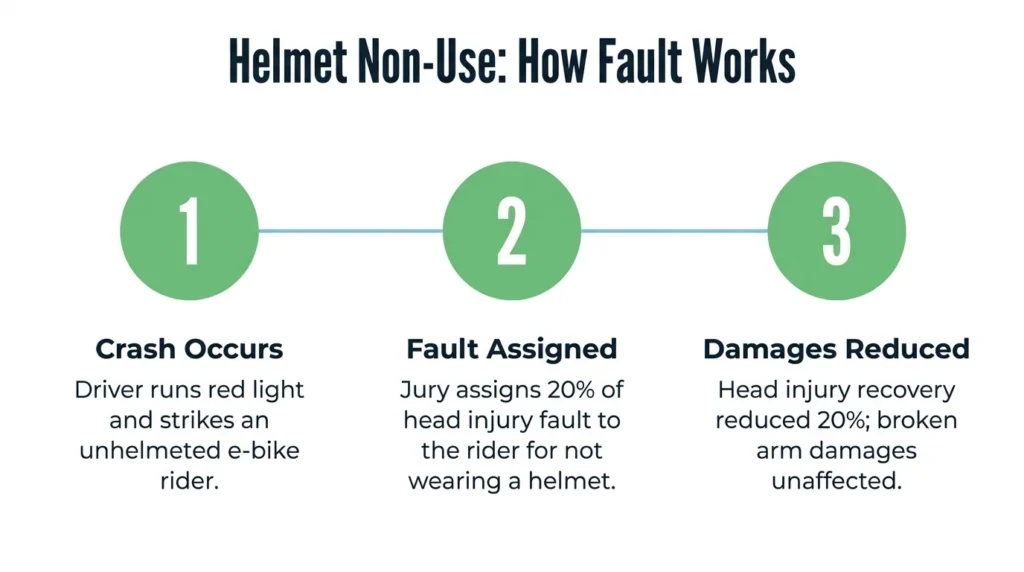
Let’s say a driver runs a red light and strikes you while you’re riding an e-bike. You aren’t wearing a helmet, and you suffer a head injury and a broken arm.
A jury might assign you 20 percent of the fault for the head injury because you didn’t wear a helmet. The broken arm damages aren’t affected at all, however. If the driver is found 80 percent at fault overall, you can still recover 80 percent of the total damages.
Not wearing a helmet doesn’t prevent you from seeking compensation. An experienced attorney can challenge comparative fault arguments and make sure that only you aren’t assigned fault that the facts don’t warrant.
Work with a Texas Personal Injury Attorney
If you were injured in an e-bike accident, whether you were wearing a helmet is just one factor among many in the legal analysis. An attorney can evaluate the full picture — the other party’s fault, the nature of your injuries, and how to position the claim for maximum recovery.
Angel Reyes & Associates has represented injury victims across Texas for more than 30 years. We have recovered more than $1 billion for our clients. We offer free initial consultations and work on a no-fee-unless-you-win basis.
To discuss your situation, contact us for a free consultation.
Past results do not guarantee future outcomes.
FAQs
Do you have to wear a helmet on a Class 3 e-bike?
No adult helmet law applies specifically to Class 3 e-bikes in Texas. However, Class 3 operators must be at least 15 years old under TTC Chapter 664. Class 3 bikes are also required to have a speedometer and may face access restrictions on certain shared trails and paths in some municipalities.
Can not wearing a helmet hurt my injury claim in Texas?
Yes. Even though no law requires adults to wear helmets, a defense attorney can argue under Texas comparative fault law that your failure to wear one contributed to the severity of your head injuries. A jury may assign you a percentage of fault, which reduces your total recovery under CPRC Chapter 33.
Does Texas require helmets for e-bike riders differently than for regular bicycle riders?
No. Texas applies the same framework to both. No statewide adult helmet law exists for either regular bicycles or e-bikes. Local ordinances covering helmet requirements for minors apply to all bicycles, including e-bikes. The Class 3 e-bike age restriction (15+) is e-bike specific, but it is an age rule, not a helmet rule.
About the Authors

Angel Reyes
Writer
Angel L. Reyes, III is the Founder and Managing Partner of Angel Reyes & Associates. A nationally recognized trial attorney and business leader, Angel has helped over 70,000 injury victims recover more than $1 billion since founding the firm in 1993. Named to the Texas Super Lawyers list annually since 2008, Angel brings Wall Street experience, Ivy League education, and a deep commitment to client advocacy. He is a frequent legal commentator and published author with extensive contributions to legal scholarship, trial strategy, and consumer protection.

Graham Griffin
Editor
Graham Griffin is the Web & Content Manager at Angel Reyes & Associates, where he oversees content strategy, AI-powered workflows, a...

Angel Reyes
Reviewer
Angel L. Reyes, III is the Founder and Managing Partner of Angel Reyes & Associates. A nationally recognized trial attorney and business...