Does Shared Fault Dismiss a Wrongful Death Claim in Texas?


Every article on this site is researched by our internal team, reviewed for legal accuracy against current Texas law, and held to State Bar of Texas advertising standards before publication. We do not publish content that overstates outcomes or makes promises about results.
Learn more about our
editorial standards .
Key Takeaways
- A Texas wrongful death claim can succeed if the victim was 50% or less at fault.
- Fault above 50% prohibits recovery, but if your loved one was found 50% or less at fault, then your award is reduced by their percentage of fault.
- Only a surviving spouse, child, or parent can file a Texas wrongful death claim.
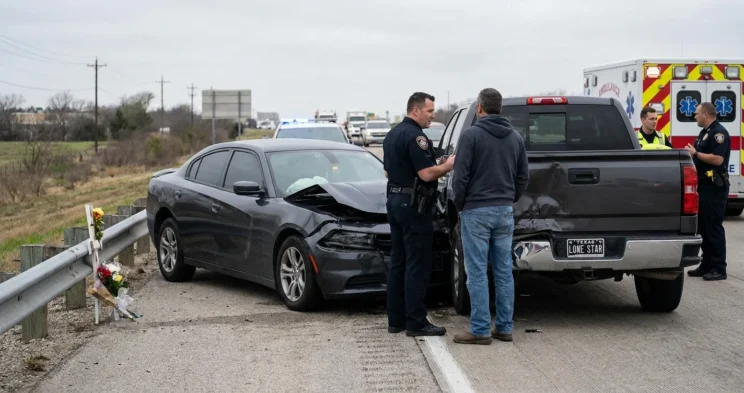
The call from the insurance adjuster came a week after you buried your husband. Instead of condolences, the adjuster wanted to talk about how fast he was driving on the Southwest Freeway the night of the crash. He mentioned the word “fault,” and now you are afraid that means your family will walk away with nothing.
Partial Fault Does Not Dismiss Your Claim
In fatal car accident cases, the at-fault driver’s insurer often tries to shift part of the blame onto the person who died, but rest assured that if an adjuster says that any amount of fault will automatically dismiss your case, then they are just fearmongering you.
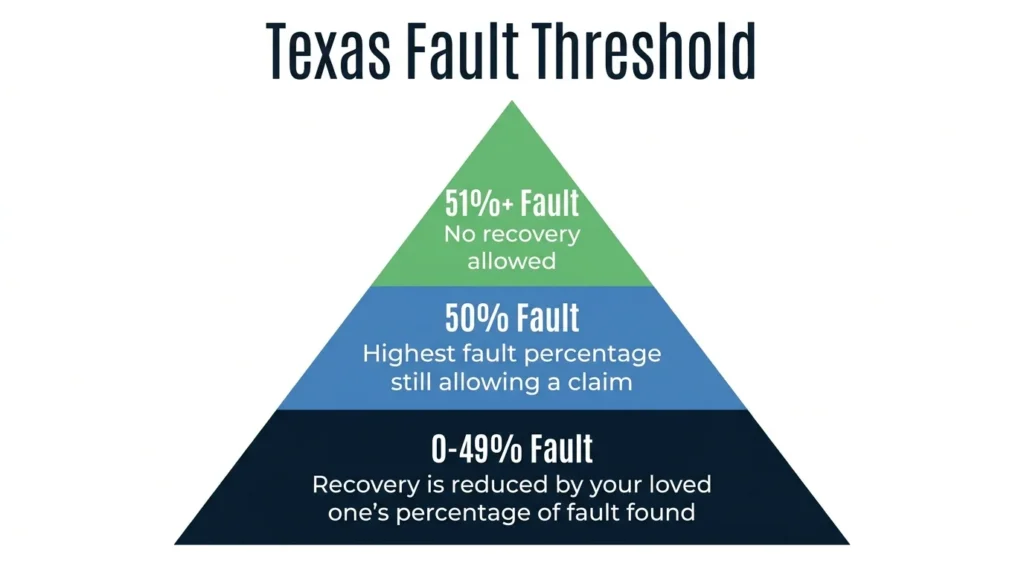
This is where the 51 percent rule for injury claims comes into play. Your family can still file a wrongful death claim if your loved one was 50% or less at fault for the crash.
Texas follows a modified comparative fault rule under the Texas Civil Practice and Remedies Code § 33.001. This law prohibits recovery only if the jury finds your loved one more than 50% responsible for the crash. If your loved one is found to be 50% or less at fault, then your claim can still be filed, and your total recovery is reduced by your loved one’s percentage of fault.
Who Can File a Wrongful Death Claim?
The Texas Wrongful Death Act states that only three parties to file a wrongful death claim on behalf of the deceased:
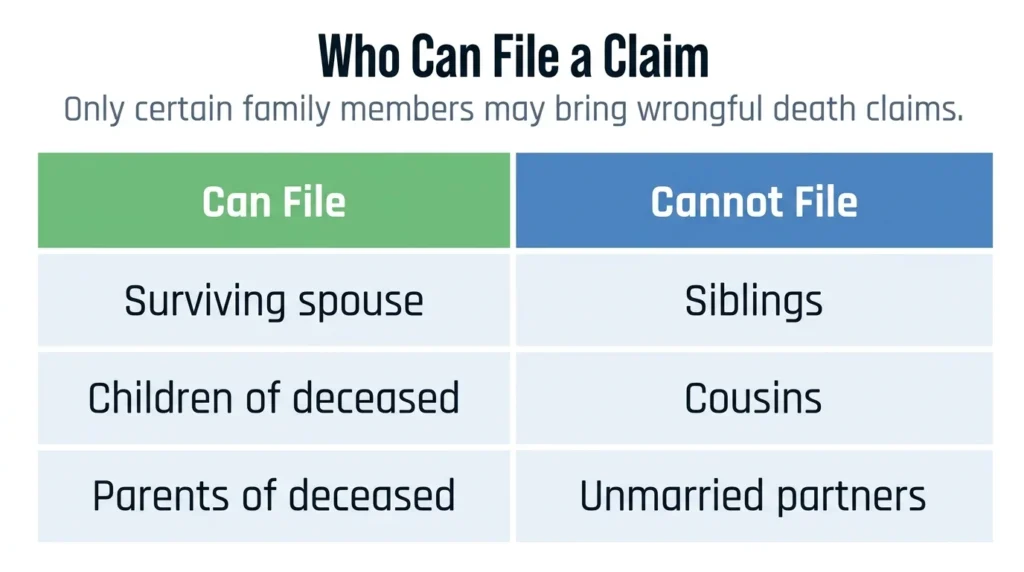
- The surviving spouse
- The children of the deceased
- The parents of the deceased
Under Texas Civil Practice and Remedies Code § 71.004, those family members can file the claim together, or one relative can file the claim on behalf of everyone. Siblings, cousins, and unmarried partners usually cannot file a claim on their own. Our overview of Texas wrongful death claims can help you understand which of your family members can file a claim.
No matter who files the claim, they must adhere to the deadline. Texas generally gives families two years from the date of death to file a claim. Our guide on the wrongful death statute of limitations covers the exceptions to this rule.
How Fault Gets Assigned in Your Case
A jury decides how much fault belongs to each person involved, including your loved one. Under Texas Civil Practice and Remedies Code § 33.003, the jury assigns a percentage of fault to each party based on the evidence.
To argue that your loved one had a higher percentage of fault, insurers and defense lawyers will consult the crash report, witness statements, phone records, and toxicology results. They will also look at whether your loved one wore a seatbelt, which is allowed as evidence by Texas courts. A Texas Supreme Court ruling on seatbelt evidence determined that not wearing a seatbelt is an important determiner when a jury divides fault.
The stronger your own evidence is, the harder it will be to inflate your loved one’s percentage of fault.
How Shared Fault Reduces Your Recovery

Once the jury determines a percentage of fault, your family’s award is reduced by that percentage. For example, if the jury finds your loved one 20%, you keep 80% of the total award.
Under Texas Civil Practice and Remedies Code § 33.012, the court subtracts your loved one’s percentage of fault before it finalizes the judgment. For example, if a jury values your family’s loss at $1 million, but they find your loved one 30% responsible for the crash, then your recovery is reduced to $700,000. If your loved one is found more than 50% responsible for the crash, then you collect nothing.
Reviewing how the insurer calculated a fault percentage can reveal whether this reduction is valid.
Fault Allegations from Insurance Adjusters
When an adjuster tells you that your loved one caused the crash, that is just their opinion, not a legal decision. Adjusters often question fault before the investigation is complete to lower your expectations and extend a lower offer than your claim is actually worth.
Remember, an adjuster’s opinion carries no legal weight by itself. A jury determines the real percentage of fault, and these two numbers can be vastly different. Recognizing this early allegation as a negotiation tactic can change your family’s response to a low settlement offer.
Work with an Attorney on Your Wrongful Death Claim in Texas
Losing someone you love and then hearing that they caused their own death can make the pain even worse. If an insurance company is telling you this, you should not have to face it alone.
Angel Reyes & Associates has guided Texas families through wrongful death claims for over 30 years, including cases where insurers blamed the deceased. We work on contingency, so you pay nothing unless we win, and your first consultation is free.
Our results include more than $1 billion recovered for clients, and we have office locations across Texas. When you are ready, schedule a free consultation to discuss your options.
Past results do not guarantee future outcomes.
Comparative Fault in Wrongful Death FAQs
Who has to prove that the deceased shared fault for the crash?
Under Texas law, the defense has to prove fault based on evidence. Your family does not need to prove that your loved one was not at fault.
How is the percentage of fault determined if the case settles, instead of going to trial?
Most wrongful death claims settle before trial. In this case, attorneys and insurers negotiate a percentage of fault based on the same evidence that a jury would review. No judge or jury determines an official percentage unless the case actually goes to trial.
What happens if another driver is mostly to blame for the crash?
If a jury finds that another driver is more than 50% responsible, Texas law determines that the driver is responsible for the entire judgment, not just their share of fault. This rule is most important when an at-fault driver does not have enough insurance to cover the damages.
Does shared fault reduce punitive damages in a Texas wrongful death case?
No. Texas law reduces compensatory damages by the deceased’s percentage of fault, but punitive damages require proof of gross negligence or malice, and they are not subject to reduction.
Does a wrongful death claim replace a survival claim in Texas?
No. A survival claim is a separate claim that allows the deceased’s estate to recover damages for the pain and losses suffered before death. A wrongful death claim covers the family’s own losses. One does not negate or replace the other, and families can often pursue both claims at the same time.
About the Authors

Spencer Browne
Writer
Spencer Browne is a partner at Angel Reyes & Associates and a Board Certified personal injury trial lawyer with nearly 100 jury trials across Texas. He focuses on car, truck, and wrongful death cases, with notable verdicts including a landmark win in the Choctaw Casino bus crash case. A recognized speaker and legal educator, Spencer is a member of the American Board of Trial Advocates and has been honored as a Texas Super Lawyer and one of D Magazine’s Best Lawyers in Dallas. He brings deep trial experience and relentless advocacy to every client he represents.

Graham Griffin
Editor
Graham Griffin is the Web & Content Manager at Angel Reyes & Associates, where he oversees content strategy, AI-powered workflows, a...

Angel Reyes
Reviewer
Angel L. Reyes, III is the Founder and Managing Partner of Angel Reyes & Associates. A nationally recognized trial attorney and business...