Lost Wages After a Bus Accident in Texas


Every article on this site is researched by our internal team, reviewed for legal accuracy against current Texas law, and held to State Bar of Texas advertising standards before publication. We do not publish content that overstates outcomes or makes promises about results.
Learn more about our
editorial standards .
Key Takeaways
- Whether the bus was private or government-run controls your deadlines and damage caps.
- Government bus claims cap damages and require written notice within six months; some entities impose shorter windows.
- Past lost wages cover income already missed; lost earning capacity covers future losses.
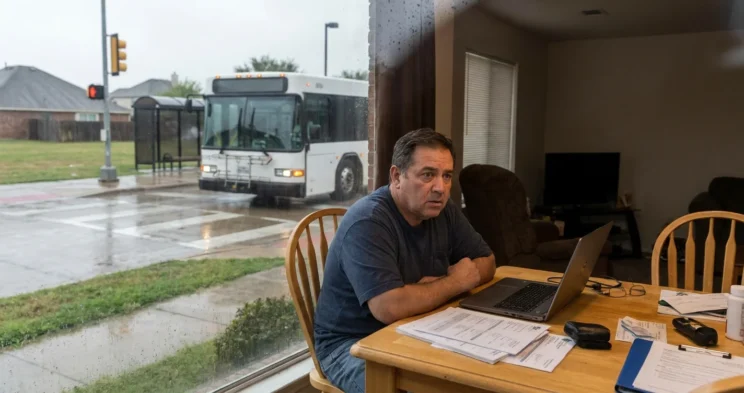
You were riding the city bus to work in downtown Houston when it slammed into a stopped truck near the Museum District. Now you are stacking up missed shifts, and the paychecks you count on have stopped coming. You want to know how much of that lost income you can actually get back.
Private vs. Government Bus Operators in Texas
The first thing to pin down is who operated the bus, because that single fact controls every rule that follows. A privately run bus and a government-run bus sit under completely different legal frameworks, with different deadlines and different limits on what you can recover.
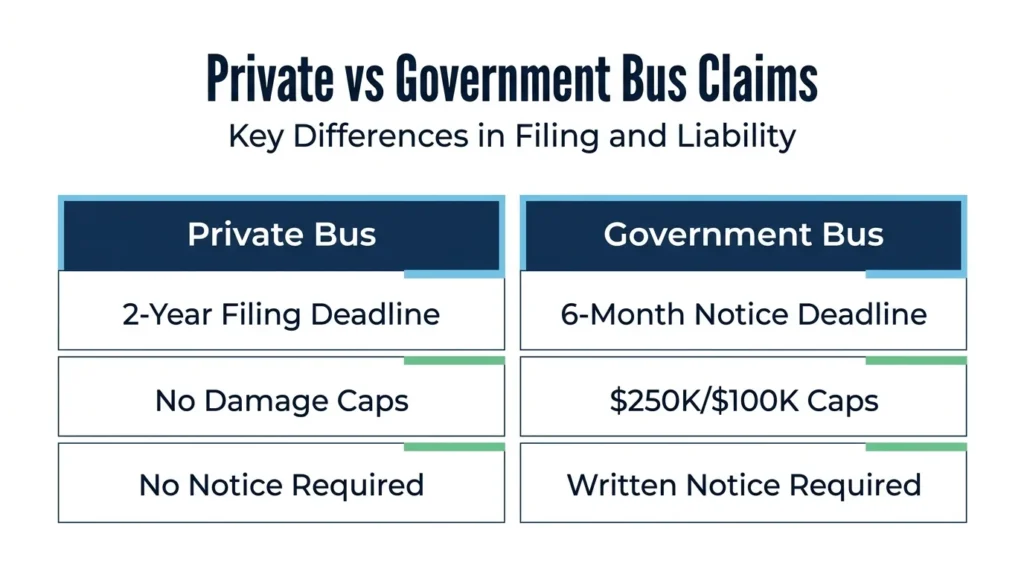
Private bus companies include charter services, commercial carriers, and privately owned transit lines. These claims follow standard negligence rules. You have two years to file under the Texas Civil Practice and Remedies Code (CPRC) § 16.003, and your damages are not capped.
Government-operated buses are a different story. City transit buses, public school buses, and county-owned vehicles fall under the Texas Tort Claims Act, which imposes strict damage caps and a short notice deadline. Miss that deadline and your entire claim can vanish, lost wages included.
Because so much rides on this one question, it helps to know how bus accident claims split along public and private lines before you take any next step.
One rule applies no matter who ran the bus. Under Texas proportionate responsibility, a person found more than 50% at fault recovers nothing. That bar wipes out lost wages along with everything else.
Lost Wages vs. Lost Earning Capacity
Your income losses fall into two separate buckets, and confusing them can cost you real money. One looks backward at pay you have already missed. The other looks forward to income you may never earn because of a lasting injury.
Past Lost Wages
Past lost wages are the earnings you actually missed from the date of injury through the day your case settles or goes to trial. This is the concrete, backward-looking number tied directly to your pay records and your doctor’s notes.
It covers more than a base paycheck. You can claim missed wages, lost tips, lost commissions, missed shifts, and any paid time off you were forced to burn while you recovered.
The math starts with actual days missed multiplied by your daily rate. That rate looks different for hourly, salaried, and self-employed workers, which the next section breaks down.
You also need a treating physician to document your work restrictions. That record is what ties your missed time to the crash rather than to some unrelated reason.
An attorney can help you gather and organize the medical and employment records needed to prove a lost wages claim after a crash.
Lost Earning Capacity
Lost earning capacity is the forward-looking category, and in serious cases it is often the larger of the two figures. It addresses your reduced ability to earn a living in the future because of a permanent or long-term injury.
This applies when a lasting injury limits your future earning potential, even if you go back to work in some reduced role. A back injury that pushes you off a job site and into lighter, lower-paying work is a common example.
The calculation compares your projected lifetime earnings before the injury against your projected earnings after. That usually calls for input from a vocational expert or an economist.
This category does not appear in every claim. You must show evidence of a lasting impairment, so short-term recovery cases typically involve only past lost wages. If you want a sense of how these figures play out, our overview of the average bus accident settlement walks through what shapes the final number.
Documenting Your Income Loss
Your income loss claim is only as strong as the records behind it. Insurers and defense attorneys will challenge any wage claim that lacks solid, contemporaneous documentation, so gather your proof early. What you need depends on how you are paid.
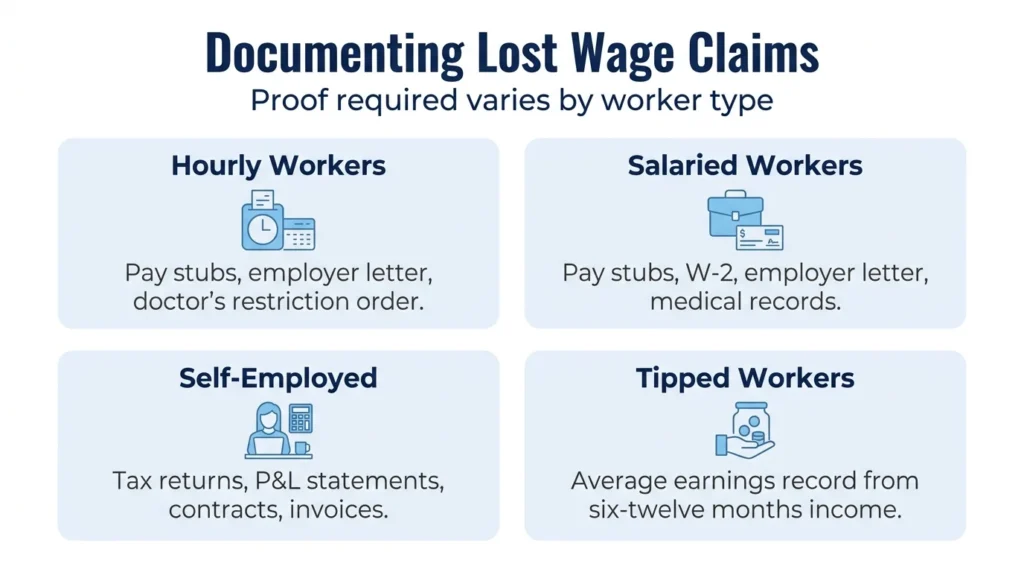
Hourly workers: recent pay stubs covering at least four weeks, a letter from your employer confirming your hourly rate and the dates you missed, and a work-restriction order from your treating physician.
Salaried workers: pay stubs or a W-2 showing your annual salary, an employer letter confirming the days you missed, and matching medical documentation.
Self-employed workers: the prior two years of tax returns, profit-and-loss statements for the period you could not work, client contracts showing recurring income, and invoices that show the business you lost during recovery.
Tipped or commission workers: an average-earnings record, often built from six to twelve months of prior income, because your pay swings from week to week. An employer letter alone will not carry this claim.
One more wrinkle can shrink your net recovery. If you were hurt on the job and collected workers’ compensation, your carrier holds a subrogation right under the Texas Labor Code § 417.002. That means the carrier can claim part of any wages you recover from the bus operator.
An attorney can help you file a bus accident claim with these records organized from the start.
Texas Tort Claims Act Caps & Notice Deadlines
If a government agency operated the bus, the Texas Tort Claims Act sets hard limits on your recovery and a deadline that can end your case before it begins. The Act waives government immunity for injuries caused by government-operated vehicles under Texas Tort Claims Act § 101.023, but it caps what you can collect.

The per-person cap against a municipality is $250,000. For other local government units, such as school districts, the cap drops to $100,000. These caps cover your total damages, so your lost wages have to compete with medical bills and pain-and-suffering for room under that ceiling.
The deadline is even more unforgiving. The written notice requirement under § 101.101 is a hard procedural gate. If you fail to give the government entity timely written notice, you lose the entire claim, wages and all.
The clock is not the same everywhere. Most Texas entities give you six months to file that notice. Some local governmental entities and transit authorities in major cities may impose shorter windows under their own charters or governing rules, so confirming the specific deadline for the agency that operated the bus is one of the first things an attorney should do.
Private bus claims escape all of this. They carry no caps and no notice requirement, though the two-year filing deadline still controls your timing. The distinctions can get technical, and our breakdown of Tort Claims Act limits in bus cases explains how they interact.
Missing the notice deadline on a government bus claim usually ends the entire case, so acting quickly protects your right to recover anything at all.
Recover Lost Income with a Texas Bus Attorney
Recovering lost wages after a bus accident is rarely simple, especially when a government agency ran the bus. Documentation demands, statutory deadlines, and damage caps can each reshape what you walk away with.
Angel Reyes & Associates has spent over 30 years helping injured Texans put their lives back together after serious crashes. We work on contingency, so you pay no fee unless we win, and your first consultation is always free. Over the years, we have recovered more than $1 billion for clients across the state.
If a bus accident has cost you income you cannot afford to lose, reach out to us for a free consultation. You can also learn more about our team and history before you decide.
Past results do not guarantee future outcomes.
Frequently Asked Questions
Can I recover lost wages from both the bus operator and another driver who caused the crash?
Yes. If another driver shares fault for the accident, you can pursue claims against both parties at the same time. Texas allows injured people to seek damages from each responsible party up to that party’s share of fault.
Does Texas require commercial bus operators to carry minimum insurance coverage?
Yes. The Federal Motor Carrier Safety Administration sets minimum liability limits for interstate commercial buses, and Texas applies its own minimum requirements to intrastate carriers. The specific limit depends on the number of seats and the type of operation, but these minimums exist to protect passengers and others injured in a crash.
How long does it typically take to receive lost wages from a Texas bus accident claim?
There is no fixed timeline. Straightforward claims against a private carrier can settle in months, while cases involving disputed liability, a government defendant, or serious injuries often take a year or more before any payment is made.
Can an undocumented worker in Texas recover lost wages after a bus accident?
Texas courts have allowed undocumented workers to recover lost wages in personal injury cases, though proving income without traditional pay records can be more difficult. The legal right to seek compensation is not conditioned on immigration status.
What happens to my lost wages claim if the private bus company has no insurance?
If the at-fault bus carrier is uninsured, you may still have options through your own uninsured motorist coverage or by pursuing the company’s assets directly. An uninsured carrier does not eliminate your legal right to seek damages; it changes how you collect them.
About the Authors

Angel Reyes
Writer
Angel L. Reyes, III is the Founder and Managing Partner of Angel Reyes & Associates. A nationally recognized trial attorney and business leader, Angel has helped over 70,000 injury victims recover more than $1 billion since founding the firm in 1993. Named to the Texas Super Lawyers list annually since 2008, Angel brings Wall Street experience, Ivy League education, and a deep commitment to client advocacy. He is a frequent legal commentator and published author with extensive contributions to legal scholarship, trial strategy, and consumer protection.

Kyle Nicolas
Editor
Kyle Nicolas is the Web Content & SEO Manager at Angel Reyes & Associates. He has more than 10 years of experience as a marketing co...

Spencer Browne
Reviewer
Spencer Browne is a partner at Angel Reyes & Associates and a Board Certified personal injury trial lawyer with nearly 100 jury trials a...