Motorcycle Accidents at a Rally or Biker Event in Texas


Every article on this site is researched by our internal team, reviewed for legal accuracy against current Texas law, and held to State Bar of Texas advertising standards before publication. We do not publish content that overstates outcomes or makes promises about results.
Learn more about our
editorial standards .
Key Takeaways
- Texas waivers cannot shield rally organizers from gross negligence or intentional misconduct claims.
- CPRC § 16.003 gives injured riders two years from the crash date to file a Texas lawsuit.
- Rally crashes can involve organizers, venues, alcohol vendors, and other riders as defendants.
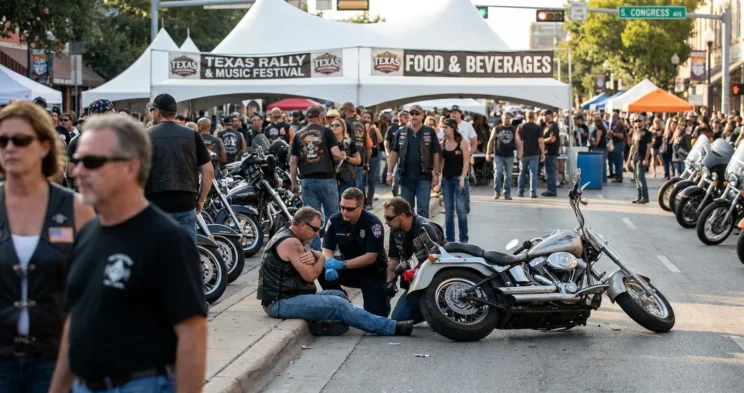
You rode into Austin for a weekend rally, parked near Congress Avenue, and joined the staged ride down South Congress. Somewhere between the vendor tents and the next intersection, another rider clipped your bike and you went down hard.
Now you’re nursing a broken collarbone, staring at hospital bills, and wondering whether the waiver you signed at registration just erased your right to do anything about it.
Rally Crashes Differ from Standard Road Accidents
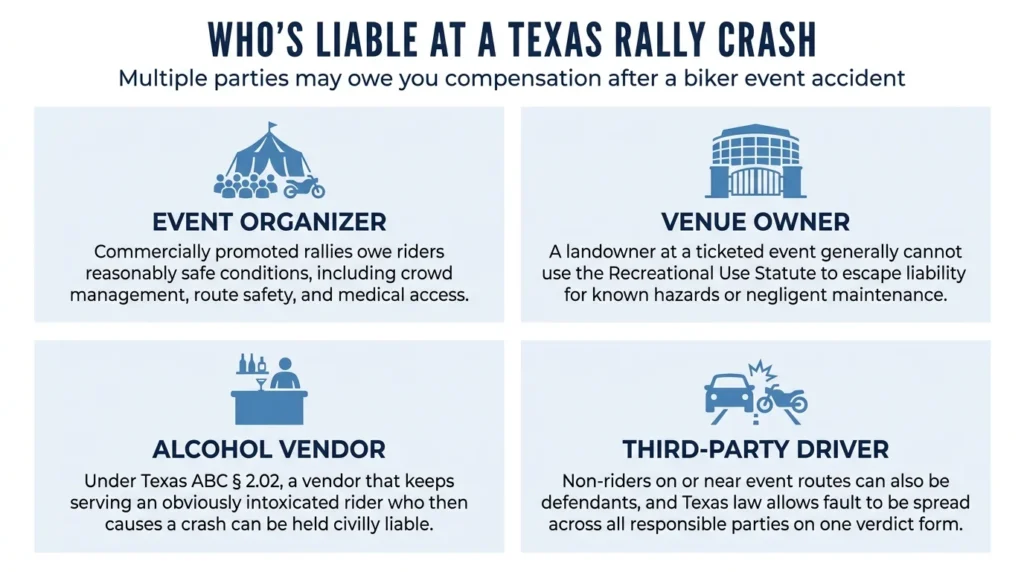
A rally crash is rarely a two-rider problem. Event organizers, permit holders, venue landowners, alcohol vendors, and third-party drivers may all share legal responsibility for what happened to you. That layered liability is what makes these cases legally different from ordinary highway collisions.
Texas hosts some of the largest biker gatherings in the country, including the Republic of Texas Biker Rally, where thousands of riders share closed or partially closed roads. Crashes at these events can involve road-condition defects, crowd hazards, and alcohol service at a scale you would not see on a typical Saturday ride.
The broader safety picture is what’s important. TxDOT reported 600 motorcyclist deaths in Texas in 2023, along with more than 2,400 serious injuries. Those risks severely increase at large events with hundreds or thousands of attendees.
If you were hurt at a Texas rally, your claim may involve more than one defendant. A clear-eyed review of Texas motorcycle accident claims starts with mapping every party whose conduct put you on the ground.
Event Organizer Negligence at Texas Biker Events
Organizers of ticketed or commercially promoted motorcycle rallies owe you a duty to provide reasonably safe conditions. That duty covers crowd management, route safety, medical access, and coordination with local authorities. When an organizer ignores known hazards or fails at basic safety planning, that failure can support a negligence claim.
Specific failures show up in case after case. Inadequate barricading at staged ride routes. Known road damage that goes unaddressed. Thin medical and emergency response. Weak security screening at gates.
Permit holders and co-sponsors can share liability when their names sit on the event authorization and their agents control the event environment. A sponsor that just wrote a check is in a different position than one that actually staffed the route.
There is a real line between event types. An informal group ride, such as a GoFundMe charity ride pulled together through a Facebook post, carries a lighter duty-of-care footprint than a commercial rally with entry fees, vendor revenue, and printed schedules. That distinction often determines whether an organizer claim is viable.
If you are unsure whether your event qualifies, we encourage you to learn more about your rights after a Texas motorcycle accident.
Does a Signed Waiver Block Your Injury Claim?
Not automatically. Texas enforces liability waivers only when they are clear, conspicuous, and specific about the risks and parties being released. A waiver buried in fine print or written in vague language often fails when a court actually reads it. And no waiver in Texas can shield an organizer from gross negligence.
When Waivers Are Enforceable in Texas
The waiver must unambiguously name the releasing party and the type of claim being waived. Generic “release of all claims” language frequently does not hold up.
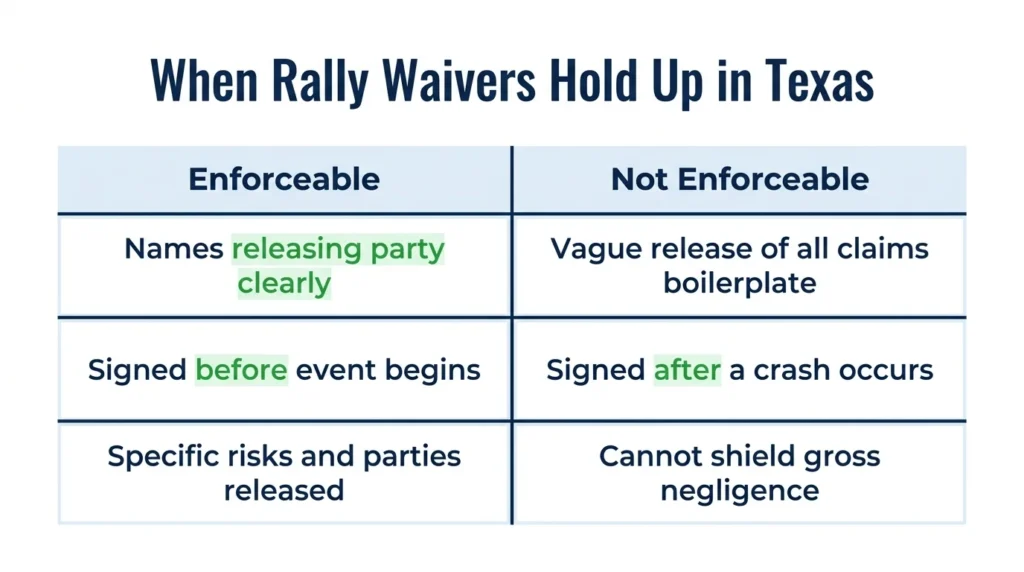
Timing matters too. Waivers must be presented and signed before the event. A release pushed at you after a crash is treated very differently under Texas contract law.
When Waivers Cannot Protect Organizers
A waiver cannot release an organizer from gross negligence or intentional misconduct, no matter how the document is drafted. Gross negligence means conduct showing conscious indifference to the rights or safety of others. If an organizer knew about a dangerous condition, a crumbling road surface or a repeat history of alcohol-fueled crashes at the same event, and did nothing, that carve-out may apply.
Venue liability adds another layer. The Texas Civil Practice and Remedies Code (CPRC) Chapter 75, often called the Recreational Use Statute, can limit a landowner’s exposure when property is used for recreation without an admission fee. Free events on private land may receive greater protection. Ticketed rallies usually do not.
A close look at how courts have weighed these facts in past cases, including our firm’s case results, can help you gauge where your situation lands.
Dram Shop Liability When Alcohol Causes a Crash
If an intoxicated rider caused your crash, the bar or vendor that kept serving them may also be accountable. Under Texas Alcoholic Beverage Code § 2.02, a provider can be civilly liable when it serves alcohol to a person who is obviously intoxicated to the point of presenting a clear danger to himself and others, and that intoxication then causes injury to a third party. That rule applies squarely to rally beer tents and sponsor-run bars.
Event organizers can fall within the same liability when they directly run alcohol service or contract with vendors while controlling how service is handled. A festival cannot fully outsource its drinking culture to a third party and then walk away from the consequences.
Evidence for a dram shop claim disappears fast. You need witness accounts of the at-fault rider’s visible impairment at the point of service, purchase receipts or drink wristbands, and vendor surveillance footage. Many vendors keep video for only a short window before it overwrites, meaning the video is erased or replaced.
The injuries from a high-speed rally crash are rarely minor. Riders dealing with the aftermath often face the serious injuries common in motorcycle accidents, including fractures, head trauma, and long-term mobility loss.
Fault, Damages, & Filing Deadlines in Texas
Texas uses a proportionate responsibility system under CPRC Chapter 33. You can still recover damages if you were partly at fault, as long as your share does not exceed 50 percent. Your recovery is reduced by your fault percentage. Reach 51 percent or more, and you recover nothing.
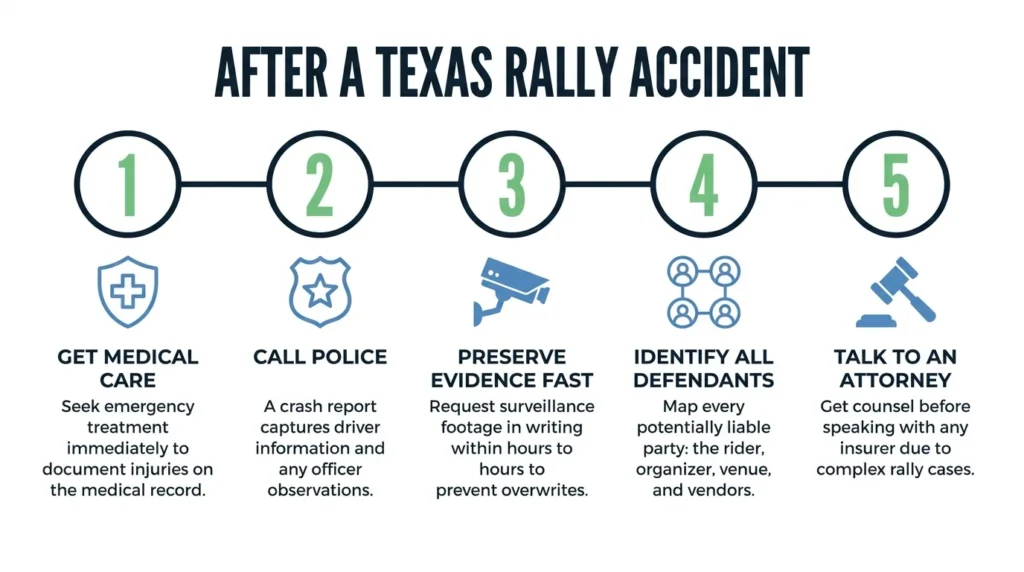
In a multi-defendant rally crash, a jury can apportion fault across the at-fault rider, the organizer, the venue, an alcohol vendor, and a road-maintenance authority, all on one verdict form. Spreading fault that way often helps an injured rider because more defendants means more sources of recovery.
Recoverable damages cover current and future medical expenses, lost wages, reduced earning capacity, and pain and suffering. In fatal cases, surviving family members may pursue wrongful death damages.
The deadline is firm. CPRC § 16.003 gives you two years from the date of the crash to file a personal injury lawsuit. Miss it, and the claim generally ends, no matter how strong the underlying facts. Riders injured at Austin-area events can review options with lawyers familiar with rally-specific cases.
Talk to an Attorney Today
Rally cases get complicated quickly: multiple defendants, signed waivers, dram shop questions, and a clock that does not stop. Angel Reyes & Associates handles Texas motorcycle accident claims on a contingency basis, meaning no fee unless we win. With over 30 years of experience and more than $1 billion recovered for clients, our team handles the layered liability work these cases demand.
Contact us today for a free case evaluation and a straight answer about where your claim stands.
Past results do not guarantee future outcomes.
Texas Motorcycle Rally Accident FAQs
Can a minor who was injured at a Texas motorcycle rally file a personal injury claim?
Yes, but the two-year statute of limitations does not start running until the minor turns 18 under Texas Civil Practice and Remedies Code § 16.001. A parent or legal guardian may also file a claim on the minor’s behalf before that time.
Does Texas require motorcycle event organizers to carry liability insurance?
Texas has no statewide law that forces private event organizers to carry liability insurance as a condition of hosting a motorcycle rally. Coverage requirements, if any, typically come from local permitting authorities or venue contracts rather than state statute.
Can a passenger on the at-fault rider's motorcycle file a claim against rally organizers or alcohol vendors?
Yes. Passengers injured in a rally crash are treated as third parties under Texas law and can pursue claims against any party whose negligence contributed to the crash. A passenger’s right to recover is generally not limited by what the rider signed or did wrong.
What happens to an injury claim if the at-fault rider has no motorcycle insurance?
The rider’s lack of insurance does not eliminate your right to sue, but it may affect what you can actually collect from that defendant. Other parties in the crash, such as an event organizer or dram shop vendor, may become the more practical sources of recovery.
About the Authors

Angel Reyes
Writer
Angel L. Reyes, III is the Founder and Managing Partner of Angel Reyes & Associates. A nationally recognized trial attorney and business leader, Angel has helped over 70,000 injury victims recover more than $1 billion since founding the firm in 1993. Named to the Texas Super Lawyers list annually since 2008, Angel brings Wall Street experience, Ivy League education, and a deep commitment to client advocacy. He is a frequent legal commentator and published author with extensive contributions to legal scholarship, trial strategy, and consumer protection.

Kyle Nicolas
Editor
Kyle Nicolas is the Web Content & SEO Manager at Angel Reyes & Associates. He has more than 10 years of experience as a marketing co...

Angel Reyes
Reviewer
Angel L. Reyes, III is the Founder and Managing Partner of Angel Reyes & Associates. A nationally recognized trial attorney and business...