Nursing Home Wrongful Death Claims in Texas


Every article on this site is researched by our internal team, reviewed for legal accuracy against current Texas law, and held to State Bar of Texas advertising standards before publication. We do not publish content that overstates outcomes or makes promises about results.
Learn more about our
editorial standards .
Key Takeaways
- Texas gives spouses, children, and parents two years to file a nursing home death claim.
- Ordinary negligence or Chapter 74 classification changes deadlines and damages.
- A Chapter 74 claim caps non-economic damages, but ordinary negligence claims do not.
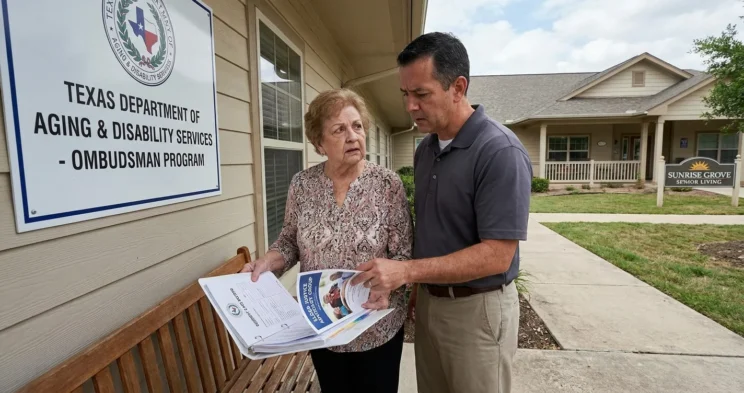
You made the drive to your mother’s nursing home off Fredericksburg Road every week, trusting the staff to care for her when you could not. Then came the call no family is ever ready for. Now you’re left wondering whether a fall, an infection, or a missed medication was something the facility could have prevented.
Nursing Home Neglect That Causes Wrongful Death
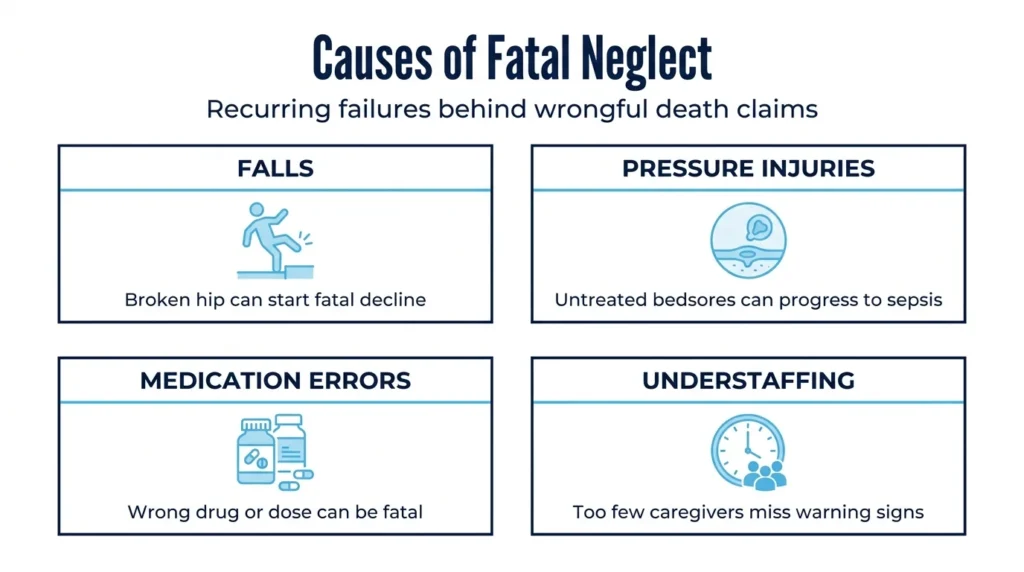
Most fatal nursing home neglect traces back to a few recurring failures:
- Falls
- Untreated pressure injuries
- Medication mistakes
- Chronic understaffing
Falls are among the most common. When staff members fail to supervise a resident at risk, or leave a hazard in a walkway, a broken hip can begin a decline that ends in death. A fatal fall is one of the situations that most often leads to a Texas nursing home neglect lawsuit.
Untreated pressure injuries, also called bedsores, are another. When a resident is not turned in their bed or kept clean, wounds can progress to infection or sepsis. Texas holds these facilities to care standards under the Texas Health and Safety Code Chapter 242, which governs how nursing homes must be licensed and operated.
Medication errors take many forms. The wrong drug, the wrong dose, or a skipped dose can be fatal for a frail resident who depends on a precise regimen.
Understaffing sits behind many of these failures. When too few caregivers cover too many residents, monitoring slips and warning signs go unnoticed. A 2025 federal review of nursing home staffing data found that federal regulators are not giving states enough detail to catch dangerous understaffing before it puts residents at risk.
Ordinary Negligence vs. Chapter 74 Claims
Whether your claim counts as ordinary negligence or a health care liability claim depends on one question: Did the failure connect to the provision of health care? That answer shapes your deadlines, your proof, and the money your family can recover.
Ordinary Negligence Claims
Texas courts look for a substantive nexus to medical care, not merely a but-for link. The Texas Supreme Court set that standard in Ross v. St. Luke’s Episcopal Hospital. Claims against a health care provider are presumed to be health care liability claims unless that presumption is rebutted, as the court explained in Loaisiga v. Cerda.
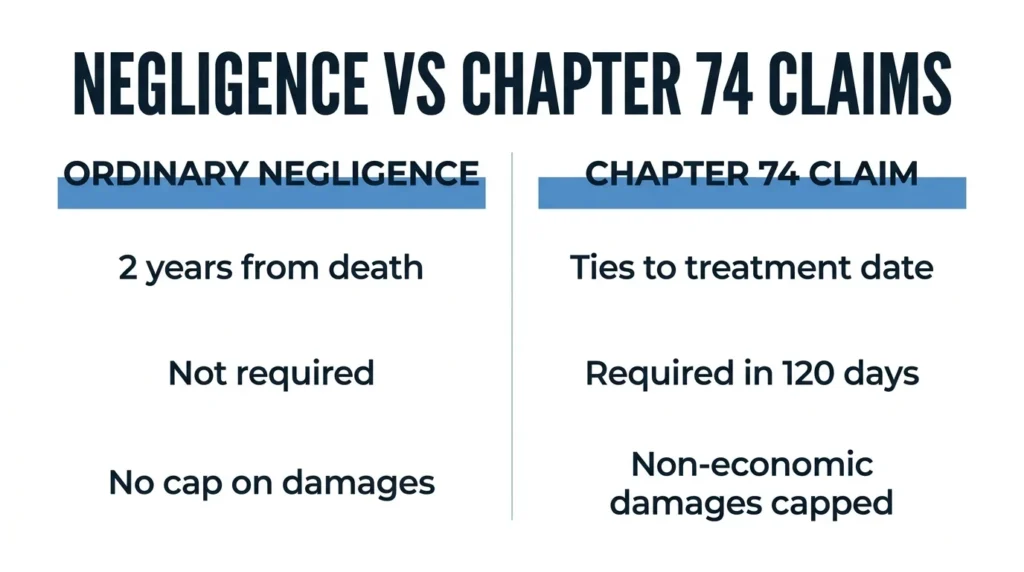
Claims without a substantive tie to health care follow the standard wrongful death track. Texas gives you two years to file, and the clock runs from the date of death under the Texas Civil Practice and Remedies Code (CPRC) § 16.003.
These claims carry no expert report requirement and no statutory cap on damages. That makes them simpler to pursue when a death stems from an ordinary hazard rather than a medical decision. Some fatal falls tied to unsafe conditions fall into this category, the same way other premises liability claims do.
Chapter 74 Health Care Liability Claims
Claims tied to medical monitoring, medication, or treatment of pressure injuries are generally health care liability claims under CPRC Chapter 74.
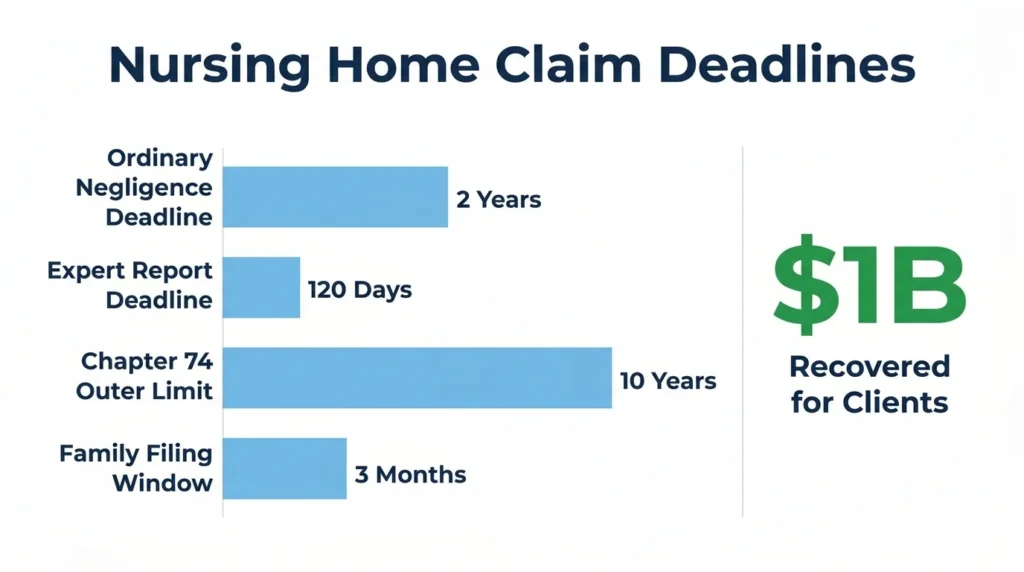
That track adds a major hurdle. You must serve an expert report within 120 days of filing suit under CPRC § 74.351, or the case can be dismissed. This report must connect the facility’s conduct to the death.
Instead of the date of death, the deadline can tie to the date of the breach or the completion of treatment. CPRC § 74.251 also sets a ten-year outer limit, and pre-suit notice can pause the clock.
The classification as a Chapter 74 claim is the first thing an attorney examines in a wrongful death nursing home lawsuit. Claims resting on ordinary premises conditions, like some fall scenarios unrelated to medical judgment, may fall outside Chapter 74.
If you’re weighing how much time you realistically have to act, understanding how the filing deadline works helps you file a claim.
Who Can Sue for Nursing Home Wrongful Death
Under Texas law, the surviving spouse, children, and parents can bring a nursing home wrongful death claim. CPRC § 71.004 gives these family members the right to file.
If none of them files within three months of the death, the estate’s personal representative may file on their behalf, unless the family asks them not to.
A wrongful death claim against a nursing home compensates surviving family members for their loss. A survival claim is different. It belongs to the estate and covers what your loved one could have claimed had they lived, such as their own pain and medical costs before death.
Families often pursue both. Understanding wrongful death claims in Texas helps you see how the two fit together.
Proving Neglect Caused a Wrongful Death
Proving a nursing home death resulted from neglect, not age or underlying illness, takes solid documentation and expert analysis. These claims typically rest on a few kinds of evidence:
- Medical records and incident reports: The facility’s own records often document the injury, the decline, and what staff knew.
- Staffing logs and schedules: These can reveal that too few caregivers were on duty when the incident happened.
- Federal care standards: Nursing homes that accept Medicare and Medicaid must meet the quality-of-care rules in Title 42 of the Code of Federal Regulations, Part 483.
- Inspection and citation history: Prior state and federal citations, along with Medicare’s nursing home inspection data, can show a pattern of problems.
- Photographs and witness statements: Images of wounds or hazards, plus accounts from other residents or staff, help fill the gaps.
- Expert medical testimony: A qualified expert connects the facility’s failure to the death, often the hardest and most important link.
Building a Texas nursing home negligence case means turning these pieces into a clear chain of evidence from the facility’s failure to your loved one’s death. That work takes resources most grieving families don’t have on their own.
Before assuming what a claim like this might be worth, it helps to see how these cases typically resolve.
Damages in a Nursing Home Wrongful Death Claim
A nursing home wrongful death claim can recover both economic and non-economic damages.
- Economic damages cover the tangible losses, like medical bills, funeral costs, and the financial support your loved one would have provided.
- Non-economic damages cover the loss of companionship and the mental anguish your family carries.
The classification issue returns here. When a claim is treated as a health care liability claim, Texas CPRC § 74.301 caps non-economic damages.
How the wrongful death damage cap works in practice depends on the details. Ordinary negligence claims that fall outside Chapter 74 are not capped. That difference can mean a much larger recovery when a claim falls outside Chapter 74.
Talk to a Wrongful Death Attorney About Your Claim
Losing a loved one to nursing home neglect is painful, and the legal path can feel overwhelming while you grieve. You don’t have to sort out the classification questions, deadlines, and evidence on your own.
Angel Reyes & Associates has guided Texas families through wrongful death claims for more than 30 years. We bring in medical experts and investigators to establish that link, and our case results show the kinds of claims we have handled. You can also read about our decades helping injured Texans.
Our track record includes more than $1 billion recovered for clients. We work on contingency, so you pay no fee unless we win, and your first consultation is free. Our team is available 24/7, serves families across Texas, and offers support in Spanish.
When you’re ready, schedule a free consultation and we’ll review what happened and explain your options.
Past results do not guarantee future outcomes.
Nursing Home Wrongful Death Claim FAQs
Does signing an arbitration agreement when a loved one is admitted stop my family from suing?
Not always. If the family members bringing the wrongful death claim never signed the agreement themselves, courts have refused to force the case into arbitration.
Can I sue the company that owns the nursing home, not just the local facility?
Yes. Many nursing homes are run by corporate chains, and a lawsuit can name the parent company when corporate decisions on staffing or budgets contributed to the neglect.
Should I report the nursing home to a state agency in addition to filing a lawsuit?
Yes, you can file a separate complaint with the Texas Health and Human Services Commission. That investigation is separate from a lawsuit and does not extend your filing deadline.
How long does a nursing home wrongful death lawsuit usually take to resolve?
Some cases settle within a year, while contested claims that go to trial can take much longer. If the case involves a death, a probate court may also need to approve the final settlement.
Can I still file a claim if my loved one already had a serious illness before the neglect happened?
Yes. A prior illness does not block a claim, but you must show the facility’s negligence caused a decline or death that would not otherwise have happened this way.
About the Authors

Angel Reyes
Writer
Angel L. Reyes, III is the Founder and Managing Partner of Angel Reyes & Associates. A nationally recognized trial attorney and business leader, Angel has helped over 70,000 injury victims recover more than $1 billion since founding the firm in 1993. Named to the Texas Super Lawyers list annually since 2008, Angel brings Wall Street experience, Ivy League education, and a deep commitment to client advocacy. He is a frequent legal commentator and published author with extensive contributions to legal scholarship, trial strategy, and consumer protection.

Graham Griffin
Editor
Graham Griffin is the Web & Content Manager at Angel Reyes & Associates, where he oversees content strategy, AI-powered workflows, a...

Angel Reyes
Reviewer
Angel L. Reyes, III is the Founder and Managing Partner of Angel Reyes & Associates. A nationally recognized trial attorney and business...