Rideshare Accident with an Uninsured Driver in Texas: How UM/UIM Coverage Works


Every article on this site is researched by our internal team, reviewed for legal accuracy against current Texas law, and held to State Bar of Texas advertising standards before publication. We do not publish content that overstates outcomes or makes promises about results.
Learn more about our
editorial standards .
Key Takeaways
- Texas requires $1M rideshare UM/UIM coverage during active trips in Periods 2 and 3.
- Period 1 has a UM/UIM gap, so your personal auto policy becomes the only layer.
- Texas law gives you two years to file a personal injury claim after a rideshare crash.
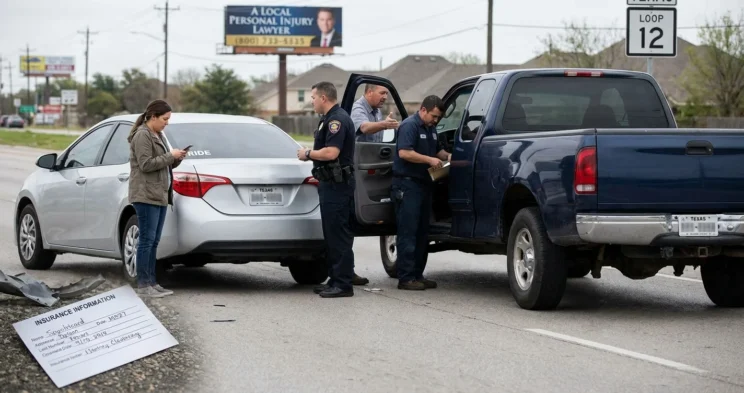
You are riding through Dallas in an Uber when another car blows through a red light and slams into your door. The driver who hit you has no insurance. Now you are hurt, the bills are starting, and you have no idea whose policy actually pays.
The Third-Party Uninsured Scenario Explained
It is important to note that an uninsured third-party driver striking the Uber or Lyft vehicle you are riding in is different from your rideshare driver being the one without coverage.
“Uninsured” covers more than a missing policy. It includes a lapsed policy, a hit-and-run driver, or limits too low to cover your harm. That last situation triggers underinsured motorist (UIM) coverage instead.
Texas requires uninsured/underinsured motorist (UM/UIM) coverage in every personal auto policy unless you reject it in writing. You can read the rule in Texas Insurance Code Section 1952.101.
Rideshare companies, known as transportation network companies (TNCs), follow separate rules under Chapter 1954 of the Texas Insurance Code. Several coverage sources may apply to your crash at the same time.
For a deeper look at how these claims work, see our guide to Texas UM/UIM accident claims. You can also review how personal UM/UIM and PIP policies protect you.
Coverage Periods Determine Which Policy Activates First
The rideshare app’s status at the moment of impact decides which UM/UIM layer responds. These stages are called coverage periods. Our explainer on Uber and Lyft insurance coverage periods breaks down each one in full.
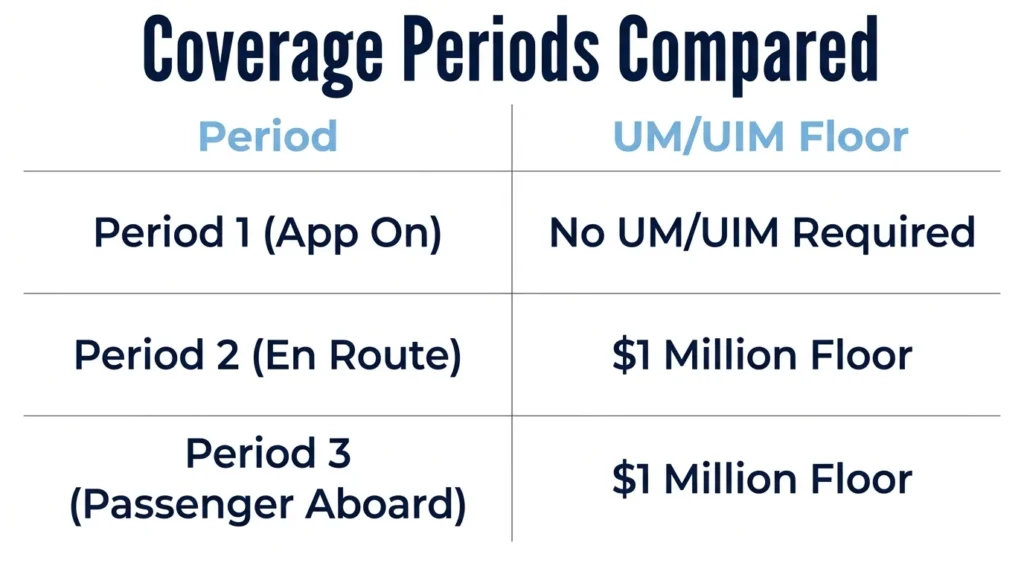
Periods 2 and 3: $1 Million UM/UIM Floor
Period 2 begins when your driver accepts a ride. Period 3 covers the time a passenger is in the vehicle. During both, Texas requires $1 million in primary liability plus UM/UIM coverage, as set out in Texas Insurance Code Section 1954.053.
So if you were a passenger on an active trip, the TNC’s commercial UM/UIM is your first and largest source. The state confirms these requirements through the TDLR TNC compliance rules.
Period 1: The Gap That Affects You
Period 1 is when the app is on but no ride has been accepted yet. Texas requires only a contingent $50,000/$100,000/$25,000 liability floor here, under Texas Insurance Code Section 1954.052.
Texas law does not require TNC UM/UIM coverage during Period 1. Uber and Lyft do not provide it voluntarily either.
That creates a gap. If your crash happened in Period 1, no TNC UM/UIM exists to cover the uninsured driver. Your personal UM/UIM policy becomes the only available layer.
If you are unsure which coverage period applies to your crash, documentation from the driver’s app log and dispatch records can often establish the active period. This is something an attorney can help you obtain.
How Uber and Lyft UM/UIM Coverage Works for Passengers
During Periods 2 and 3, the Uber or Lyft commercial UM/UIM policy protects you when an uninsured driver causes the crash. It steps in where the at-fault driver cannot pay.
Keep one thing in mind. The $1 million figure is the policy ceiling, not an automatic award. Your recovery depends on the harm you can prove.
This coverage can pay for medical expenses, lost wages, and pain and suffering. Those are the core categories most injury claims include.
TNC insurers do not simply write checks. They investigate every claim and may dispute coverage, liability, or the value of your damages. You may also have a parallel first-party benefit through personal injury protection. Our breakdown of PIP, MedPay, and UM/UIM explains how those benefits compare.
Your Personal UM/UIM Policy as a Second Layer
Texas requires UM/UIM coverage in personal auto policies unless you reject it in writing, under Insurance Code § 1952.101. That coverage can matter even when you were not driving.
You can file a personal UM/UIM claim even as a passenger in someone else’s vehicle. Your own policy can follow you into the rideshare.
In Periods 2 and 3, the TNC commercial UM/UIM responds first. Your personal UM/UIM may then provide additional recovery on top of it. In Period 1, your personal policy is primary and the only UM/UIM source available.
Texas permits coordination between policies. The way a TNC policy offsets against a personal policy remains unsettled, so it requires careful attorney review. For more detail, see our article explaining UM/UIM and PIP insurance coverage.
Texas policies can include anti-stacking language that affects how coordination works. An attorney familiar with TNC insurance claims can review your actual policy language before you file.
Steps to Protect Your Claim After the Crash
A few early actions can protect your right to recover. Work through these steps as soon as you are able.
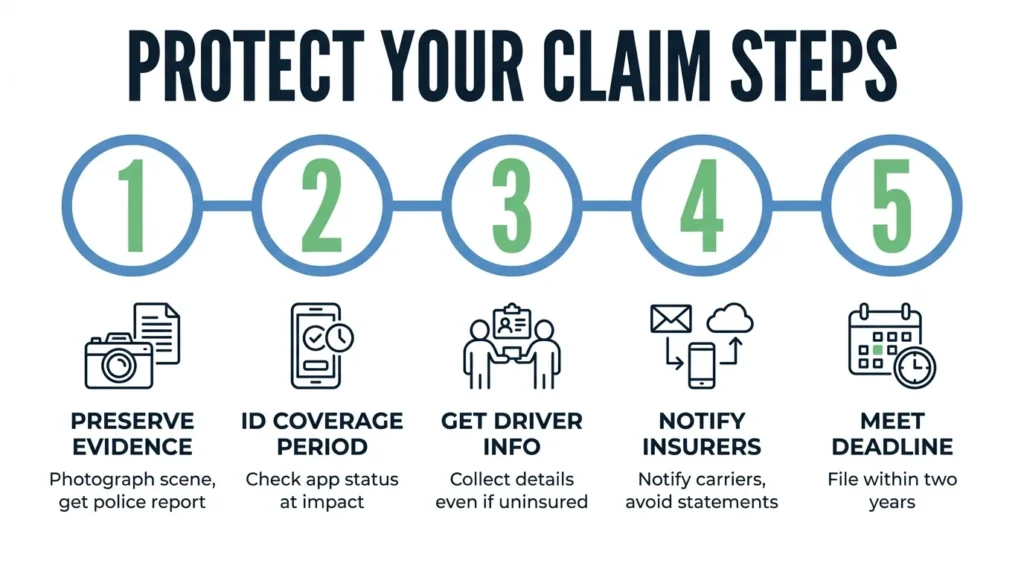
Step 1: Preserve the evidence. Photograph the scene, the vehicles, and your injuries. Get the police report and note the road and weather conditions.
Step 2: Determine the coverage period. Check your app confirmation for the trip status at the moment of impact. This decides which policies apply.
Step 3: Get the at-fault driver’s information. Collect it even if they claim to have no insurance. A police report confirming no valid policy is key documentation later.
Step 4: Notify all potentially applicable carriers. That means the at-fault driver’s insurer if one exists, the Uber or Lyft insurer, and your personal auto insurer.
Step 5: Do not give recorded statements. Decline any insurer’s request for a recorded statement until you have consulted an attorney.
Step 6: Observe the two-year deadline. Texas generally limits injury claims under Texas Civil Practice and Remedies Code Section 16.003. Missing it can end your claim.
For a full walkthrough, see our guide on what to do after a rideshare accident in Texas.
Get Help with Your Rideshare Claim
Multi-layer UM/UIM claims in rideshare crashes are among the most complex personal injury insurance scenarios in Texas. Sorting out which policy pays, and in what order, takes experience that insurers do not expect you to have.
Angel Reyes & Associates has more than 30 years of experience helping injured Texans sort out rideshare and motor vehicle claims. We work on contingency, so there is no fee unless we win, and your first consultation is free. Our team has recovered more than $1 billion for clients.
Meet our team of attorneys and read our client reviews and testimonials to see how we have helped people in situations like yours. Learn more about how we handle rideshare accident cases.
If an uninsured driver hit your Uber or Lyft, reach out for a free consultation.
Past results do not guarantee future outcomes.
Frequently Asked Questions
Does UM/UIM coverage apply if I was only partially at fault for the rideshare crash?
Yes. Texas uses a modified comparative fault rule, so you can recover as long as you are not more than 50 percent responsible for the accident. Your recovery is reduced by your share of fault, but it is not eliminated unless your fault exceeds that threshold.
Do I have to pay a deductible to use UM/UIM coverage after a rideshare accident in Texas?
For bodily injury claims there is no deductible under a standard Texas UM/UIM policy. A $250 deductible typically applies to uninsured motorist property damage claims if that optional coverage is included in your policy.
What records do I need to support a UM/UIM claim after a rideshare accident in Texas?
You will need the police report confirming the at-fault driver had no valid insurance, medical records showing your injuries and treatment, and a copy of your insurance declarations page. Rideshare trip records, which live in Uber’s or Lyft’s systems, also establish which coverage period was active at the time of the crash and typically require a formal request to obtain.
How long does a UM/UIM claim typically take to settle after a rideshare accident in Texas?
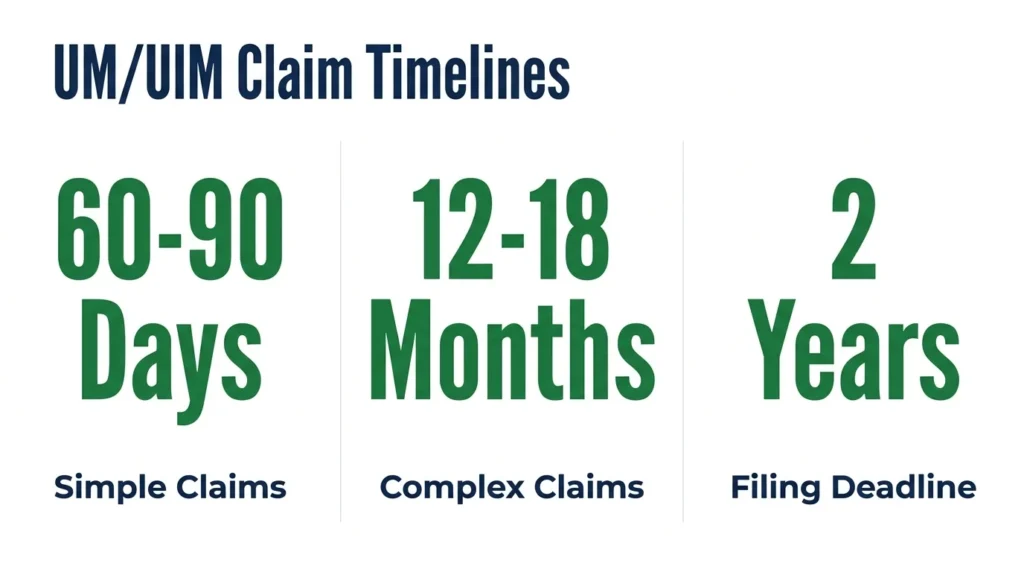
A straightforward claim with clear liability and completed medical treatment can resolve in 60 to 90 days, but cases involving disputed liability, ongoing care, or multiple insurers often take 12 to 18 months or longer to reach a final settlement.
Does UM/UIM coverage follow me if I was riding as a passenger in someone else's vehicle, not my own car?
Yes. Your personal UM/UIM coverage is tied to you as the insured, not to your vehicle, so it can protect you when you are a passenger in another person’s car, including a rideshare vehicle.
About the Authors

Angel Reyes
Writer
Angel L. Reyes, III is the Founder and Managing Partner of Angel Reyes & Associates. A nationally recognized trial attorney and business leader, Angel has helped over 70,000 injury victims recover more than $1 billion since founding the firm in 1993. Named to the Texas Super Lawyers list annually since 2008, Angel brings Wall Street experience, Ivy League education, and a deep commitment to client advocacy. He is a frequent legal commentator and published author with extensive contributions to legal scholarship, trial strategy, and consumer protection.

Kyle Nicolas
Editor
Kyle Nicolas is the Web Content & SEO Manager at Angel Reyes & Associates. He has more than 10 years of experience as a marketing co...

Angel Reyes
Reviewer
Angel L. Reyes, III is the Founder and Managing Partner of Angel Reyes & Associates. A nationally recognized trial attorney and business...