When a Rideshare Driver Refuses to Exchange Info After an Accident


Every article on this site is researched by our internal team, reviewed for legal accuracy against current Texas law, and held to State Bar of Texas advertising standards before publication. We do not publish content that overstates outcomes or makes promises about results.
Learn more about our
editorial standards .
Key Takeaways
- Texas law requires every driver in a crash to share their name, address, and insurance information.
- Screenshot your trip screen and call 911 to identify a rideshare driver who refuses to cooperate.
- You have two years from the date of the crash to file a Texas personal injury claim.
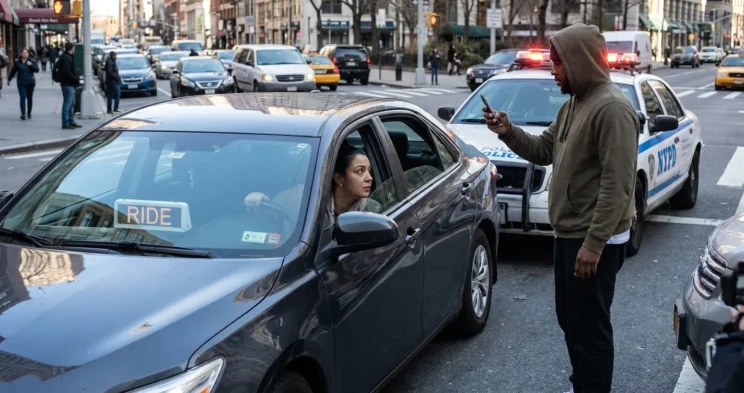
You climbed out of an Uber on Westheimer Road near Montrose after a crash, and the rideshare driver refused to give you their name or insurance info, then they drove off and left you there. Now, you are standing on the curb, wondering how you can possibly file a claim against someone you cannot even identify.
Fortunately, Texas law is already on your side, and you have options.
Texas Law Requires Drivers to Exchange Info
A rideshare driver who refuses to give you their information is not just being difficult; they’re breaking state law. Texas Transportation Code § 550.023 requires every driver in a crash to provide their name, address, vehicle registration number, and the name of their motor vehicle liability insurer.
That responsibility does not change for Uber or Lyft drivers. They follow the same traffic laws as everyone else on the road. If a driver refuses to exchange info after a crash, it doesn’t hurt your claim. Their refusal only creates problems for them; it does not prevent you from recovering compensation.
When a crash causes injury, death, or damage that leaves a vehicle inoperable, Texas Transportation Code § 550.026 requires drivers to notify the police right away. That responsibility falls on the rideshare driver, whether they cooperate with you or not.
Use the App to Identify the Driver
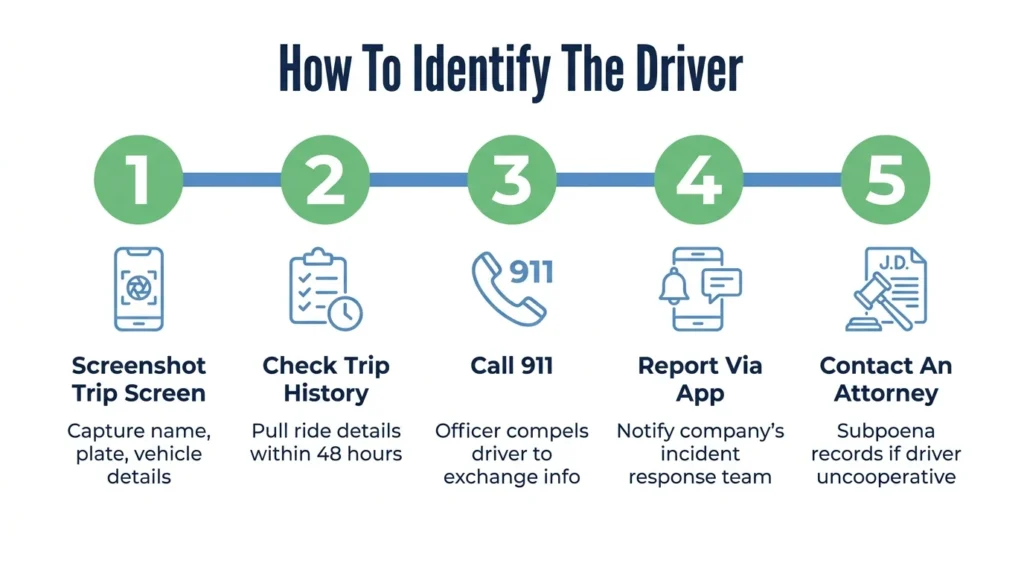
If you were a passenger in a rideshare crash, your phone is the quickest way to verify the driver’s identity. Before you close the app, take a screenshot of the active trip screen, which shows the driver’s name, their vehicle’s make and model, their license plate, and their rating. This info can vanish once the trip is marked complete, so capture it right away.
If you already closed the app, do not panic. The trip history in both the Uber and Lyft apps stores the date, time, route, and driver profile for every ride you took. You can usually pull that up within 24 to 48 hours, even if you forgot to take a screenshot at the scene.
If You’re a Pedestrian or Driver Hit by a Rideshare Vehicle
What if you were not the passenger? If you were another driver or pedestrian on the road, you can still discover the rideshare driver’s identity by writing down their license plate at the scene. A plate plus a timestamp of the crash is enough to identify the vehicle later by connecting the vehicle to a specific trip and driver through legal records.
If it takes you a few days or weeks to get this info, don’t panic, as these records do not disappear quickly. The licensing rules tied to Texas Occupations Code Chapter 2402 and state regulations legally require Uber and Lyft to keep individual ride records for years.
So, gather everything you can see right after the crash. Photograph the vehicle, the license plate, any in-app notifications, and the trip route on the map.
Call 911 & File a Police Report
When the driver refuses to share info, calling 911 from the scene is your strongest move. It triggers an official investigation, and the responding officer can run the license plate of the rideshare vehicle, pull the vehicle registration, and compel the driver to exchange info.
The police report is the backbone of your claim. It creates a sworn, timestamped record of the crash, including the driver’s identity, vehicle information, and any witness accounts. Once the police are involved, it doesn’t matter if the driver refuses to share info, as insurers look to the police report to determine the facts of the crash.
Calling the police ensures that you are legally covered even if the other driver refused to cooperate, as the police report satisfies the police notification responsibility under Texas Transportation Code § 550.026. Get a copy of the police report even if your injuries seem minor. Insurers and attorneys use the police report number to pull legal records.
If the driver fled the scene, police officers can open a hit-and-run investigation. This case is built from witness statements, nearby surveillance footage, and the app records you saved.
Reporting the Crash Through the Rideshare App
File a crash report in the app to put the company on formal notice. Both Uber and Lyft offer in-app crash reporting tools, and filing one obligates the platform to assign an incident team to your claim.
Texas Insurance Code Chapter 1954 requires rideshare companies to carry contingent liability coverage while the app is on and a ride is in progress. If the rideshare driver refuses to give you their policy information, the rideshare company’s coverage becomes the policy that responds to your claim.
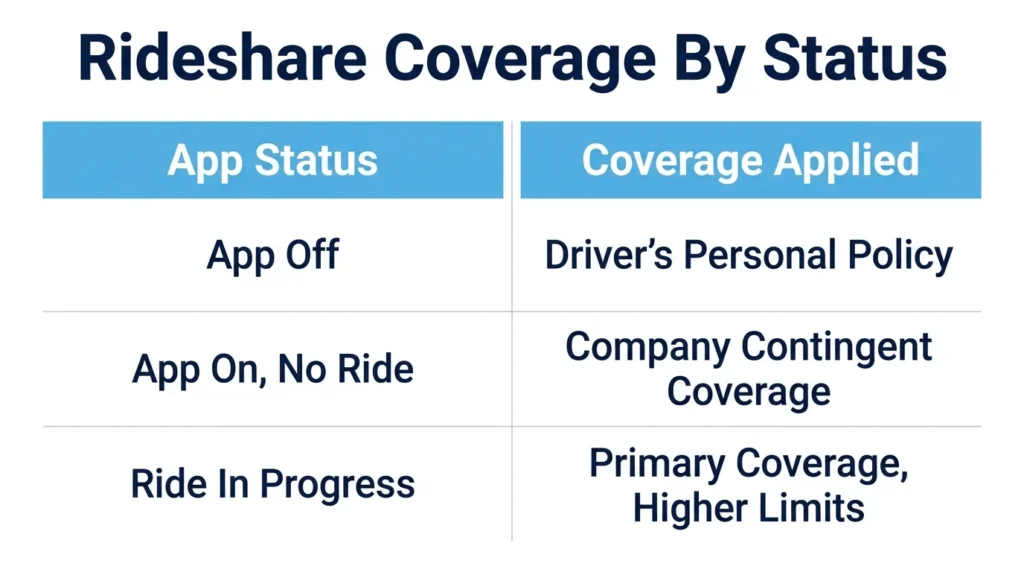
The coverage that applies depends on what the driver was doing at the moment of the crash. If the app was off, only the driver’s personal policy applies. If the app was on but no ride was accepted, the company’s contingent coverage kicks in. If the ride was in progress, the company’s primary coverage applies at even higher limits. Our breakdown of rideshare insurance coverage periods shows how each coverage period works in detail.
If the driver refuses to say which period applied at the time of the crash, the platform’s incident team can confirm the trip status from their own records. You do not need the driver’s cooperation to learn which period applies.
When to Get an Attorney Involved
Bring in an attorney when the police and the platform report still cannot identify the rideshare driver, or the insurer is stalling for time. In this case, an attorney will issue a subpoena to Uber or Lyft for the driver’s name, insurance details, and trip records, and the company must comply with the law.
An attorney can also request licensing and compliance records from the state agency that regulates rideshare operations. These official records can confirm the driver’s status and which coverage was in effect at the time of the crash.
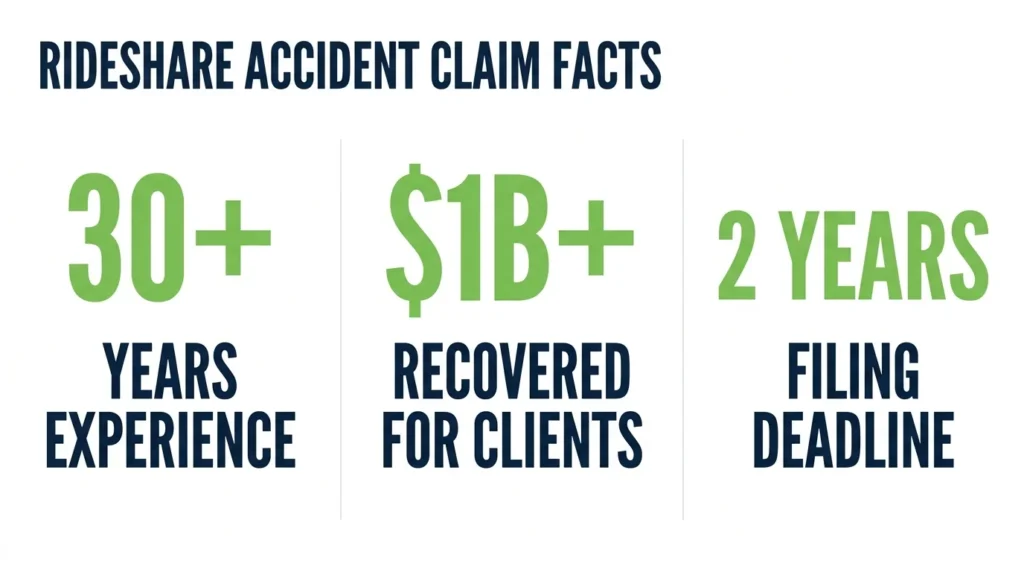
Texas law enforces a two-year deadline from the date of the crash. Evidence like surveillance footage and electronic trip logs can be overwritten long before then, so taking legal action early keeps your options open.
Finally, rideshare crashes often involve more than one responsible party. The driver, the company, and even the owner of the vehicle (if different from the driver) can all share fault. An experienced attorney can identify every party in the crash, even if the rideshare driver refuses to cooperate.
Talk to an Attorney About Your Rideshare Accident in Texas
A driver who refuses to cooperate can make you feel like your case is over before it even begins. Rest assured, you have options. Angel Reyes & Associates has spent over 30 years helping injured Texans pursue rideshare claims, including cases where the driver refused to cooperate or fled the scene.
We work on a contingency basis, which means you pay no fee unless we win. We have recovered more than $1 billion for clients across Texas.
If a rideshare driver left you in the dust, reach out to us for a free consultation to discuss your options before time runs out.
Past results do not guarantee future outcomes.
Frequently Asked Questions
Can I use my own car insurance if a rideshare driver hits me and drives away?
Yes. Texas law requires auto insurers to offer uninsured motorist coverage, and that coverage can pay for your injuries when a hit-and-run driver is never identified. If you carry UM/UIM on your personal policy, your own insurer will cover your damages up to your policy limits, even if the at-fault driver cannot be identified.
What if the rideshare driver was not logged into the app when the crash happened?
If the driver had the app off at the time of the crash, no Uber or Lyft coverage applies. Your claim will be filed against the driver’s personal auto insurance instead. This makes confirming the driver’s app status especially important, since the available coverage can drop significantly when the app is off.
How do I pay my medical bills while I wait for a rideshare accident claim to settle?
Your own Personal Injury Protection (PIP) or Medical Payments (MedPay) coverage can pay your medical bills right away, regardless of who caused the crash. If you do not have PIP or MedPay, an attorney can sometimes arrange a letter of protection with your medical provider so that your treatment can continue without upfront payment.
Can I make a claim directly against Uber or Lyft, not just the driver?
In some situations, yes. Texas law allows claims against a company that negligently hired or retained a dangerous driver, and Texas House Bill 1733 created a specific path to sue rideshare companies that failed to give their drivers a background check. These claims are separate and require proof that the company knew or should have known that the driver posed a risk.
What if the rideshare platform says the driver was not on an active trip at the time of the crash?
The platform’s determination of trip status can be disputed through legal processes. An attorney can issue a subpoena for the app data, server logs, and electronic records showing the driver’s app activity at the time of the crash.
About the Authors

Angel Reyes
Writer
Angel L. Reyes, III is the Founder and Managing Partner of Angel Reyes & Associates. A nationally recognized trial attorney and business leader, Angel has helped over 70,000 injury victims recover more than $1 billion since founding the firm in 1993. Named to the Texas Super Lawyers list annually since 2008, Angel brings Wall Street experience, Ivy League education, and a deep commitment to client advocacy. He is a frequent legal commentator and published author with extensive contributions to legal scholarship, trial strategy, and consumer protection.

Kyle Nicolas
Editor
Kyle Nicolas is the Web Content & SEO Manager at Angel Reyes & Associates. He has more than 10 years of experience as a marketing co...

Angel Reyes
Reviewer
Angel L. Reyes, III is the Founder and Managing Partner of Angel Reyes & Associates. A nationally recognized trial attorney and business...