Who Gets the Money in a Wrongful Death Lawsuit in Texas?


Every article on this site is researched by our internal team, reviewed for legal accuracy against current Texas law, and held to State Bar of Texas advertising standards before publication. We do not publish content that overstates outcomes or makes promises about results.
Learn more about our
editorial standards .
Key Takeaways
- Texas pays wrongful death money to a surviving spouse, children, and parents only.
- Proceeds are split by each beneficiary's individual loss, not shared equally.
- A Texas court must approve any wrongful death settlement involving a minor child.

Your father died in a crash on I-35W outside Fort Worth, and the other driver was clearly at fault. Now a settlement is on the table, and your family keeps asking the same hard question: who actually receives the money? Grief is heavy enough without a fight over how the compensation gets split.
Wrongful Death Beneficiaries Under Texas Law
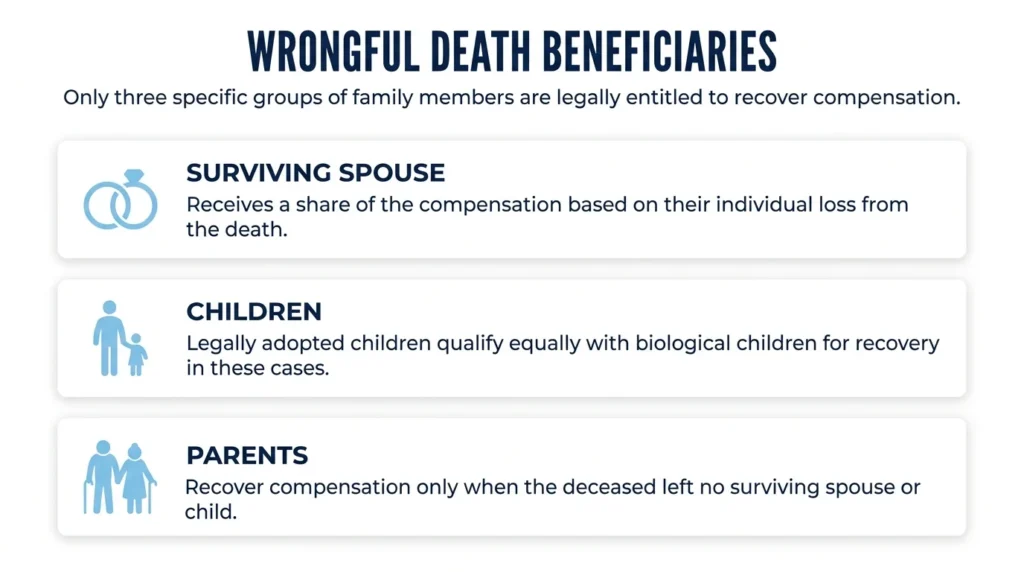
Texas law limits wrongful death recovery to three groups: the surviving spouse, the children, and the parents of the person who died. No one else qualifies as a beneficiary, no matter how close they were to your loved one.
The Texas Civil Practice and Remedies Code (CPRC) § 71.004 names these three as the only people who can recover money. However, being allowed to file the lawsuit is not the same as being paid from it.
When no spouse, child, or parent survives, there is no wrongful death beneficiary at all, so there is no one to receive that type of compensation. Your family’s only remaining option becomes a survival action, a separate claim that belongs to the estate and covers different losses, such as the person’s own medical bills and pain and suffering before death.
How Are Wrongful Death Proceeds Divided in Texas?
Texas does not split wrongful death proceeds evenly. The money is divided by each beneficiary’s individual loss, so shares are rarely identical.
Under Texas Civil Practice and Remedies Code (CPRC) § 71.010, the jury or the court sets each person’s share based on that person’s own losses. Financial dependence, age, and the closeness of the relationship all shape the result.
A spouse who relied on the deceased’s income may receive more than an adult child living on their own. The total pool depends on the damages proven, and Texas caps wrongful death damage awards in certain cases.
That pool comes from three kinds of damages: lost financial support, lost companionship, and mental anguish.
Unequal shares can create tension among relatives, so it helps to know typical wrongful death settlement ranges before anyone discusses how to divide the money.
Wrongful Death Claims vs. Survival Actions
In Texas, a wrongful death claim and a survival action often come from the same death, but the money travels to different places. One pays your family directly. The other pays the estate.
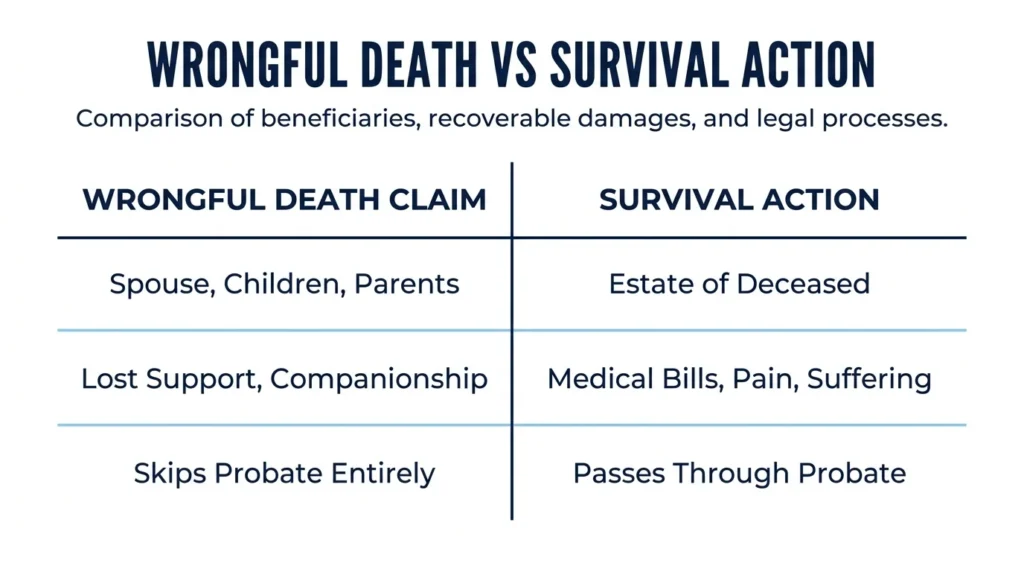
Wrongful Death Claim Distribution
Wrongful death proceeds skip probate and go straight to the spouse, children, and parents. Each person receives a share set by their individual loss, not by a will or by estate rules.
This is the money meant to replace what your family lost when your loved one died. It never enters the estate, so creditors of the estate cannot reach it.
Survival Action Estate Distribution
A survival action belongs to the estate of the person who died. It covers what they could have claimed themselves: medical bills, lost earnings before death, and pain and suffering.
Texas Civil Practice and Remedies Code (CPRC) § 71.021 lets the estate pursue the claims your loved one held at the moment of death.
Those proceeds pass through probate court. A valid will directs where they go. Without a will, the Texas Estates Code § 201 sets the order of inheritance through intestate succession.
Both claims often run together after a fatal collision.
Wrongful Death Settlements for Minor Children
When a child is one of the beneficiaries, a Texas court must approve the settlement before anyone releases the funds. This protects the child’s share from being spent or mishandled by the adults involved.
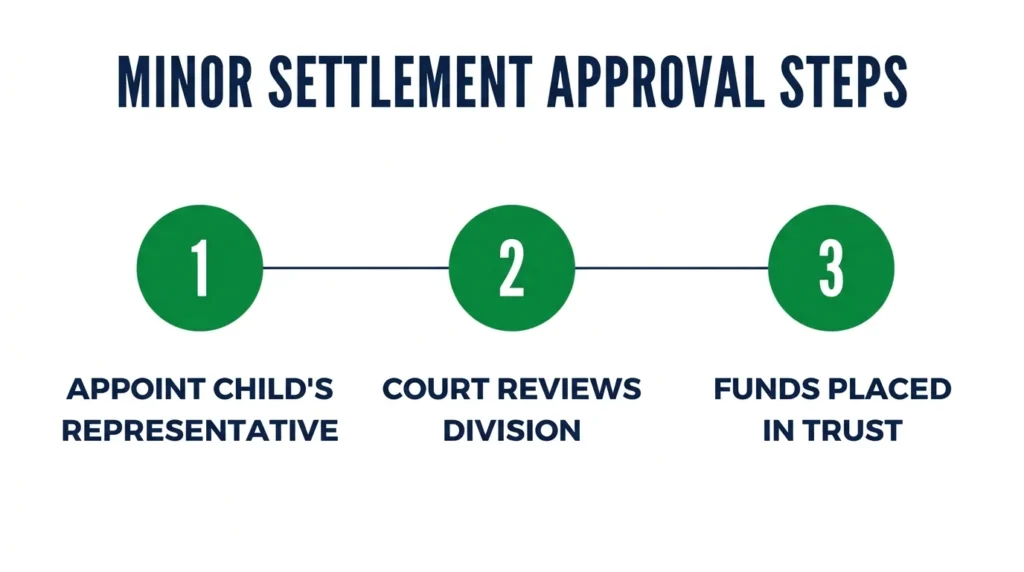
The Texas Property Code Chapter 142 governs how a minor’s money is managed once the court signs off. The approval usually follows three steps.
Step 1: The court appoints a representative for the child. A guardian ad litem or next friend protects the minor’s interest, separate from the adults in the case.
Step 2: The court reviews the proposed division. A judge checks that the child’s share is fair before approving it.
Step 3: The funds go into a protected account. Approved money sits in a court-supervised account or trust until the child reaches adulthood.
This oversight exists to protect the child, not to stall your family’s recovery. Seeing how to file a Texas wrongful death lawsuit helps you place court approval inside the larger process.
Families handling a minor’s share often lean on guidance that has managed these distributions before.
How Are Wrongful Death Settlements Paid Out?
Once shares are set and any court approval is done, the money reaches you in one of two ways. You either take it all at once or spread it out over time.
Lump Sum Payouts
A lump sum is a single payment of your full share as soon as the case resolves. You get immediate access to the entire amount and control how you use it.
Structured Settlement Payouts
A structured settlement pays your share in scheduled amounts over months or years. Families often choose this to keep long-term stability or to protect a child’s share until adulthood.
Taxes can push a family toward one option. Compensatory wrongful death damages are generally not taxed as income under 26 U.S.C. § 104, while punitive damages usually are.
Talk to an Experienced Attorney Today
Deciding who receives the money and how it gets paid is hard enough without doing it alone. Angel Reyes & Associates has guided Texas families through wrongful death claims for over 30 years. We work on contingency, so there is no fee unless we win.
Our record includes more than $1 billion recovered for clients. You can read what our clients say about working with us before you reach out.
Schedule a free consultation and we will review how any recovery would be divided in your case.
Past results do not guarantee future outcomes.
Wrongful Death Lawsuit Compensation FAQs
Is there a deadline to file a wrongful death lawsuit in Texas?
Yes. You generally have two years from the date of death to file, though certain circumstances can change that deadline.
Do adopted children or stepchildren count as wrongful death beneficiaries in Texas?
A legally adopted child has the same rights as a biological child. A stepchild does not qualify unless a formal adoption was completed before the parent’s death.
Who decides how to split a wrongful death settlement if the case settles instead of going to trial?
Adult beneficiaries who agree on the split can put that agreement in writing without court involvement. A court steps in only when beneficiaries disagree or a minor’s share is involved.
Can a wrongful death settlement affect eligibility for programs like SSI or Medicaid?
A lump sum can count as a resource and affect need-based programs such as SSI or Medicaid. It generally does not affect Social Security retirement or disability benefits.
Are attorney fees and case costs taken out before the settlement is divided?
Yes. Fees and expenses such as court costs and expert fees are typically deducted first, and beneficiaries then split what remains.
About the Authors

Angel Reyes
Writer
Angel L. Reyes, III is the Founder and Managing Partner of Angel Reyes & Associates. A nationally recognized trial attorney and business leader, Angel has helped over 70,000 injury victims recover more than $1 billion since founding the firm in 1993. Named to the Texas Super Lawyers list annually since 2008, Angel brings Wall Street experience, Ivy League education, and a deep commitment to client advocacy. He is a frequent legal commentator and published author with extensive contributions to legal scholarship, trial strategy, and consumer protection.

Kyle Nicolas
Editor
Kyle Nicolas is the Web Content & SEO Manager at Angel Reyes & Associates. He has more than 10 years of experience as a marketing co...

Angel Reyes
Reviewer
Angel L. Reyes, III is the Founder and Managing Partner of Angel Reyes & Associates. A nationally recognized trial attorney and business...