Who Pays Uber’s Insurance Deductible After an Accident?


Every article on this site is researched by our internal team, reviewed for legal accuracy against current Texas law, and held to State Bar of Texas advertising standards before publication. We do not publish content that overstates outcomes or makes promises about results.
Learn more about our
editorial standards .
Key Takeaways
- The Uber driver pays the $2,500 deductible, but only for repairs to their own vehicle.
- Injured passengers and third parties file liability claims and do not have to pay the deductible.
- While you're logged into the app but no trip is selected, coverage is limited, but once you accept a ride, the full $1 million insurance protection applies until the trip ends.
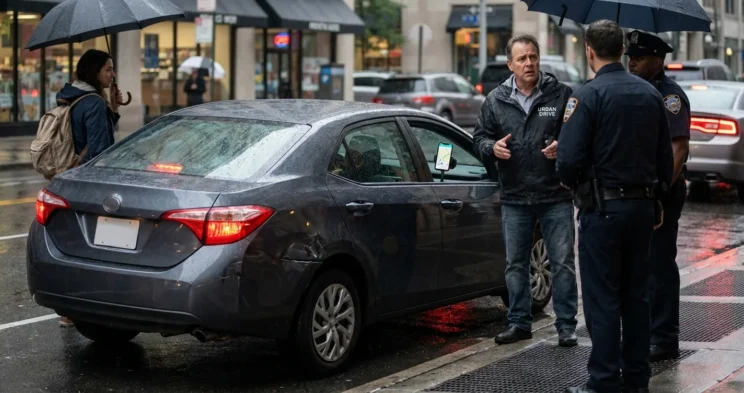
You were finishing a late Friday night shift, dropping off a rider near Deep Ellum, when another car clipped your front bumper on Commerce Street. Now, your car needs repairs, the rider is asking who pays for their injuries, and an insurer mentioned a $2,500 deductible. You are left wondering whether that bill lands on you.
The answer depends entirely on your role in the crash. The first step is sorting out exactly what that deductible covers, and who is actually responsible for paying it.
What Uber’s Deductible Actually Covers
The deductible only applies to any repairs made to the Uber driver’s own vehicle. It is part of Uber’s contingent physical damage coverage, which can pay to fix your car up to its actual cash value. This coverage has nothing to do with paying for injuries suffered in the crash.
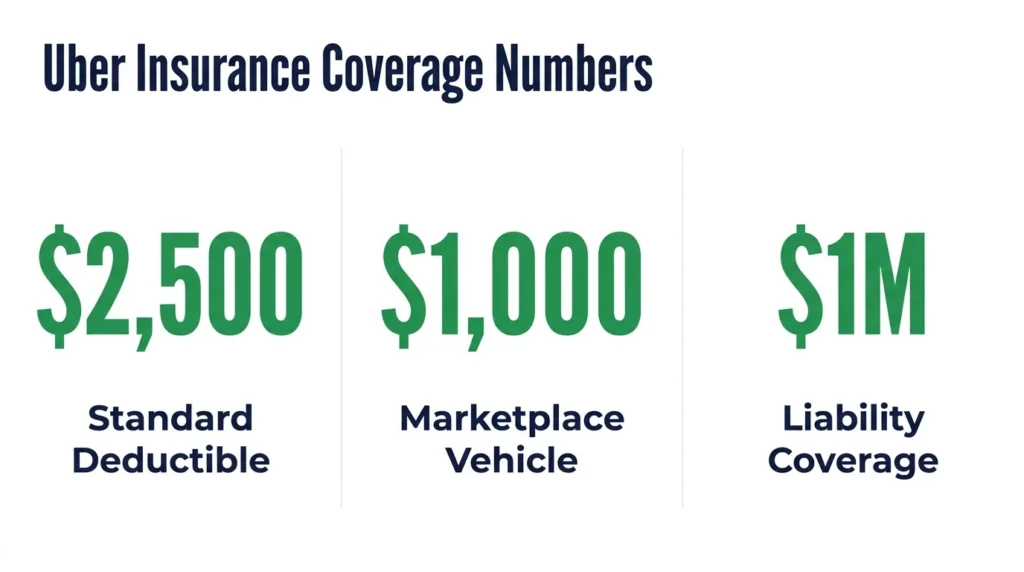
The standard deductible is $2,500, according to Uber’s official insurance page, but that figure drops to $1,000 if you drive a vehicle obtained through the Uber Vehicle Marketplace.
This physical damage coverage does not always apply. It only kicks in after you accept a trip on the app. You must also have comprehensive coverage and collision coverage on your own personal auto policy before Uber’s physical damage coverage applies.
Liability for injuries is determined separately. When someone gets hurt, fault must be decided, and no deductible applies. If you want to see how coverage applies across each stage of a trip, our breakdown of Uber and Lyft coverage periods walks you through it.
Who Pays the Uber Deductible After a Crash?
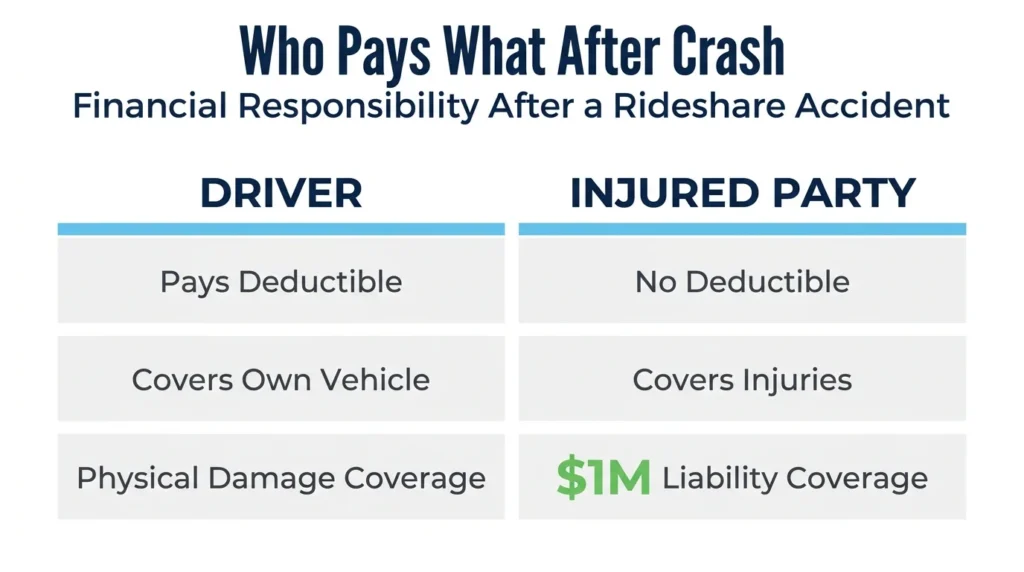
The Uber driver pays the deductible, but it can only be used for repairs made to their own car. Passengers and other motorists do not have to pay the deductible, nor do they receive any compensation from it. These two situations are often confused, so it helps to look at them one at a time.
When the Driver Pays the Deductible
If you drive for Uber, and your car is damaged, you must pay the deductible first, then Uber’s physical damage coverage pays the rest. This means you must cover the first $2,500, then Uber’s physical damage coverage takes care of repairs up to your car’s actual cash value.
This applies no matter who caused the crash. As long as you have comprehensive coverage and collision coverage on your personal auto insurance policy, Uber’s physical damage coverage helps pay for repairs made to your vehicle, even if the other driver was clearly at fault.
However, if the total damage to your vehicle is under $2,500, then Uber’s physical damage coverage gives you nothing. In this case, you must absorb the full cost of repairs yourself.
When Passengers and Third Parties Recover Damages
If you were a passenger or another driver, you do not have to pay the deductible at all. Instead, you’ll file a liability claim, which will compensate you for injuries and damage caused by the at-fault party. Uber’s official insurance page confirms that this coverage works separately from the driver’s physical damage deductible.
During an active trip, Uber provides at least $1 million in liability coverage for injuries and property damage to others. Injured passengers and third parties are compensated from this coverage, not the driver’s deductible.
Fault can be shared between multiple parties, and Texas decides how recovery is split using a rule called “proportionate responsibility,” which is found in the Texas Civil Practice and Remedies Code Chapter 33. This rule states that if you are partially to blame for the crash, then your recovery is reduced by your share of fault.
To understand when Uber can be held responsible, our guide on suing Uber after an accident in Texas covers the details on this.
How Texas Rideshare Insurance Rules Apply
Texas requires different levels of rideshare coverage based on your status in the app. These rules are determined by the Texas Insurance Code Chapter 1954. This states that the coverage available to you changes, depending on whether the app was off or on, and whether you were carrying a passenger at the time of the crash.
When the app is on, but you have not accepted a trip yet, the available insurance coverage is lower. Once you accept a trip, the $1 million coverage applies through the end of the ride.
The deductible applies only to vehicle damage, which is separate from liability coverage. Knowing which coverage period applied to your crash often tells you more than anything else, so reviewing the rideshare claims process before assuming the bill is yours to pay can save you money.
Steps to Protect Your Claim After an Uber Crash
Acting quickly after a crash protects your wallet and your claim. Taking the right steps in the first few days will keep your options open and stop an insurer from lowballing you.
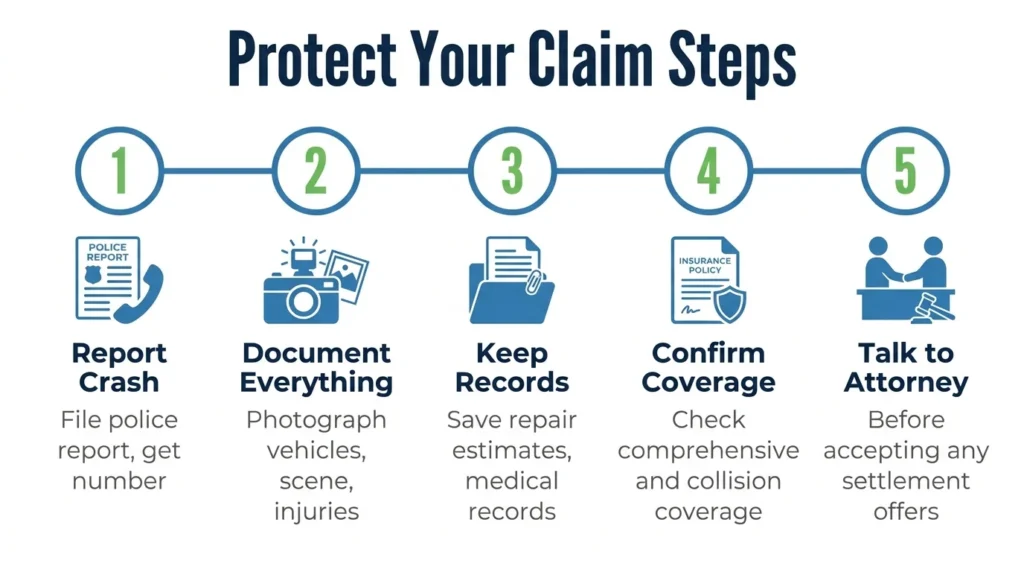
- Step 1: Report the crash in the Uber app and to the police. File a police report and get the report number. This creates an official record that every insurer will ask for later.
- Step 2: Document the damage and any injuries. Take clear photos of the vehicles, the scene, and visible injuries from several angles. Capture details while they are still fresh.
- Step 3: Keep your repair estimates and medical records. These papers support what you are owed and will make it harder for an adjuster to dispute the value of your claim.
- Step 4: Confirm what your own auto policy covers. Check to make sure you have comprehensive coverage and collision coverage before you assume the deductible falls on you.
- Step 5: Talk to an attorney before accepting any offers. Insurers often quickly make low offers as a tactic to pay less than your claim is worth. Accepting these offers gives up your right to ask for more compensation later.
Reviewing your options for a car accident claim can dramatically change how much compensation you walk away with. Additionally, our overview of what to do after a rideshare crash breaks down these first steps in detail.
Talk to an Attorney About Your Rideshare Accident in Texas
Sorting out who pays after an Uber crash is confusing on purpose, and insurance companies are not in a hurry to clear it up for you. You deserve a straight answer about what you may owe and what you can recover.
Angel Reyes & Associates has guided injured Texans through rideshare claims for over 30 years. We work on a contingency basis, which means you pay no fee unless we win. Your first consultation is free, and we have recovered more than $1 billion for clients across the state. You can see how we have handled cases like yours on our case results page. Past results do not guarantee future outcomes.
We serve clients throughout Texas and can handle the majority of your case remotely. Reach out for a free consultation, so you understand your options before you sign anything.
Uber Insurance Deductible FAQs
Can I avoid paying Uber's deductible out of pocket?
Some insurers offer a rideshare add-on called an “endorsement” to reimburse the difference between Uber’s deductible and your lower personal deductible. However, you have to add this to your personal auto policy before a crash happens, not after.
Will my personal car insurance cover an Uber crash if I did not buy rideshare coverage?
Most personal auto policies exclude coverage when a vehicle is used for work, so the insurer can deny a claim for a crash that happened while your app was on. To reimburse this coverage gap, you will need to add a rideshare endorsement to your policy.
Is the deductible the same when I am delivering food through Uber Eats?
Yes, Uber’s physical damage coverage and its deductible generally follow the same rules for delivery once you accept an order, but coverage can vary by state. Check your current driver app terms to confirm whether this applies to you.
What happens if I never added comprehensive coverage and collision coverage to my personal policy?
Uber’s physical damage coverage does not apply at all without comprehensive coverage and collision coverage on your own policy. In this case, Uber will not pay for repairs to your car, regardless of the deductible.
About the Authors

Angel Reyes
Writer
Angel L. Reyes, III is the Founder and Managing Partner of Angel Reyes & Associates. A nationally recognized trial attorney and business leader, Angel has helped over 70,000 injury victims recover more than $1 billion since founding the firm in 1993. Named to the Texas Super Lawyers list annually since 2008, Angel brings Wall Street experience, Ivy League education, and a deep commitment to client advocacy. He is a frequent legal commentator and published author with extensive contributions to legal scholarship, trial strategy, and consumer protection.

Kyle Nicolas
Editor
Kyle Nicolas is the Web Content & SEO Manager at Angel Reyes & Associates. He has more than 10 years of experience as a marketing co...

Angel Reyes
Reviewer
Angel L. Reyes, III is the Founder and Managing Partner of Angel Reyes & Associates. A nationally recognized trial attorney and business...