Bus Accident During Loading or Unloading in Texas


Every article on this site is researched by our internal team, reviewed for legal accuracy against current Texas law, and held to State Bar of Texas advertising standards before publication. We do not publish content that overstates outcomes or makes promises about results.
Learn more about our
editorial standards .
Key Takeaways
- The danger zone extends up to 30 feet from the front bumper and 10 feet from each side and rear of the bus.
- Texas caps school district recovery at $100,000 per person and $300,000 per occurrence.
- You must give a Texas school district written notice within six months of the injury.
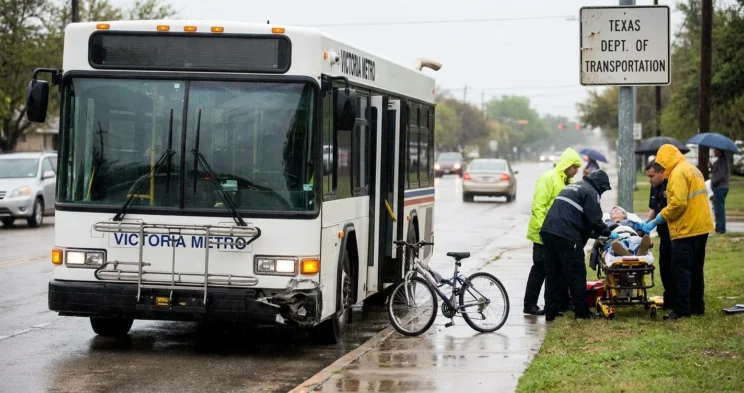
You watched your child step toward the school bus near your home in Sugar Land, the same stop you use every morning. In a few seconds, something went wrong, and now your child is hurt. You are frightened, and you are not sure whether anyone can be held responsible.
School Bus Danger Zone Explained
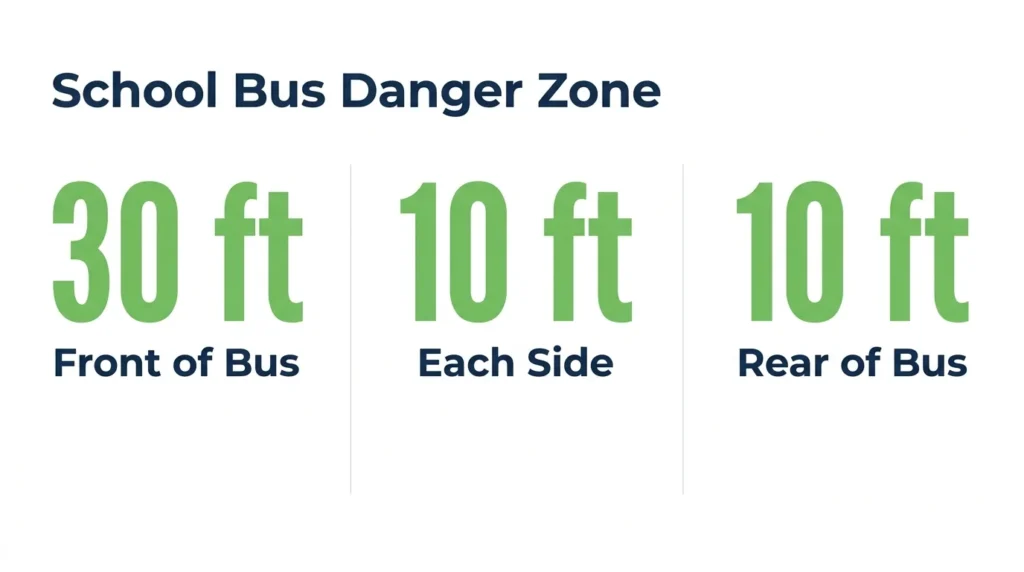
The school bus danger zone is the area around the bus where children face the highest risk of being struck while boarding or exiting. It extends up to 30 feet from the front bumper and 10 feet from each side and the rear, the spaces a driver cannot reliably see.
This zone is dangerous because the driver cannot see it well. Blind spots run along the front, the sides, and the rear, exactly where a small child is likely to stand.
That limited visibility creates a heightened duty to watch children before the bus moves. The driver is expected to confirm the zone is clear, and the district is expected to plan for it.
Federal and state safety frameworks treat the danger zone as a known hazard. Resources like the NHTSA guidance on safer school bus stops describe how stops should be designed and how drivers should be trained around it.
Districts are expected to account for this hazard when they train drivers and set loading procedures. The broader framework appears in school bus safety standards from NHTSA, which recognize the danger zone as a distinct risk.
A loading-zone injury is legally different from a crash at an intersection or in mid-road traffic. The duties involved are different, and the parties who may be responsible can be different too.
Who Is Responsible for a Loading-Zone Injury
Responsibility for a loading-zone injury can fall on the bus driver, the school district, a passing motorist, or a private bus company. Often more than one party shares fault, which changes how your claim is built.
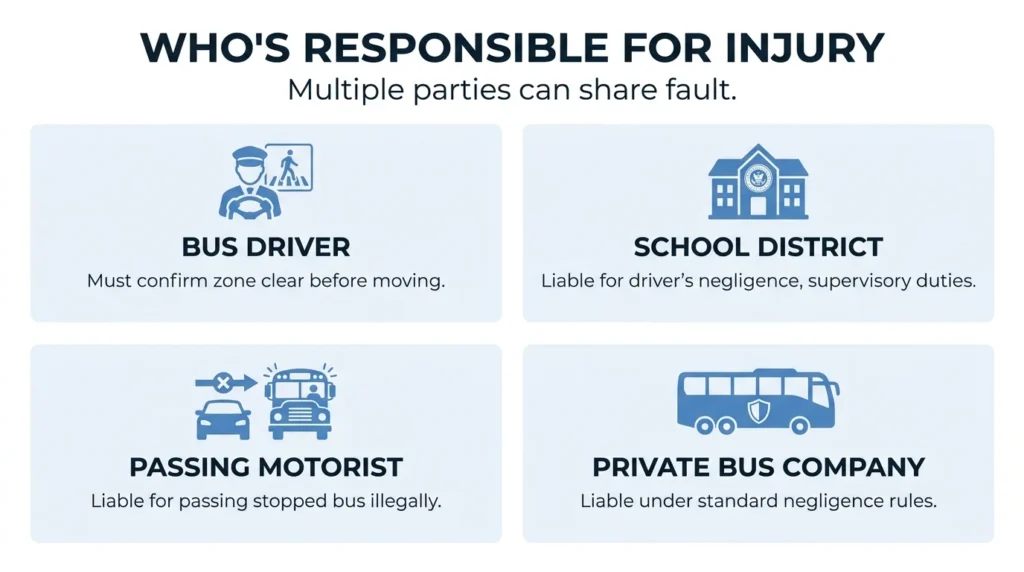
The bus driver carries a clear duty in these moments. The driver must confirm the danger zone is clear before moving the bus and must supervise children as they get on or off safely.
The school district can also be responsible for the driver’s negligence through what the law calls vicarious liability. That simply means the employer answers for what its employee does on the job.
The district can carry its own supervisory duties as well, separate from the driver’s conduct. Texas law sets out the district’s role in student transportation and safety under the Texas Education Code Chapter 34. For a closer look at how fault gets sorted out, see who can be held liable in a bus accident.
A passing motorist can be liable too. A driver who ignores the stop arm and passes a stopped bus violates Texas Transportation Code § 545.066, and that driver can be held responsible for striking a child in the loading zone.
The picture shifts when a private company runs the buses under contract. In that case, the contractor and its driver may be liable under ordinary negligence rules, without the immunity protections a public district gets. You can learn how these cases generally develop on our bus accident injury page.
Texas Governmental Immunity & TTCA Limits
Public school districts normally enjoy governmental immunity, but Texas law opens a narrow door for these claims. The Texas Civil Practice and Remedies Code (CPRC) § 101.021 waives that immunity for injuries arising from a district employee’s operation or use of a motor vehicle.
That waiver is the reason a loading-zone claim against a public district is possible at all. The bus is the motor vehicle, and the driver is the district employee.
The phrase “operation or use” sets the limit, though. A claim built purely on a supervision failure, like too few monitors at the stop, may not connect closely enough to the actual operation of the bus.
Claims tied to the driver actively operating the vehicle fit the waiver more cleanly. When the bus moves, stops, or pulls away with a child nearby, the link to vehicle operation is stronger. A parent whose child was hurt in a loading-zone incident can have an attorney assess whether the facts meet this standard, a question covered in the limits of Texas Tort Claims Act bus claims.
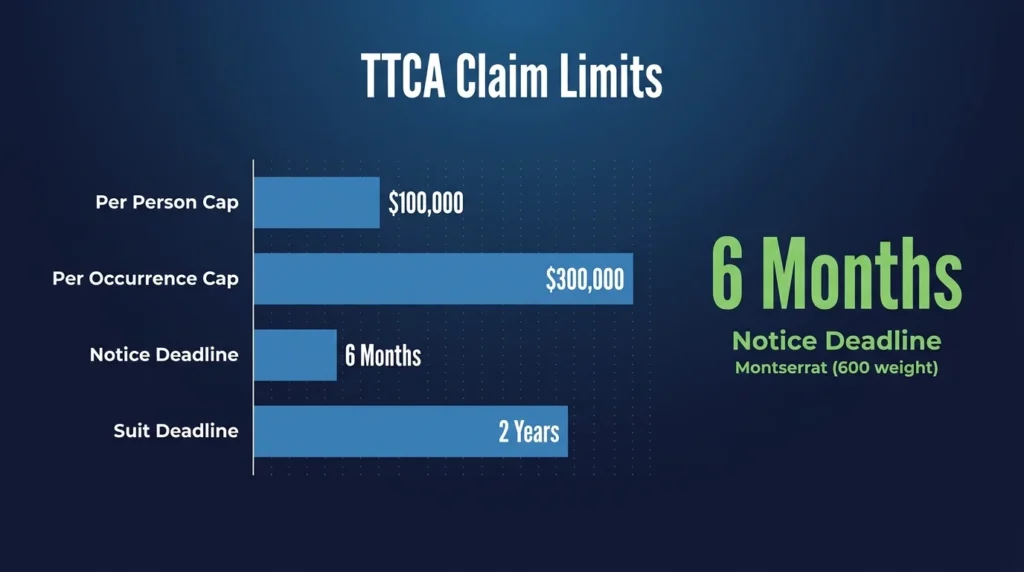
Recovery against a public district is capped. Under CPRC § 101.023, damages are limited to $100,000 per person and $300,000 per occurrence. For a serious childhood injury, those caps can fall well short of the actual costs.
There is also a strict deadline before you can sue. Under CPRC § 101.101, you must give the district written notice within six months of the incident. Miss that window, and the claim against the district can be barred entirely.
Steps to Take After a Loading-Zone Incident
Your first job is your child’s health, and your second is protecting the claim before evidence disappears. The six-month notice deadline makes early action especially important here.
Step 1: Get medical care for your child right away. Document every injury, diagnosis, and treatment record, even for symptoms that seem minor at first.
Step 2: Report the incident to the school district. Ask for a written incident report and keep your own copy of everything you submit.
Step 3: Preserve the physical evidence. Photograph the loading zone, the bus, the stop-arm signals, and any visible injuries, and note the time, location, and weather.
Step 4: Collect witness contact information. Other parents, students, and bystanders at the stop may have seen what you did not.
Step 5: Request the bus camera footage and district records. Ask in writing that they be preserved, because retention periods vary by district and footage can be overwritten quickly.
Step 6: Contact an attorney as early as you can. The six-month notice deadline can eliminate the claim against the district, so waiting is costly. Our overview of how to file a Texas bus accident claim walks through what comes next.
An attorney familiar with Texas school district claims can help you meet the notice deadline and gather the evidence needed to build a strong case.
Statute of Limitations for Texas Bus Injury Claims
Two different clocks can run at once after a loading-zone injury. One governs claims against the school district, and a separate one governs claims against a private motorist who struck your child.
Claims Against the School District
For a claim against the district, the six-month written notice under CPRC § 101.101 comes first. It is a prerequisite to suing, not the lawsuit deadline itself, and you generally have two years from the injury date to file suit.
Missing the six-month notice window does not pause or extend anything. It simply bars the claim.
Special tolling rules for minors can affect the two-year limitations period in some situations. Because these rules are fact-specific, you should confirm how they apply with one of our personal injury attorneys.
Claims Against Private Motorists
A claim against a third-party driver who hit your child follows a different path. The standard two-year personal injury deadline under CPRC § 16.003 applies, with no six-month notice requirement.
This motorist claim runs under ordinary negligence rules. It stands separate from, and in addition to, any claim against the district.
Comparative fault can affect what you recover when more than one party shares responsibility. If the driver, the district, and a contractor each played a role, the recovery from each can shift based on their share of fault.
Talk to a Texas Bus Accident Attorney
A loading-zone injury leaves you juggling your child’s recovery and a tight legal deadline at the same time. You do not have to sort it out alone.
Angel Reyes & Associates has guided Texas families through bus accident and school district injury cases for over 30 years. We offer free initial consultations, and we charge no fee unless we win. Our team has more than $1 billion recovered for clients, and we can handle most, if not all, of your case remotely.
Because the six-month notice deadline moves fast, the sooner you act, the more options you keep. Reach out to us for a free consultation to talk through what happened and what you can do next.
Past results do not guarantee future outcomes.
Frequently Asked Questions
What information must be in the written notice to the school district?
The notice must describe the injury or damage claimed, the time and place of the incident, and what happened. A phone call or an informal report to the principal does not meet this requirement.
Does the school district's knowledge of the accident count as formal notice?
Courts rarely apply the “actual notice” exception, and the burden falls on the family to prove the district had that knowledge. A formal written notice is the only reliable way to protect the claim.
Can a child struck at a bus stop be found partly at fault under Texas law?
Texas uses modified comparative fault, so yes, a child can be assigned a percentage of fault, but courts weigh the child’s developmental age when deciding what standard of care applies. Recovery is reduced by the child’s share of fault and barred only if that share exceeds 50 percent.
Does a family's own auto insurance cover a child hit by an uninsured driver at the bus stop?
Uninsured and underinsured motorist coverage can extend to pedestrian family members in Texas, so a child struck by a driver with no insurance may be covered under a parent’s policy. Both coverages are optional in Texas, but insurers must offer them in writing before a valid rejection can stand.
Does the six-month TTCA notice deadline apply to a private bus contractor?
No. Private contractors are not government entities, so the six-month pre-suit notice requirement and the TTCA damage caps do not apply to them. Claims against a contractor follow standard Texas negligence rules, with no statutory cap on recovery.
About the Authors

Angel Reyes
Writer
Angel L. Reyes, III is the Founder and Managing Partner of Angel Reyes & Associates. A nationally recognized trial attorney and business leader, Angel has helped over 70,000 injury victims recover more than $1 billion since founding the firm in 1993. Named to the Texas Super Lawyers list annually since 2008, Angel brings Wall Street experience, Ivy League education, and a deep commitment to client advocacy. He is a frequent legal commentator and published author with extensive contributions to legal scholarship, trial strategy, and consumer protection.

Kyle Nicolas
Editor
Kyle Nicolas is the Web Content & SEO Manager at Angel Reyes & Associates. He has more than 10 years of experience as a marketing co...

Angel Reyes
Reviewer
Angel L. Reyes, III is the Founder and Managing Partner of Angel Reyes & Associates. A nationally recognized trial attorney and business...