Comparative Fault in Bus Accidents in Texas


Every article on this site is researched by our internal team, reviewed for legal accuracy against current Texas law, and held to State Bar of Texas advertising standards before publication. We do not publish content that overstates outcomes or makes promises about results.
Learn more about our
editorial standards .
Key Takeaways
- Texas bars recovery only when your fault for the bus crash tops 50% of the total blame.
- A bus driver must use due care to avoid you even if you cross outside a crosswalk.
- Government bus claims demand written notice within six months or the claim can be barred.
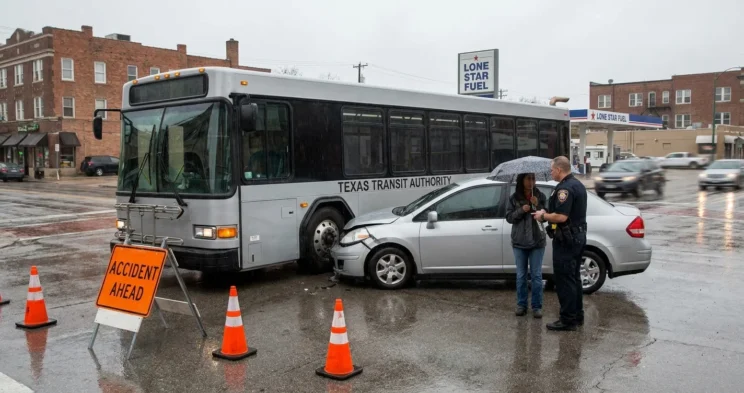
You were hurrying to catch the METRO bus on Westheimer Road, crossing mid-block because the light was slow to change. The bus clipped you as it pulled toward the stop, and now the driver’s insurer is saying it was your fault for not using the crosswalk. You are scared that one bad decision just erased any chance of getting your medical bills covered.
Texas Proportionate Responsibility & the 51% Bar
Partial fault does not automatically mean zero recovery in Texas. The state uses a system called proportionate responsibility, where each party involved gets a percentage of the blame. Your damages are reduced by your share, not wiped out.
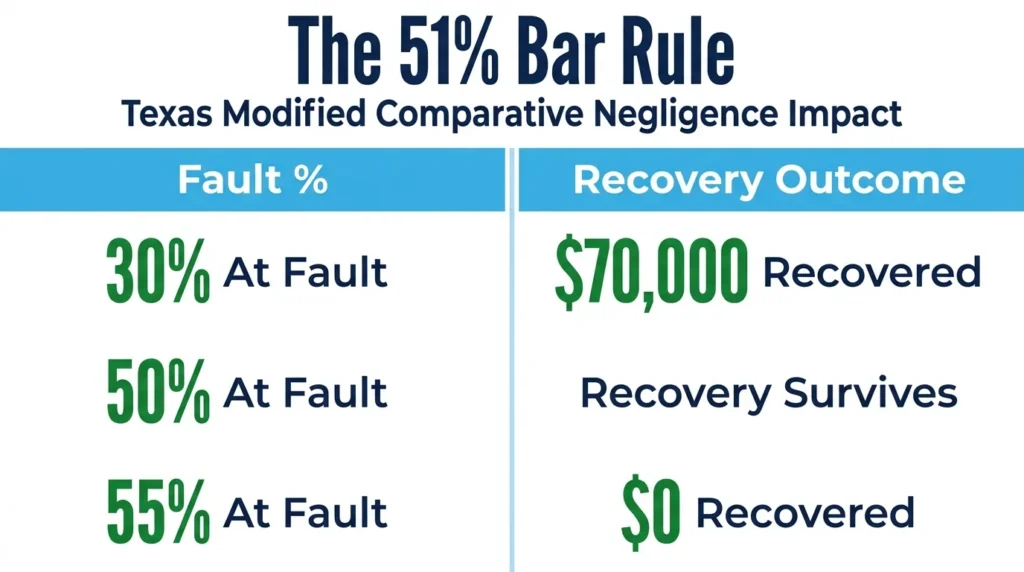
There is one hard line you cannot cross. Under the Texas Civil Practice and Remedies Code (CPRC) § 33.001, you recover nothing if your fault is more than 50%. This is the 51% bar rule. At 50% or below, your recovery shrinks but survives.
The math is straightforward once you see it. A rider found 30% at fault for a $100,000 injury recovers $70,000. A rider found 55% at fault recovers nothing at all.
Every party whose actions contributed to the crash lands on the verdict form. That includes the bus driver, the bus company, and you. Each gets a percentage, and those percentages must add up to 100%.
Because shared blame in a bus crash confuses so many people, it helps to see how the general rule works first. Our breakdown of the Texas comparative negligence rule walks through the same 51% line in plain terms.
How Fault Percentages Are Assigned in Bus Crashes
A jury or judge assigns fault, weighing the evidence from every side. The CPRC § 33.003 directs the trier of fact to give each party a percentage based on what the proof shows. Bus cases carry an extra layer that ordinary car crashes do not.
Bus operators are common carriers, which means they owe passengers a heightened duty of care. That elevated standard tilts the fault calculus in your favor. Conduct that might split 50/50 in a fender bender can push a larger share onto the bus operator when a passenger gets hurt. You can see the full range of what these cases involve on our Texas bus accident claims page.
Several types of evidence shape the final percentages. Surveillance footage, dashcam video, witness statements, and police reports all matter. So do the operator’s federal safety records, which the FMCSA large truck and bus crash data helps put in context.
The defense will work hard against you here. Insurers point to your phone use, a sudden movement, or a failure to hold the handrail to argue you deserve a bigger slice of the blame. Countering that story means digging into who was actually at fault on the operator’s side.
An attorney can pull the operator’s records and safety history to shift fault back toward the bus company where it belongs. That same review often reveals maintenance gaps or training failures the insurer would rather keep quiet. Our guide to who is liable in a Texas bus accident shows how many parties can share responsibility.
Jaywalking & Distraction: Common Victim Fault Scenarios
Your mistake rarely ends the case on its own. The real question is never whether you erred. It is whether your error crosses the 50% line, and in most bus scenarios the operator’s own failures weigh heavily on the other side.
Jaywalking to a stop is the classic example. Even when you cross outside a crosswalk, the Texas Transportation Code § 552.008 requires a bus driver to use due care to avoid hitting you. That statutory duty limits how far the operator can push the argument that you alone caused the crash.
Distraction while boarding works much the same way. Say you were looking at your phone or skipped the handrail as you stepped up. You might carry some fault, but the company still owes you safe boarding conditions.
Several factors decide how that plays out. A court looks at whether the lighting was adequate, whether the steps were maintained, and whether the driver waited for riders to be seated before pulling away. The same fault-sharing logic applies to partial fault in a car accident, so the comparison can help you picture your own situation.
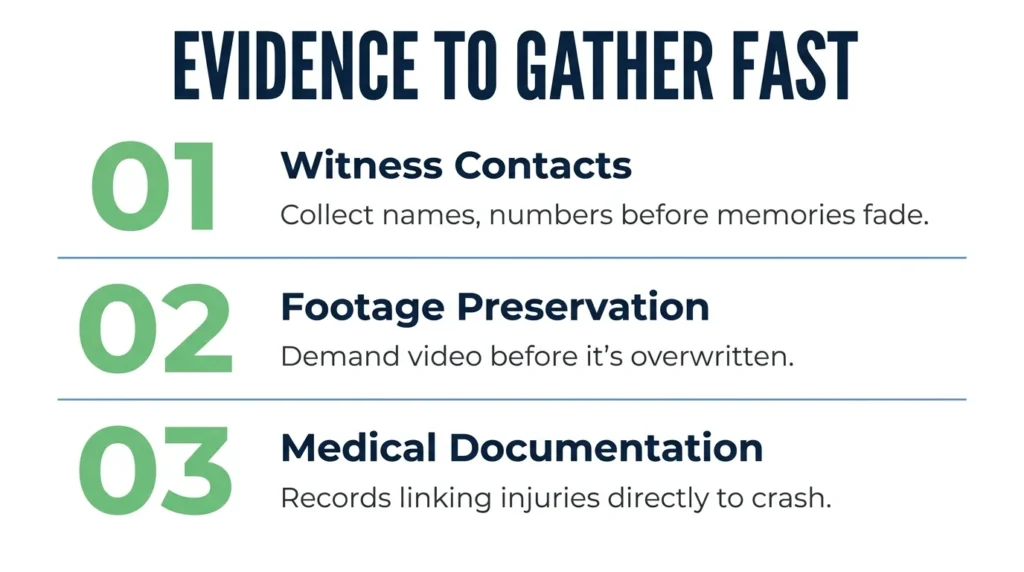
Bus operators and their insurers routinely argue for inflated victim fault percentages. Acting early protects your number before it hardens into the record. Gather these while the trail is fresh:
- Witness contact information. Riders and bystanders forget details within days, so collect names and numbers at the scene.
- Footage preservation requests. Surveillance and dashcam video get overwritten fast, and a written demand stops that clock.
- Medical documentation. Records that tie your injuries to the crash keep the insurer from blaming a prior condition.
Filing correctly matters just as much as gathering proof. Our overview of how to file a bus accident claim in Texas covers the steps and the deadlines that come with them.
Government Buses: Extra Deadlines & Damage Rules
Everything changes when a government entity runs the bus. When a city transit system, a county, or a school district operates it, the Texas Tort Claims Act governs your claim. Sovereign immunity limits when and how much you can sue for.
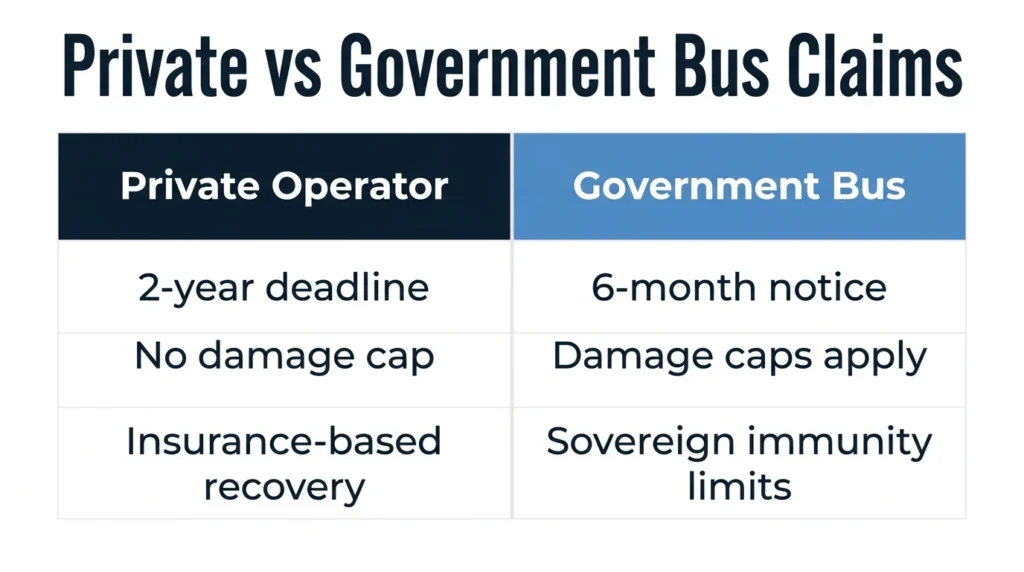
One deadline can end your case before fault ever comes up. Under CPRC § 101.101, you must give the government entity written notice within six months of the incident. Miss it and the claim can be barred no matter how little of the blame was yours.
Damage caps add another limit. The Tort Claims Act caps per-person recovery below what a claim against a private bus operator would allow. That cap stacks on top of any reduction from your fault percentage.
Timing works differently for private and government buses. For a private operator, the two-year deadline under CPRC § 16.003 sets the outer window to file. For a government bus, the six-month notice rule makes early action urgent well before that two-year clock runs out.
If a government-operated bus hurt you, confirm whether that six-month window has already closed before you assume the claim is dead. Our explainer on Texas Tort Claims Act limits walks through how the caps and deadlines fit together.
Talk to a Texas Bus Accident Attorney
Partial fault is not the end of your claim, but proving where the blame really sits takes work. Angel Reyes & Associates has represented bus accident victims across Texas for more than 30 years, including cases where the operator tried to pin the crash on the injured rider. We have recovered more than $1 billion for clients, and we work on contingency, so you owe no fee unless we win.
You can review our results in past injury cases to see the kinds of claims we handle. When you are ready, reach out to us for a free consultation.
Past results do not guarantee future outcomes.
Frequently Asked Questions
Does a pre-existing injury affect how much I can recover in a Texas bus accident claim?
A pre-existing condition does not bar your recovery. Texas follows the eggshell plaintiff rule, which holds the at-fault party responsible for aggravating a condition that already existed, so long as you can show the crash made it worse.
What information must I include in the written notice to a government bus agency?
The notice must describe the injury or damage you suffered, identify the time and place of the incident, and state your identity as the claimant. Missing any of those elements can undermine the notice even if it arrives within the six-month window.
Are damage caps different for private charter buses than for government-run transit?
Private and charter bus operators are not covered by the Texas Tort Claims Act, so no statutory cap limits what you can recover from them. Your recovery against a private operator is bounded only by your proven damages and the operator’s insurance and assets.
Can a third-party driver who caused the crash affect my recovery even if I did not sue that driver?
Yes. Under Texas law, the jury can assign a fault percentage to a responsible third party who is not named in your lawsuit. That share reduces the bus operator’s liability, which can lower the amount you actually collect from the operator.
Do the same rules apply if my child was hurt on a school bus?
School districts are government entities, so the six-month notice requirement and the Texas Tort Claims Act damage cap both apply. The per-person cap for school district claims is generally lower than what applies to city transit agencies, so timing and proper notice matter even more in those cases.
About the Authors

Angel Reyes
Writer
Angel L. Reyes, III is the Founder and Managing Partner of Angel Reyes & Associates. A nationally recognized trial attorney and business leader, Angel has helped over 70,000 injury victims recover more than $1 billion since founding the firm in 1993. Named to the Texas Super Lawyers list annually since 2008, Angel brings Wall Street experience, Ivy League education, and a deep commitment to client advocacy. He is a frequent legal commentator and published author with extensive contributions to legal scholarship, trial strategy, and consumer protection.

Kyle Nicolas
Editor
Kyle Nicolas is the Web Content & SEO Manager at Angel Reyes & Associates. He has more than 10 years of experience as a marketing co...

Spencer Browne
Reviewer
Spencer Browne is a partner at Angel Reyes & Associates and a Board Certified personal injury trial lawyer with nearly 100 jury trials a...