Bus Accident Pain and Suffering Damages in Texas


Every article on this site is researched by our internal team, reviewed for legal accuracy against current Texas law, and held to State Bar of Texas advertising standards before publication. We do not publish content that overstates outcomes or makes promises about results.
Learn more about our
editorial standards .
Key Takeaways
- The Texas Tort Claims Act caps total recovery, so pain and suffering shares one limit.
- A government bus claim demands written notice within six months or recovery can be barred.
- Private bus carriers face no damage cap, so pain and suffering awards can run higher.
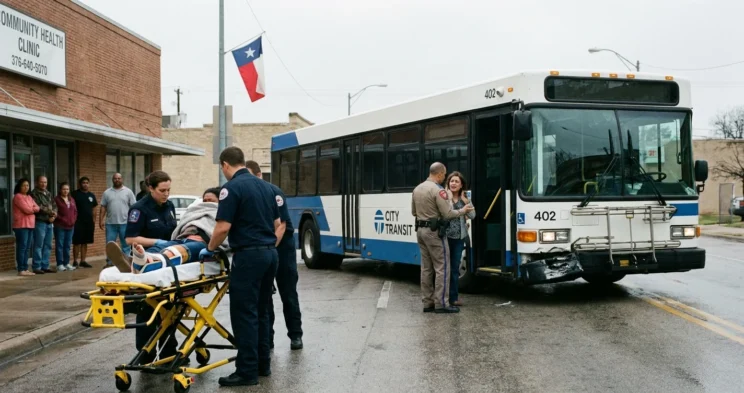
You were riding the city bus down Westheimer in Houston when another driver ran a red light and slammed into the side of the bus. Weeks later, the bruises have faded, but the headaches and the fear of getting back on a bus have not. Now you are wondering whether that ongoing pain counts for anything, or whether the bills are all you can claim.
Non-Economic Damages in Bus Claims
Non-economic damages compensate you for losses that do not come with bills, receipts, or other direct financial records. These usually include physical pain, mental anguish, disfigurement, physical impairment, and loss of consortium.
Texas treats this as its own category of recovery. You can pursue it alongside your economic losses, though the cap rules covered below can limit how much of it you actually collect.
The value of a pain and suffering claim depends on the severity of your injury, how long your symptoms last, and how well your medical records and personal documentation show the impact on your daily life.
How the TTCA Cap Limits Your Recovery
The Texas Tort Claims Act caps your total recovery against a government bus operator, and that single ceiling is the biggest factor in what you can collect. The law waives governmental immunity when a government employee causes injury while operating a motor vehicle, which is what makes a city transit or school bus operator liable in the first place. You can read the conditions in the Texas Civil Practice and Remedies Code (CPRC) § 101.021.
The cap is a combined total, not a separate ceiling for pain and suffering. Under CPRC § 101.023, all of your compensatory damages, economic and non-economic together, must fit inside one statutory limit.
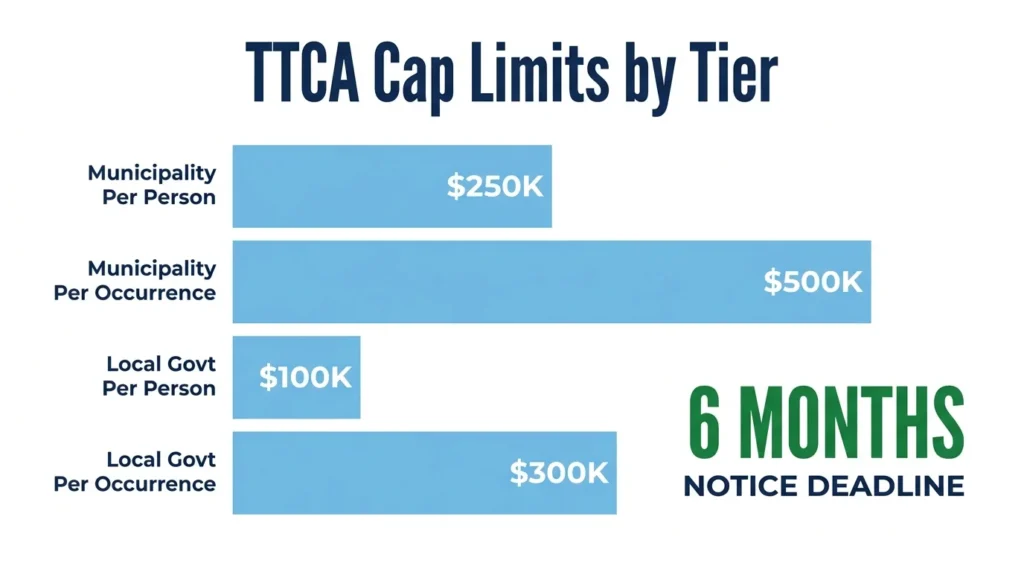
Two tiers apply, and which one controls depends on who operated the bus. For municipalities and the state, the limit is $250,000 per person and $500,000 per occurrence. For other local government units like counties and special districts, it drops to $100,000 per person and $300,000 per occurrence.
Medical bills and lost wages can consume most or all of the available cap. When your economic losses are high, there may be little room left to recover pain and suffering, even though Texas law recognizes those damages.
That is why identifying the correct cap tier matters so much. The Texas Tort Claims Act sets different limits depending on the type of government entity that operated the bus, and those TTCA cap limits in bus accident cases can significantly affect what you are ultimately able to recover.
Government Bus vs. Private Carrier: Key Differences
Whether your bus was government-operated or privately owned changes almost everything about your claim. The two tracks run on different rules for damages, caps, and deadlines.
Government-Operated Buses
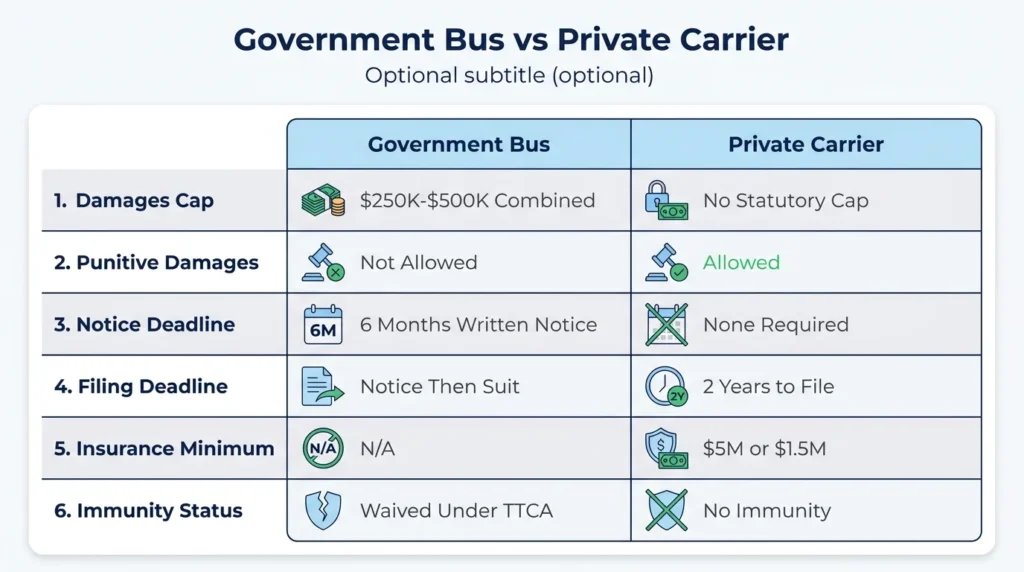
Government buses include those operated by city transit agencies, school districts, and state-operated carriers. Your recovery is capped, punitive damages are off the table entirely, and a short notice deadline applies before you can sue.
The cap covers your economic and non-economic damages combined. When your medical bills and lost wages run high, the money left for pain and suffering shrinks in proportion.
You also face a tight deadline that catches many people off guard. You must deliver written notice of your claim to the government unit within six months of the crash under CPRC § 101.101.
One more limit applies here. You cannot recover punitive damages against a government operator, no matter how reckless the conduct was.
Private & Charter Buses
Private carriers, charter companies, and intercity lines sit outside TTCA immunity, so the rules tilt in your favor. There is no statutory cap on what you can recover, punitive damages are available, and federal insurance rules create a deeper pool to draw from.
No statute limits your pain and suffering against a private carrier. The award reflects your actual harm and what a jury decides it is worth. Punitive damages are available, too, though CPRC § 41.003 requires clear and convincing evidence that the harm resulted from fraud, malice, or gross negligence.
Federal rules set the insurance floor for interstate carriers. Under federal motor carrier insurance requirements, a bus designed to carry 16 or more occupants, including the driver, must carry at least $5 million in coverage, and smaller vehicles must carry at least $1.5 million in coverage.
You generally get more time to act against a private carrier as well. The two-year deadline in CPRC § 16.003 governs these claims.
How to Maximize Pain & Suffering Recovery
Average bus accident settlements vary. Pain and suffering damages depend on more than the severity of your injury. Your medical records, the consistency of your treatment, and the way your injuries affect your daily life all shape what your claim is worth.
The strongest claims are built on documentation, and the record starts the day of the crash. The more clearly you capture your injuries and their effect on your life, the harder it is for an insurer to wave them away.
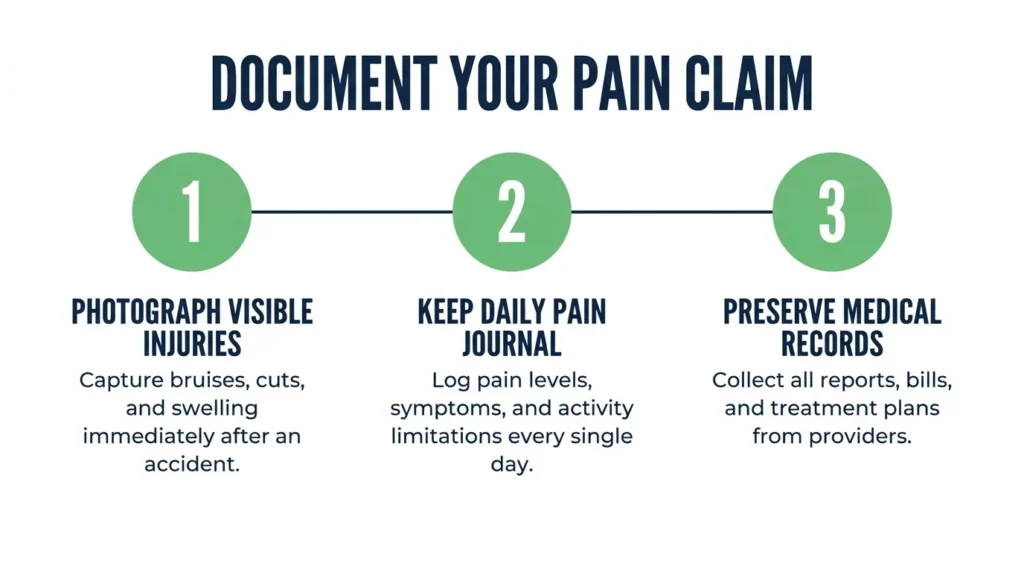
Step 1: Photograph your visible injuries. Take clear photos of bruises, cuts, and swelling, and keep updating them as your injuries heal or scar.
Step 2: Keep a daily pain journal. Write down your pain levels, sleep problems, and the activities you can no longer do. A consistent record over weeks carries real weight.
Step 3: Preserve every medical record. Save all treatment notes, imaging, and physician statements in one place so nothing goes missing later.
Stay consistent with your medical care. Gaps in treatment make it easier for an insurer to argue that your injuries were not as serious as you claim.
Do not overlook the emotional effects of the crash. Anxiety, depression, fear of riding a bus again, and the loss of activities you once enjoyed may all support a claim for non-economic damages when they are properly documented.
Protecting your claim also means identifying every responsible party early. When multiple defendants share fault, Texas proportionate responsibility rules can affect how compensation is allocated. Identifying everyone who is liable in a bus accident helps preserve every available source of recovery.
If your claim involves a government-operated bus, act quickly. The Texas Tort Claims Act generally requires written notice within six months of the accident, and missing that deadline can prevent you from recovering compensation altogether.
Work with an Accident Attorney
A bus accident claim lives or dies on the details: the right defendant tier, the applicable cap, and a documented record of what you have endured. Angel Reyes & Associates has spent over 30 years helping injured Texans work through exactly these questions across the state. We handle bus accident claims from the first government notice to the final negotiation, and you can learn more about our team and how we work.
We offer free initial consultations, we charge no fee unless we win, and we have recovered more than $1 billion for clients over the years. If you were hurt on a bus, contact us for a free consultation so you understand what your claim is worth before any deadline expires.
Past results do not guarantee future outcomes.
Frequently Asked Questions
Can surviving family members recover pain and suffering after a fatal bus accident in Texas?
Yes. Under Texas wrongful death law, eligible survivors can pursue non-economic damages such as mental anguish, loss of companionship, and loss of consortium. When the bus was government-operated, those damages are subject to the same TTCA cap that applies to injury claims.
If I was partly at fault for the crash, can I still recover pain and suffering?
If your share of fault is 50% or less, you can still recover, but your total damages, including pain and suffering, are reduced by your percentage of fault. If you are found 51% or more at fault, you are barred from recovery entirely.
If a private driver caused the crash, can I file a separate claim against that driver without the TTCA cap?
Yes. The TTCA cap only limits what you can recover from the government entity that operated the bus. A private driver who shares fault is a separate defendant, and no statutory cap restricts what you can seek from them.
Does the six-month government notice deadline still apply when the injured person is a child?
Yes. Texas courts have held that the TTCA notice requirement is not tolled for minors, so the six-month deadline runs from the date of the crash regardless of the child’s age. A parent or guardian must act within that window, or the claim against the government entity can be permanently barred.
Can I recover pain and suffering if my injuries did not require surgery or a hospital stay?
Yes. Pain and suffering is not limited to serious surgical injuries. Soft tissue injuries, concussions, and ongoing back pain can all support a non-economic damages claim as long as you have consistent medical documentation and evidence of how the injury has affected your daily life.
About the Authors

Angel Reyes
Writer
Angel L. Reyes, III is the Founder and Managing Partner of Angel Reyes & Associates. A nationally recognized trial attorney and business leader, Angel has helped over 70,000 injury victims recover more than $1 billion since founding the firm in 1993. Named to the Texas Super Lawyers list annually since 2008, Angel brings Wall Street experience, Ivy League education, and a deep commitment to client advocacy. He is a frequent legal commentator and published author with extensive contributions to legal scholarship, trial strategy, and consumer protection.

Kyle Nicolas
Editor
Kyle Nicolas is the Web Content & SEO Manager at Angel Reyes & Associates. He has more than 10 years of experience as a marketing co...

Angel Reyes
Reviewer
Angel L. Reyes, III is the Founder and Managing Partner of Angel Reyes & Associates. A nationally recognized trial attorney and business...