Government Bus Accident Claims Process in Texas


Every article on this site is researched by our internal team, reviewed for legal accuracy against current Texas law, and held to State Bar of Texas advertising standards before publication. We do not publish content that overstates outcomes or makes promises about results.
Learn more about our
editorial standards .
Key Takeaways
- The Texas Tort Claims Act lets you sue a government bus operator for negligent driving.
- You must file a written notice describing your injury, and when and where it happened.
- Being more than 50% at fault under Texas law can leave you with no recovery.
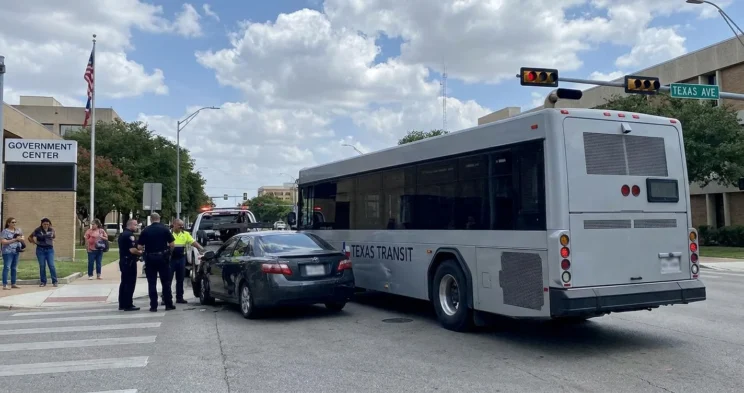
You were riding the bus home from work when it ran a red light on Elm Street in downtown Dallas and hit a car. Now the medical bills are stacking up, and someone from a government claims office keeps calling with questions that feel like traps.
A crash on a public bus does not work like a normal car accident claim. The other side answers to the government, and the process runs on rules most riders don’t know about.
The Texas Tort Claims Act Bus Accident Process
You can bring a claim because of one specific law. Texas government entities are normally immune from lawsuits. But Texas Civil Practice and Remedies Code (CPRC) § 101.021 waives that immunity when a government worker negligently operates a government vehicle.
That waiver covers public transit buses and school buses. When a government bus injures you through a driver’s negligence, the law lets you seek compensation.
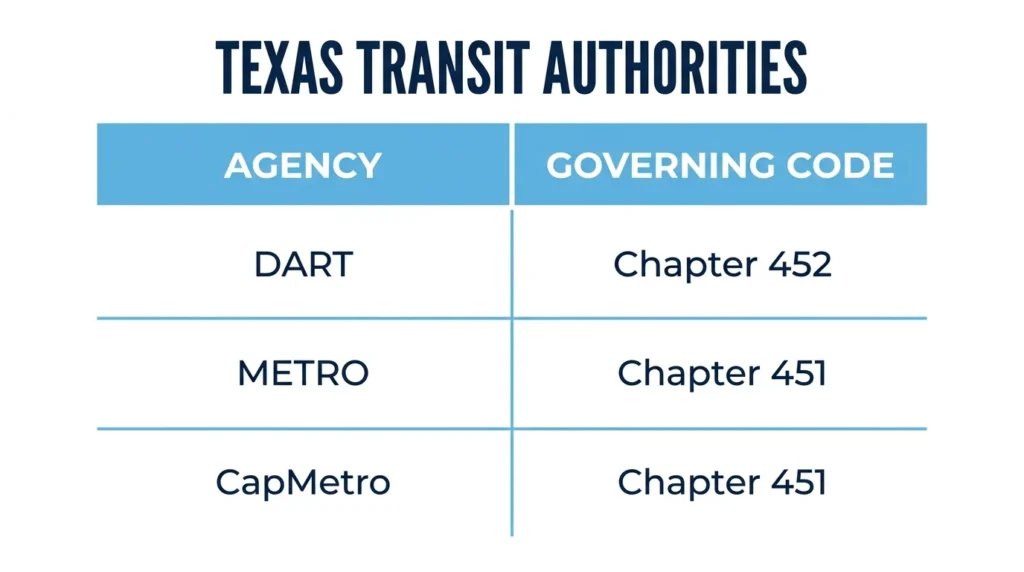
Transit authorities like Dallas Area Rapid Transit, Houston METRO, and Austin’s CapMetro count as governmental units under this framework. DART operates under Texas Transportation Code Chapter 452, while METRO and CapMetro operate under Chapter 451, and all three fall under the same governmental liability rules as other public bodies.
Filing a Notice of Claim in Texas
Before your claim can move forward, Texas law requires a formal written notice to the government entity that owns the bus. Under Texas Civil Practice and Remedies Code (CPRC) § 101.101, your notice generally must include three things:
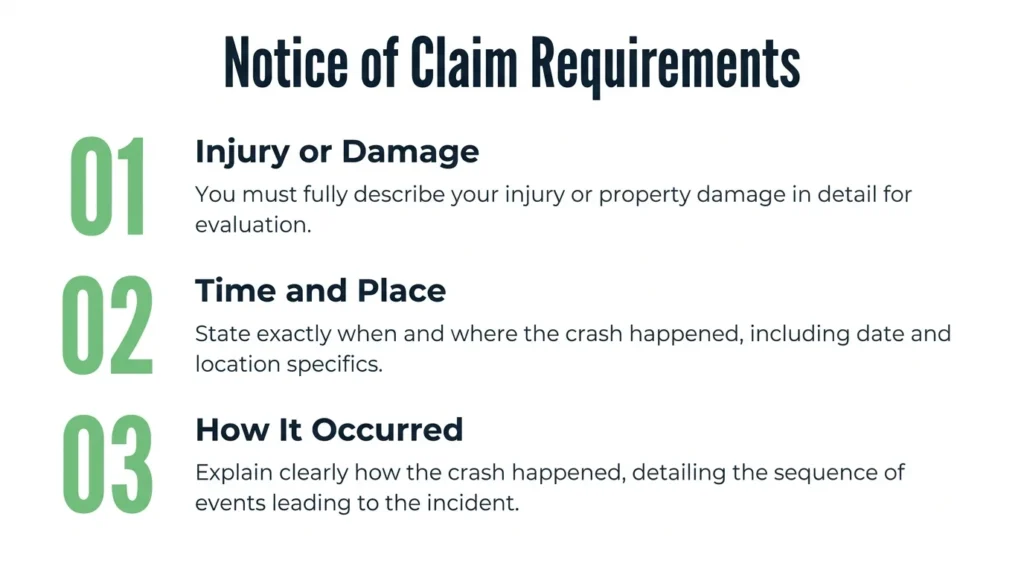
- The injury or damage you are claiming
- The time and place the crash happened
- How the crash occurred
Get these details right, and you close off one of the easiest ways an agency can challenge your claim.
How you deliver the notice matters too. Some cities, such as San Antonio, accept it through a dedicated online claims portal instead of a mailed letter. Other entities still expect a letter, so confirm the method before you send anything.
Government Claims Adjusters in Bus Accident Cases
After the agency receives your notice, your claim moves to a government claims department. A claims adjuster there reviews it, and that adjuster works for the transit agency, not for you.
The adjuster builds the agency’s version of the crash from its own records. That means maintenance logs, the driver’s history, and internal incident reports.
Their goal is to protect the agency’s budget, the same way a private insurer protects its bottom line. A low or quick response is a business decision, not a measure of what your injuries are worth.
If you have not documented your injuries or the scene yet, do it now.
How the adjuster frames fault early can shape whether your claim resolves quietly or moves toward a lawsuit. Before you answer the adjuster’s questions, understand how liability gets established in your case.
Sovereign Immunity Defenses in Bus Accident Claims
Even though the Tort Claims Act waives immunity for vehicle crashes, agencies still fight claims during the review itself. Many of these defenses arrive well before a courtroom is involved.
The most common move is attacking your notice. An agency may argue it was late, incomplete, or missing a required detail, hoping to beat your claim on a technicality instead of the facts.
A clear record of fault is your defense against that tactic.
Texas courts have weighed how much detail a notice really needs. In City of San Antonio v. Tenorio, the court asked a key question. Can an agency’s own knowledge of the crash satisfy the notice rule when the written notice falls short?
If the crash took a life, the analysis shifts. The available damages and the immunity questions change, because it becomes a wrongful death case.
Suing a Government Transit Agency in Texas
If the agency denies your claim or never responds, you can generally take the next step and file a lawsuit. The same law that opened the door to your claim also governs the suit.
Your own share of fault can shrink or even erase what you financially recover. Texas uses a fault-sharing rule, so if you are found more than 50% responsible, you recover nothing. An adjuster may raise this early, before any lawsuit begins.
Work with an Experienced Attorney Today
Facing a government claims department is intimidating, but you do not have to handle it alone or pay anything upfront. Attorneys from Angel Reyes & Associates have guided injured Texans through claims like these for over 30 years. You can read more about our firm and the team who would handle your case.
We work on contingency, so you owe no attorney fee unless we win, and your first consultation is always free. Our track record includes more than $1 billion recovered for clients.
With office locations across Texas, help stays close, and we can handle much of your case remotely if travel is hard.
You should not have to face the government’s process on your own. Schedule a free consultation so we can review your options together.
Past results do not guarantee future outcomes.
Government Bus Accident Claim FAQs
Can you recover punitive damages in a claim against a Texas government transit agency?
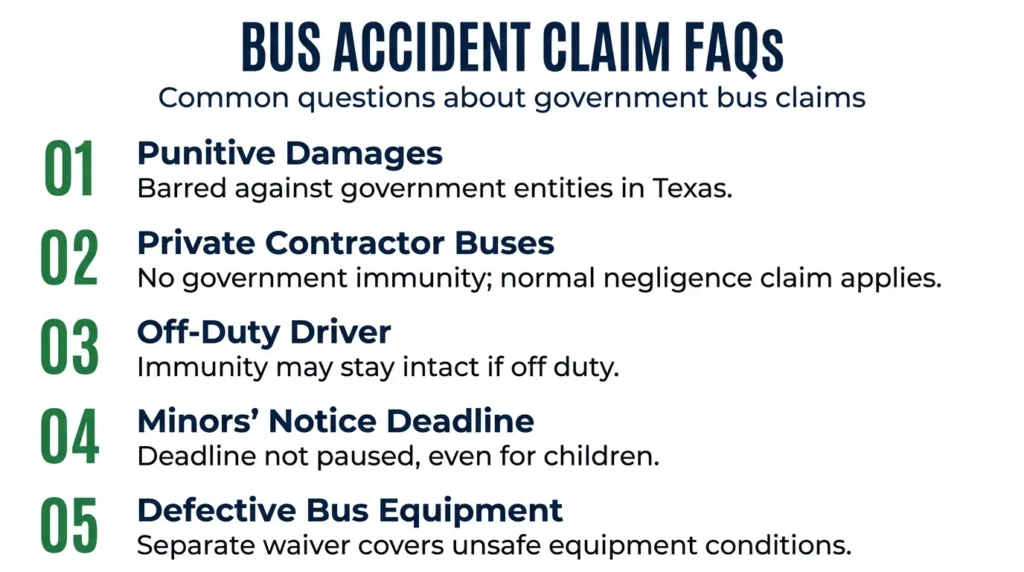
No. Texas law bars punitive damages against government entities, so you can only recover for actual losses like medical bills and lost wages.
Does this claims process apply if a private company drove the bus under a contract with a school district or transit agency?
No. A private contractor does not get government immunity, so a crash it causes is handled as a normal negligence claim instead of through the government notice process.
What happens if the bus driver was off duty or not doing an assigned work task during the crash?
The law’s waiver only applies when the driver is doing their assigned job at the time. If the driver was off duty or running a personal errand, the agency’s immunity may stay intact, and the driver could face a claim personally instead.
Does a child hurt in a school bus accident get more time to meet the notice deadline?
No. Texas courts do not pause that short deadline for minors, even though a child’s overall time to sue is extended until they turn 18.
Does the Tort Claims Act cover a defective bus seat or worn safety equipment, not just a crash caused by driving?
Yes, a separate part of the law waives immunity for injuries tied to the condition of government property, not just negligent driving. Courts read this ground narrowly, so it works differently than the vehicle operation rules covered here.
About the Authors

Angel Reyes
Writer
Angel L. Reyes, III is the Founder and Managing Partner of Angel Reyes & Associates. A nationally recognized trial attorney and business leader, Angel has helped over 70,000 injury victims recover more than $1 billion since founding the firm in 1993. Named to the Texas Super Lawyers list annually since 2008, Angel brings Wall Street experience, Ivy League education, and a deep commitment to client advocacy. He is a frequent legal commentator and published author with extensive contributions to legal scholarship, trial strategy, and consumer protection.

Kyle Nicolas
Editor
Kyle Nicolas is the Web Content & SEO Manager at Angel Reyes & Associates. He has more than 10 years of experience as a marketing co...

Angel Reyes
Reviewer
Angel L. Reyes, III is the Founder and Managing Partner of Angel Reyes & Associates. A nationally recognized trial attorney and business...