Statute of Limitations for Rideshare Accidents in Texas


Every article on this site is researched by our internal team, reviewed for legal accuracy against current Texas law, and held to State Bar of Texas advertising standards before publication. We do not publish content that overstates outcomes or makes promises about results.
Learn more about our
editorial standards .
Key Takeaways
- Texas law gives rideshare accident victims two years from the crash date to file a personal injury lawsuit.
- The discovery rule and minor tolling can pause the clock, but courts apply both exceptions very strictly.
- Waiting until close to the deadline risks losing digital evidence that rideshare platforms delete after a short time.

You were in the back seat of a Lyft on Westheimer Road in Houston when another car ran a red light and hit the passenger door. You walked away shaken, and for weeks you told yourself you were fine. Now the medical bills have arrived, and you’re wondering whether it’s too late to do anything about it.
The answer depends on when the clock started on the statute of limitations and whether any exceptions apply to you.
Texas Gives You Two Years To File
Two years. That is how long the Texas Civil Practice and Remedies Code (CPRC) § 16.003 gives you to file a personal injury lawsuit after a rideshare crash. Miss that deadline, and a Texas court will almost certainly dismiss your case before it starts, regardless of how badly you were hurt or how clear the other party’s fault is.
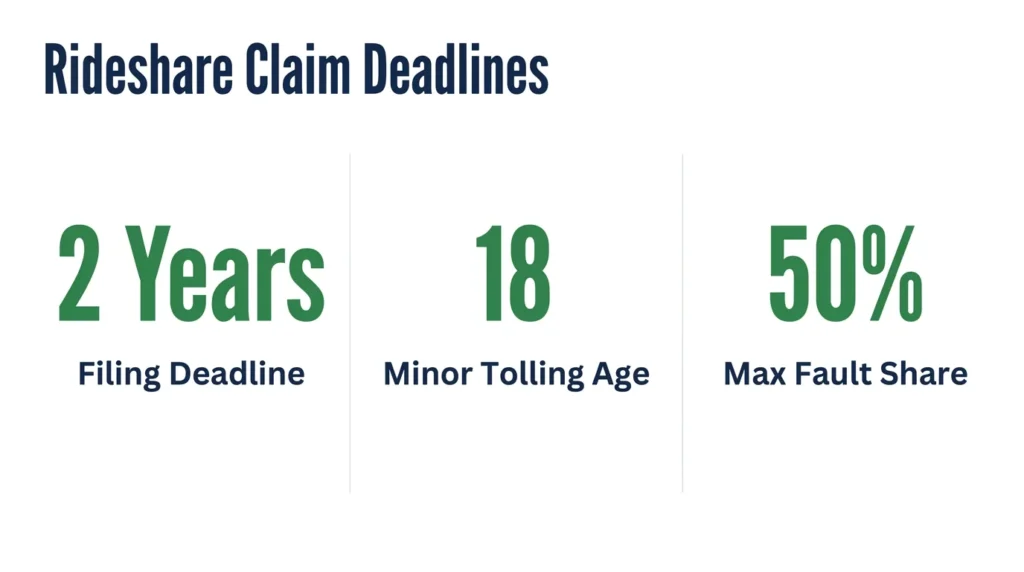
The two-year window applies to everyone involved in the crash: passengers riding inside an Uber or Lyft, pedestrians struck by a rideshare driver, and other motorists whose vehicles collided with a rideshare vehicle.
One common misconception is that filing an insurance claim or negotiating with an adjuster extends this deadline. It does not. The clock runs independently of any insurance process. You can be deep in settlement talks when the two-year window closes, and at that point your right to sue is gone.
When the Clock Can Be Paused
Texas law recognizes narrow exceptions that can delay the start of the clock or pause it while it runs. Courts apply these exceptions strictly. You cannot assume an exception applies to your situation without verifying it.

The Discovery Rule
In most rideshare crash cases, the clock starts on the day of the collision. But some injuries are not immediately apparent. A spinal injury that causes no immediate pain, or an internal injury that goes undetected for weeks, can trigger the discovery rule.
When an injury is inherently undiscoverable at the time of the crash, the clock may not start until you discover the injury or reasonably should have discovered it. The burden of proving that falls on you. Courts will want to see medical records documenting when your symptoms first appeared and when a doctor formally diagnosed the condition.
The discovery rule is not a general grace period. It applies only when the nature of the injury made early detection genuinely impossible, not simply inconvenient. If you had symptoms but delayed getting checked out, a court may find the clock started when the symptoms appeared.
Minor Victims & Legal Disability Tolling
If the injured person was under 18 at the time of the crash, CPRC § 16.001 pauses the statute of limitations until that person’s 18th birthday. From there, the standard two-year clock begins. A 15-year-old injured in a rideshare crash would have until their 20th birthday to file their own lawsuit.
A parent or legal guardian can file suit on behalf of the child before the child turns 18. That option is often worth pursuing because the evidence is fresher and witnesses are easier to locate.
The same rule applies when the injured person has a legal disability, such as being of unsound mind at the time of the crash. The clock does not run during the disability. It resumes once the person regains capacity, and the standard two-year period applies from that point.
Wrongful Death Claims Have the Same Deadline
When a rideshare crash kills someone, the filing deadline shifts. Surviving family members must bring a wrongful death claim within two years of the date of death, not the date of the crash. CPRC Chapter 71 governs these claims in Texas.
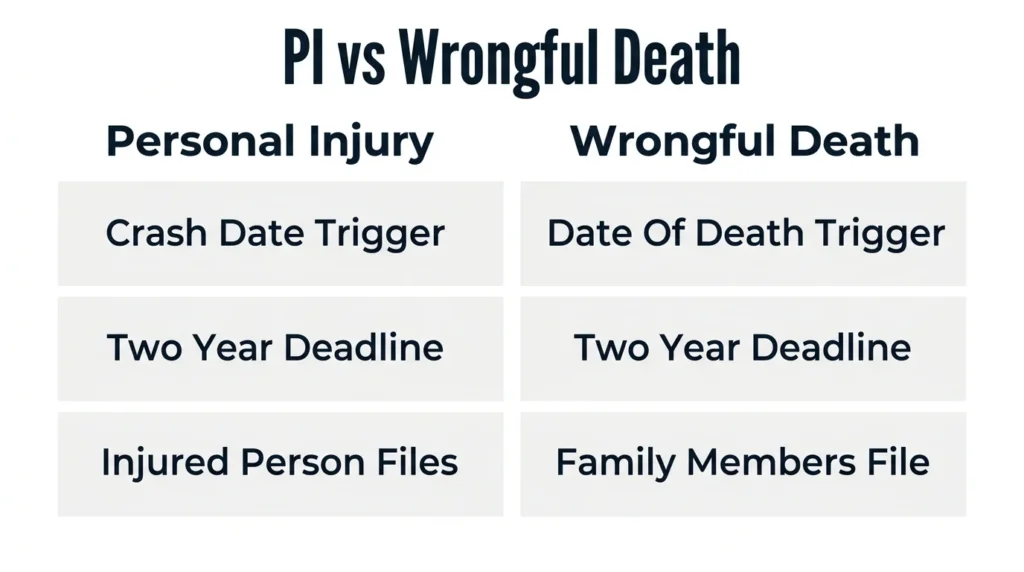
The distinction between the crash date and the death date can matter. If the victim survived in a hospital for three weeks before passing, the two-year clock for wrongful death starts on the date of death, not the date of the accident. Eligible claimants under Texas law are surviving spouses, children, and parents of the deceased.
Families dealing with a fatal rideshare crash should move quickly. The steps to take after a rideshare accident in Texas are similar whether the injury was fatal or not, and the evidence preservation needs are just as urgent.
Why Waiting Is Dangerous Even Before the Deadline
The two-year deadline is the outer limit of your legal right. It is not a safe buffer zone. Waiting costs you in ways that go beyond whether you can still file.
Rideshare crashes generate digital evidence that disappears quickly. Platforms keep trip data, GPS logs, in-app communications, and dashcam footage from the vehicle for only a limited time before overwriting. A personal injury attorney can send evidence preservation letters to the rideshare company and insurers before those records are gone.
Understanding how Uber and Lyft insurance coverage periods work is one part of building a solid claim. Knowing which policy applies at the moment of impact shapes who you’re filing against and what coverage is available. That analysis gets harder when records disappear.
Insurance adjusters also benefit from delay. When months pass between a crash and a rideshare accident claim, insurers argue the gap shows the injuries were not serious, or that something after the crash caused the harm rather than the original collision. The longer you wait, the more that argument gains traction.
Talk to an Attorney Before You Think You Have To
If you were hurt in a rideshare crash in Texas, do not wait until you feel the deadline approaching. By the time you think you’re running out of time, you may already be.
Angel Reyes & Associates has guided injured Texans through rideshare accident claims for over 30 years. We work on contingency, which means no fee unless we win. A free consultation costs you nothing, and it gives you a clear picture of where you stand before the clock closes.
Reach out to us for a free consultation. Our team is available 24/7 and can handle most of your case remotely, from the initial review through resolution.
Past results do not guarantee future outcomes.
Rideshare Accident Statute of Limitations FAQs
Does filing an insurance claim pause the two-year deadline in Texas?
No. Opening an insurance claim does not stop the statute of limitations clock in Texas. You must file a lawsuit in court before the two-year deadline expires, even if you are actively negotiating a settlement with the insurance company.
What if the rideshare driver was not logged into the app when the crash happened?
If the driver was offline, the rideshare company’s commercial insurance policy does not apply. Your claim would go against the driver’s personal auto insurance instead. The two-year filing deadline is the same either way.
Can I still file a claim if I was partially at fault for the rideshare crash?
Yes, as long as your share of fault is 50% or less. Texas uses a modified comparative fault rule, which reduces your recovery by your percentage of fault but does not bar your claim unless you are found more than 50% responsible.
Does the two-year deadline apply to property damage from a rideshare crash?
No. Property damage claims in Texas follow a different deadline. Under Texas law, you have two years for personal injury but also two years for property damage, so the deadlines align for most rideshare crashes. However, you should verify your specific situation with an attorney to confirm the correct accrual date for each type of claim.
What if the rideshare company disputes that its driver caused the crash?
The dispute does not pause the statute of limitations. If the company denies liability, you may need to file suit before the deadline, regardless of where negotiations stand. Filing a lawsuit does not prevent settlement talks from continuing.
About the Authors

Angel Reyes
Writer
Angel L. Reyes, III is the Founder and Managing Partner of Angel Reyes & Associates. A nationally recognized trial attorney and business leader, Angel has helped over 70,000 injury victims recover more than $1 billion since founding the firm in 1993. Named to the Texas Super Lawyers list annually since 2008, Angel brings Wall Street experience, Ivy League education, and a deep commitment to client advocacy. He is a frequent legal commentator and published author with extensive contributions to legal scholarship, trial strategy, and consumer protection.

Graham Griffin
Editor
Graham Griffin is the Web & Content Manager at Angel Reyes & Associates, where he oversees content strategy, AI-powered workflows, a...

Spencer Browne
Reviewer
Spencer Browne is a partner at Angel Reyes & Associates and a Board Certified personal injury trial lawyer with nearly 100 jury trials a...