Who Pays Medical Bills After a Rideshare Accident?


Every article on this site is researched by our internal team, reviewed for legal accuracy against current Texas law, and held to State Bar of Texas advertising standards before publication. We do not publish content that overstates outcomes or makes promises about results.
Learn more about our
editorial standards .
Key Takeaways
- Which coverage period was active at the crash determines which insurer pays your medical bills.
- Health insurance and MedPay pay bills now; your insurer recoups those costs from your settlement.
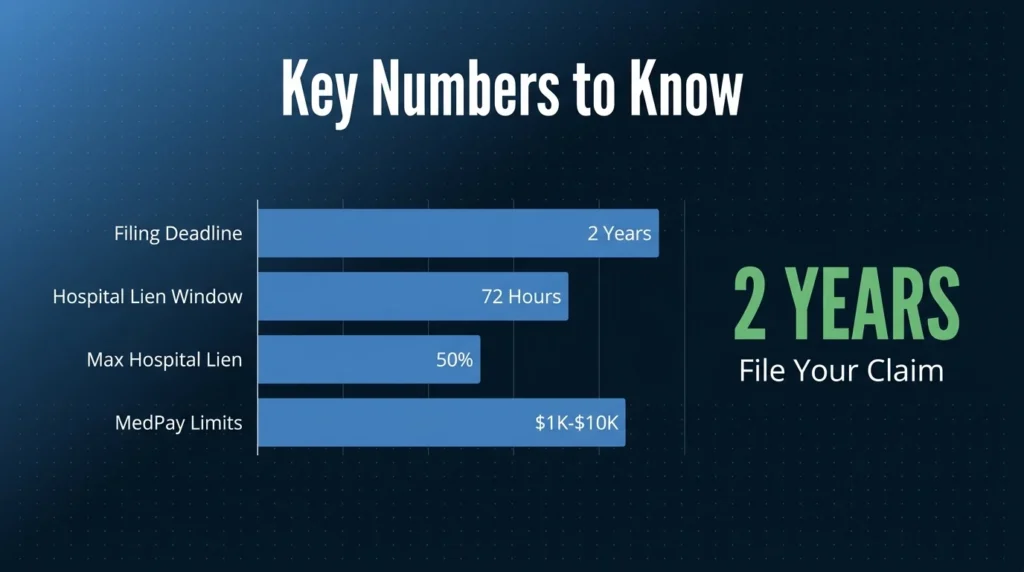
- Texas gives most crash victims two years to file a personal injury claim under CPRC § 16.003.
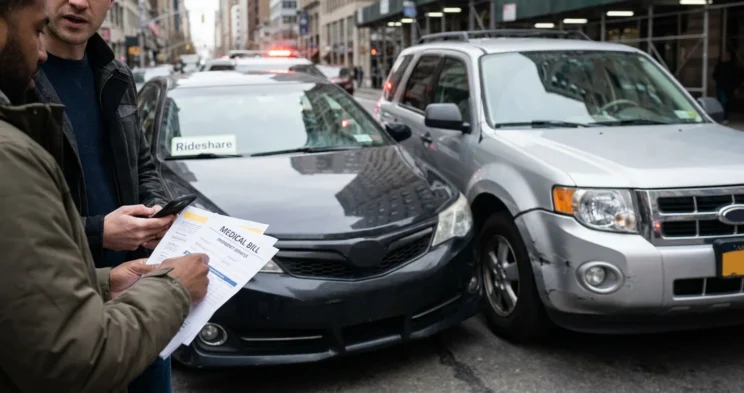
You requested an Uber on your way home from work on the I-10 frontage road in west Houston, and somewhere between pickup and drop-off, another driver ran a red light and T-boned the car. You made it out, but now you are staring at emergency room bills, and nobody from the app is calling you back. The question you need answered right now is simple: who actually pays these bills?
The answer depends on more than just who caused the crash.
Coverage Periods & Who Pays
The starting point for any rideshare medical bill question is the coverage period that was active when the crash happened. Texas Insurance Code Chapter 1954 divides rideshare operations into three periods, and the period in effect at the moment of the crash determines which insurance source is on the hook for your bills.
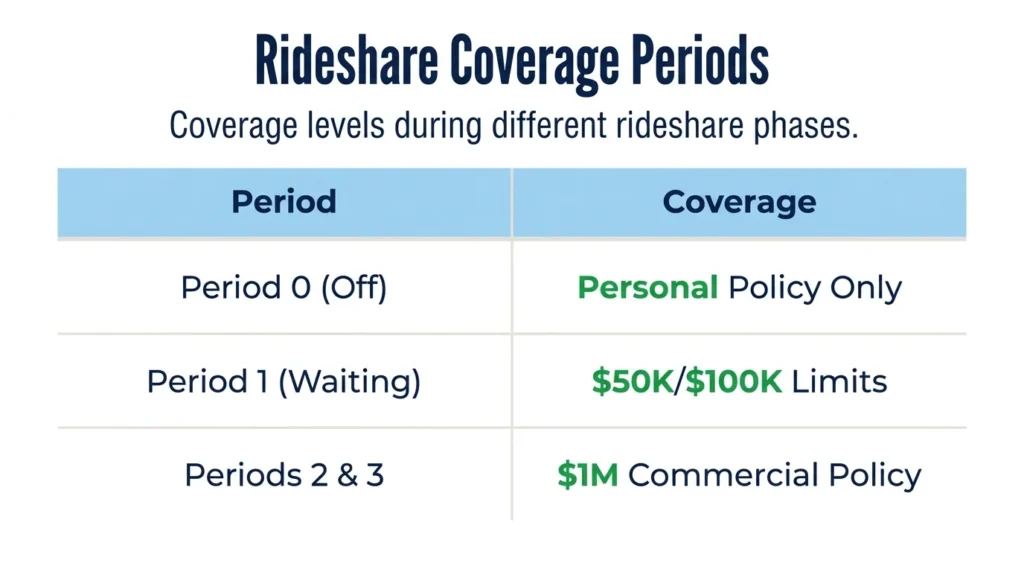
- Period 0: When the driver’s app is off, no rideshare coverage exists at all. The driver’s personal auto policy is the only option, and it may not cover your injuries if the driver was uninsured or underinsured.
- Period 1: Is known as the gap period, and is when the driver has the app on but has not accepted a ride. During this window, Uber and Lyft provide limited liability coverage that applies regardless of whether the driver’s personal auto policy responds to the claim first. Furthermore, Texas law sets minimum limits of $50,000 per person and $100,000 per incident for bodily injury during this window.
- Periods 2 and 3: These periods carry the strongest coverage, with Period 2 beginning the moment the driver accepts a ride request until the passenger gets in, and Period 3 covering the time the passenger is in the vehicle through drop-off. During these periods, which apply to most passenger injuries, the rideshare company’s commercial policy provides up to $1 million in primary liability coverage.
Health Insurance & MedPay as a Bridge
Liability insurance pays the at-fault party’s claim, which resolves the case. But the case can take months or years to settle, and your medical bills arrive long before that.
Your personal health insurance is your best tool for managing bills in the meantime. Health insurance covers crash-related treatment regardless of fault, which means your provider gets paid now while the liability claim works its way forward. This keeps your bills out of collections and your credit protected during the wait.
MedPay is a separate coverage type that works the same way: it pays your medical bills without requiring a fault determination first. MedPay is optional in Texas. It can come from your own auto policy; a family member’s policy if you are a covered resident; or, in some cases, from the Transportation Network Company’s (TNC) commercial policy. Limits typically run from $1,000 to $10,000, which may not cover everything, but it can reduce the amount you owe out of pocket while the claim resolves.
Using health insurance or MedPay now does not give up your right to recover compensation from the at-fault party later. You keep the right to sue or settle for all your damages, including medical expenses.
The catch is subrogation, meaning when your health insurer pays your crash-related medical bills, it gains the right to recover that amount from your eventual settlement. While you do not lose the coverage and do benefit from having your bills paid now, the insurer takes its portion back before you receive your share when the settlement money arrives. An attorney can sometimes negotiate a reduction in what the insurer recovers, which increases your net payout.
When Bills Go to Collections vs. When They Are Held
Not every provider will wait patiently for your case to settle. Without a clear payment arrangement in place, bills can and do end up in collections, and that damages your credit in ways that outlast the accident itself.
A Letter of Protection (LOP) solves this problem by serving as a written agreement between your attorney and a medical provider stating that the provider will defer billing until your case settles, at which point your attorney will pay the balance from settlement proceeds. Providers who sign an LOP do not send your account to collections, making this arrangement common in personal injury cases. This contract lets injured people get ongoing medical treatment without paying out of pocket during the claim.
Hospital liens work differently but serve a similar purpose. Texas Property Code Chapter 55 allows a hospital that admits you within 72 hours of the accident to file a formal lien against your personal injury settlement. The lien attaches to your settlement proceeds rather than your other assets, and Texas law caps hospital liens at 50% of your total recovery. Providers with a valid lien get paid before you receive your net portion of the settlement.
Here is the practical picture for managing your bills before settlement:
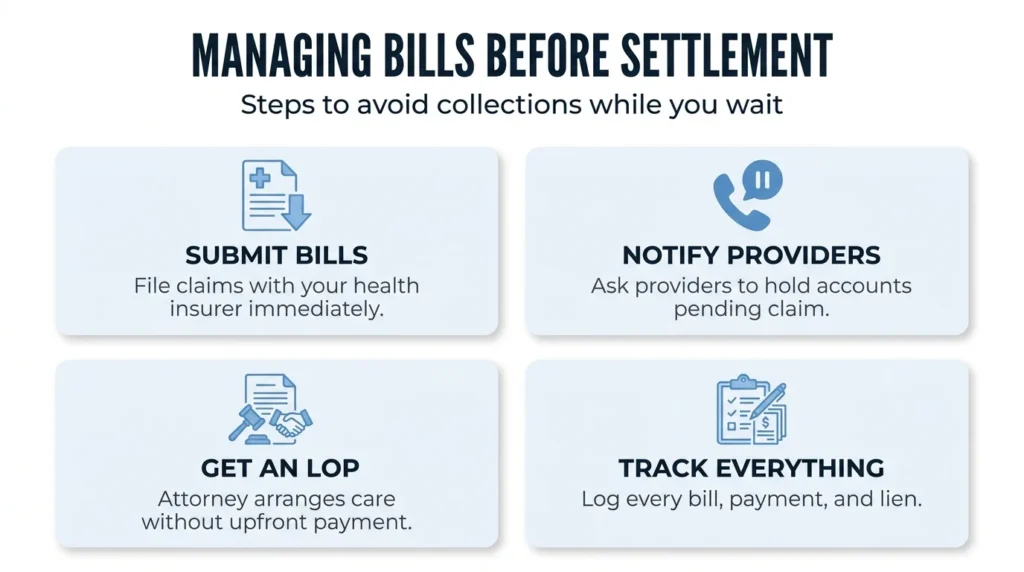
Step 1: Submit bills to your health insurer immediately. This is the fastest path to keeping your providers paid and your account out of collections.
Step 2: Tell your medical providers a claim is pending. Ask them to hold your account before referring it to collections. This is not a guarantee, but many providers will cooperate once they know a liability claim is in progress.
Step 3: Work with an attorney on a Letter of Protection for ongoing care. If you need continued treatment that your health insurance does not fully cover, an LOP agreement can keep you in care without out-of-pocket payments.
Step 4: Track every bill and payment. Your attorney needs a complete picture of every charge, every payment, and every lien to negotiate your settlement correctly.
Medical liens are often negotiable; hospitals, insurers, and medical finance companies frequently accept less than the full lien amount, especially when the settlement is not large enough to cover everything. An attorney handles these negotiations and works to maximize what you actually take home.
Your bills going to collections while you wait for a settlement is not inevitable. It is a problem that can usually be avoided with the right steps taken early. What to do right after the crash matters enormously, and you can find more guidance in our article on what steps to take immediately after a rideshare accident.
Filing Deadline & What Happens If You Wait
Texas gives most personal injury victims two years from the date of the crash to file a lawsuit, under the Texas Civil Practice and Remedies Code (CPRC) § 16.003. That deadline is a hard stop; miss it, and you almost certainly lose the right to seek compensation entirely, no matter how strong your case.
Waiting to act creates layered problems beyond the legal deadline as evidence disappears, app data gets purged from rideshare databases, and witness memories fade. If the at-fault driver was uninsured, the window to access Uber or Lyft’s uninsured motorist coverage can narrow based on reporting timelines in the policy.
On the billing side, delay means your providers have less reason to cooperate with bill-holding requests. Collection referrals happen faster; liens can expire if not properly maintained; and the longer a case goes without legal representation, the harder it is to negotiate down outstanding balances before settlement.
If you are unsure which coverage period was active when your crash happened, your attorney can formally request the app records from Uber or Lyft, which document the driver’s status at the exact time of impact. Those records are the foundation of the coverage analysis. Our rideshare accident practice area page explains the full scope of what a claim typically involves.
Get Help with Your Rideshare Injury Claim
Rideshare crashes involve at least two insurers, often more. The coverage period analysis alone can determine whether you are dealing with a $50,000 policy limit or a $1 million one. Add health insurer subrogation claims, hospital liens, and Letter of Protection arrangements, and the path from crash to cleared bills requires careful management.
Angel Reyes & Associates has helped injured Texans work through this exact type of multi-insurer complexity for over 30 years. With more than 20 offices statewide, we are available 24/7 and serve clients in both English and Spanish. We offer free consultations, and we work on contingency, meaning you pay nothing unless we win.
Our team can pull app records, correspond with adjusters, negotiate lien reductions, and protect your right to the compensation you are owed. Contact us for a free consultation.
Past results do not guarantee future outcomes.
Medical Bills & Rideshare Accidents FAQs
What if a third-party driver caused my rideshare crash, not my Uber or Lyft driver?
You can file a claim against the at-fault driver’s liability insurance. If that driver was uninsured or underinsured, Uber and Lyft’s commercial policy provides uninsured/underinsured motorist coverage during Periods 2 and 3, which can cover your medical bills up to the policy limits.
What if the rideshare driver had no personal auto insurance at the time of the crash?
During Periods 2 and 3, the rideshare company’s commercial policy is primary, meaning it does not depend on the driver’s personal insurance. Texas Insurance Code Chapter 1954 requires TNC coverage to apply regardless of whether the driver’s personal policy denies the claim first.
Does Texas require personal injury protection (PIP) on rideshare policies?
Texas auto policies must offer PIP, but drivers can decline it in writing. If the rideshare driver carries PIP on their personal policy, it may be available to cover your immediate medical costs. Uber and Lyft’s commercial policies may also include PIP or MedPay in some cases, depending on the state requirements in effect.
What happens if my medical bills exceed the rideshare company's coverage limits?
If your bills exceed the applicable policy limits, you may be able to recover the remaining amount through your own underinsured motorist coverage, a personal umbrella policy, or by pursuing the at-fault driver’s personal assets. An attorney can assess all available sources before accepting a settlement.
Can providers other than hospitals file liens on my rideshare accident settlement in Texas?
Texas Property Code Chapter 55 applies specifically to hospitals and emergency medical services providers. Other providers, such as physical therapists or specialty clinics, generally cannot file a statutory hospital lien, but they may have contractual rights under a Letter of Protection or similar billing arrangement negotiated directly with your attorney.
About the Authors

Angel Reyes
Writer
Angel L. Reyes, III is the Founder and Managing Partner of Angel Reyes & Associates. A nationally recognized trial attorney and business leader, Angel has helped over 70,000 injury victims recover more than $1 billion since founding the firm in 1993. Named to the Texas Super Lawyers list annually since 2008, Angel brings Wall Street experience, Ivy League education, and a deep commitment to client advocacy. He is a frequent legal commentator and published author with extensive contributions to legal scholarship, trial strategy, and consumer protection.

Graham Griffin
Editor
Graham Griffin is the Web & Content Manager at Angel Reyes & Associates, where he oversees content strategy, AI-powered workflows, a...

Angel Reyes
Reviewer
Angel L. Reyes, III is the Founder and Managing Partner of Angel Reyes & Associates. A nationally recognized trial attorney and business...