What Is a Combined Single Limit Policy?


Every article on this site is researched by our internal team, reviewed for legal accuracy against current Texas law, and held to State Bar of Texas advertising standards before publication. We do not publish content that overstates outcomes or makes promises about results.
Learn more about our
editorial standards .
Key Takeaways
- A combined single limit is one shared per-accident pool for injury and property claims.
- Texas §601.072 sets 30/60/25 minimums but does not expressly describe a CSL option.
- Check declarations, excess layers, and other claimants before judging available coverage.
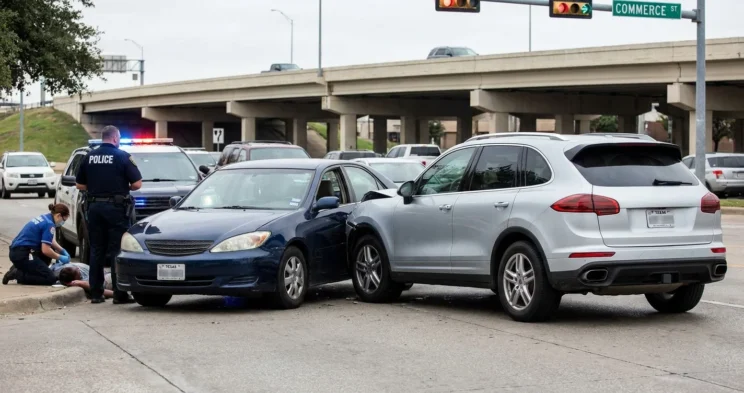
A combined single limit (CSL) is one liability limit shared by covered bodily injury and property damage claims from the same accident. If you’ve been hurt in a Texas crash, this structure can affect how much insurance covers your losses.
Compared with split limits, a CSL may make more coverage available to one injured person, depending on the policy limit, covered damages, and competing claims.
How Does a Combined Single Limit Work?
A combined single limit policy provides one per-accident amount for covered bodily injury and property damage claims together. According to Progressive’s explanation of split and combined limits, split coverage includes bodily injury per person, bodily injury per accident, and property damage per accident.
When comparing split limits with combined single limit coverage, look at the actual dollar amounts. Either structure can fall short of your losses.
What Changes for One Injured Person
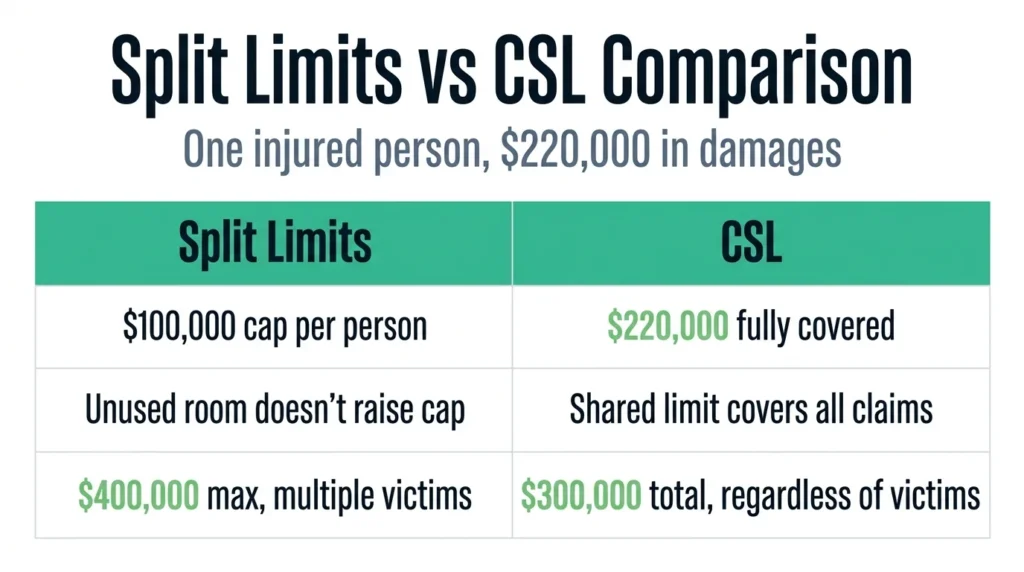
A CSL can leave more coverage available when one person suffers serious injuries. Consider a hypothetical crash in which one person has $200,000 in covered injury damages, and the crash causes $20,000 in covered property damage.
Under 100/300/100 split limits, the most available for that person’s injuries is $100,000. Unused room in the per-accident injury cap or property limit does not raise that individual ceiling.
Under a $300,000 combined single limit, the shared limit covers all $220,000 in covered damages under these assumptions.
These policies do not provide equal total coverage. In a crash with several injured people, the split policy could provide up to $300,000 for injuries plus $100,000 for property. The CSL remains $300,000 total.
How Other Claims Reduce the Limit
Covered injury and property damage payments draw from the same CSL. Payments to other claimants reduce what remains for you.
Before evaluating an offer, confirm whether payments to other claimants have already reduced the available limit.
What Do Texas Minimum Limits Say About CSL?
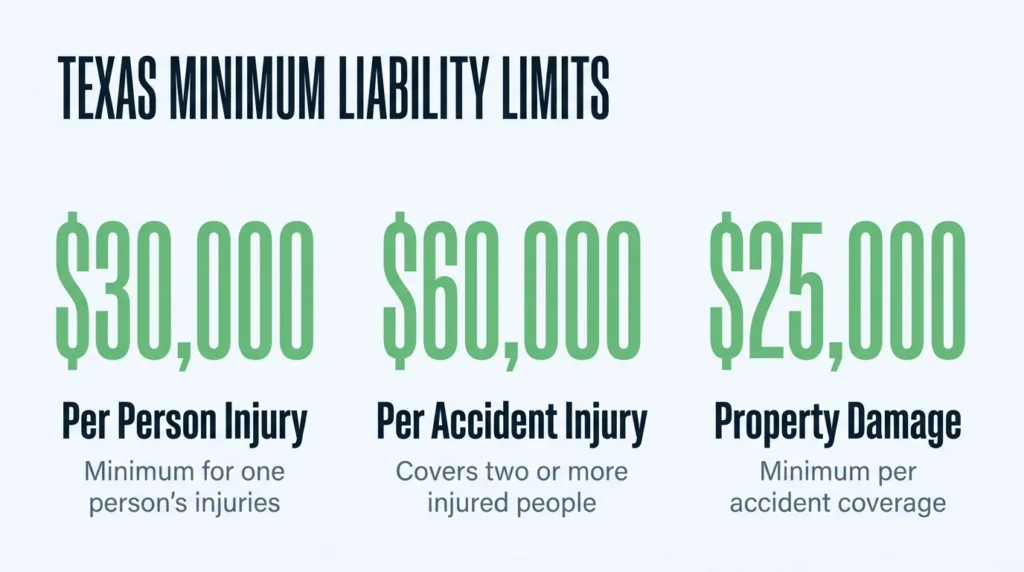
Texas Transportation Code § 601.072(a-1) states Texas minimum liability amounts in split form. The minimum amounts per accident are:
- $30,000 for bodily injury or death of one person
- $60,000 for bodily injury or death of two or more people, subject to the $30,000 individual limit
- $25,000 for damage to or destruction of another person’s property
These figures are often called 30/60/25 and represent the minimum liability coverage required by Texas law. Your injuries may be worth more than the available coverage. The Texas Department of Insurance auto insurance guide warns that minimum limits may not cover the costs of a serious crash.
Section 601.072 does not expressly state a CSL alternative or a CSL minimum. Don’t calculate one by adding or rearranging the 30/60/25 numbers. Whether a particular combined-limit policy meets Texas financial-responsibility requirements depends on its terms and applicable rules.
Where Might an Injured Person Encounter a CSL Policy?
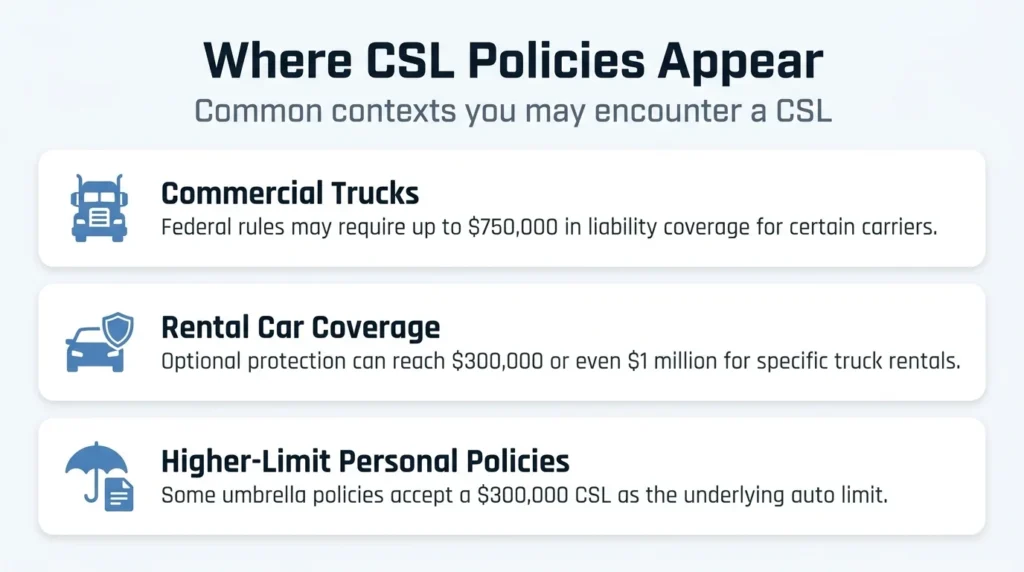
A combined single limit can appear in commercial vehicle coverage, optional rental protection, and higher-limit personal insurance arrangements. The specific policy determines what applies.
Commercial Trucks
Federal financial-responsibility minimums vary by the motor carrier’s operation. After a crash involving an 18-wheeler on I-35 or I-10, identifying the applicable category helps you determine which requirements to review.
49 CFR Part 387 sets public-liability minimums for covered motor-carrier operations. For example, § 387.9 lists $750,000 for for-hire carriers transporting nonhazardous property in interstate or foreign commerce in vehicles with a gross vehicle weight rating of at least 10,001 pounds.
Other commercial vehicles may fall under different requirements. An injured person’s recovery also depends on the available coverage, damages, and competing claims. FMCSA insurance filing requirements vary by vehicle, cargo, and operating-authority category.
Carriers can meet federal requirements through multiple policies. FMCSA guidance on layered insurance explains how primary and excess policies can combine to provide the required per-accident amount. Those layers may affect the insurance available in a Texas truck accident claim.
Rental Car Coverage
Enterprise’s rental protection explanation describes optional supplemental liability protection up to a $300,000 combined single limit, or up to $1 million under its Truck Rental brand. Its stated total combines underlying minimum protection and excess coverage.
Coverage after a rental car crash in Texas can depend on whether the renter accepted the option, whether the driver was authorized, the rental location, and the policy terms. Confirm the protection shown in the rental agreement.
Higher-Limit Personal Policies
Some personal umbrella or excess policies also accept a CSL on the underlying auto policy. For example, Chubb’s personal excess policy highlights list a $300,000 CSL as an acceptable underlying auto limit. Available limits and policy structures vary by insurer.
How Can You Find the Limit Available After a Crash?
Start with the declarations page in effect on the crash date. TDI explains that it summarizes coverage types, dollar limits, and deductibles. Then review the full policy and endorsements to confirm the limit structure and coverage.
A declarations page for one layer may not show the full insurance program. A policy limit also does not determine your settlement amount.
Steps to Evaluate the Available Coverage
These steps help identify available coverage and document your losses. Some documents may take time to obtain.
- Obtain the declarations page and endorsements effective on the collision date, then review the full policy to confirm the limit structure and covered driver and vehicle.
- Identify applicable primary and excess policies, including any umbrella coverage.
- Ask the insurer to confirm the limits and payments already made from them.
- Identify other injury and property damage claimants whose claims may draw on the same limit.
- Gather medical and wage-loss records to document your losses.
- Keep property damage records, including repair estimates and photos.
How CSL & Umbrella Coverage Differ
A CSL describes the limit structure within a liability policy. An umbrella, or excess, policy provides a separate coverage layer that may increase the commercial policy limits available after a Texas truck accident.
TDI’s umbrella policy guidance describes additional liability protection that can pay after home or auto liability coverage stops paying. Do not assume an umbrella exists or covers your claim. Each layer responds according to its terms.
How Prior Payments Reduce a CSL
Every covered payment reduces the amount remaining under a combined single limit. If an insurer pays $50,000 in property damage from a $300,000 CSL, up to $250,000 remains for all other covered claims arising from the crash.
All injured claimants draw from that same $250,000. Their damages, competing claims, prior payments, and the policy terms affect how much may ultimately be available to each person.
Talk With Angel Reyes & Associates About the Available Coverage
Reviewing a combined single limit policy takes more than reading one number. The declarations page, any excess policies, and competing claims all help show what coverage may be available.
Contact Angel Reyes & Associates for a free consultation about the policy limits and other coverage that may apply to your Texas crash. Bring your insurance information and damage records. Past results do not guarantee future outcomes.
Past results do not guarantee future outcomes.
Combined Single Limit FAQs
Can I Sue an At-Fault Driver for Damages That Exceed Their Combined Single Limit Policy?
Yes. Under Texas law, you may pursue compensation beyond the at-fault driver’s insurance limits, but collecting additional damages depends on the driver’s assets and other available sources of recovery.
Does Uninsured or Underinsured Motorist Coverage Apply When a CSL Policy Is Not Enough?
Underinsured motorist coverage may help pay for covered losses that exceed the at-fault driver’s available liability insurance, subject to your policy terms and Texas law. Whether you qualify depends on your damages, the applicable coverage, and amounts already recovered.
How Are Combined Single Limit Insurance Funds Divided Among Multiple Accident Victims?
A CSL policy generally does not guarantee each injured person an equal share of the available funds. When multiple victims pursue compensation, settlements, court judgments, and the insurer’s handling of competing claims can affect how the limit is distributed.
Does a Combined Single Limit Policy Cover Pain and Suffering After a Texas Car Accident?
A CSL liability policy may cover compensation for physical pain, mental anguish, and other legally recoverable noneconomic damages arising from a covered accident. These damages share the same overall limit as other covered bodily injury and property damage claims.
Can a Texas Insurance Company Refuse to Disclose Combined Single Limit Policy Information?
Texas law generally requires disclosure of applicable liability insurance information during discovery in a lawsuit. Before litigation, access to another driver’s complete policy information may be more limited.
About the Authors

Angel Reyes
Writer
Angel L. Reyes, III is the Founder and Managing Partner of Angel Reyes & Associates. A nationally recognized trial attorney and business leader, Angel founded the firm in 1993, which has gone on to help over 70,000 injury victims recover more than $1 billion. Named to the Texas Super Lawyers list annually since 2008, Angel brings Wall Street experience, Ivy League education, and a deep commitment to client advocacy. He is a frequent legal commentator and published author with extensive contributions to legal scholarship, trial strategy, and consumer protection.

Graham Griffin
Editor
Graham Griffin is the Web & Content Manager at Angel Reyes & Associates, where he oversees content strategy, AI-powered workflows, a...

Angel Reyes
Reviewer
Angel L. Reyes, III is the Founder and Managing Partner of Angel Reyes & Associates. A nationally recognized trial attorney and business...