Can You Still Drive for Uber After an Accident?


Every article on this site is researched by our internal team, reviewed for legal accuracy against current Texas law, and held to State Bar of Texas advertising standards before publication. We do not publish content that overstates outcomes or makes promises about results.
Learn more about our
editorial standards .
Key Takeaways
- An accident triggers a safety review, not an automatic ban, but severity and fault determine the outcome.
- Texas Occupations Code § 2402.107 sets state-level eligibility requirements that apply on top of Uber's internal policies.
- You have two years from the date of your crash to file a personal injury claim under Texas law.
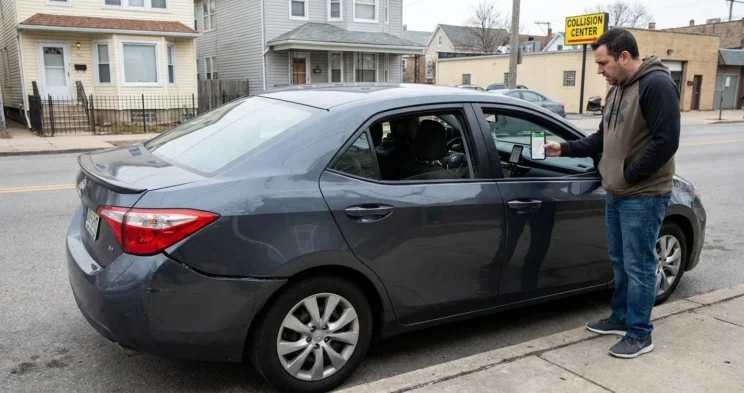
You were finishing a late ride near the Pearl in San Antonio when another driver ran a light on Broadway Street and clipped your front end. Now the car is in the shop, the rider filed a report, and your driver app has gone quiet. The first question on your mind is simple: can you still earn a living behind the wheel?
Does an Accident Automatically Deactivate Your Account?
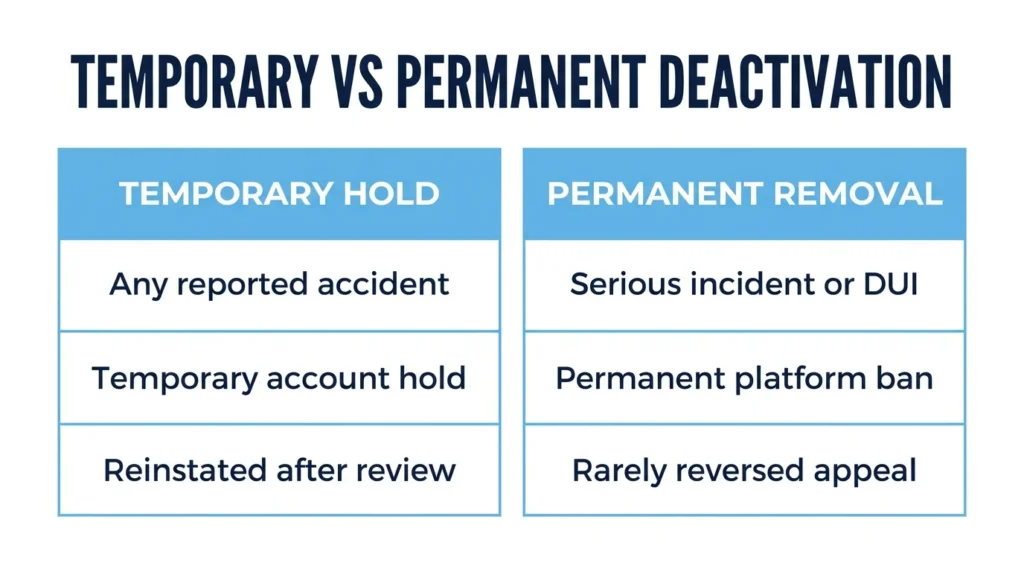
An accident does not automatically end your time driving for Uber, but it does trigger a safety review. Uber’s official policy separates a temporary hold during that review from a permanent removal based on the outcome, as the company explains in its driver deactivation policy.
A temporary deactivation during this review is standard procedure. Your account goes on hold while Uber looks at the incident, and that hold is not the same thing as a permanent ban.
You may have read that three accidents in three years automatically gets you removed. That claim is not official Uber policy. Uber’s own safety and background check standards make clear that a single serious incident can lead to immediate permanent removal, no matter your prior history. Severity affects the decision more than a strike count.
Fault also shapes the outcome. A driver found to have caused the crash faces a higher chance of an extended review or permanent deactivation than a driver who was not at fault.
Uber’s Safety Review Process
During a safety review, Uber notifies you through the app and by email that your account is under review, and you lose access to the driver app while it runs. Uber spells out the reporting steps in its post-accident driver guidance.
Uber then looks at your full history. That includes your background check results, any prior safety incidents, your ratings, and reports from passengers or police. Because Uber re-screens drivers every year and checks criminal history going back at least seven years for most offense categories, a new accident gets weighed against your whole recent record.
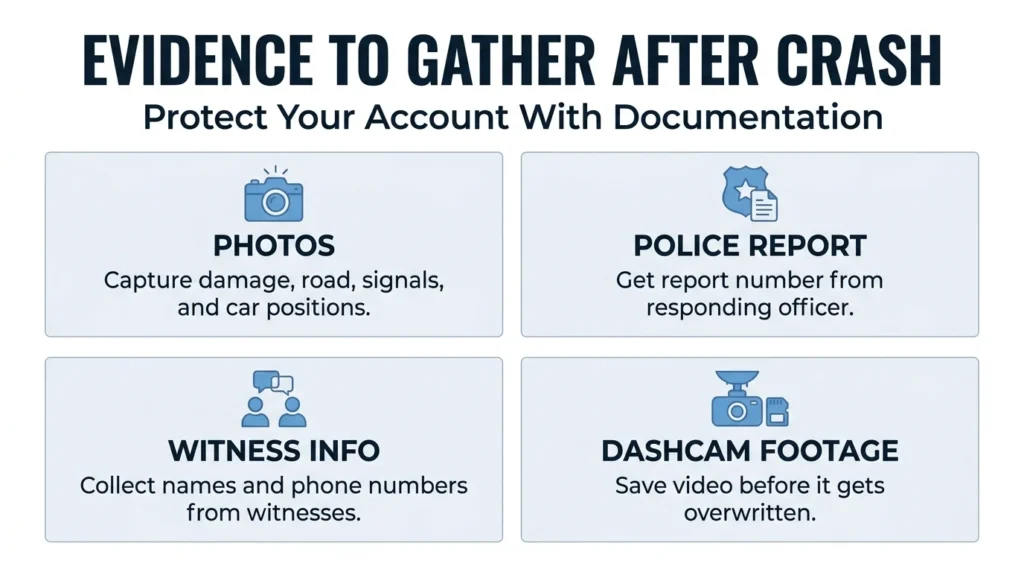
The current crash is not reviewed in a vacuum. Strong documentation is your best protection during this period. Gather it at the scene while the details are fresh:
- Photographs of the scene. Capture the vehicle damage, the road, traffic signals, and the position of both cars from several angles.
- The police report number. Ask the responding officer for it, or request a copy through the department later.
- Witness contact information. Get a name and phone number from anyone who saw what happened.
- Dashcam footage. Save any video before it records over itself.
Uber also requires you to report the accident through the app. Failing to report can become its own ground for deactivation, separate from whatever caused the crash, which is why knowing your post-accident obligations in Texas matters before you ever need them.
Texas Law & Your Driver Eligibility
Texas adds its own layer of driver rules on top of Uber’s internal policies. Texas Occupations Code Chapter 2402 governs how rideshare companies operate in the state, and it requires Uber to verify and re-screen every driver. That means a post-accident incident lands on a record the company is legally required to check.
The rules go further on who qualifies to drive. Texas Occupations Code § 2402.107 sets minimum standards: a valid license, a clean driving record review, and a criminal background check.
An at-fault crash that brings a DUI charge or a reckless driving conviction can disqualify you at the state level, not just on the app. That is a deeper problem than a single platform decision.
The Texas Department of Licensing and Regulation oversees this permit framework and enforces it against a Transportation Network Company (TNC) like Uber. Under state law, if a driver no longer meets the eligibility standards set out in § 2402.107, such as after a DUI conviction, no TNC operating in Texas may legally allow that person on its platform, regardless of what Uber might otherwise decide.
The TDLR’s official information for rideshare drivers explains how this framework applies to TNC companies operating in the state.
If you were hurt in the crash, a second clock is already running. The Texas Civil Practice and Remedies Code § 16.003 gives you two years from the date of injury to file a personal injury claim.
It is easy to pour all your energy into getting your account back and let that deadline slip away. Your right to recover money for medical bills and lost income can hinge on which rideshare insurance coverage period was active when the crash happened. Understanding where your injury claim stands is worth exploring early.
How to Appeal an Uber Deactivation
Uber’s Terms of Service give you the right to appeal a deactivation. You submit the appeal through the Uber driver support portal and attach every piece of supporting documentation you have.
The strongest appeals come down to evidence. Include the police or incident report showing you were not at fault, your photographs from the scene, any dashcam footage, and a written statement that answers Uber’s stated reason for removing you.
Uber’s arbitration clause is a real limit here. It restricts your ability to take a permanent deactivation to court, so for most drivers the internal appeal is the main path to reinstatement.
Some removals are effectively final. Permanent deactivations tied to serious criminal charges, a DUI, or a reckless driving conviction usually cannot be reversed through the standard appeal.
If you were also injured, the appeal is only half the picture. Knowing whether you have grounds to sue Uber for the accident can change how you approach the entire situation.
Talk to an Experienced Attorney About the Accident
A deactivation can put your income at risk, and a serious crash can leave you with injuries and bills on top of it. You do not have to sort out both problems on your own.
Angel Reyes & Associates has guided injured Texans through rideshare crashes for over 30 years, with more than $1 billion recovered for clients. We work on a contingency basis, which means no fee unless we win, and past clients have many positive things to say about working with us.
Whether you are pursuing an injury claim, untangling which insurance coverage applies, or weighing your full set of options, we can help you see the path forward. Reach out to us for a free consultation.
Past results do not guarantee future outcomes.
Driving for Uber FAQs
Can I drive for Lyft or another gig platform while my Uber account is under review?
Nothing in Uber’s terms prevents you from working for a different platform during the review period, and Lyft runs its own independent background check. Keep in mind that any new incident during this time could affect both your Uber reinstatement and your standing on the new platform.
How long does Uber's safety review typically take after an accident?
Uber does not publish a set timeline, and reviews can last anywhere from a few days to several weeks depending on the complexity of the incident and how quickly evidence/documentation is available. Drivers generally cannot speed up the process, but submitting a complete police report and photos promptly can avoid delays caused by missing information.
Will the accident show up on my background check or driving record?
A crash itself does not automatically appear on a motor vehicle record, but any traffic citation, reckless driving charge, or DUI that results from the accident will show up when Uber re-screens you. Uber uses a seven-year lookback window, so a new conviction stays on your record well beyond the current review.
Does Uber's insurance cover me if I was driving between trips when the accident happened?
Uber’s coverage depends on which period was active at the time of the crash. If your app was on but you had no accepted ride, Uber provides limited liability coverage that is lower than the coverage active during a trip. Your personal auto policy may not cover you during that window either, since many personal policies exclude rideshare activity.
Does filing an injury claim against the at-fault driver affect my Uber account status?
Pursuing a personal injury claim against another driver is separate from Uber’s internal safety review and should not influence your account outcome. The two processes run on different tracks: Uber assesses platform eligibility while a personal injury claim addresses your right to compensation for medical costs and lost income.
About the Authors

Angel Reyes
Writer
Angel L. Reyes, III is the Founder and Managing Partner of Angel Reyes & Associates. A nationally recognized trial attorney and business leader, Angel has helped over 70,000 injury victims recover more than $1 billion since founding the firm in 1993. Named to the Texas Super Lawyers list annually since 2008, Angel brings Wall Street experience, Ivy League education, and a deep commitment to client advocacy. He is a frequent legal commentator and published author with extensive contributions to legal scholarship, trial strategy, and consumer protection.

Kyle Nicolas
Editor
Kyle Nicolas is the Web Content & SEO Manager at Angel Reyes & Associates. He has more than 10 years of experience as a marketing co...

Angel Reyes
Reviewer
Angel L. Reyes, III is the Founder and Managing Partner of Angel Reyes & Associates. A nationally recognized trial attorney and business...