Can You Sue a Bus Company After an Accident in Texas?


Every article on this site is researched by our internal team, reviewed for legal accuracy against current Texas law, and held to State Bar of Texas advertising standards before publication. We do not publish content that overstates outcomes or makes promises about results.
Learn more about our
editorial standards .
Key Takeaways
- The identity of the bus operator dictates your entire legal strategy.
- Public transit and school district claims face severe, hyper-short deadlines.
- Government claims have strict payout limits, while private claims often open access to massive multi-million-dollar policies.
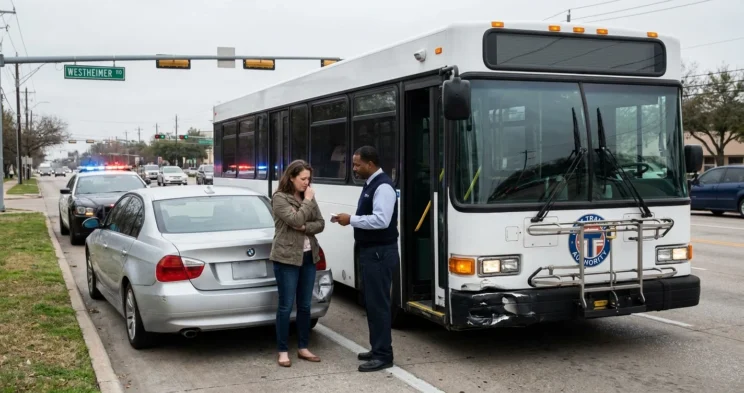
You were riding the bus home from work along Westheimer Road when the driver braked hard, and you were thrown into the seat in front of you. Now your back is in spasms, you’re missing shifts, and the bills are stacking up. The bus had a city logo on the side, but the driver handed you a card with a private company name. Who do you actually have a claim against?
Determining Who the Operator of the Bus Is
Identifying who owns and operates the bus is the most critical first step of your personal injury claim. If it is a private charter or commercial bus, standard Texas personal injury laws apply. However, if it is a city transit or school district bus, your case falls under the Texas Tort Claims Act, which comes with strict, short-notice deadlines and caps on the money you can recover.
This means that the type of bus dictates your entire legal strategy. It controls who you can name as a defendant, how long you have to act, and how much money you can recover for your bus accident claim.
Suing a Private Charter or Commercial Bus Company
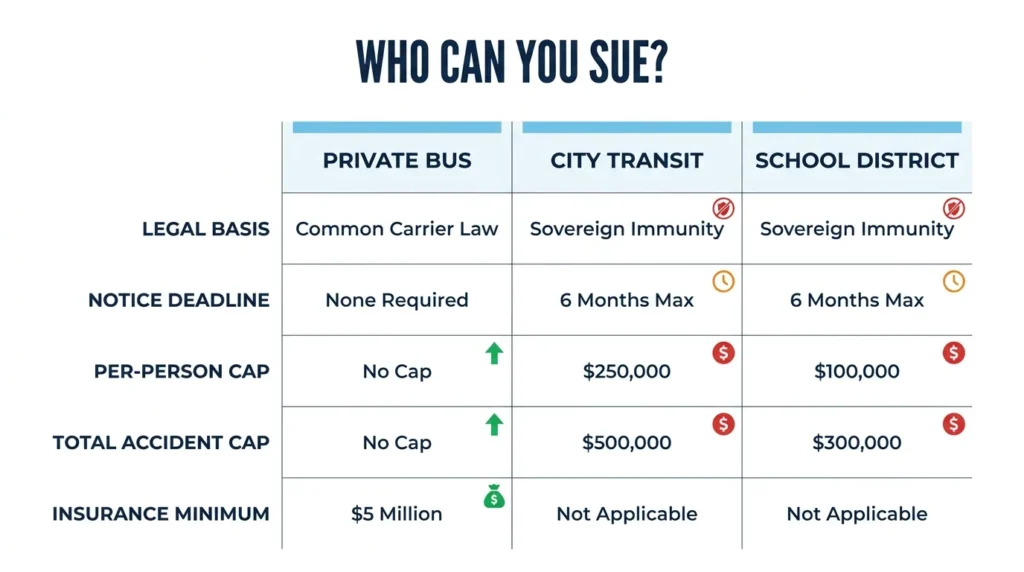
Private bus companies are classified as “common carriers” under Texas law. That means they are held to a much higher standard of safety than average drivers. If a commercial bus crashes into you, you can sue both the driver and the company, and the company is usually the primary target for recovering damages.
Holding the Bus Company Accountable
Under the legal rule of vicarious liability, an employer is automatically responsible for a crash caused by an employee who was working at the time.
However, you can also sue the bus company directly for its own independent mistakes, such as:
- Hiring unqualified or poorly trained drivers.
- Failing to properly maintain the buses.
- Violating state and federal transportation safety rules.
Because commercial buses carry so many people, federal regulations (49 CFR § 387.33T) require these companies to carry massive amounts of insurance. For-hire buses built to carry 16 or more passengers must maintain a minimum of $5,000,000 in liability insurance. This high financial floor ensures that victims of catastrophic crashes have access to the full compensation they need.
In commercial bus accidents, the most important evidence often disappears within weeks. Onboard camera footage, electronic driving logs, maintenance records, and driver training files are routinely overwritten or destroyed by the company if left alone.
To prevent this, an experienced attorney must immediately send formal preservation letters to the bus company and their tech vendors, legally forcing them to lock down and protect that data before it is lost forever.
Suing a City or Public Transit Authority
Public transit agencies (like city buses or regional transit authorities) are protected by a legal shield called “sovereign immunity.” This means you cannot sue them unless the state specifically gives you permission. Fortunately, Texas law provides a narrow loophole that makes public bus claims possible.
Under the Texas Civil Practice and Remedies Code (CPRC) § 101.021, the government waives its immunity if an employee causes an injury while driving a government-owned vehicle. If a city transit bus driver runs a red light, rear-ends your car, or makes a reckless lane change, you have the legal right to sue the city agency for your damages.
Deadlines for Government Bus Claims
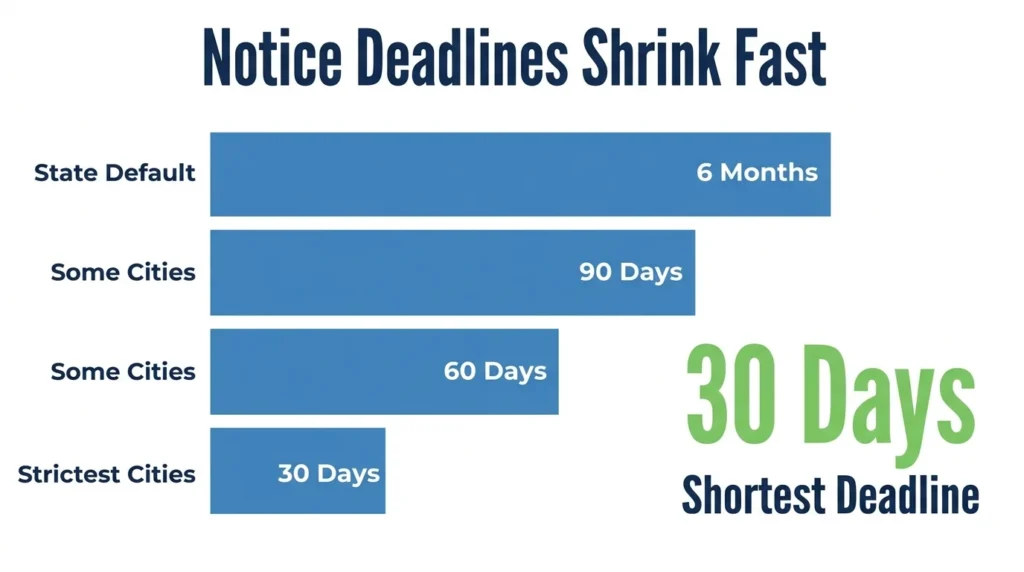
The biggest danger in a government bus claim is the clock. Texas state law requires you to file a formal, written “Notice of Claim” with the correct government agency within six months of the crash.
Even worse, many Texas cities use their own local charters to shorten this deadline to 90, 60, or even 30 days. If you miss this hyper-specific window by even a single day, your case is permanently dead, no matter how severe your injuries are.
Strict Caps on Financial Compensation
Unlike lawsuits against private commercial buses, the money you can recover from a government agency is strictly limited by state law. Under CPRC § 101.023, compensation is legally maxed out at $250,000 per person and $500,000 total per accident.
These caps are absolute. Even if your medical bills, lost income, and long-term care costs total millions of dollars, the city cannot legally pay you a penny over the $250,000 limit.
School Bus Accident Claims & School District Liability
School bus accidents are highly complex because they involve two overlapping layers of protection: governmental immunity for the school district and employment immunity for the driver. To build a successful case, you must navigate both.
Suing the School District
Public school districts are treated as government entities under the Texas Tort Claims Act. Just like city buses, you can only sue a school district if an employee was negligent while operating a district-owned vehicle.
However, the following limits apply:
- Crushing Deadlines: While state law allows up to 6 months to file a formal “Notice of Claim,” many Texas school districts have local rules that cut this timeline down to 30 or 90 days.
- Strict Payout Limits: Financial compensation is strictly capped at $100,000 per person and $300,000 total per accident for school districts (CPRC § 101.023). This is significantly lower than the $250,000 limit for cities.
Suing the Bus Driver Individually
Under Texas Education Code § 22.0511, public school bus drivers are considered professional employees and are generally protected from personal lawsuits.
However, you can bypass this protection and sue the driver directly if:
- The driver’s actions amounted to gross negligence (such as driving under the influence or drag racing).
- The driver caused the crash intentionally.
- The driver was uncertified or improperly licensed by the district.
Suing the Third-Party Transportation Company
Many Texas school districts outsource their bus routes to private, third-party transportation companies. If a private company owns the bus and employs the driver, the strict government caps and short deadlines do not apply. Instead, the claim falls under standard commercial vehicle laws, giving you a path to seek full, uncapped compensation from the private company’s multi-million-dollar insurance policy.
Steps to Take After a Texas Bus Accident
As we mentioned before, critical evidence in bus accidents can disappear very quickly. That makes what you do in the early days after your accident very important to your claim.
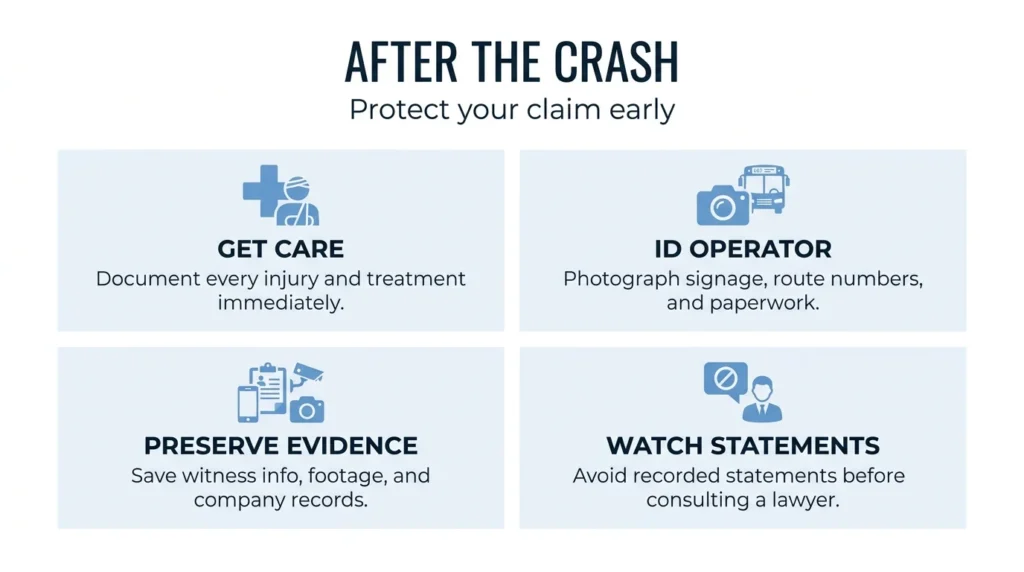
- Get medical care right away and document every injury, treatment, and expense from day one. Gaps in treatment are the first thing an adjuster points to when reducing an offer. Keep copies of bills, prescriptions, and any work absences tied to the injury.
- Identify the operator early. Photograph signage, route numbers, and any markings on the bus. Save anything written you were handed at the scene.
- Preserve evidence quickly. This includes witness contact information, scene photos, surveillance footage, and bus company records. For public transit and school district crashes, a written notice of claim must reach the correct governmental unit within the applicable deadline, or the claim is gone.
- Be careful with insurance and government adjusters. Avoid recorded statements before talking to a lawyer, because early statements get used to undermine valid claims. Reading about the average settlement in a bus accident case can help you set realistic expectations before you sign anything.
Talk to a Texas Bus Accident Attorney
Whether you were a pedestrian, bus passenger, or another driver involved in a bus accident, the right legal guidance can have a big impact on the success of your claim. There are often many complex layers involved in a bus accident claim. Make sure you are doing what you can to protect your claim by working with an experienced attorney.
Angel Reyes & Associates has helped injured Texans handle complex bus and commercial vehicle claims for decades, recovering more than $1 billion for our clients. Our consultations are free, and we work on a contingency basis, meaning there are no fees unless we win. Contact us today to schedule a free consultation and discuss your case.
Past results do not guarantee future outcomes.
Bus Company Injury Claim FAQs
Can I still file a claim if I was a standing passenger on a Texas bus when the accident happened?
Yes. Standing passengers are still owed the same elevated duty of care that Texas common carrier law requires. Your position on the bus does not reduce the operator’s obligation to transport you safely.
Does Texas require bus companies to carry uninsured motorist coverage for passengers?
Texas law does not require commercial bus carriers to carry uninsured motorist coverage, and most commercial policies exclude it. If another driver caused the crash and lacks adequate insurance, your recovery path runs through the at-fault driver’s policy or the bus carrier’s liability policy, depending on how fault is assigned.
What happens to my claim if the bus driver was an independent contractor rather than an employee?
Courts look at how much control the bus company exercised over the driver’s work, not just the job title on the contract. If the company controlled the route, schedule, and vehicle, a court may still find the company liable even if the driver was classified as an independent contractor.
Can a non-citizen or undocumented person file a bus accident claim in Texas?
Texas courts do not require proof of immigration status to pursue a personal injury claim. An injured person’s right to seek compensation for negligence is not conditioned on citizenship or documentation status.
If multiple passengers were injured on the same bus, does that affect how much I can recover from a public transit agency?
Yes. The TTCA caps total recovery against a municipality at $500,000 per occurrence, regardless of how many people were hurt. If several passengers file claims from the same crash, that single-occurrence cap is shared amongst all of them.
About the Authors

Angel Reyes
Writer
Angel L. Reyes, III is the Founder and Managing Partner of Angel Reyes & Associates. A nationally recognized trial attorney and business leader, Angel has helped over 70,000 injury victims recover more than $1 billion since founding the firm in 1993. Named to the Texas Super Lawyers list annually since 2008, Angel brings Wall Street experience, Ivy League education, and a deep commitment to client advocacy. He is a frequent legal commentator and published author with extensive contributions to legal scholarship, trial strategy, and consumer protection.

Kyle Nicolas
Editor
Kyle Nicolas is the Web Content & SEO Manager at Angel Reyes & Associates. He has more than 10 years of experience as a marketing co...

Spencer Browne
Reviewer
Spencer Browne is a partner at Angel Reyes & Associates and a Board Certified personal injury trial lawyer with nearly 100 jury trials a...