Common Rideshare Accident Injuries in Texas


Every article on this site is researched by our internal team, reviewed for legal accuracy against current Texas law, and held to State Bar of Texas advertising standards before publication. We do not publish content that overstates outcomes or makes promises about results.
Learn more about our
editorial standards .
Key Takeaways
- Injury type is the biggest driver of rideshare claim value in Texas, from soft tissue to TBI.
- Texas Insurance Code Chapter 1954 requires $1 million in coverage during active rideshare trips.
- You have two years from the injury date to file a personal injury claim under Texas law.

You were riding in the back of an Uber through downtown Austin when another driver ran a red light and slammed into the passenger side. The impact happened in seconds. Now you’re sitting in an emergency room, unsure how serious your injuries are and wondering whether Uber’s insurance will actually cover what comes next.
The type of injury you suffered affects nearly every part of your claim. It influences the treatment you need, how long your recovery takes, and how much compensation may be available.
Why Rideshare Crashes Cause Serious Injuries
Rideshare accidents often cause serious injuries because passengers are not braced for impact. When you drive your own vehicle, you instinctively tense before a collision you see coming. As a backseat passenger, you rarely see the crash approaching.
Urban driving patterns make rideshare trips riskier than they might look on paper. Frequent lane changes, stopping and starting for pickups and drop-offs, and the driver’s divided attention between the road and the app all increase the chance of a collision. Back seat passengers can be more vulnerable to neck and spinal injuries when a crash happens.
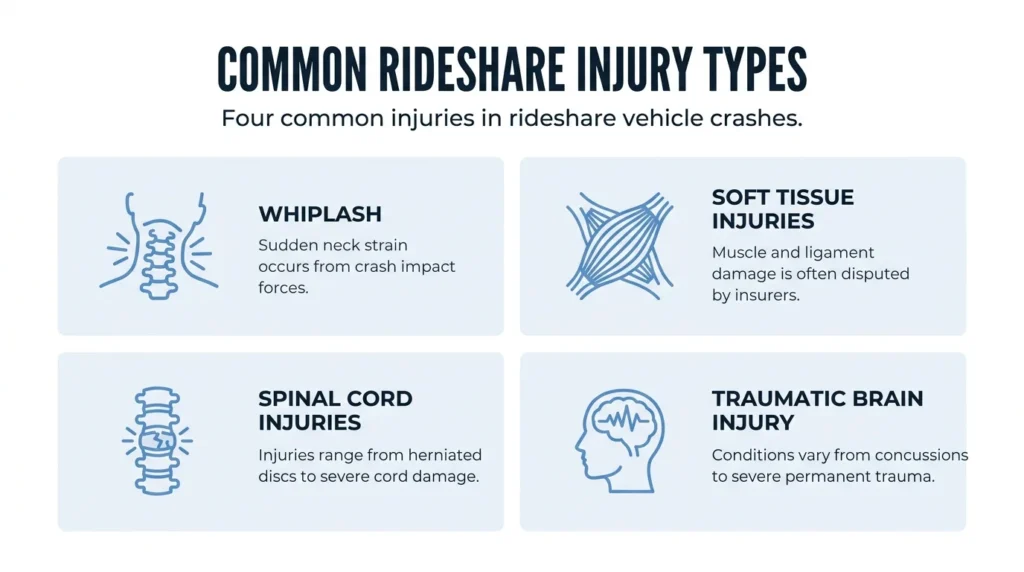
Whiplash & Soft Tissue Injuries
Whiplash and soft tissue injuries are among the most common rideshare accident injuries. They are also some of the most frequently disputed. Insurance companies often argue that these injuries are minor or unrelated to the crash, which makes proper medical documentation especially important.
Whiplash
Whiplash happens when a sudden deceleration or rear-end impact snaps your neck forward and back faster than your muscles can react. It’s one of the most common neck injuries after rideshare crashes. The ligaments and muscles stretch beyond their normal range, and the pain often does not appear until hours or even days after the crash.
That delay works against you. If you do not see a doctor immediately after the collision, an adjuster may argue there was no real injury. Getting evaluated at an urgent care clinic or emergency room as soon as possible creates the documentation needed to support your claim.
Soft Tissue Injuries
Soft tissue injuries cover damage to muscles, tendons, and ligaments beyond the neck. Strains, sprains, and bruised tissue from the force of impact fall into this category. Like whiplash injuries, these do not show up on a standard X-ray.
That is what makes them so frequently disputed. An adjuster reviewing an X-ray showing no broken bones may argue that the injury is minor or fabricated. An MRI or diagnostic ultrasound can document the actual damage. Physical therapy records, prescription refills, and follow-up visits all build the file that keeps an adjuster from dismissing your injury.
Documenting your treatment from the start is the best way to protect the value of a soft-tissue claim.
Spinal Cord & Back Injuries
Spinal injuries cover a wide spectrum, from herniated discs to fractured vertebrae to partial or complete spinal cord damage. Rideshare passengers often sit in relaxed positions and may not see the collision coming, which can increase the force placed on the back and spine during a sudden impact.
You do not have to suffer paralysis from a spinal injury to change your life. Herniated discs can cause chronic nerve pain, reduced mobility, and lasting limitations at work and home. Many people need surgery, rehabilitation, pain management, or ongoing specialist care after a serious back injury.
These injuries also tend to generate some of the highest medical costs in a rideshare accident claim. Future treatment, physical therapy, and lost earning capacity can significantly increase the value of a case.
Insurance coverage available for serious injuries like these depends on what the driver was doing when your crash happened. Uber and Lyft insurance coverage periods can determine whether your serious injury is fully covered.
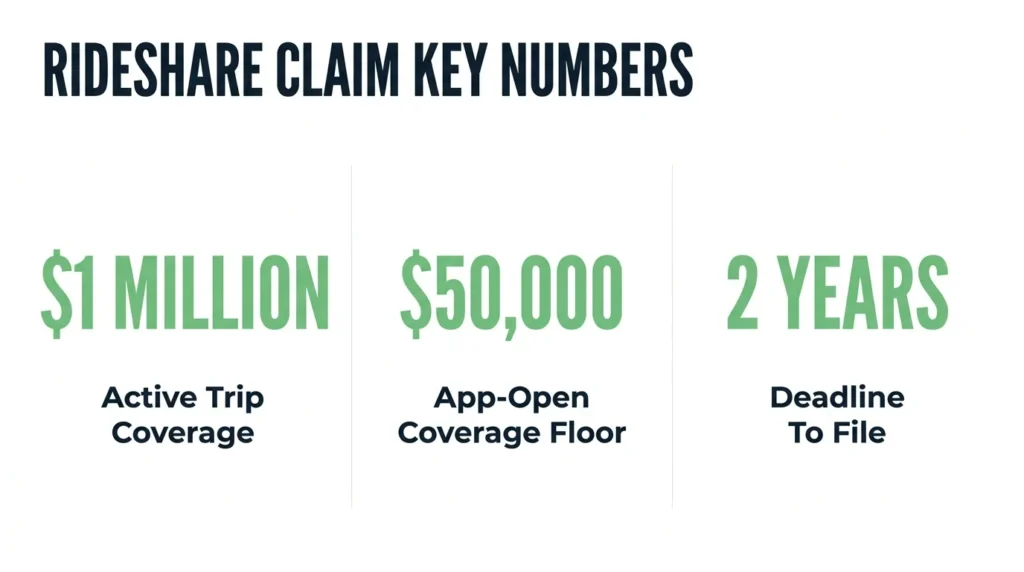
Under Texas Insurance Code Chapter 1954, which governs insurance requirements for Transportation Network Company drivers in Texas, a driver who was actively transporting a passenger must carry at least $1 million in total liability coverage. If the driver had the app open but had not yet accepted a ride, the coverage floor drops to $50,000 per person.
Traumatic Brain Injuries in Rideshare Accidents
A traumatic brain injury can occur when your head strikes a window, door frame, or headrest during a crash. It can also happen without direct impact. The sudden force of a collision can cause the brain to move inside the skull and create serious injury.
TBIs range from mild concussions to severe brain trauma. Even a mild TBI can cause headaches, difficulty concentrating, memory problems, mood changes, and sleep disruption. These symptoms often develop gradually and become more noticeable in the days after a crash. If you experience any of them, seek medical attention as soon as possible. A neurological evaluation can identify problems that basic emergency room testing may miss.
Severe TBI cases can involve permanent cognitive impairment, personality changes, and the need for long-term care. Because the consequences can last a lifetime, traumatic brain injury claims often involve substantial medical expenses, future care costs, and lost earning capacity. Insurance companies and juries consider all of those factors when they evaluate the value of an Uber accident claim.
How Injury Type Affects Your Rideshare Claim
Your injury type is the largest single driver of claim value in a rideshare accident. Soft tissue injuries typically produce lower settlements than fractures or herniated discs. Spinal cord damage and severe TBI cases sit at the top of the range because of the lifetime cost of treatment and the extent of non-economic losses.
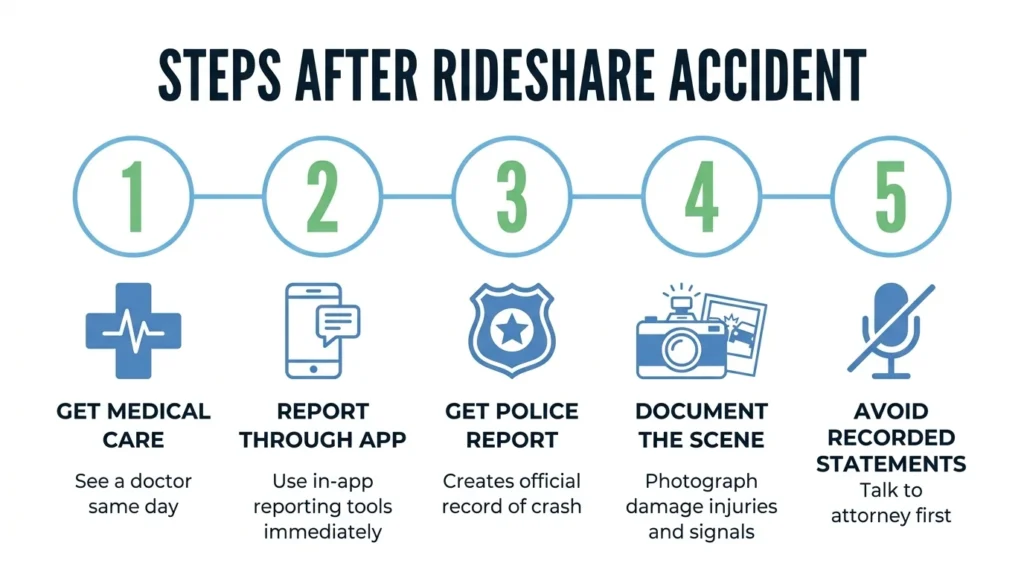
Here are the steps to take after a rideshare accident to help protect your claim:
- Get medical attention. See a doctor the same day, even if you feel fine. Delayed symptoms are common across all injury categories.
- Report the crash through the app. Uber and Lyft have in-app reporting tools. Use them. The timestamp and trip data can be critical.
- Get a police report. A police report creates an official record that is harder for insurers to dismiss.
- Document the scene. Photos of damage, the road, traffic signals, and any visible injuries support every claim type.
- Avoid recorded statements. Do not give a recorded statement to any insurance adjuster before speaking with an attorney.
Texas law requires that you file a personal injury claim within two years of your injury date under the Texas Civil Practice and Remedies Code (CPRC) § 16.003. Miss that window and you lose the right to file, regardless of how serious your injuries are or how clearly the other party was at fault.
Talk to an Injury Attorney About Your Case
The type of injury you have affects how much compensation may be available and how aggressively an insurer may challenge your claim. Rideshare claims also involve multiple insurance policies and coverage rules that can affect how compensation is paid.
Angel Reyes & Associates has helped injured Texans through situations like this for over 30 years. We work on a contingency basis, which means you pay no fee unless we win your case. Consultations are free. If you were injured in a rideshare crash and want to understand your options, reach out to us. You can also learn more about how we handle rideshare accident claims and about the firm.
Past results do not guarantee future outcomes.
Rideshare Accident Injury FAQs
Can a rideshare passenger sue both the Uber driver and the other driver at the same time?
Yes. If the fault is shared between the rideshare driver and another motorist, you can pursue claims against both. Passengers are rarely at fault, which puts you in a strong position regardless of how liability is allocated.
Can my own car insurance help pay my medical bills after a rideshare accident?
If you carry uninsured or underinsured motorist coverage on your own auto policy, it may step in when other coverage falls short or is denied. Texas requires insurers to offer this coverage, so check your policy to confirm whether you opted in.
How long does it typically take to settle a rideshare injury claim in Texas?
Minor injury claims may resolve in a few months, while cases involving serious injuries like spinal cord damage or TBI can take a year or more. The timeline depends on how long your medical treatment lasts and whether the insurer disputes liability or the severity of the injury.
Does Uber or Lyft's insurance cover pain and suffering, not just medical bills?
Yes. The commercial liability policies that rideshare companies carry can cover non-economic damages like pain and suffering, not just out-of-pocket medical expenses. The amount depends on the policy limits, the severity of your injury, and how well the damages are documented.
Can I still recover compensation if my injuries did not appear until days after the crash?
Yes. Some rideshare accident injuries, including whiplash, soft tissue injuries, and mild traumatic brain injuries, do not produce immediate symptoms. Seek medical attention as soon as symptoms appear and make sure your records document when they began.
About the Authors

Angel Reyes
Writer
Angel L. Reyes, III is the Founder and Managing Partner of Angel Reyes & Associates. A nationally recognized trial attorney and business leader, Angel has helped over 70,000 injury victims recover more than $1 billion since founding the firm in 1993. Named to the Texas Super Lawyers list annually since 2008, Angel brings Wall Street experience, Ivy League education, and a deep commitment to client advocacy. He is a frequent legal commentator and published author with extensive contributions to legal scholarship, trial strategy, and consumer protection.

Kyle Nicolas
Editor
Kyle Nicolas is the Web Content & SEO Manager at Angel Reyes & Associates. He has more than 10 years of experience as a marketing co...

Spencer Browne
Reviewer
Spencer Browne is a partner at Angel Reyes & Associates and a Board Certified personal injury trial lawyer with nearly 100 jury trials a...