Do You Have a Concussion After Your Car Accident?


Every article on this site is researched by our internal team, reviewed for legal accuracy against current Texas law, and held to State Bar of Texas advertising standards before publication. We do not publish content that overstates outcomes or makes promises about results.
Learn more about our
editorial standards .
Key Takeaways
- A normal CT scan is expected with a concussion and does not rule out a brain injury
- Most concussion patients score a normal 15 on the Glasgow Coma Scale and never black out
- Texas gives you two years from the crash date to file a personal injury lawsuit
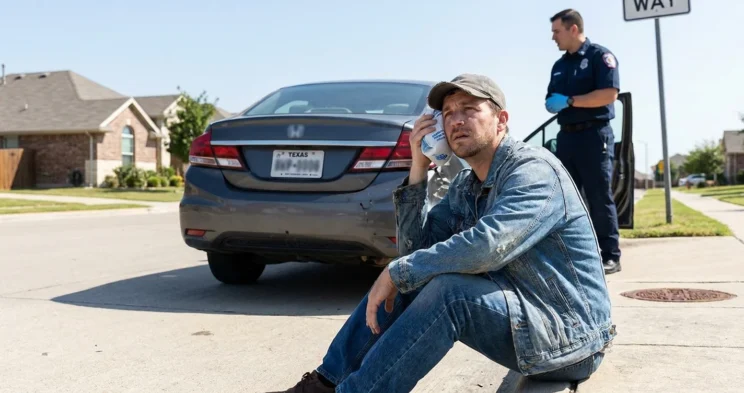
You walked away from the wreck on LBJ Freeway feeling rattled but basically fine. Two days later the headache will not quit, the light from your phone hurts, and you lose the thread of a sentence halfway through saying it.
You may have a concussion. A concussion, also called a mild traumatic brain injury, is diagnosed from what happened to you and how you looked and functioned afterward. It is not diagnosed from a picture of your brain.
That distinction matters more than almost anything else you will learn about this injury. A clean scan is the normal result in concussion cases, not the exception, and the record that proves your injury is one that starts building in the first hours and days after the crash.
How Doctors Diagnose a Concussion & What the Glasgow Coma Scale Measures
A concussion is a clinical diagnosis. Doctors confirm it from the mechanism of the crash, your mental status right afterward, and the symptoms that follow, not from a scanner.
The Glasgow Coma Scale is the standard tool emergency staff use to describe how much your consciousness is impaired after a trauma. It scores three responses:
- Eye opening, scored 1 to 4
- Verbal response, scored 1 to 5
- Motor response, scored 1 to 6
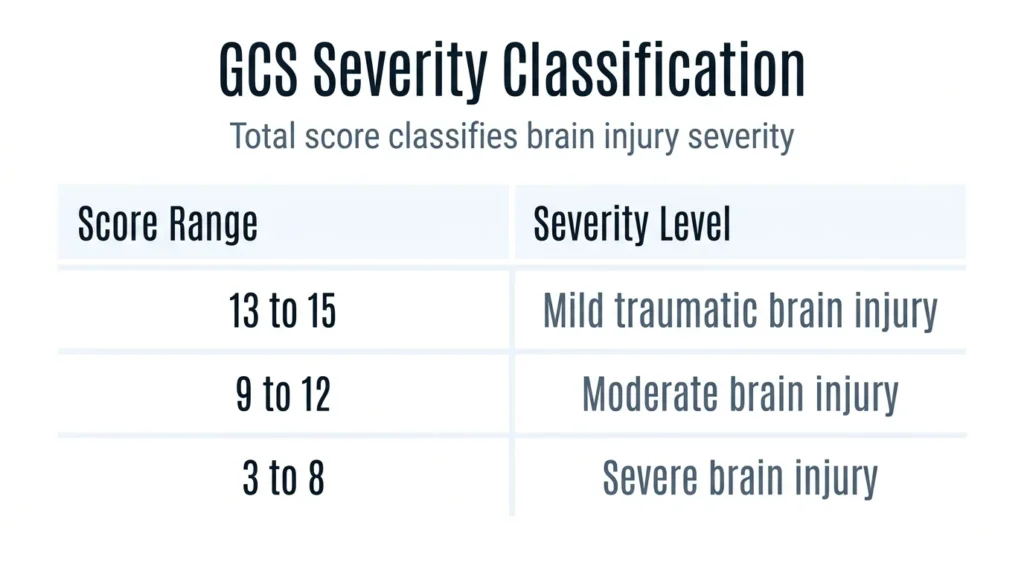
Those add up to a total between 3 and 15. Brain injury severity is classified from that total, with mild traumatic brain injury falling in the 13 to 15 range, moderate at 9 to 12, and severe at 3 to 8, according to the Glasgow Coma Scale reference in StatPearls.
However, most patients diagnosed with a concussion score a perfectly normal 15 and never lose consciousness at all. The scale sorts severity and guides triage decisions. It is not a gatekeeping test that has to come back abnormal before a concussion counts.
The actual diagnostic criteria come from elsewhere. The VA/DoD Clinical Practice Guideline for post-acute mild traumatic brain injury defines a concussion as a traumatically induced disruption of brain function from an external force, shown by the new onset of at least one of the following:
- Any loss of consciousness or decreased level of consciousness
- Any loss of memory for events immediately before or after the injury, known as post-traumatic amnesia
- Any alteration of mental state at the time of injury, such as confusion, disorientation, or slowed thinking
- Any transient neurological deficit
Under that same guideline, the mild category is defined partly by normal structural imaging, along with loss of consciousness of up to 30 minutes and altered mental status lasting up to 24 hours.
The scale also has real limits in a busy Texas emergency room. Emergency department management of traumatic brain injuries notes its difficulty of use, inconsistent application by providers, and confounding factors such as intoxication, medications, and other traumatic injuries competing for attention.
Why a Normal CT Scan Does Not Rule Out a Concussion
A normal CT scan is the expected result in a concussion. It is not evidence against one.
The American Society of Neuroradiology states the point plainly. CT is much more limited in its ability to detect the widespread microscopic injury to axons, the nerve fibers that carry signals through your brain, and it is not unusual for a CT scan to be entirely normal in a patient with a traumatic brain injury.
The scan is typically normal in patients with milder brain injury, including concussion.
MRI is more sensitive, and doctors sometimes order one when symptoms persist. Even MRI may not detect any abnormality, because the underlying damage is often stretched and sheared nerve fibers and temporary chemical changes rather than bleeding or bruising that shows up as a structural finding.
Not every head-injured patient even gets imaged. Emergency physicians use validated decision instruments, the Canadian CT Head Rule and the New Orleans Criteria, to decide who needs a scan at all. A patient who does not meet either rule’s criteria is considered very low risk for a clinically important injury inside the skull, so imaging may reasonably be skipped.
None of that means nothing happened to you. A CT is ordered to rule out a bleed that needs a neurosurgeon, not to rule out a concussion. “My scan was normal” and “my brain is uninjured” are two different statements, and the difference shapes how your car accident claim has to be built.
The Invisible Injury Problem in Texas Car Accident Claims
Because there is usually no positive imaging finding to point at, a concussion claim rests on documentation of your history, your exam findings, and the course your symptoms take.
Timing complicates that. The CDC’s HEADS UP guidance on concussion signs and symptoms confirms that symptoms may not show up right away and may take hours or days to appear. A calm, unremarkable exam at the scene or in triage can simply mean the injury had not fully surfaced yet.
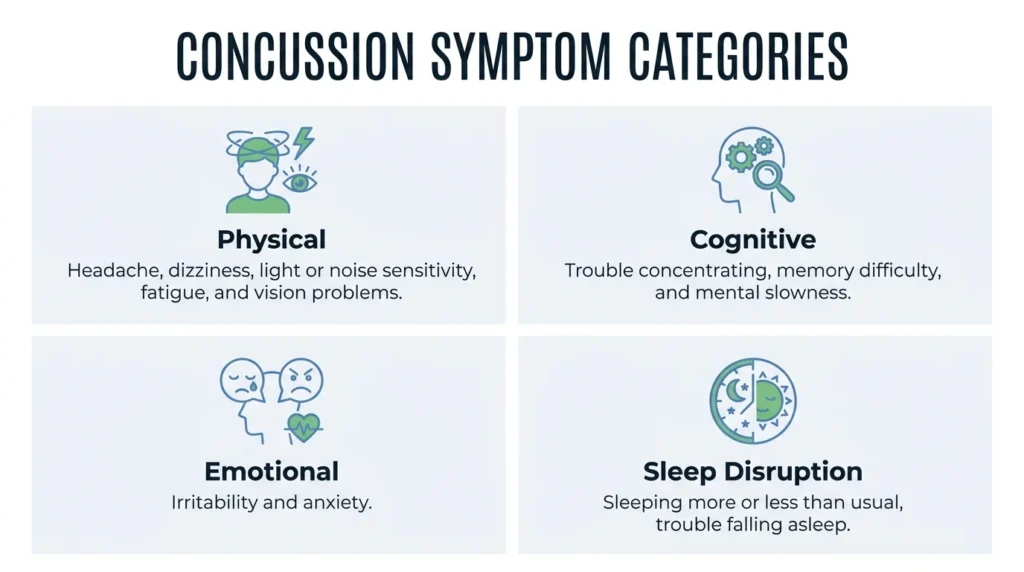
The CDC groups concussion symptoms into four categories:
- Physical symptoms, including headache, dizziness, sensitivity to light or noise, fatigue, and vision problems
- Cognitive symptoms, including trouble concentrating, memory difficulty, and mental slowness
- Emotional symptoms, including irritability and anxiety
- Sleep disruption, including sleeping more or less than usual and trouble falling asleep
That delay is exactly where claims get contested. Insurers commonly point to a normal CT result and a brief emergency room note to argue that the injury is minor or unrelated to the crash. The adjuster’s job is to close your claim for as little as possible, and a gap in your medical record is the cheapest tool available for doing it.
How to Build the Medical Evidence for a Concussion Claim
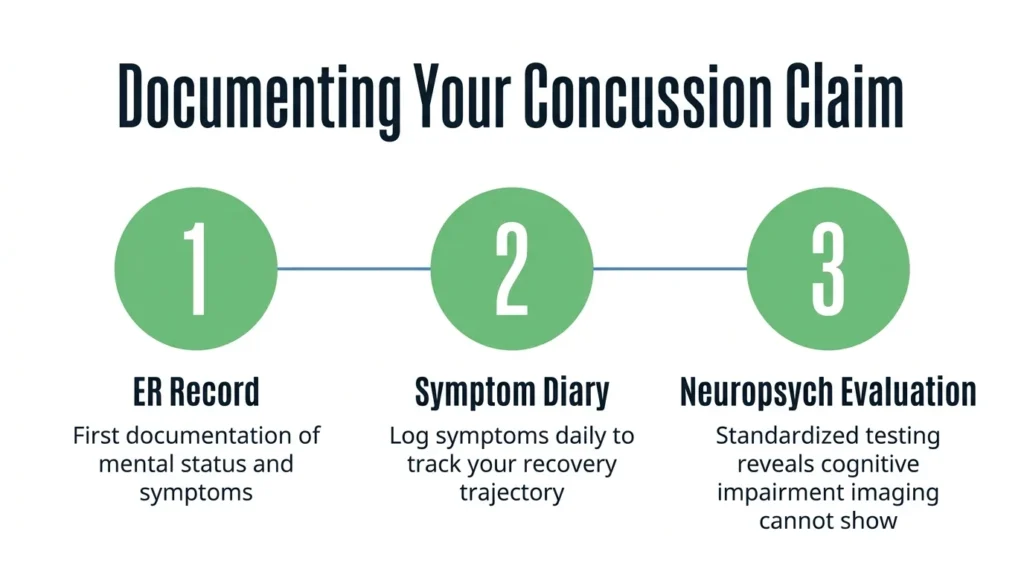
Three records carry a concussion claim when imaging is normal, and they build in sequence:
Start with the emergency department record. A structured mental status and history assessment at triage and in the emergency department is the first medical documentation of your injury. It should capture any period of altered mental status, including a Glasgow Coma Scale score of 14 or lower, agitation, sleepiness, slowed responses, or repetitive questioning, along with post-traumatic amnesia and any post-concussive symptoms.
Discharge instructions should state the diagnosis, the expected clinical course, warning signs that require a return visit, and follow-up recommendations. The emergency medicine literature notes that this documentation is inconsistently completed in practice, which is a good reason to request your complete records rather than assume they are thorough.
Start a symptom diary the day you get home. Concussion management guidance generally recommends logging symptoms at consistent intervals, daily or every two or three days, using a simple severity scale a clinician can review later.
This is practical best practice rather than a mandated protocol, and it works because retrospective recall of a fluctuating, largely subjective symptom set is unreliable. A dated log turns “I felt awful for weeks” into a trajectory someone can evaluate.
Then pursue formal neuropsychological evaluation if symptoms persist. Neuropsychological
assessments of traumatic brain injury note that this standardized testing helps clinicians reach differential diagnoses and develop treatment strategies, and that cognitive testing can reveal impairments even when structural imaging appears relatively normal. Testing typically covers memory, attention, executive function, and language and social cognition.
That evaluation is what converts your account of feeling foggy into a clinician-documented, standardized measure of how your brain is actually functioning.
Talk to Angel Reyes & Associates About Your Concussion Claim
Texas does not give you unlimited time to sort this out. Texas Civil Practice and Remedies Code § 16.003(a) requires a personal injury suit to be brought not later than two years after the day the cause of action accrues, and for a car crash that clock generally starts on the date of the collision.
Two years sounds generous until you consider what actually proves a concussion. Symptom documentation gets harder to reconstruct every week, memories fade, and treatment gaps become arguments the other side makes for you.
Angel Reyes & Associates has guided injured Texans through the legal process for more than 30 years, and the team includes board-certified personal injury attorneys who handle car accident and brain injury claims. You can reach the firm 24 hours a day.
Contact Angel Reyes & Associates for a free consultation to review your options and your medical documentation.
Past results do not guarantee future outcomes.
Concussion After Car Accident FAQs
Can a concussion show up days after a car accident even if I felt fine at the scene?
Yes. Concussion symptoms often do not appear immediately and can take hours or days to develop. A calm exam right after the crash does not mean nothing happened, only that the injury had not surfaced yet. Watch for headache, dizziness, light or noise sensitivity, trouble concentrating, irritability, or sleep changes afterward.
What kind of testing can confirm a concussion when imaging looks normal?
Formal neuropsychological evaluation can reveal cognitive impairment even when a CT or MRI looks normal. This standardized testing typically assesses memory, attention, executive function, and language, turning a subjective account of feeling foggy into a documented, measurable record. It is most useful when symptoms persist beyond the first days after the crash.
What are the symptoms of a more serious brain injury?
Repetitive vomiting, loss of consciousness for more than a minute, seizures, convulsions, severe neck pain, persistent double vision, and burning, tingling, or weakness in the arms or legs are among the signs of a serious brain injury.
About the Authors

Angel Reyes
Writer
Angel L. Reyes, III is the Founder and Managing Partner of Angel Reyes & Associates. A nationally recognized trial attorney and business leader, Angel founded the firm in 1993, which has gone on to help over 70,000 injury victims recover more than $1 billion. Named to the Texas Super Lawyers list annually since 2008, Angel brings Wall Street experience, Ivy League education, and a deep commitment to client advocacy. He is a frequent legal commentator and published author with extensive contributions to legal scholarship, trial strategy, and consumer protection.

Graham Griffin
Editor
Graham Griffin is the Web & Content Manager at Angel Reyes & Associates, where he oversees content strategy, AI-powered workflows, a...

Angel Reyes
Reviewer
Angel L. Reyes, III is the Founder and Managing Partner of Angel Reyes & Associates. A nationally recognized trial attorney and business...