Does Surge Pricing Affect Your Rideshare Accident Claim?


Every article on this site is researched by our internal team, reviewed for legal accuracy against current Texas law, and held to State Bar of Texas advertising standards before publication. We do not publish content that overstates outcomes or makes promises about results.
Learn more about our
editorial standards .
Key Takeaways
- Surge pricing never changes which Uber or Lyft insurance period covers your Texas crash.
- Surge conditions may serve as evidence of driver fatigue or rushed, careless driving.
- Texas gives you two years from the crash date to file your rideshare injury claim.

You booked an Uber home from a concert near Deep Ellum in Dallas, watched the fare jump because demand was high, and tapped accept anyway. Halfway home, your driver rushed a yellow light and got hit. The situation has left you wondering whether that surge fare changes anything about your rights.
What Surge Pricing Is & How It Works
Surge pricing is a fare multiplier that Uber and Lyft apply when rider demand spikes. You see it during rush hour, late nights, major events, and bad weather, and the app shows you the higher price before you confirm. Tapping accept means you agreed to that fare, nothing more.
The platform controls when surge turns on, not your driver. This distinction shapes how fault gets analyzed after a crash.
In our state, the Texas Department of Licensing and Regulation oversees rideshare companies and allows surge pricing as long as the app discloses it. The same agency requires these companies to keep ride records, including trip data, for five years. That retention rule will be important if you need to prove surge was active when you were hurt.
Surge Pricing & Insurance Coverage Periods
Surge pricing does not change which insurance applies to your crash. Coverage depends on what your driver was doing at the moment of the wreck, not on how high the fare climbed.
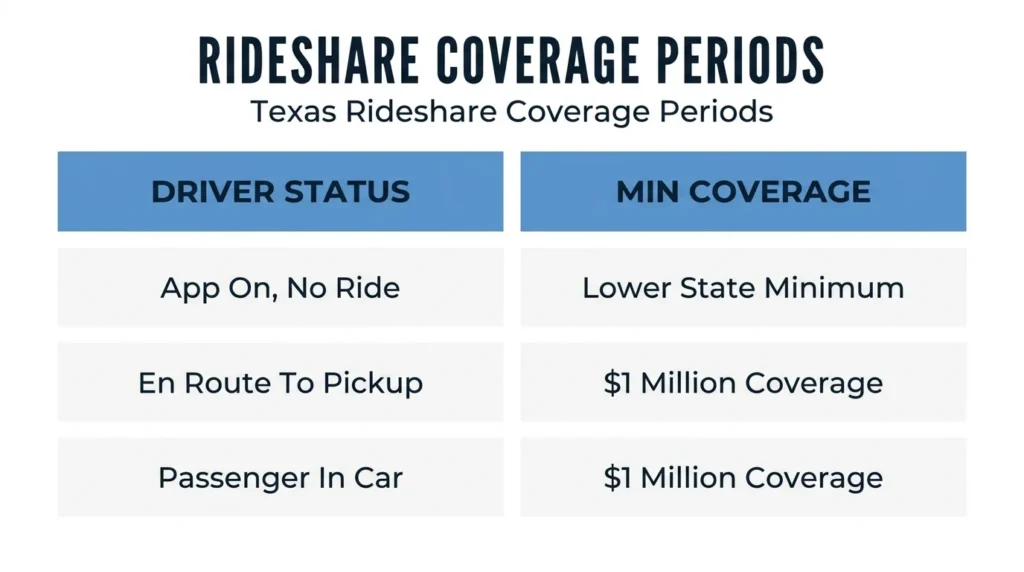
Texas sets three rideshare coverage periods based on driver activity, and you can see how each one works in our breakdown of Uber and Lyft coverage periods.
Period 1 covers a driver with the app on but no ride accepted.
Period 2 starts once a driver accepts a ride and heads to pick up.
Period 3 applies while you are a passenger in the car.
Texas Insurance Code Chapter 1954 defines the minimum coverage required at each stage, with lower minimums when no ride has been accepted and $1 million in coverage once a prearranged ride begins.
A crash during Period 3 on a surge trip carries the same $1 million minimum coverage as a non-surge Period 3 trip. A crash during Period 1 on the way to grab a surge ride still falls under the lower Period 1 minimums, regardless of the fare.
Some passengers assume surge equals premium service, which must equal premium coverage. The law does not work that way. A rideshare attorney can confirm which period applies to your crash and whether the insurer is using the correct tier.
Surge Rush Hour Crashes & Driver Negligence
Surge conditions can still serve as evidence in a negligence claim even though they do not raise your coverage tier. The argument is about driver behavior, not the price.
Surge periods often line up with driver fatigue, distracted acceptance of back-to-back rides, and pressure to finish more trips fast. Each of those factors speaks to whether your driver used reasonable care behind the wheel.
Because the platform decides when and where surge activates, you may be able to argue its pricing incentives created a foreseeable risk of rushed or tired driving. Our guide on whether you can sue Uber after a Texas crash explains how platform claims develop.
No Texas court has ruled directly on surge pricing as a negligence factor, so this theory is still emerging. Because the law here is unsettled, documenting the facts of your trip carefully is more important than usual.
Texas also splits fault among everyone responsible for a crash under its proportionate responsibility rule. If surge incentives shaped how your driver behaved, that belongs in the fault analysis when your claim is filed. Our explainer on the Texas 51% fault rule shows how shared fault can reduce what you recover.
Evidence to Preserve After a Surge-Period Crash
The single most useful step is to screenshot your fare receipt right away, because it captures the surge multiplier, trip time, route, and driver rating. From there, a short checklist keeps the rest of your evidence intact.
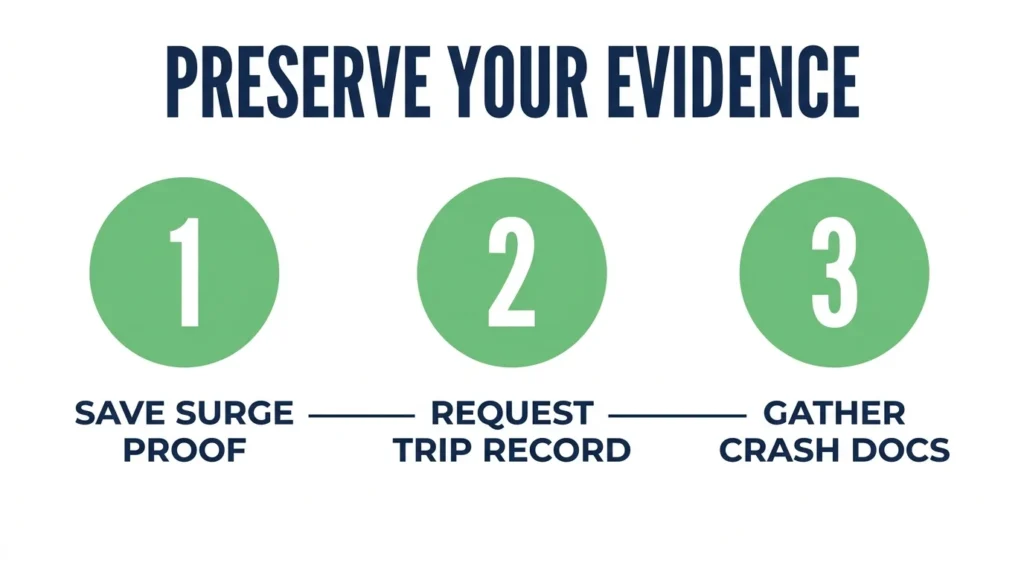
Save your surge proof. Keep any app screenshots showing the multiplier, estimated fare, or demand badges active when you booked.
Request your full trip record. Ask Uber or Lyft through in-app Help or their legal data request channel, and do it early even though they retain records for five years.
Gather standard crash documentation. Collect the police report, witness contact information, scene photos, and your medical records. Our guide on what to do after a Texas rideshare accident walks through each step.
An attorney can also send a litigation hold letter to the platform, which preserves digital trip data that might otherwise be archived or purged.
You have a deadline running alongside all of this. The Texas Civil Practice and Remedies Code Section 16.003 gives you two years from the crash date to file a personal injury claim. Evidence fades long before that window closes, so act early.
Contact Angel Reyes & Associates
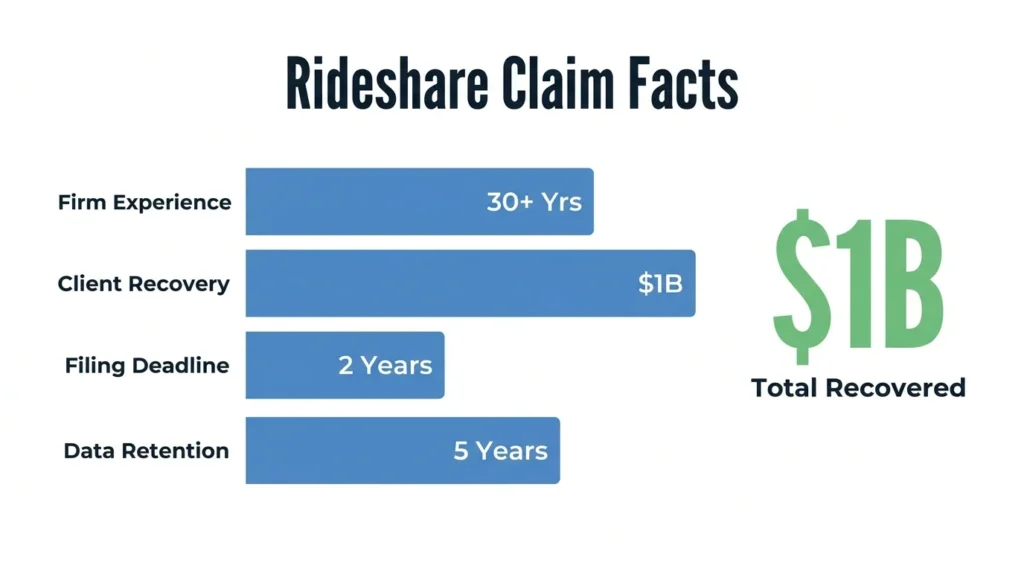
Angel Reyes & Associates has spent over 30 years handling Texas rideshare accident claims, with more than $1 billion recovered for clients. We work on a no fee unless we win basis, so reviewing your case costs you nothing up front.
If surge was active when you were hurt, we can tell you whether those conditions strengthen your claim and which insurance period applies. You can learn how we have served injured Texans for decades and read what past clients say about working with us.
Reach out to us for a free consultation to discuss your surge-period crash.
Past results do not guarantee future outcomes.
Frequently Asked Questions
Does accepting a surge fare waive my right to sue if I am injured?
No. Tapping “accept” on a surge fare only agrees to a higher price for the ride. It does not release the driver, Uber, or Lyft from liability if negligent driving causes your injury.
What if the other driver, not my Uber or Lyft driver, caused the crash?
You can still file a claim against the at-fault driver’s insurance just as you would in any car accident. If that driver is uninsured or underinsured, Uber and Lyft carry UM/UIM coverage during active trips that can step in to cover the gap.
Do Uber and Lyft's user agreements require arbitration for injury claims?
Both companies include arbitration clauses in their terms of service that can affect how disputes against the platform proceed. Courts have at times refused to enforce these clauses in personal injury cases, and claims filed directly against the driver, rather than the company, are not subject to them at all.
Does Lyft use surge pricing too, or is that only an Uber thing?
Lyft uses the same concept but calls it “Prime Time” pricing. Both platforms apply a fare multiplier when demand outpaces driver supply, and both are controlled by the company’s algorithm, not the driver.
What types of compensation can an injured rideshare passenger seek in Texas?
A passenger can seek economic damages such as medical bills and lost wages, as well as non-economic damages for pain and suffering. In cases involving gross negligence, Texas courts may also award punitive damages.
About the Authors

Angel Reyes
Writer
Angel L. Reyes, III is the Founder and Managing Partner of Angel Reyes & Associates. A nationally recognized trial attorney and business leader, Angel has helped over 70,000 injury victims recover more than $1 billion since founding the firm in 1993. Named to the Texas Super Lawyers list annually since 2008, Angel brings Wall Street experience, Ivy League education, and a deep commitment to client advocacy. He is a frequent legal commentator and published author with extensive contributions to legal scholarship, trial strategy, and consumer protection.

Kyle Nicolas
Editor
Kyle Nicolas is the Web Content & SEO Manager at Angel Reyes & Associates. He has more than 10 years of experience as a marketing co...

Angel Reyes
Reviewer
Angel L. Reyes, III is the Founder and Managing Partner of Angel Reyes & Associates. A nationally recognized trial attorney and business...