Negligent Hiring of Bus Drivers in Texas


Every article on this site is researched by our internal team, reviewed for legal accuracy against current Texas law, and held to State Bar of Texas advertising standards before publication. We do not publish content that overstates outcomes or makes promises about results.
Learn more about our
editorial standards .
Key Takeaways
- Negligent hiring holds a Texas bus company liable for its own choice to hire an unfit driver.
- Federal Part 391 rules require record checks and a Driver Qualification File before any hire.
- You have two years from a Texas bus crash to file a negligent hiring injury claim.
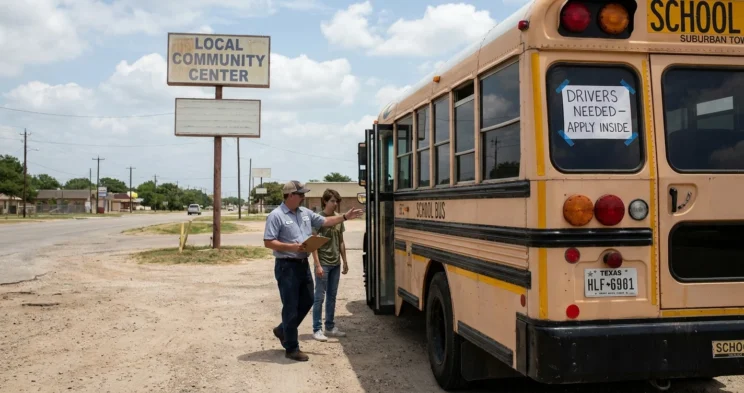
You were riding home on a charter bus along the I-35 corridor when the driver drifted across two lanes and clipped another vehicle. Later you learn the driver had a record that should have kept them off the road entirely.
Now you are facing medical bills and lost time at work, and you want to know one thing: was hiring that driver itself a mistake the company can answer for?
What Is Negligent Hiring Under Texas Law?
Negligent hiring holds a bus company directly responsible for its own choice to put an unfit driver behind the wheel. This is a separate claim from the driver’s carelessness during the crash itself. The company answers for what it did wrong before the driver ever started the route.
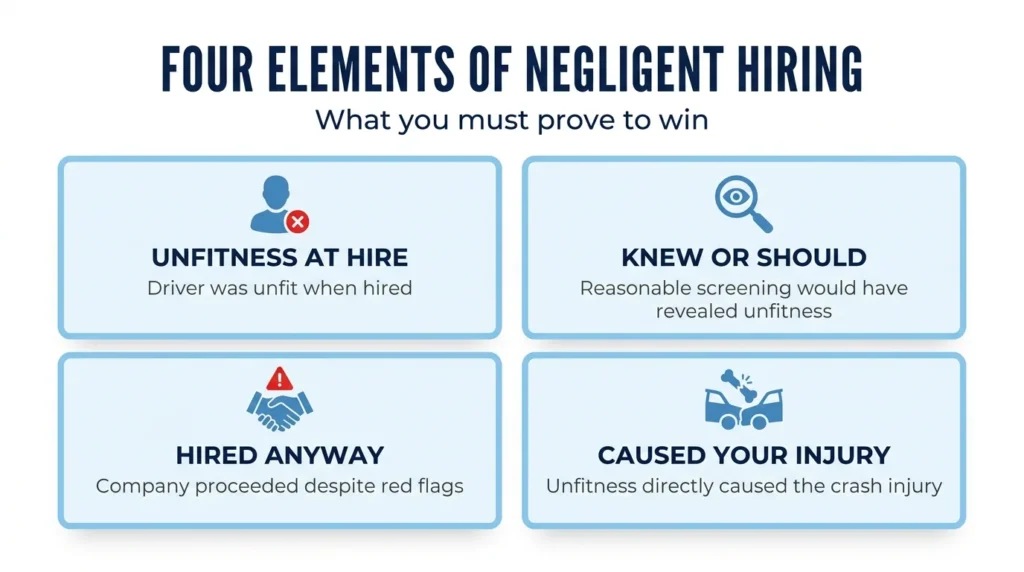
To win this kind of claim in Texas, you must show the company knew or should have known the driver was unfit. You also must show that unfitness was a direct cause of your injury. Texas common law holds employers responsible for this kind of harm when they know or should have known, through reasonable screening, that the driver was unfit for the role.
Texas Civil Practice and Remedies Code Chapter 142 also affects how these claims work: it limits a negligent hiring suit that is based solely on an employee’s prior criminal conviction, though important exceptions apply when the conviction is closely connected to the type of work involved.
This is different from vicarious liability, sometimes called respondeat superior. That theory holds a company responsible simply because the driver was working for it. Negligent hiring goes further and targets the company’s own conduct during the hiring process.
Understanding how these theories fit together matters when more than one party may share fault.
Negligent entrustment is a related claim about handing a vehicle to an unfit driver, but the focus here stays on the hiring decision itself.
Federal Rules Bus Companies Must Follow Before Hiring
Federal law sets clear duties a bus company must meet before a driver ever carries a passenger. These rules give your claim a measurable standard. When a company skips them, that failure becomes evidence.
Under 49 C.F.R. Part 391, a carrier must confirm the driver holds a valid CDL, review three years of driving records, and request a safety history from past employers. The carrier must also build a complete Driver Qualification File before the driver starts. Skipping any of these steps is a serious gap.
The rules in 49 C.F.R. Part 383 governs how a CDL is issued and revoked. A company must confirm the driver holds a valid, unrevoked license for the correct class and endorsement.
State law adds another layer. Texas Transportation Code Chapter 522 lists the grounds that disqualify a commercial driver, including DUI convictions, certain felonies, and serious traffic violations. A Texas bus operator must check these state disqualifiers along with the federal ones.
Drug and alcohol screening is also mandatory. Under 49 C.F.R. Part 382, a carrier must test a driver before service begins. It must also contact the federal Clearinghouse for past positive tests or refusals. An attorney can review whether the carrier completed every required pre-hire check and whether any failure supports a direct claim against the company.
Bus Driver Background Checks & Red Flags
A bus company must complete several specific checks before a driver carries a single passenger. When you suspect a driver was never properly vetted, these are the steps the company was supposed to take:
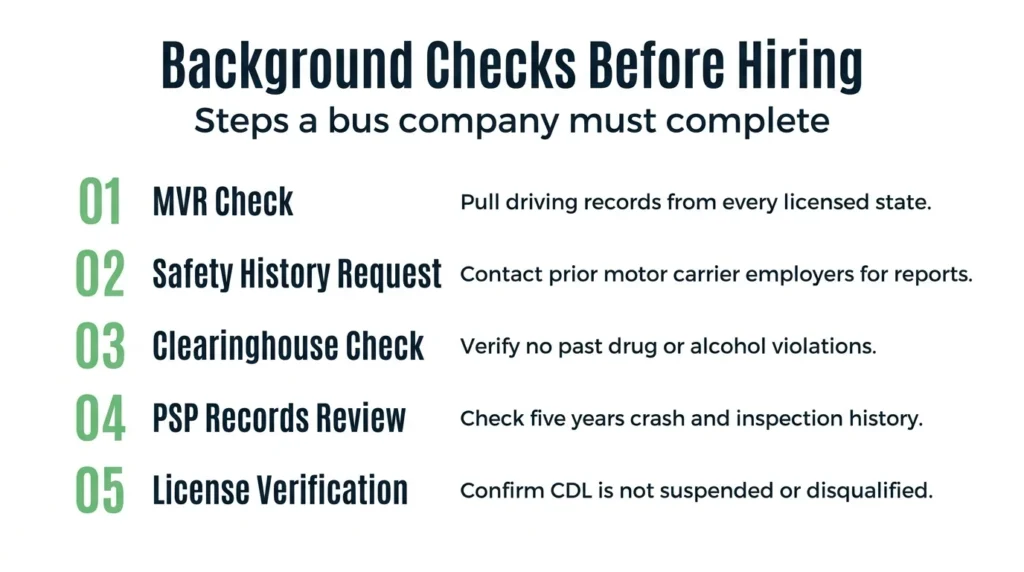
- Run a motor vehicle record check. The carrier must pull driving records from every state where the driver held a license in the prior three years.
- Request the safety performance history. Federal rules require the carrier to contact all prior motor carrier employers and document what they report.
- Contact the Drug and Alcohol Clearinghouse. The company must check the federal Drug and Alcohol Clearinghouse before the driver’s first day for any past violations.
- Review PSP records. The FMCSA Pre-Employment Screening Program shows five years of crash history and three years of inspections. It is not strictly required, but skipping it can be used as evidence of weak vetting.
- Confirm the license against state records. The carrier should verify the CDL is not suspended or disqualified using the Texas DPS list of CDL disqualifying offenses.
Certain findings should stop a hire outright. A prior DUI on a commercial license, a felony involving a commercial vehicle, repeated serious traffic violations, an out-of-state disqualification, or an unresolved positive drug test all qualify as red flags.
Sometimes the driver is the one hiding the problem. A driver with a disqualifying past may present false credentials or conceal a prior disqualification. A carrier that fails to independently verify the license against state and federal records can still be liable, even when the driver lied.
Proving Negligent Hiring After a Texas Bus Crash
To succeed on a negligent hiring claim, you must prove four things. The driver was unfit at the time of hire. The company knew or should have known through reasonable screening. The company hired the driver anyway. And that unfitness directly caused your injury.
Much of the proof lives in the company’s own files. The Driver Qualification File, or its absence, carries real weight. So do the driving records pulled at hire, the Clearinghouse query, PSP records, drug test results, and any internal hiring policy the company kept.
Regulatory violations strengthen your position. A failure to meet the Part 391 screening duties can support a finding of negligence per se or stand as evidence the company fell below the standard of care.
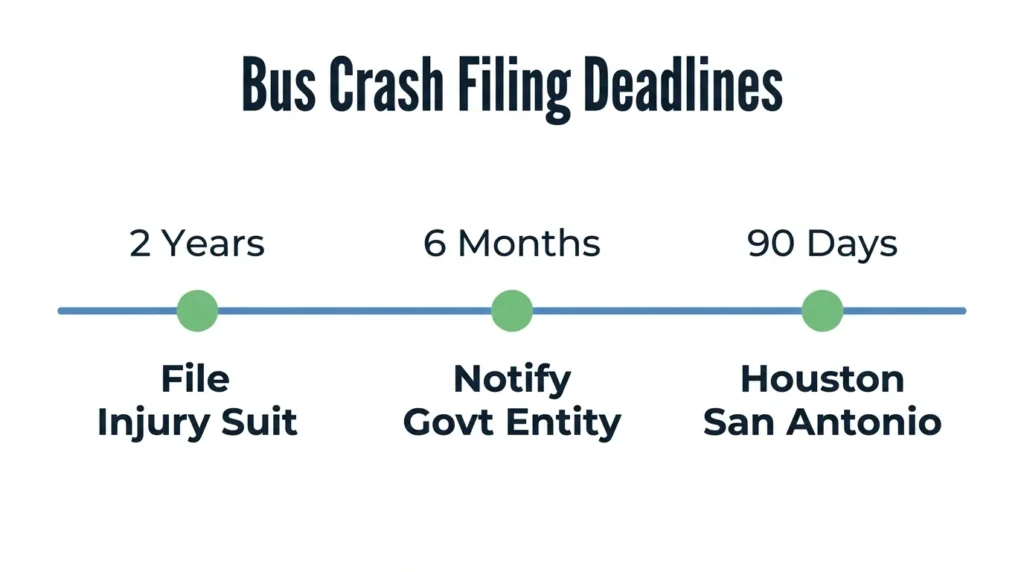
You have a firm deadline. A personal injury claim from a bus crash, including a negligent hiring claim, must be filed within two years of the crash date under Texas Civil Practice and Remedies Code § 16.003. Miss that window and your right to sue is almost always gone.
In some cases, you may also seek punitive damages. That becomes possible when the company showed real awareness of the danger. A supervisor who reviewed a disqualifying record and hired anyway, or a pattern of skipping checks, can support a gross negligence theory.
If you believe a company failed to screen your driver, learning how to file a bus accident claim in Texas is a useful next step.
Work with an Experienced Attorney Today
A negligent hiring claim turns on records most people never see, and proving it takes work the insurance company will resist. Angel Reyes & Associates has handled commercial vehicle and bus accident cases across Texas for over 30 years. We offer free initial consultations and charge no fee unless we win, so the cost of asking is nothing.
We have more than $1 billion recovered for clients, and you can read how others felt about working with us through our client reviews and testimonials.
When a crash takes a life, our work on wrongful death claims can help your family seek answers. Contact us for a free consultation.
Past results do not guarantee future outcomes.
Negligent Bus Driver Hiring FAQs
Does negligent hiring law apply if the bus driver was an independent contractor?
Yes. A bus company can still face a negligent hiring claim even when it classified the driver as a contractor rather than an employee. The claim targets the company’s own failure to screen, not the employment label.
What kinds of damages can I recover in a Texas negligent hiring case?
You can seek compensation for medical bills, lost wages, pain and suffering, and future care costs. If the company showed gross negligence, such as knowingly hiring a driver with a disqualifying record, a jury may also award punitive damages up to the limits set under Texas law.
Does it matter if the bus only operated inside Texas and never crossed state lines?
No. Texas has adopted the federal driver-qualification standards for intrastate carriers, so a bus company operating entirely within the state must meet the same screening requirements. Failing those requirements can support a negligent hiring claim under Texas law.
Can a bus company be liable if it hired a qualified driver but kept them after problems emerged?
That falls under a related claim called negligent retention. If a company learned of new violations, failed drug tests, or other red flags after hire and kept the driver on the road anyway, it can be held directly liable for that decision.
If a government agency operated the bus, do the same rules apply?
The negligent hiring doctrine still applies, but the timeline is shorter. You must serve written notice of your claim on the government entity within six months of the crash. Cities like Houston and San Antonio require notice within 90 days. Missing that deadline can bar your claim entirely, even if the two-year suit filing period has not yet run.
About the Authors

Angel Reyes
Writer
Angel L. Reyes, III is the Founder and Managing Partner of Angel Reyes & Associates. A nationally recognized trial attorney and business leader, Angel has helped over 70,000 injury victims recover more than $1 billion since founding the firm in 1993. Named to the Texas Super Lawyers list annually since 2008, Angel brings Wall Street experience, Ivy League education, and a deep commitment to client advocacy. He is a frequent legal commentator and published author with extensive contributions to legal scholarship, trial strategy, and consumer protection.

Kyle Nicolas
Editor
Kyle Nicolas is the Web Content & SEO Manager at Angel Reyes & Associates. He has more than 10 years of experience as a marketing co...

Angel Reyes
Reviewer
Angel L. Reyes, III is the Founder and Managing Partner of Angel Reyes & Associates. A nationally recognized trial attorney and business...