Pre-Settlement Funding for Motorcycle Accident Lawsuits in Texas


Every article on this site is researched by our internal team, reviewed for legal accuracy against current Texas law, and held to State Bar of Texas advertising standards before publication. We do not publish content that overstates outcomes or makes promises about results.
Learn more about our
editorial standards .
Key Takeaways
- Pre-settlement funding is non-recourse: you only repay the advance if your case results in a recovery.
- Fees can compound monthly, turning a modest advance into a large repayment obligation over 18-24 months.
- Holding out for a fair settlement is often the better financial move when an attorney can show a strong case.
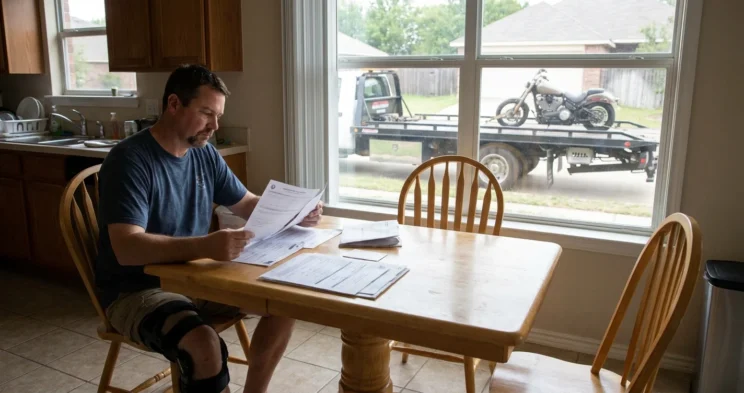
Your medical bills are stacking up, your bike is totaled, and you haven’t been able to work in weeks. The case is moving, but settlements don’t happen overnight. Then you see an ad for a lawsuit advance. You probably are familiar with them: they’re on TV or the radio, promising cash in 24 hours with no credit check required.
Before you call that number, you need to understand what you’re actually getting into and what it could mean for your long-term financial future. Pre-settlement funding could lift a burden off your shoulders today, only to saddle you with a heavier one later.
What Is Pre-Settlement Lawsuit Funding?
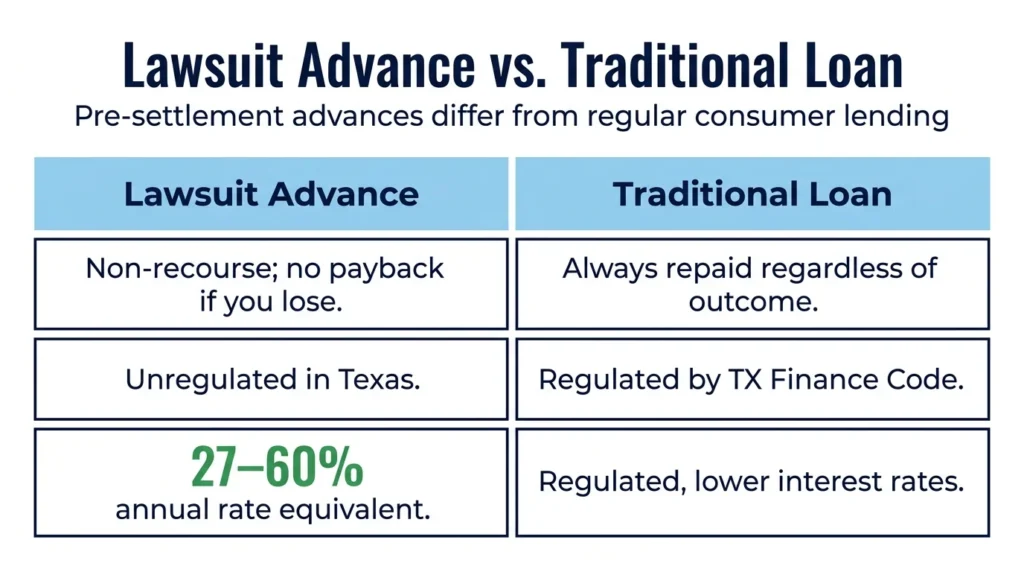
Pre-settlement funding is a cash advance against the settlement you expect to receive, not a traditional loan. The critical difference is the non-recourse structure: if your motorcycle accident case does not result in a recovery, you owe the funding company nothing.
The funding company looks at the strength of your case, not your credit score or your employment history. They review police reports, medical records, liability evidence, and your attorney’s assessment. Based on that review, they offer an advance, typically 10 to 20 percent of the expected settlement value.
For a broader look at what goes into calculating a Texas motorcycle settlement, review how motorcycle accident settlements work in Texas.
One thing to know before you proceed: Texas does not regulate these advances as consumer loans. Standard lending protections under Texas Finance Code Chapter 342, which set caps and consumer rights for traditional lenders, do not apply to pre-settlement funding companies. Instead, what they offer is largely unregulated in this state.
How Fees Work & What You Actually Pay Back
The non-recourse protection sounds reassuring, but the fees are where these advances get complicated. Funding companies charge either a flat fee or a monthly rate that compounds over time. Monthly rates commonly run 2 to 4 percent, which translates to an annual equivalent of 27 to 60 percent.
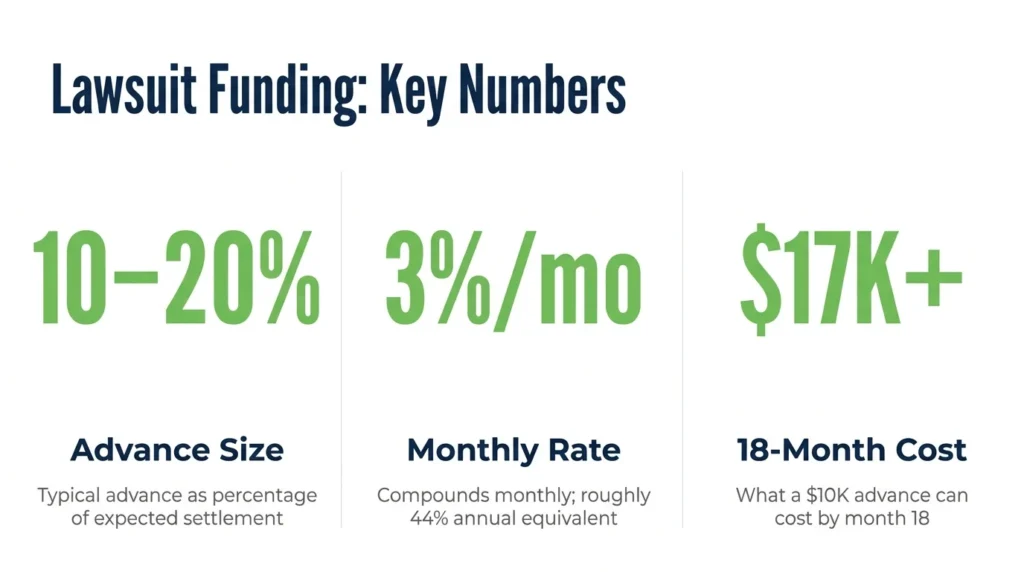
Compounding makes a significant difference over a long case. A $10,000 advance at 3 percent monthly compounding does not cost $3,600 after 12 months. Because the fee applies to the growing balance each month, the actual repayment climbs well above that figure. At 18 months, the repayment on that same advance can approach $17,000 or more, depending on the structure.
Motorcycle accident cases involving serious injuries, disputed liability, or litigation can easily run 18 to 24 months. Many funding companies also charge a minimum fee period, often six months, even if your case settles in three. How long your case takes directly determines how expensive the advance becomes.
If you want a clearer picture of how long Texas settlements typically take and what drives the timeline, review how long an insurance settlement takes in Texas. Understanding that timeline before you take an advance is worth more than any fee comparison chart.
When Funding May Make Sense
Pre-settlement funding is a last resort. That does not mean it is always the wrong choice. There are narrow circumstances where an advance is a reasonable tool.
Funding may be worth considering when liability is clear and the case is strong, meaning compensation is highly likely. It makes more sense when the case will genuinely take a long time to resolve due to serious injury, ongoing treatment, or contested damages. The other piece is financial urgency: housing, utilities, or ongoing medical care are at real risk, and all other options have been exhausted.
That last point is worth spelling out. Before contacting a funding company, check whether your own motorcycle insurance includes medical payment coverage. Talk to your health insurer about coverage for accident injuries. Ask your medical providers about deferred billing arrangements.
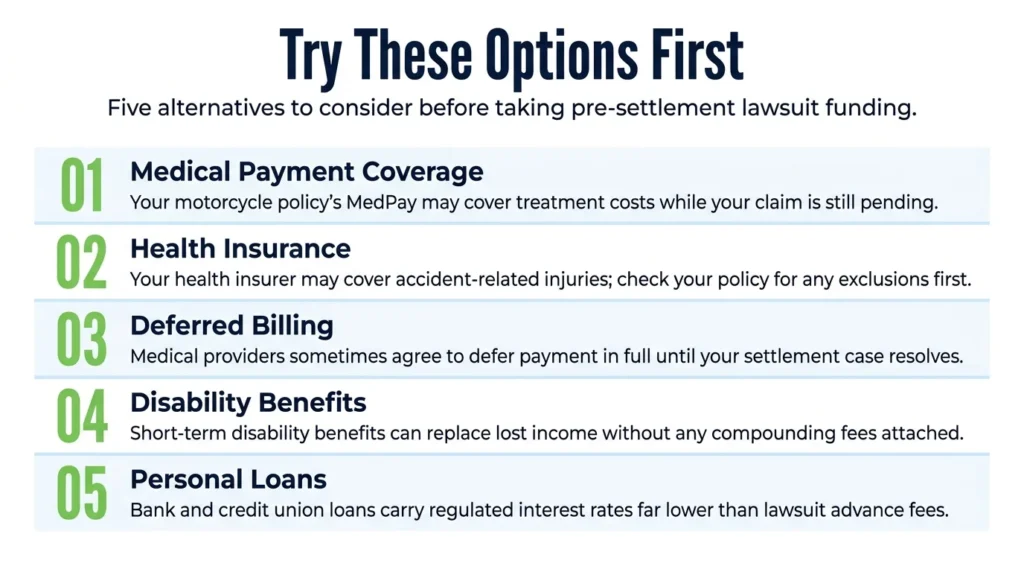
You can also look into whether you qualify for short-term disability benefits. Personal loans from a bank or credit union carry regulated interest rates that are far lower than lawsuit advance fees. Pre-settlement funding belongs at the bottom of that list, not the top.
If funding does make sense in your situation, the advance should be small relative to your expected net recovery after attorney fees and medical liens are paid. Borrowing a large portion of your anticipated recovery today and paying compounding fees for 18 months can leave you with very little after everything is settled.
When Holding Out Is the Better Financial Move
For most riders, the better financial decision is to hold out rather than take an advance. Insurers understand that financial pressure pushes people toward early settlements. A low offer extended while you are struggling to pay rent is a deliberate tactic, not a generous gesture.
When you take an advance and then accept a fast, low settlement, you end up paying twice: high fees on the advance, plus a recovery that was smaller than it should have been. The combination can be more damaging than either problem on its own.
Fault disputes also change the math. Under Texas Civil Practice and Remedies Code Chapter 33, which governs proportionate responsibility in Texas, if you are found partially at fault for the crash, your compensation is reduced by that percentage. A disputed liability case may take longer to resolve and settle for less than initially expected. Both outcomes increase the cost of an advance while reducing the amount available to repay it.
You can review whether you should accept an insurance settlement offer and when to push back.
The decision to hold out requires confidence in your attorney and a clear sense of your case’s value and timeline. Both of those things start with a conversation before any funding agreement is signed.
Get Legal Guidance Before You Sign Anything
Pre-settlement funding is not a simple product, and the agreements are not always written in plain language. Before you sign one, you should know the full repayment structure, whether fees compound, the minimum fee period, and whether the agreement requires lender consent before settling your case.
Angel Reyes & Associates has spent over 30 years helping injured Texans through the decisions that come up while a case is pending. We work on contingency, so there is no fee unless we win your case, and we offer free consultations to help you get started with no obligation. We have more than 20 office locations across the entire state of Texas and handle cases in every county.
If you are considering a funding advance, talk to us first. We can walk you through your case timeline, what your recovery is likely to look like, and whether an advance makes financial sense for your situation before you commit to an agreement that could reduce what you take home. Reach out for a free consultation.
Past results do not guarantee future outcomes.
Pre-Settlement Funding FAQs
Does taking a pre-settlement advance affect what my attorney can do in negotiations?
The advance itself does not change your attorney’s legal strategy, but some funding agreements require lender consent before settling, which can create friction. Review the agreement with your attorney before signing to confirm it does not limit your ability to accept or reject offers freely.
Can I still get pre-settlement funding if liability in my motorcycle crash is disputed?
Yes, many funding companies will consider cases with disputed liability, but the advance amount will typically be lower because the risk to the funder is higher. Clearer liability and stronger evidence generally result in better terms.
Is a pre-settlement advance considered taxable income?
The advance itself is generally not treated as taxable income because it is structured as a repayable advance, not a payment for your injuries. However, certain portions of the underlying settlement, such as punitive damages or lost wage compensation, may be taxable, so consult a tax professional once your case resolves.
What if my case settles for less than the amount I received in the advance?
Non-recourse protection covers situations where there is no recovery at all. If your case settles for any amount, the funder is typically repaid from those proceeds first, up to what you owe. Settling for a very small amount may mean little to nothing is left for you after repaying the advance and attorney fees.
Do I need my attorney's cooperation to apply for pre-settlement funding?
Yes. Funding companies require information directly from your attorney, including case documents, medical records, and an assessment of liability. Most attorneys will cooperate, but some decline to participate in funding arrangements; discuss this with your attorney early if you are considering an advance.
About the Authors

Angel Reyes
Writer
Angel L. Reyes, III is the Founder and Managing Partner of Angel Reyes & Associates. A nationally recognized trial attorney and business leader, Angel has helped over 70,000 injury victims recover more than $1 billion since founding the firm in 1993. Named to the Texas Super Lawyers list annually since 2008, Angel brings Wall Street experience, Ivy League education, and a deep commitment to client advocacy. He is a frequent legal commentator and published author with extensive contributions to legal scholarship, trial strategy, and consumer protection.

Kyle Nicolas
Editor
Kyle Nicolas is the Web Content & SEO Manager at Angel Reyes & Associates. He has more than 10 years of experience as a marketing co...

Angel Reyes
Reviewer
Angel L. Reyes, III is the Founder and Managing Partner of Angel Reyes & Associates. A nationally recognized trial attorney and business...