Third-Party Liability in Bus Accidents in Texas


Every article on this site is researched by our internal team, reviewed for legal accuracy against current Texas law, and held to State Bar of Texas advertising standards before publication. We do not publish content that overstates outcomes or makes promises about results.
Learn more about our
editorial standards .
Key Takeaways
- A private driver who causes a bus crash faces standard, uncapped personal injury liability.
- You can name both the at-fault driver and the bus company in one Texas lawsuit.
- You have two years to sue the driver, but a government defendant needs six-month notice.
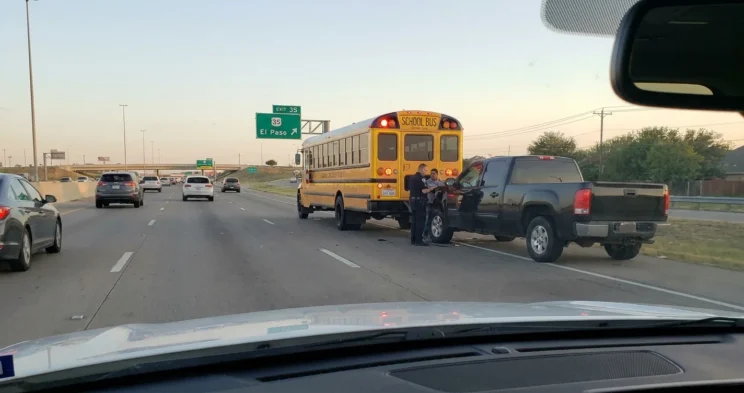
You were riding a Metro bus down Westheimer Road in Houston when another driver ran a light and slammed into the side of the bus. You walked away with injuries you did not ask for, and the crash was not your fault. Now you are wondering who actually pays for this, especially since you have heard that suing anything connected to the city is a nightmare.
When Another Driver Causes a Bus Crash
When a private driver causes the crash, that driver is the at-fault party, not the bus company or the transit agency. Your claim runs against the person who hit the bus, and standard personal injury law governs it.
That means none of the special government procedures apply to this part of your case. You are pursuing a regular driver who owed everyone on the road a duty of care and broke it.
Riding as a passenger does not weaken your position. You did nothing to cause the wreck, so you keep the same right to recover as any other injured driver would.
To win, you show four things. The driver owed you a duty of care, the driver breached that duty, the breach caused the crash, and you suffered real damages as a result. These are the same elements that decide Texas car accident claims involving any vehicle.
Sorting out who is responsible can get tangled when a bus is involved. For a wider look at the parties who can share blame, our overview of who is liable in a Texas bus accident walks through the full picture.
No Government Cap on Third-Party Driver Claims
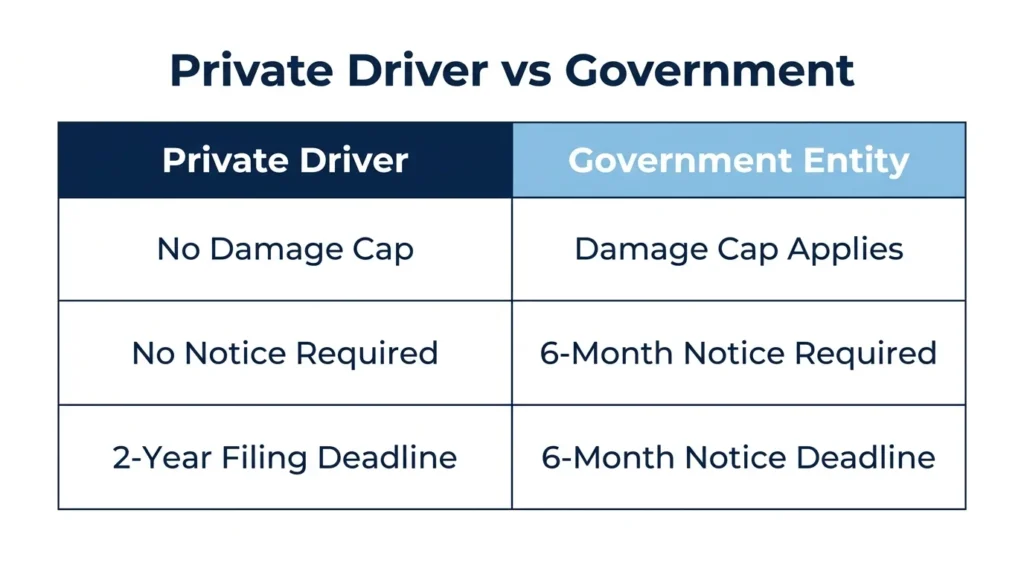
The Texas Tort Claims Act damage caps do not apply to a private driver. Those caps limit what you can collect from a government entity, and a private driver is not one.
This is the part most people get wrong. They assume that because a city bus was involved, a government cap limits everything. It does not.
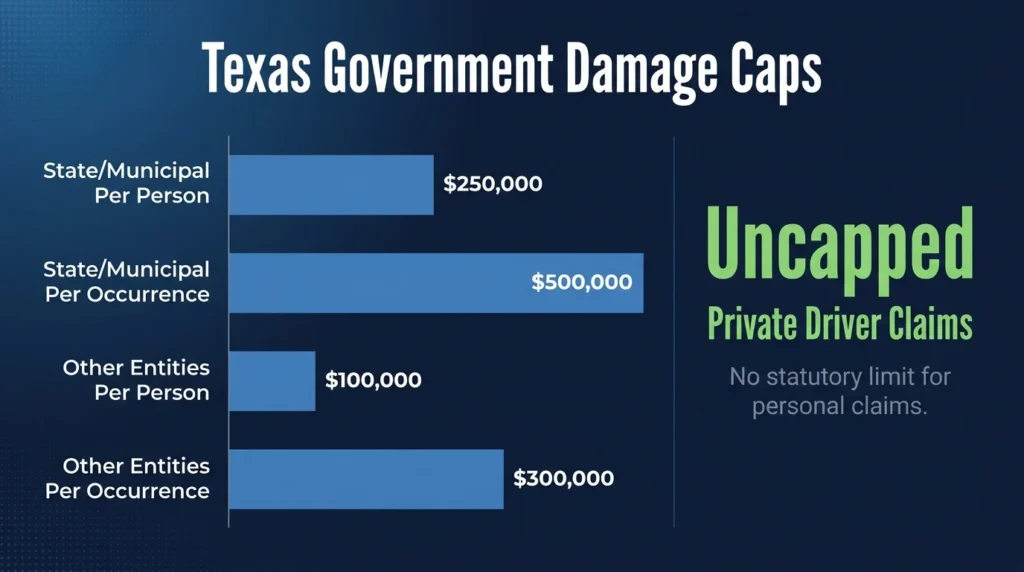
The caps in the Texas Civil Practice and Remedies Code (CPRC) Chapter 101 only restrict claims against governmental units. Under CPRC § 101.023, state and municipal entities cap out at $250,000 per person and $500,000 per occurrence, and other governmental units cap out at $100,000 per person and $300,000 per occurrence.
Your claim against the driver who hit the bus carries no such ceiling. You can pursue the full measure of your damages, both economic losses like medical bills and lost wages and non-economic losses like pain and suffering.
The government notice rules work the same way. The six-month written notice requirement under the Texas Tort Claims Act attaches only to a government bus defendant, never to your claim against the private driver.
If you are unsure which rules apply to your situation, a conversation with an attorney before any deadline passes can save your claim.
Suing Both the Third-Party Driver & the Bus Company
Sometimes the other driver is not the only one at fault. The bus company or transit agency can share blame when its own conduct helped cause the crash, and Texas law lets you name both in a single lawsuit.
A jury then sorts out how much each party owes. You do not have to choose one defendant and give up the other.
When the Bus Company Shares Fault
The bus company may be liable when its driver or its vehicle contributed to the conditions that caused the crash. A distracted bus driver, a brake failure, or a bus stopped in a dangerous spot can all add to the fault picture.
When the at-fault bus belongs to a government agency, the rules tighten. That defendant falls under the Texas Tort Claims Act, including the six-month notice requirement in CPRC § 101.101.
You can still bring everyone into the same case. Speak to one of our attorneys regarding how to file a bus accident claim in Texas and he or she will explain the steps when more than one party caused your injuries.
How Fault Is Allocated Among Multiple Defendants
Texas uses a fault-sharing system to divide responsibility. Under Texas Civil Practice and Remedies Code Chapter 33, the jury assigns a fault percentage to each party, and each pays its own share.
The split matters to your recovery. The private driver’s share stays uncapped, while the government bus defendant’s share is still limited by the Tort Claims Act.
This system has a hard limit for you too. If a jury finds you more than 50% at fault, Texas law bars you from recovering anything. For this reason, it is essential you speak to an attorney about the Texas 51% comparative negligence rule and how that line works in practice.
Deadlines for Filing Your Claim in Texas
You have two years from the date of the crash to sue the private driver. That deadline comes from Texas Civil Practice and Remedies Code § 16.003, and missing it almost always ends your case before it starts.
A second deadline can apply at the same time. When you also name a government transit agency, the six-month written notice requirement runs from the date of the incident, and missing it can bar your claim against that defendant.
These two clocks run side by side but independently. Meeting one does not satisfy the other, so you have to track both.
Because more than one deadline may apply depending on who you name, an early legal review helps make sure no filing window closes before you act.
What you do in the first days after the crash can decide how strong your claim is later. Protect your case by taking these steps as soon as you are able.
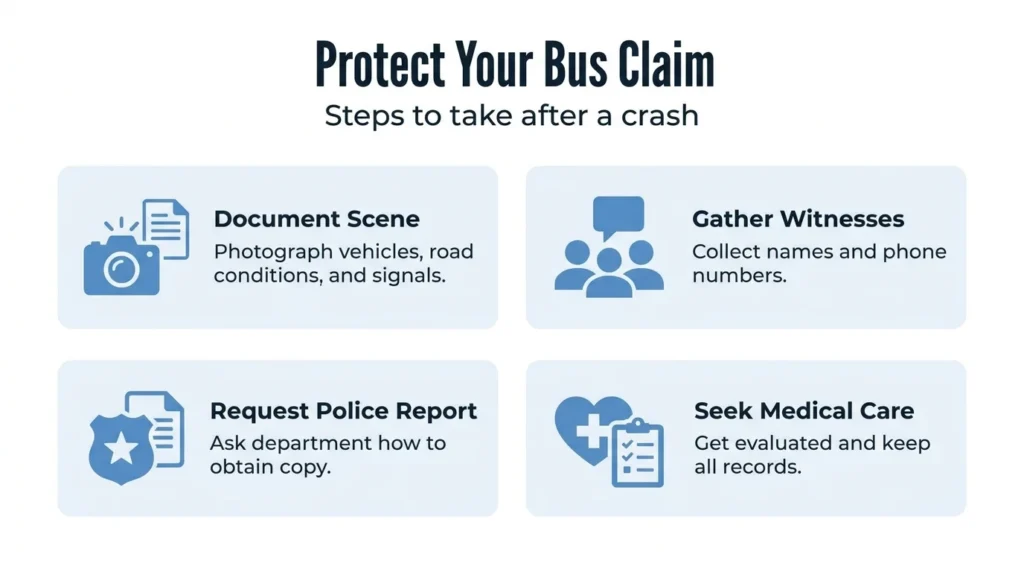
- Document the scene: Photograph all vehicles, the bus, road conditions, and any traffic signals from several angles.
- Gather witness information: Collect names and phone numbers from anyone who saw the crash.
- Request the police report: Ask the responding department how to obtain a copy once it is filed.
- Seek prompt medical care: Get evaluated right away and keep every record of your treatment.
Talk to a Texas Bus Accident Attorney
When another driver causes a bus crash, you can be left with serious injuries and a confusing fight over who pays. Angel Reyes & Associates has spent over 30 years helping injured Texans hold the right parties accountable in cases exactly like this.
We serve the entire state of Texas, and we work on a contingency basis, which means no fee unless we win your case. Your first consultation is always free, so there is no upfront cost to learn where you stand.
We have more than $1 billion recovered for clients in cases that leave families facing medical bills and lost income. See what past clients have said about working with us through our client reviews and testimonials.
If another driver caused your bus accident, schedule a free consultation so you understand your options before any deadline runs out.
Past results do not guarantee future outcomes.
Frequently Asked Questions
What if the driver who caused the bus crash has no insurance or not enough insurance to cover my injuries?
If the at-fault driver is uninsured or underinsured, your own auto insurance policy may cover the gap through uninsured/underinsured motorist (UM/UIM) coverage. Texas insurers are required to offer UM/UIM coverage, and it can apply even when you were injured as a bus passenger rather than as a driver.
Does it matter if the bus was a private charter bus instead of a city or county bus?
If the bus belonged to a private charter company rather than a government entity, the Texas Tort Claims Act does not apply to the bus company at all. That means both the at-fault driver and the charter company face standard, uncapped personal injury liability if their negligence contributed to the crash.
What if the driver who hit the bus was working for a rideshare company or making a delivery at the time?
When an at-fault driver is on duty for a company like Uber, Lyft, or a delivery service, the company’s commercial insurance policy may also cover your injuries. Whether that coverage applies depends on the driver’s status at the time of the crash and the company’s policy terms.
Can family members file a claim if a bus passenger dies from injuries caused by another driver?
Yes. Texas law allows eligible family members to bring a wrongful death claim under Texas Civil Practice and Remedies Code Chapter 71. The two-year statute of limitations applies to wrongful death claims the same way it applies to personal injury claims.
Does a pre-existing injury affect what I can recover from the driver who caused the bus crash?
A pre-existing condition does not bar your claim. Under Texas law, the at-fault driver is responsible for any aggravation of an existing injury caused by the crash, not just new injuries.
About the Authors

Angel Reyes
Writer
Angel L. Reyes, III is the Founder and Managing Partner of Angel Reyes & Associates. A nationally recognized trial attorney and business leader, Angel has helped over 70,000 injury victims recover more than $1 billion since founding the firm in 1993. Named to the Texas Super Lawyers list annually since 2008, Angel brings Wall Street experience, Ivy League education, and a deep commitment to client advocacy. He is a frequent legal commentator and published author with extensive contributions to legal scholarship, trial strategy, and consumer protection.

Graham Griffin
Editor
Graham Griffin is the Web & Content Manager at Angel Reyes & Associates, where he oversees content strategy, AI-powered workflows, a...

Angel Reyes
Reviewer
Angel L. Reyes, III is the Founder and Managing Partner of Angel Reyes & Associates. A nationally recognized trial attorney and business...