How Much Does a Lawyer Cost in Texas After a Car Accident?


Every article on this site is researched by our internal team, reviewed for legal accuracy against current Texas law, and held to State Bar of Texas advertising standards before publication. We do not publish content that overstates outcomes or makes promises about results.
Learn more about our
editorial standards .
Key Takeaways
- Texas lawyers work on contingency, so you pay nothing upfront or by the hour.
- Contingency percentages rise at each stage, from pre-lawsuit talks through trial or appeal.
- If you lose your case, you owe no attorney fee, though expense rules vary by firm.
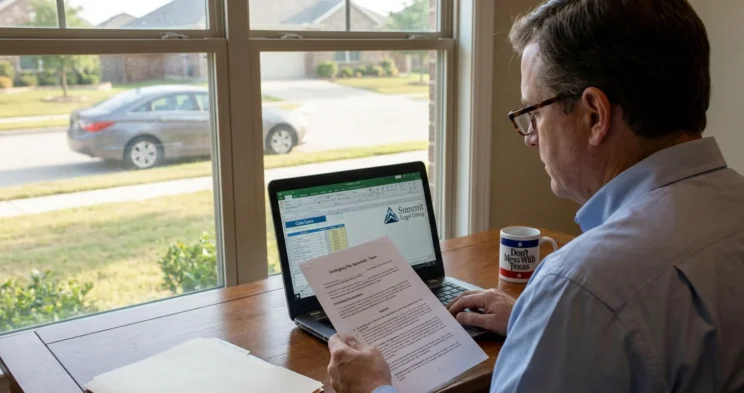
You’ve just left the scene of a crash on Houston’s Loop 610, and a tow truck driver already handed you a card for a lawyer. Medical bills are stacking up, and you are wondering if hiring an attorney means paying money you do not have. Before you sign anything, you need to know exactly how lawyers get paid in Texas following car accidents.
How Lawyer Fees Work
Most lawyers in Texas work on a contingency fee. You pay nothing upfront, and there is no hourly bill to track. This “no win, no fee” model means your attorneys only get paid if your case succeeds.
While your car accident claim moves forward, the firm advances the costs needed to build it. Filing fees, medical records, and expert costs get paid without any check from you. Those advanced costs come out of your settlement later.
What Percentage Do These Lawyers Take?
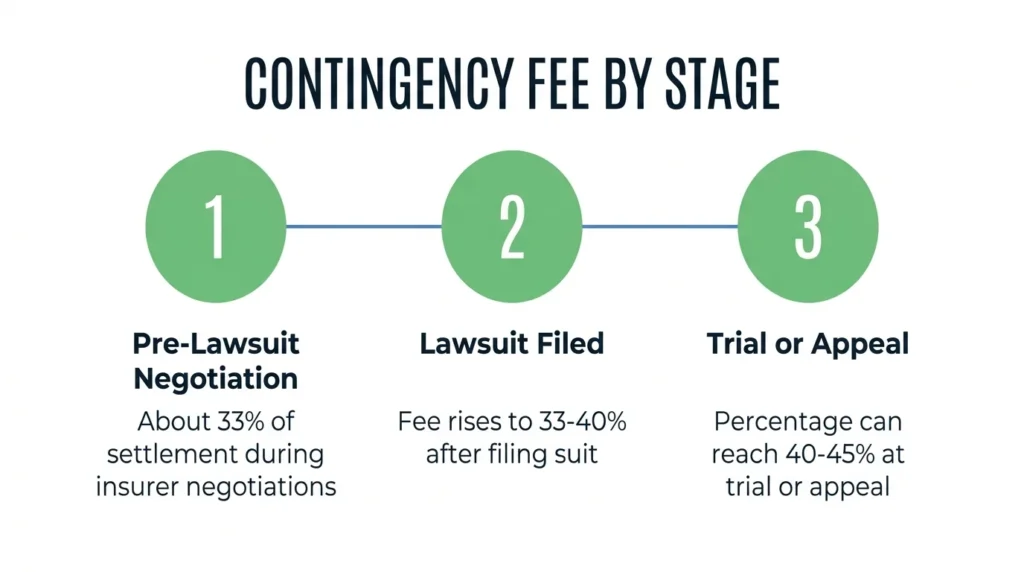
Lawyers in Texas typically take a percentage of your settlement, and that percentage usually rises as a case moves further into the legal process. Understanding your lawyer contingency fee percentage upfront helps you compare offers from different firms.
Before a lawsuit is filed, while your claim is still being negotiated with the insurer, contingency fees are commonly around one third, or about 33 percent, though the exact rate varies by firm. Firm approach and case complexity vary, so it helps to review past client outcomes before you sign anything.
Once a lawsuit is filed, that range often climbs to between 33 and 40 percent. This increase reflects the added work, risk, and time your attorney takes on once litigation starts. Depositions and trial preparation demand far more hours than a straightforward negotiation.
If a case proceeds to trial or appeal, the percentage can climb further, sometimes to around 40 to 45 percent. Texas Disciplinary Rule 1.04 requires your written fee agreement to spell out any change in percentage tied to settlement, trial, or appeal. Nothing about your fee should surprise you once the case reaches that stage.
Whichever stage your case resolves, the percentage is fixed in writing before you sign, not decided after the fact. Before accepting any offer, check whether an insurer’s settlement offer actually reflects the value of your claim.
How Settlement Money Gets Distributed
Once your case settles, the insurance company sends the funds to your attorney, not directly to you. Texas Disciplinary Rules require lawyers to hold client and settlement funds separate from the firm’s own money. Under Texas Disciplinary Rule 1.14, that money goes into an IOLTA trust account before anything gets paid out.
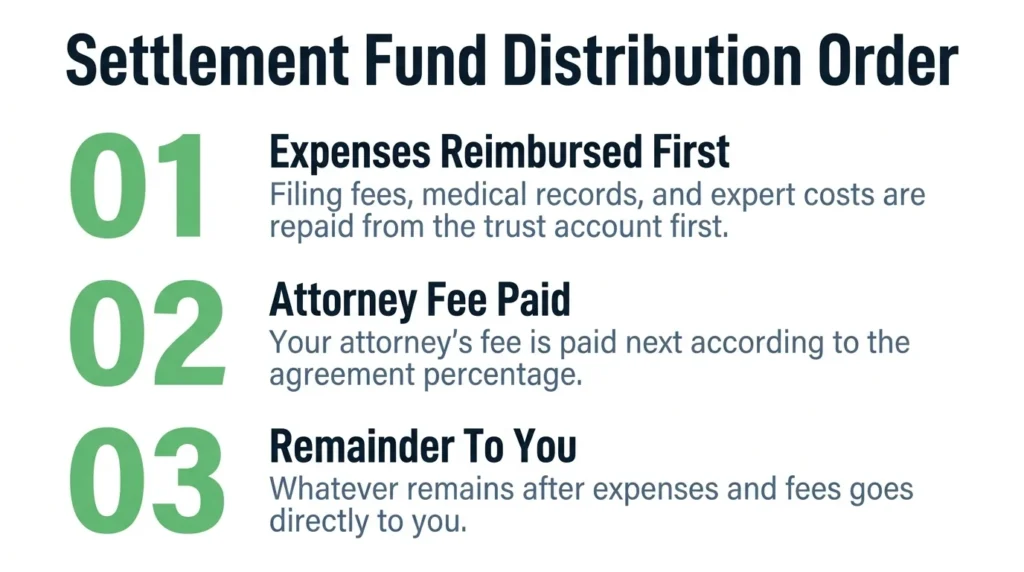
This structure keeps your attorney fees that Texas law governs fully separate from the firm’s operating funds.
From that trust account, funds are typically paid out in the order set by your fee agreement. In many arrangements, case expenses such as filing fees, medical records, and expert witnesses are reimbursed first, followed by your attorney’s fee. Whatever remains after that goes to you.
Interest earned on these trust accounts funds legal aid programs through the Texas Access to Justice Foundation. This system protects your money while your case moves through the process.
How long this whole process takes depends on how long your case takes to resolve. A typical settlement timeline in Texas can range from a few months to over a year, depending on your injuries and the insurer’s cooperation.
This same trust account and deduction process applies to truck accident claims and other vehicle accident cases as well.
Red Flags in a Fee Agreement
A written fee agreement is not optional in Texas, and a firm that skips one is already showing you a red flag. Texas law requires a lawyer fee agreement to state exactly how the fee is calculated.
Texas Disciplinary Rule 1.04 requires every contingent fee agreement to be in writing. A verbal-only arrangement, or an agreement with a vague fee description, is a warning sign on its own. Reviewing a firm’s background and history before signing can help you judge whether its fee practices match what the law requires.
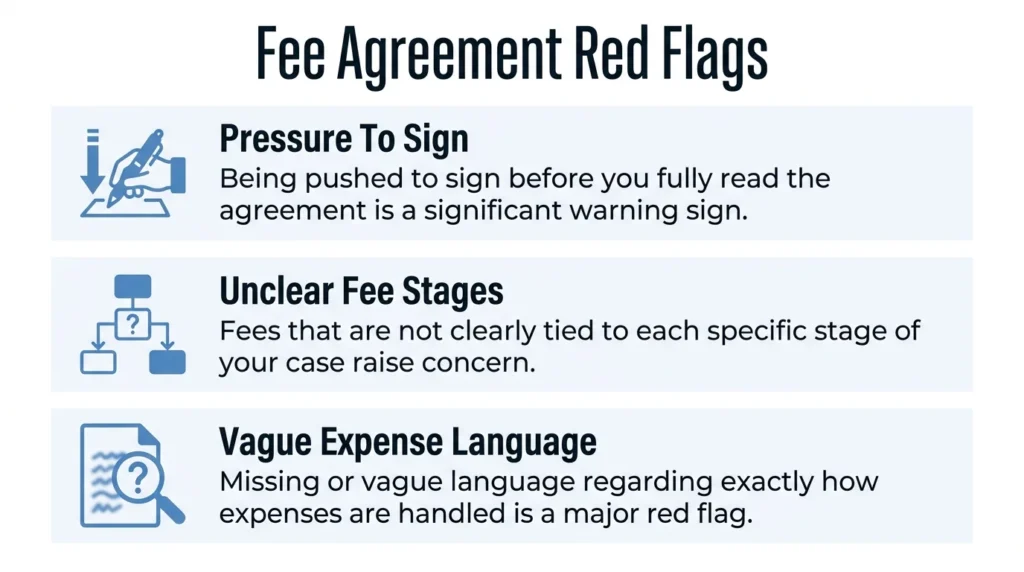
Watch for other warning signs too. Pressure to sign before you can read the agreement is one.
Fees that are not clearly tied to your case stage are another red flag. Vague or missing language about expense handling is a third.
If an insurer later tries to lowball your claim, knowing how to push back on a low settlement offer matters just as much as understanding your fee agreement.
What Happens If You Lose Your Case?
If your case does not result in a financial recovery, you typically owe your attorney no fee at all. Many people ask “What happens if I lose my car accident case?”, and the answer is simple: no recovery means no attorney fee.
Case expenses that your selected firm already advanced, such as filing fees or expert costs, get handled differently depending on the firm. Some firms absorb those costs if a case does not succeed, while others may seek reimbursement. Ask about this policy directly before you sign.
Before signing any agreement, ask these questions:
- How is the percentage calculated at each stage of the case?
- What expenses get deducted, and in what order?
- What happens to those expenses if the case is lost?
- Is the agreement in writing, as required under Texas Government Code Section 82.065?
A lawyer fee agreement in Texas becomes binding once you sign it, so read it closely first. Section 82.065 also allows a contingent fee contract to be voided if it was procured through improper solicitation of your case, a violation known as barratry. That is exactly why reviewing your agreement before signing matters so much.
Talk to an Experienced Lawyer Today
You do not have to figure out attorney fees alone. With more than $1 billion recovered for clients, Angel Reyes & Associates puts that experience to work at no upfront cost to you.
We handle car accident cases across Texas on a contingency fee, so you pay nothing unless we win. Contact us today for a free consultation about your case.
Past results do not guarantee future outcomes.
Lawyer Fee FAQs
How long do I have to file a car accident lawsuit in Texas?
Texas law gives you two years from the date of the crash to file a personal injury lawsuit, under the state’s statute of limitations. Missing that deadline usually means losing your right to sue for compensation, so it helps to talk to a lawyer well before it passes.
Can I negotiate my lawyer's fee percentage before I sign?
Many attorneys are open to discussing their contingency fee percentage, especially for simple cases likely to settle quickly. Raise the question during your initial consultation, before you sign anything.
What happens to attorney fees if I switch lawyers before my case settles?
You will not owe two full contingency fees. Your previous and new attorney typically split the single agreed fee based on the work each one did on your case.
Will medical bills or liens reduce my settlement on top of attorney fees?
Hospitals and other medical providers can place a lien on your settlement to recover unpaid bills, separate from your attorney’s fee. Texas law caps most hospital liens at the lesser of the reasonable charges owed or half of your total financial recovery.
Do I have to pay taxes on my car accident settlement?
For a crash involving physical injuries, your settlement money, including amounts for medical bills, pain and suffering, and lost wages, is generally not taxable under federal law. Punitive damages and interest added to a settlement are the main exceptions that usually are taxable.
About the Authors

Angel Reyes
Writer
Angel L. Reyes, III is the Founder and Managing Partner of Angel Reyes & Associates. A nationally recognized trial attorney and business leader, Angel has helped over 70,000 injury victims recover more than $1 billion since founding the firm in 1993. Named to the Texas Super Lawyers list annually since 2008, Angel brings Wall Street experience, Ivy League education, and a deep commitment to client advocacy. He is a frequent legal commentator and published author with extensive contributions to legal scholarship, trial strategy, and consumer protection.

Graham Griffin
Editor
Graham Griffin is the Web & Content Manager at Angel Reyes & Associates, where he oversees content strategy, AI-powered workflows, a...

Spencer Browne
Reviewer
Spencer Browne is a partner at Angel Reyes & Associates and a Board Certified personal injury trial lawyer with nearly 100 jury trials a...