Understanding Texas Rideshare Regulations and TNC Laws


Every article on this site is researched by our internal team, reviewed for legal accuracy against current Texas law, and held to State Bar of Texas advertising standards before publication. We do not publish content that overstates outcomes or makes promises about results.
Learn more about our
editorial standards .
Key Takeaways
- Texas Occupations Code Chapter 2402 governs every Uber and Lyft operating in the state.
- Cities cannot regulate rideshare companies because Texas holds exclusive authority over TNC rules.
- Rideshare coverage reaches $1 million once a driver accepts a ride.
How Texas Regulates Rideshare Companies
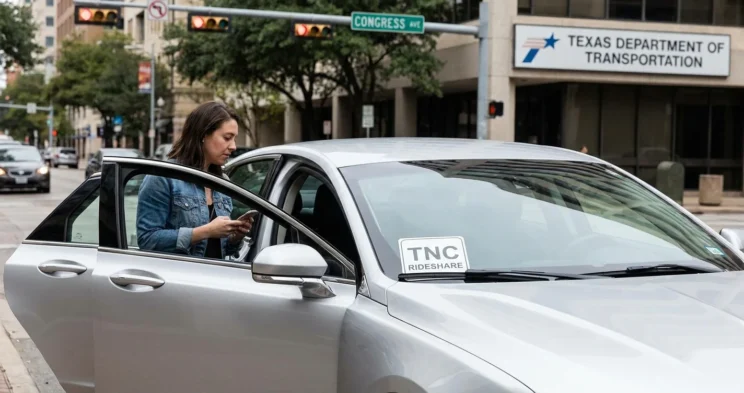
Texas regulates Uber, Lyft, and every other rideshare service through one statewide law: the Texas Occupations Code Chapter 2402. This law defines what a transportation network company is and sets the rules that every company must follow.
The legal term “transportation network company” (or TNC) applies to any business that connects riders with drivers through an app. Uber and Lyft are the names you know, but the rules apply equally to any TNC working in Texas.
The rules are set by the state, not the company. The Texas Department of Licensing and Regulation issues TNC permits and oversees compliance through its transportation network company program. A company cannot legally operate in Texas without a state permit.
As a rider, that means one consistent set of rules applies whether you hail a ride in Houston, El Paso, or a small town along the I-35 corridor. If you were hurt in a crash, then the same rules shape how Texas rideshare accident claims are handled across the state.
State Law Overrides Local Rideshare Rules
Cities in Texas cannot write their own rideshare rules. The Texas Occupations Code Section 2402.003 grants the state government the exclusive authority to regulate TNCs.
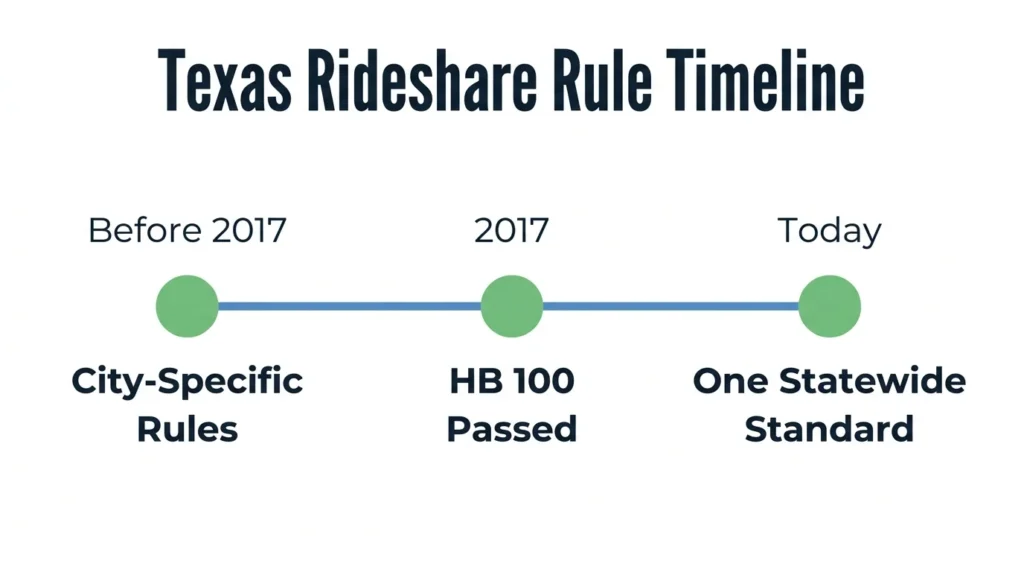
Before 2017, several Texas cities had their own rideshare rules, including fingerprinting for local drivers, but House Bill 100 changed that. The 2017 law replaced conflicting city rules with a single statewide standard. Now, no city in Texas can require its own driver fingerprinting, permits, or added rules on top of what the state already demands. The rules are the same, no matter where you ride.
However, there’s one exception. Airports and cruise ship terminals still have limited authority to set their own fees and operating rules for pickups on their property. This is why a ride from outside an airport sometimes charges an extra fee that a pickup on a city street wouldn’t charge.
Insurance Requirements for Uber and Lyft Drivers
The Texas Occupations Code Section 2402.101 requires that every TNC driver (or the company on the driver’s behalf) must carry coverage that meets the Texas Insurance Code Chapter 1954. This is layered insurance that changes based on what the driver is doing at the moment of a crash.
The coverage that applies to your crash depends entirely on the driver’s status in the app at the moment of impact. A driver who is waiting for a request has a different level of protection than a driver with a passenger.
For a more detailed breakdown, our guide on Uber and Lyft insurance coverage periods walks you through each stage in detail.
Coverage While Logged In & Waiting
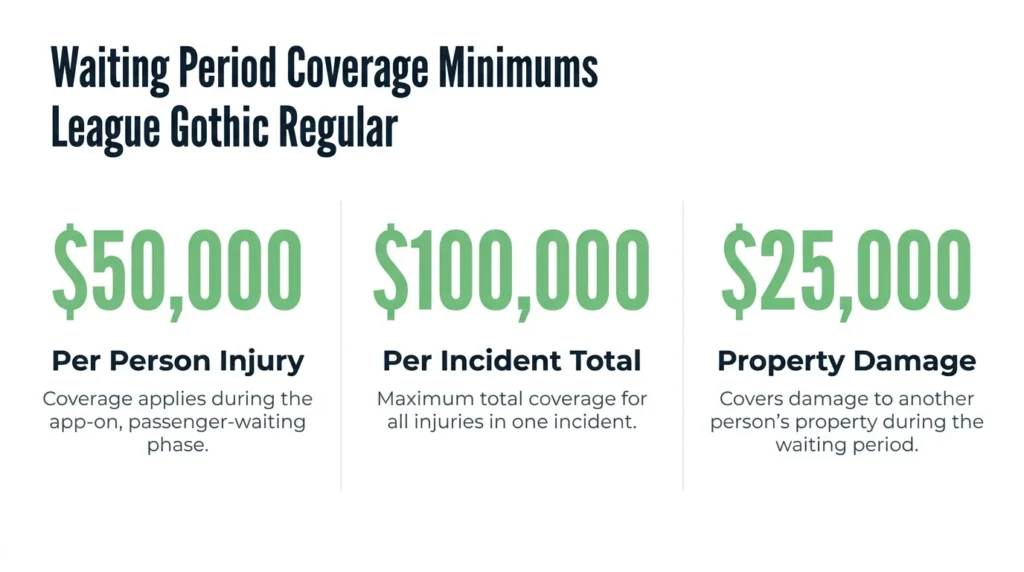
A driver who has logged on to the app but has not yet accepted a ride has the lowest insurance limits. The Texas Insurance Code Section 1954.052 sets these at $50,000 per person, $100,000 per incident, and $25,000 for property damage.
Coverage During an Accepted Ride
Once a driver accepts a ride, their level of protection increases significantly. The Insurance Code Section 1954.053 requires $1 million in total coverage for death, bodily injury, and property damage during an active trip.
This limit starts the moment the driver accepts the trip and remains active until the passenger reaches their destination. It covers passengers and others on the road during the active ride.
Driver Background Check Requirements
Every rideshare company must complete a background check on a driver before they can log in and accept rides. The Texas Occupations Code Section 2402.107 requires a local, state, and national criminal background check, plus a search of the national sex offender public registry maintained by the U.S. Department of Justice.
The law also explicitly states offenses that disqualify a person from driving. A rideshare company may not let someone log in as a driver if they have any of the following on their criminal record:
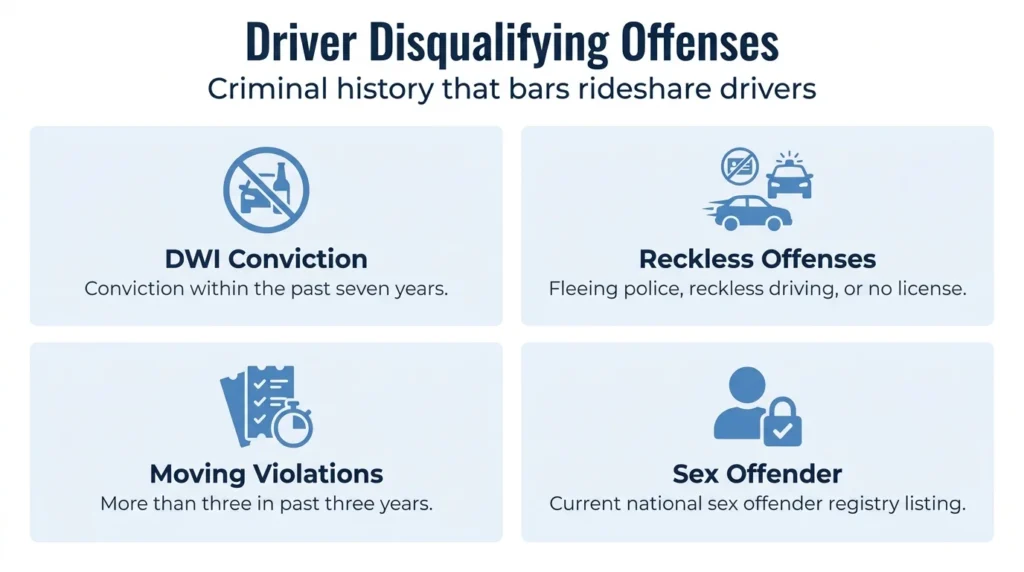
- A conviction in the past seven years for driving while intoxicated
- A conviction for fleeing police, reckless driving, or driving without a valid license
- More than three moving violations in the past three years
- A current listing on the national sex offender registry
The screening is not a one-time step. Companies must rerun the criminal background check every year for each active driver.
When a company puts an unqualified driver on the road and a passenger gets hurt, the company’s screening choices can affect your claim. Learn when an injured rider can file a claim against a rideshare company directly in our guide on suing Uber after a crash in Texas.
Ask an Attorney About Texas Rideshare Injuries
Understanding these rules is one thing, but applying them after a crash is another. Angel Reyes & Associates has spent over 30 years helping injured Texans hold the right parties accountable, and we serve clients across the entire state.
We work on contingency, so there is no fee unless we win, and your first consultation is always free. You can see how we have handled serious injury claims on our case results page.
If a rideshare crash left you hurt, and you’re unsure who is responsible, reach out for a free consultation, so we can review your options.
Past results do not guarantee future outcomes.
Texas Rideshare Regulations FAQs
Are Uber and Lyft drivers employees or independent contractors in Texas?
If the company does not set their hours, limit their territory, or restrict them from driving for other apps, then Texas treats qualifying rideshare drivers as independent contractors, not employees. Both the company and the driver must agree to this in writing for it to be applicable.
Does a car used for rideshare have to pass a Texas vehicle inspection?
Yes. A rideshare company must require every vehicle on its network to meet the state vehicle inspection rules under Chapter 548 of the Texas Transportation Code before it can carry passengers.
Do these same rules apply to food and package delivery drivers?
Chapter 2402 now covers both transportation network companies and delivery network companies, so app-based delivery drivers are regulated under a statewide set of rules, rather than separate city rules.
What happens if I am hit by a rideshare driver who had no passenger?
In this case, the driver’s lower waiting-period coverage usually applies first, and you may need to use your own uninsured or underinsured motorist coverage if the driver’s coverage is not enough to pay for your losses.
Can an out-of-state Uber or Lyft driver legally pick me up in Texas?
Even if the driver is from out of state, both the driver and vehicle must still meet Texas TNC permit and screening rules to operate in Texas, since Texas law controls rideshare activity within Texas.
About the Authors

Angel Reyes
Writer
Angel L. Reyes, III is the Founder and Managing Partner of Angel Reyes & Associates. A nationally recognized trial attorney and business leader, Angel has helped over 70,000 injury victims recover more than $1 billion since founding the firm in 1993. Named to the Texas Super Lawyers list annually since 2008, Angel brings Wall Street experience, Ivy League education, and a deep commitment to client advocacy. He is a frequent legal commentator and published author with extensive contributions to legal scholarship, trial strategy, and consumer protection.

Graham Griffin
Editor
Graham Griffin is the Web & Content Manager at Angel Reyes & Associates, where he oversees content strategy, AI-powered workflows, a...

Angel Reyes
Reviewer
Angel L. Reyes, III is the Founder and Managing Partner of Angel Reyes & Associates. A nationally recognized trial attorney and business...